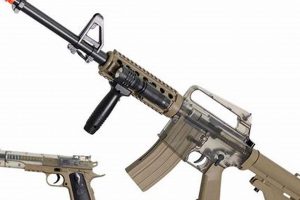
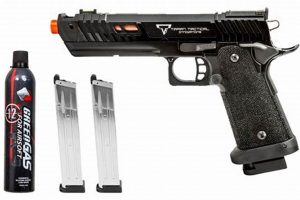
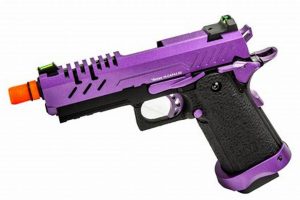
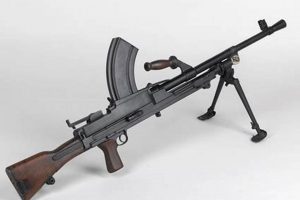
A type of airsoft weapon relies on a spring mechanism to propel projectiles. The user manually compresses a spring, which, when released, forces air through a cylinder, launching a plastic pellet. This operating principle distinguishes them from gas or electric-powered counterparts. An example of this type of device is a single-shot pistol replica that requires cocking before each shot.
These devices offer an accessible entry point into airsoft, often requiring less maintenance and lower initial investment than other types of airsoft guns. Their simplicity contributes to reliability and ease of use. Historically, they represented a common starting point for players due to their affordability and straightforward operation, serving as a foundational introduction to the sport.
Understanding the mechanics of this airsoft variant provides a base for appreciating the diversity within the broader airsoft landscape. Subsequent sections will explore the specific advantages, disadvantages, common models, and maintenance requirements associated with this type of airsoft mechanism.
Tips for Using a Spring-Powered Airsoft Gun
The following recommendations aim to enhance the performance and longevity of spring-powered airsoft devices. Adhering to these guidelines contributes to a safer and more enjoyable airsoft experience.
Tip 1: Proper Cocking Technique: Ensure complete and consistent cocking of the spring mechanism before each shot. Incomplete cocking can result in reduced power and inaccurate projectile trajectory. A smooth, deliberate motion minimizes stress on internal components.
Tip 2: Use Quality Ammunition: Employ high-grade, seamless airsoft BBs specifically designed for airsoft use. Deformed or low-quality ammunition can damage internal components and negatively impact accuracy. Weight consistency is also a crucial factor.
Tip 3: Regular Cleaning: Periodically clean the inner barrel to remove debris and residue that can accumulate over time. A clean barrel promotes consistent projectile velocity and accuracy. Specialized cleaning rods and silicone lubricants are recommended.
Tip 4: Appropriate Storage: Store the device in a cool, dry environment, away from direct sunlight and extreme temperatures. Prolonged exposure to adverse conditions can degrade plastic components and affect the spring’s performance. Consider storing uncocked to reduce spring fatigue.
Tip 5: Lubrication: Apply a small amount of silicone lubricant to the moving parts of the cocking mechanism as needed. This reduces friction and wear, ensuring smooth operation and extending the lifespan of the airsoft gun. Avoid petroleum-based lubricants, as they can damage plastic components.
Tip 6: Avoid Dry Firing: Refrain from dry firing when possible, as it can accelerate wear on the piston and other internal parts. Dry firing without a BB in the chamber can cause the piston to slam forward with excessive force.
Tip 7: Inspect Before Use: Before each use, visually inspect the device for any signs of damage or wear, such as cracks in the plastic body or loose screws. Addressing minor issues promptly can prevent more significant problems from developing.
Following these tips supports the reliable operation of a spring-powered airsoft device, maximizing its performance and extending its functional life. These practices contribute to a more satisfying and safe airsoft experience.
The subsequent discussion will delve into advanced troubleshooting and potential modifications for experienced users seeking to further optimize their spring-powered airsoft devices.
1. Manual Action

The manual action inherent in a spring-powered airsoft device directly determines its operational characteristics. Prior to each shot, the user must physically compress the spring, typically by pulling back a slide or cocking a lever. This action stores the energy necessary to propel the projectile. Consequently, the manual element serves as both the activating mechanism and a limiting factor in the device’s rate of fire. The act of manually cocking the device is a defining characteristic. For example, consider a spring-powered airsoft sniper rifle; the operator must manually pull back the bolt after each shot to reload and compress the spring, readying the weapon for the next round. Understanding this mechanism is vital for operating such devices effectively.
The reliability of spring-powered airsoft devices hinges on the durability of the manual cocking mechanism. Repeated stress on the spring and associated components can lead to wear and tear, potentially affecting performance over time. However, because the mechanism is entirely mechanical, it bypasses the need for batteries or external gas sources, offering inherent advantages in certain scenarios. For instance, in a situation where batteries are unavailable or gas canisters are empty, a spring-powered airsoft device can still function, albeit at a reduced rate of fire. This manual element, when properly maintained, ensures a level of operational independence uncommon in more complex airsoft models.
In summary, the manual action of a spring-powered airsoft mechanism is not merely a superficial feature; it is fundamental to its operation, reliability, and accessibility. While it imposes limitations on firing speed, it simultaneously provides a level of functional independence and inherent durability. Recognizing the significance of this manual component allows users to better appreciate the unique advantages and disadvantages of this type of airsoft device. The next consideration focuses on the “Single Shot” nature of the airsoft device.
2. Single Shot

The “single shot” characteristic of a spring-powered airsoft gun is inextricably linked to its core operating mechanism. Each projectile launch necessitates a manual re-cocking of the spring. This limitation contrasts with automatic or semi-automatic airsoft devices that can fire multiple rounds without manual intervention between shots. The single-shot nature is a direct consequence of the manual spring compression required to generate propulsive force. For example, each time a spring-powered airsoft pistol is fired, the slide must be manually pulled back to compress the spring before another round can be fired. This fundamental constraint significantly impacts the device’s application in airsoft scenarios.
This design feature, while limiting the rate of fire, imposes a tactical dynamic. Players using single-shot spring airsoft devices must prioritize accuracy and shot placement. The single-shot limitation promotes calculated aiming and strategic positioning. This necessitates a deliberate and thoughtful approach, contrasting with the rapid fire tactics enabled by automatic airsoft weapons. For instance, a sniper in an airsoft game relying on a single-shot spring rifle is forced to prioritize concealment and precision over sheer volume of fire.
Understanding the implications of the single-shot mechanism provides a clearer appreciation of the device’s role within the airsoft landscape. While offering limited firepower compared to its counterparts, it encourages a skillset focused on accuracy, strategic thinking, and resourcefulness. The single-shot limitation thus becomes a defining characteristic, shaping both the operational capabilities and tactical employment of a spring-powered airsoft gun, while also making these devices simpler to learn to operate compared to battery-operated devices.
3. Affordable

The affordability of a spring-powered airsoft gun stems directly from its simplified internal mechanism and manufacturing requirements. The absence of complex gas systems, electronic components, and intricate gearboxes found in other airsoft models translates to lower production costs. The reliance on a basic spring and piston system reduces material expenses and assembly time, resulting in a lower retail price. For example, entry-level spring airsoft pistols often retail for a fraction of the cost of comparable gas blowback or electric-powered models. This price difference renders spring airsoft devices accessible to a broader demographic, including beginners, casual users, and individuals with limited budgets.
The affordable nature of spring-powered airsoft guns contributes significantly to their widespread adoption as starter weapons. Individuals interested in exploring airsoft can purchase a functional device without a substantial financial investment. This allows newcomers to familiarize themselves with the sport’s fundamental principles, rules, and safety procedures before committing to more expensive and specialized equipment. Furthermore, the affordability of spring-powered models enables organizations, such as youth groups or recreational clubs, to acquire a larger quantity of airsoft devices for training or introductory activities, promoting wider participation in the sport. For instance, a summer camp might choose spring airsoft guns due to budget considerations and ease of maintenance.
In summary, the affordable nature of spring-powered airsoft guns is not merely a coincidental attribute; it is a direct consequence of their design simplicity and manufacturing efficiency. This affordability fosters accessibility, enabling broader participation in the airsoft hobby and sport. While lacking the advanced features and performance capabilities of more expensive models, the lower price point of these devices makes them a valuable gateway for those seeking to explore the world of airsoft. The next section will explore the attribute of these guns “Lower Power”.
4. Lower Power
The lower power output characteristic is a defining feature of spring-powered airsoft devices, shaping their performance capabilities and intended applications. This reduced power level is a direct result of the limitations inherent in the manual spring compression mechanism, influencing projectile velocity and effective range.
- Reduced Muzzle Velocity
The spring mechanism’s capacity to store and release energy dictates the muzzle velocity of the projectile. Spring-powered airsoft guns typically exhibit lower muzzle velocities compared to gas or electric-powered counterparts. This diminished velocity translates to a shorter effective range and reduced impact force. As an example, a spring airsoft pistol might produce a muzzle velocity of around 200-300 feet per second (FPS), while a gas-powered pistol can easily exceed 350 FPS. This lower velocity makes them less suitable for long-range engagements but safer for close-quarters scenarios.
- Limited Effective Range
The lower muzzle velocity directly impacts the effective range of the device. Due to the reduced initial force, the projectile experiences greater air resistance and loses velocity more rapidly, resulting in a shorter distance it can travel accurately. While a gas-powered sniper rifle might achieve accurate shots at distances exceeding 150 feet, a spring-powered version is typically limited to a range of around 50-80 feet for consistent accuracy. This range limitation necessitates different tactical approaches and engagement strategies.
- Enhanced Safety Profile
The lower power output contributes to a safer airsoft experience, especially in close-quarters environments. The reduced impact force minimizes the potential for injury, making spring-powered airsoft guns suitable for use by younger or less experienced players. For instance, many indoor airsoft arenas that cater to beginner players often mandate the use of lower-powered spring guns to ensure the safety of all participants. This safety factor also reduces the risk of equipment damage and potential liability issues.
- Suitability for Target Practice
The lower power output makes spring-powered airsoft guns ideal for backyard target practice and recreational shooting. The reduced projectile velocity and range mitigate the risk of accidental damage to property or injury to bystanders. The affordability and simplicity of spring models further enhance their appeal for casual target practice, providing a safe and accessible means of honing shooting skills. The relatively low velocity also contributes to reduced ricochet potential.
These facets illustrate how the “lower power” characteristic fundamentally shapes the functionality and applications of spring-powered airsoft devices. While limiting their performance in competitive scenarios, the reduced power output contributes to enhanced safety, accessibility, and suitability for beginner players and recreational activities. This inherent power limitation, therefore, becomes a defining advantage in specific contexts within the broader airsoft landscape.
5. Basic Design
The fundamental design simplicity of spring-powered airsoft devices is a core attribute that directly impacts their functionality, cost, and accessibility. This basic design philosophy influences every aspect of the device, from its internal mechanisms to its overall user experience. The following points elaborate on the key facets of this design.
- Simplified Internal Components
The core of the spring-powered mechanism consists of a spring, piston, cylinder, and trigger assembly. Unlike gas or electric airsoft devices, there are no complex gearboxes, batteries, or gas reservoirs. The trigger mechanism directly releases the compressed spring, propelling the piston forward. An example is a single-action spring airsoft pistol, where pulling the trigger releases the piston, which forces air through the cylinder, propelling the BB. The simplicity of these components contributes to lower manufacturing costs and easier maintenance.
- Manual Operation
Operation is manually driven, requiring the user to physically compress the spring before each shot. There is no reliance on external power sources or intricate automated systems. Manual operation ensures functional independence and a reduced risk of malfunctions due to electronic failures or gas leaks. This manual element removes the need for battery charging or gas refills. A spring powered sniper rifle is a key example of this manual operation.
- Durable Construction
Due to the lack of complex internal components, spring-powered devices tend to be more durable and resistant to wear and tear. The absence of intricate parts reduces the likelihood of mechanical failures. The robust construction makes them suitable for use in diverse environments. They may use less quality materials so they are prone to damage but are still a more durable option when compared to electric or gas powered airsoft guns. An example is the durability of a spring powered shotgun.
- Ease of Maintenance
The simplified design translates to easier maintenance and repair procedures. Disassembly and reassembly are generally straightforward, requiring minimal specialized tools or technical expertise. Troubleshooting is simplified. Basic lubrication and occasional spring replacement are typically the only maintenance tasks required. This reduces ongoing operational costs and increases the device’s lifespan.
In summary, the basic design of a spring-powered airsoft device is a defining characteristic that dictates its functionality, affordability, and user-friendliness. The simplified internal components, manual operation, durable construction, and ease of maintenance collectively contribute to its accessibility and widespread appeal. This basic design makes it an ideal entry point for individuals seeking to explore the airsoft hobby. The next section explores “Durable Build”.
6. Durable Build
The inherent simplicity of a spring-powered airsoft mechanism contributes directly to its notable durability. The absence of complex electronic or pneumatic systems, coupled with a reduced reliance on intricate moving parts, fosters a robust construction capable of withstanding considerable stress. This characteristic is a significant factor in the device’s appeal, particularly for novice users and those seeking a reliable, low-maintenance airsoft option.
- Minimal Component Count
Spring-powered airsoft weapons rely on a comparatively small number of internal components. The spring, piston, cylinder, and trigger mechanism constitute the primary functional elements. Fewer parts translate directly to a reduced probability of mechanical failure. The absence of batteries, circuit boards, or gas seals eliminates potential points of weakness common in other airsoft gun types. Consequently, the device is less susceptible to damage from environmental factors or rough handling.
- Mechanical Resilience
The core components are typically constructed from durable materials such as reinforced polymers or metal alloys. Springs are manufactured to withstand repeated compression cycles, while pistons are designed for impact resistance. The mechanical nature of the device renders it immune to electronic malfunctions or battery degradation, issues that can compromise the functionality of electric airsoft guns. A spring-powered airsoft rifle, for example, can remain operational in conditions that would render an electric model unusable.
- Simplified Maintenance
The inherent durability of a spring-powered airsoft device translates to reduced maintenance requirements. The absence of complex internal systems simplifies troubleshooting and repair procedures. Basic lubrication and periodic inspection of the spring are often the only maintenance tasks necessary. This ease of maintenance lowers the overall cost of ownership and enhances the device’s longevity. A user can often disassemble and reassemble a spring-powered mechanism with minimal tools or technical expertise.
- Environmental Tolerance
Spring-powered airsoft devices exhibit a degree of environmental tolerance often exceeding that of their electric or gas-powered counterparts. They are less susceptible to the effects of temperature fluctuations, humidity, or dust ingress. The absence of sensitive electronic components eliminates the risk of corrosion or short-circuiting. Consequently, spring-powered airsoft guns can be deployed in a wider range of environmental conditions without compromising their operational reliability. They require no gas to use or battery to operate so they can be taken anywhere.
These factors collectively contribute to the durable build characteristic of spring-powered airsoft devices. The simplified design, mechanical resilience, and reduced maintenance requirements render them a robust and reliable option for both recreational and training purposes. While lacking the advanced features of more complex airsoft gun types, their inherent durability provides a compelling advantage in situations where reliability and longevity are paramount. This results in spring powered airsoft guns being simple to repair, upgrade, and utilize in situations where batteries or gas is not available. This simplicity in construction also is not as prone to breaking as an electric or gas-powered gun.
Frequently Asked Questions About Spring Powered Airsoft Guns
This section addresses common inquiries regarding airsoft devices reliant on spring mechanisms. These answers aim to clarify operational characteristics and dispel potential misconceptions.
Question 1: What distinguishes a spring-powered airsoft gun from other types?
A spring-powered airsoft gun utilizes a manual spring compression system to propel projectiles. Other types employ gas or electric mechanisms for the same purpose. The manual operation is the key distinguishing factor.
Question 2: How does the power of a spring-powered airsoft gun compare to gas or electric models?
Spring-powered airsoft guns typically exhibit lower power output, resulting in reduced muzzle velocity and effective range. Gas and electric models generally offer higher performance in these areas.
Question 3: Is a spring-powered airsoft gun suitable for competitive airsoft games?
While usable, spring-powered airsoft guns are often less competitive in scenarios emphasizing rate of fire and range. Their single-shot nature and lower power can be disadvantages.
Question 4: What maintenance is required for a spring-powered airsoft gun?
Maintenance typically involves cleaning the barrel, lubricating moving parts, and occasionally replacing the spring. The simplicity of the mechanism generally results in lower maintenance demands compared to other types.
Question 5: Are spring-powered airsoft guns considered safe?
All airsoft guns require responsible handling and adherence to safety precautions. The lower power of spring-powered models can contribute to a reduced risk of injury, but eye protection and responsible usage are always essential.
Question 6: What is the typical cost of a spring-powered airsoft gun?
Spring-powered airsoft guns are typically the most affordable type, often representing the lowest entry point into the sport. Prices vary based on model and features, but are generally lower than gas or electric counterparts.
In conclusion, spring-powered airsoft guns offer a basic, affordable, and relatively durable introduction to the airsoft hobby. Their limitations in power and rate of fire are offset by their simplicity and ease of maintenance.
The following section will transition to comparing specific models and brands of spring powered airsoft devices available on the market.
Conclusion
The preceding analysis has detailed the characteristics and implications inherent to what is a spring powered airsoft gun. The manual operation, lower power, basic design, and durable construction collectively define this category of airsoft device. Its affordability and ease of maintenance contribute to its accessibility as an entry-level option within the broader airsoft landscape. The single-shot nature necessitates a strategic approach to gameplay, prioritizing accuracy over rate of fire.
Ultimately, understanding the attributes of what is a spring powered airsoft gun provides a foundational knowledge for navigating the diverse options available in the airsoft market. While technological advancements continue to shape the sport, the simplicity and reliability of the spring-powered mechanism ensure its enduring relevance. Further research and practical experience remain crucial for informed decision-making within the airsoft community.