![Guide: What is the Best Type of Airsoft Gun? [2024]](data:image/svg+xml;base64,PHN2ZyB4bWxucz0iaHR0cDovL3d3dy53My5vcmcvMjAwMC9zdmciIHdpZHRoPSI0NzQiIGhlaWdodD0iNTYiIHZpZXdCb3g9IjAgMCA0NzQgNTYiPjxyZWN0IHdpZHRoPSIxMDAlIiBoZWlnaHQ9IjEwMCUiIHN0eWxlPSJmaWxsOiNjZmQ0ZGI7ZmlsbC1vcGFjaXR5OiAwLjE7Ii8+PC9zdmc+ "Guide: What is the Best Type of Airsoft Gun? [2024] Ultimate Airsoft Guide for Beginners, Tactics & Gear Reviews")
Selecting the appropriate airsoft replica depends heavily on individual player needs and preferred gameplay styles. Factors influencing this decision encompass budget, field regulations, role within a team, and personal comfort. Diverse mechanisms power these replicas, each offering distinct advantages and disadvantages concerning realism, rate of fire, and maintenance requirements. Consideration of these aspects is essential for an optimal airsoft experience. For instance, a sniper might prioritize accuracy and range, influencing the type of system they choose, whereas a player engaging in close-quarters combat may favor maneuverability and a high rate of fire.
The availability of varied propulsion methods allows players to customize their loadouts according to their specific needs. Gas blowback systems offer enhanced realism due to the simulated recoil action. Electric-powered models provide consistent performance and ease of use, frequently favored in sustained engagements. Spring-powered versions deliver a cost-effective entry point into the sport and are commonly used as sniper rifles due to their inherent power and accuracy. Historical trends show a gradual shift towards electric-powered replicas due to their blend of performance and relative ease of maintenance. However, specialized roles and player preferences ensure all types maintain a presence on the airsoft field.
This discussion will address the primary types of airsoft replicas, highlighting their respective operational principles, performance characteristics, and suitable scenarios. By examining these factors, one can gain a comprehensive understanding of the strengths and weaknesses of each, enabling an informed selection process.
Selection Strategies for Airsoft Replicas
Strategic decision-making is crucial when acquiring airsoft equipment. Several factors must be considered to ensure the chosen replica aligns with both individual needs and field requirements. The following outlines key considerations during the selection process.
Tip 1: Define Role and Field Type: Before purchase, determine the intended role on the field (e.g., assault, support, sniper) and the typical engagement environment (CQB, woodland, open field). Different roles and environments demand different performance characteristics.
Tip 2: Establish Budget Constraints: Airsoft replicas vary significantly in price. Set a realistic budget, considering not only the initial purchase price but also potential costs for upgrades, maintenance, and accessories. Higher-priced models often offer improved durability, performance, and realism.
Tip 3: Research Propulsion Systems: Understand the characteristics of each propulsion system (electric, gas, spring). Electric replicas offer versatility and consistent performance. Gas replicas provide realism and higher potential power, but may be affected by temperature. Spring replicas offer simplicity and cost-effectiveness for sniper roles.
Tip 4: Prioritize Durability and Build Quality: Airsoft engagements can be demanding on equipment. Look for replicas constructed with robust materials such as metal or reinforced polymer. Check reviews and consult experienced players regarding the durability of specific models.
Tip 5: Evaluate Ergonomics and Comfort: Ensure the replica feels comfortable and balanced in hand. Consider factors such as weight, grip texture, and stock adjustability. A comfortable replica improves handling and reduces fatigue during extended gameplay.
Tip 6: Consider Upgrade Potential: Many airsoft replicas can be upgraded to improve performance or customize appearance. Research the availability of upgrade parts and the potential for enhancing accuracy, range, or rate of fire.
Tip 7: Check Local Regulations: Adhere to local laws and field regulations regarding maximum velocity (FPS) and replica appearance. Compliance is essential to avoid legal issues and ensure safe gameplay.
By carefully considering these factors, players can make informed decisions and select airsoft replicas that meet their specific needs and enhance their overall experience. Prioritization of performance, durability, and compliance with regulations contributes to a more enjoyable and responsible engagement in the sport.
The following section will provide more in depth information of airsoft replicas.
1. Power Source

The power source is a fundamental determinant in replica selection, directly influencing performance characteristics, operational costs, and suitability for various gameplay scenarios. The choice of power source fundamentally alters the airsoft experience.
- Electric (AEG – Automatic Electric Gun)
Electric power, typically via rechargeable batteries, offers consistent performance and ease of use. AEGs are versatile and suitable for various roles. Their consistent operation eliminates the temperature sensitivity inherent in gas-powered systems. Internal mechanisms, such as gearboxes and motors, require periodic maintenance. Upgrades are available to enhance performance. The consistent power output makes AEGs a prevalent choice for both beginners and experienced players.
- Gas (GBB – Gas Blowback, NBB – Non-Blowback)
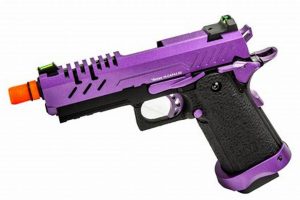
Gas-powered replicas, using compressed gas (typically green gas, propane, or CO2), provide realism and potential for higher power output. Gas Blowback (GBB) systems simulate recoil, enhancing the immersive experience. Non-Blowback (NBB) systems prioritize efficiency. Gas systems are sensitive to temperature fluctuations, affecting performance. Maintaining gas seals and valves is necessary. Gas systems are often favored for pistols and sniper rifles, offering a balance of realism and power.
- Spring
Spring-powered replicas require manual cocking before each shot. They are cost-effective and reliable, but offer a lower rate of fire. Simplicity in design minimizes maintenance requirements. Spring rifles are commonly used in sniper roles, prioritizing accuracy and power over rapid fire. Their ruggedness makes them suitable for harsh environments. The reliance on manual operation makes them less suitable for dynamic, close-quarters engagements.
- High-Pressure Air (HPA)
HPA systems utilize an external compressed air tank connected to the replica via a hose. These systems offer consistent performance and adjustable velocity. HPA provides precise control over firing parameters. HPA systems necessitate an external air source, potentially limiting mobility. The higher initial investment is offset by long-term cost savings due to reduced consumable expenses. Precise control makes HPA suitable for specialized roles and competitive play.
The choice of power source constitutes a foundational decision impacting the overall utility. The balance between cost, realism, consistency, and maintenance requirements should dictate the selected power source. Ultimately, the ideal choice hinges on an individual’s priorities and gameplay context.
2. Intended Role

The intended role within an airsoft engagement significantly influences the optimal choice of replica. Different roles necessitate distinct performance characteristics, handling requirements, and feature sets, thereby dictating the most suitable type for a given player.
- Assault/Rifleman
This role typically involves engaging the opposing force directly, often in close to medium-range engagements. AEGs are frequently selected due to their high rate of fire, versatility, and ability to sustain prolonged engagements. Durability and magazine capacity are critical considerations. An example would be an AEG with a high-capacity magazine and a robust gearbox, suitable for aggressive maneuvers and suppressing fire.
- Support Gunner
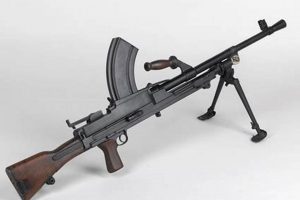
The support gunner provides covering fire and suppresses enemy positions, requiring a high-capacity replica with a consistent rate of fire. Light machine guns (LMGs), often AEGs with box magazines holding several thousand rounds, are commonly used. Reliability and sustained fire capability are paramount. An example involves an AEG LMG equipped with a bipod and a high-capacity box magazine, capable of delivering consistent suppressive fire over extended periods.
- Sniper
Snipers prioritize accuracy and range over rate of fire. Spring-powered or gas-powered (GBB) sniper rifles are preferred, offering greater power and precision for long-range engagements. Camouflage and concealment are also essential components. An example includes a bolt-action spring rifle with a high-power spring and a precision inner barrel, optimized for accuracy at extended ranges.
- CQB (Close Quarters Battle) Specialist
CQB specialists operate in confined spaces, emphasizing maneuverability and rapid target acquisition. Compact AEGs or gas-powered pistols are commonly used, allowing for easy handling in tight environments. A high rate of fire and a lightweight design are critical attributes. An example involves a compact AEG with a folding stock and a high rate of fire, or a gas-powered pistol with a reliable blowback system for realistic operation.
The interplay between the intended role and replica characteristics is crucial for maximizing effectiveness on the airsoft field. Selecting the correct replica that aligns with a designated role ensures a player can adequately fulfill their responsibilities and contribute effectively to the team’s overall strategy. This selection requires a careful assessment of the performance attributes required for the specific role and an understanding of how different replica types fulfill these needs.
3. Field Regulations

Field regulations constitute a primary determinant in the selection of airsoft replicas. Velocity limits, typically measured in feet per second (FPS) with 0.20g BBs, directly constrain the permissible power output of any selected airsoft device. Failure to comply results in exclusion from gameplay, rendering any performance advantages moot. For example, a field may stipulate a maximum FPS of 400 for AEGs and 500 for sniper rifles with minimum engagement distances. This immediately narrows the range of suitable airsoft guns based on their tested performance.
Specific fields often impose further restrictions, including limitations on magazine capacity, the use of certain types of ammunition (e.g., biodegradable BBs only), or rules governing the types of replicas permitted (e.g., banning full-auto fire in certain zones). Adherence to these rules necessitates careful consideration of a replica’s capabilities prior to purchase. A player intending to use a support weapon on a field with magazine capacity restrictions would need to either modify the weapon or choose an alternative. Chronograph testing, where replicas are fired through a device that measures FPS, is a standard procedure at most airsoft fields to ensure compliance.
Understanding and adhering to field regulations is not merely a matter of compliance but a prerequisite for participation. Ignoring these rules results in immediate disqualification and potential safety risks. The interplay between field-specific rules and replica characteristics necessitates thorough research and careful selection to ensure both regulatory compliance and optimal performance within the intended environment. Therefore, comprehensive knowledge of field regulations is an indispensable element in determining what type of airsoft gun is best suited for a given player and playing environment.
4. Budget Allocation

Budget allocation exerts a significant influence on the selection of airsoft replicas. The amount of capital allocated directly impacts the range of available options, influencing factors such as build quality, internal components, and overall performance. A limited budget necessitates a focus on essential features and may preclude access to higher-end models with advanced capabilities. Conversely, a larger budget permits the exploration of more sophisticated replicas, potentially offering improved durability, accuracy, and realism. For instance, an individual with a budget of $100 may be limited to basic spring-powered or low-end electric replicas, while a budget of $500 could allow for the purchase of a mid-range AEG or a gas blowback pistol with enhanced features. Budget allocation also dictates the potential for aftermarket upgrades, allowing for the customization of existing equipment to meet specific performance requirements.
The interplay between budget and replica selection extends beyond the initial purchase. Ongoing costs, such as batteries, gas, BBs, and maintenance, must also be considered. Gas-powered replicas, while offering realism, incur recurring expenses for propellant. Electric replicas require batteries, and higher-quality batteries contribute to increased cost. Spring-powered replicas generally present the lowest long-term cost due to their minimal operational requirements. An informed decision requires balancing initial investment with projected operational expenses. The availability of affordable and reliable components, such as batteries or magazines, can significantly impact the overall cost of ownership and the practicality of a given replica.
In summary, budget allocation serves as a critical constraint and a guiding factor in the selection of airsoft replicas. It not only limits the initial options but also influences long-term operational costs. A balanced approach involves considering both initial purchase price and recurring expenses to determine the most suitable replica within the available financial resources. Ignoring this relationship can result in the acquisition of equipment that is either unsustainable in the long run or fails to meet the basic performance requirements for intended gameplay scenarios.
5. Durability Assessment

Durability assessment forms a cornerstone in the determination of the most suitable airsoft replica for sustained use. The ability of a replica to withstand the rigors of gameplay, including impacts, environmental exposure, and mechanical stress, directly impacts its longevity and overall value. This assessment involves examining materials, construction methods, and design features to predict and mitigate potential failure points.
- Material Composition
The materials used in construction significantly influence durability. Metal components, such as receivers and barrels, generally offer greater resistance to impact and wear compared to plastic counterparts. Reinforced polymers, however, provide a balance of strength and weight reduction, making them suitable for certain components. The type of metal or polymer used further refines this assessment; for instance, steel offers superior strength compared to aluminum, while certain engineered polymers exhibit greater impact resistance than standard plastics. An airsoft replica constructed primarily of steel and high-grade aluminum is inherently more durable than one made of lower-grade alloys and standard polymers.
- Internal Component Quality
Internal components, such as gears, pistons, and motors in electric replicas, or gas valves and seals in gas-powered replicas, are subject to constant stress during operation. The quality and construction of these components directly affect the replica’s ability to withstand sustained use. Reinforced steel gears, high-torque motors, and durable gas seals contribute to increased longevity and reduced risk of mechanical failure. A replica with high-quality internal components is less likely to experience breakdowns, requiring less frequent maintenance and repair.
- Construction and Assembly
The method of construction and assembly plays a critical role in overall durability. Solid, well-fitted components minimize stress points and prevent premature wear. Properly aligned and secured parts reduce the likelihood of internal components shifting or vibrating loose during operation. Replicas that undergo rigorous quality control during assembly exhibit fewer manufacturing defects and enhanced structural integrity. Attention to detail in construction contributes to the replica’s ability to withstand the demands of gameplay.
- Environmental Resistance
Airsoft engagements often occur in diverse outdoor environments, exposing replicas to moisture, dust, and extreme temperatures. The ability of a replica to resist these environmental factors contributes to its long-term reliability. Sealed gearboxes, corrosion-resistant materials, and protective finishes mitigate the effects of environmental exposure. A replica designed to withstand environmental stressors is less prone to malfunction or degradation, maintaining consistent performance over time.
In conclusion, durability assessment is an essential step in determining the most suitable airsoft replica. By considering material composition, internal component quality, construction methods, and environmental resistance, one can evaluate a replica’s potential for long-term reliability and sustained performance. A durable airsoft replica represents a worthwhile investment, minimizing the need for frequent repairs or replacements and ensuring a consistent, enjoyable airsoft experience.
Frequently Asked Questions
The following addresses common inquiries regarding airsoft replica selection, offering insights into various aspects that influence the determination of an optimal choice.
Question 1: What criteria define the most effective airsoft replica?
Effectiveness is contingent upon intended use. Factors encompassing range, accuracy, rate of fire, and reliability, coupled with adherence to field regulations, determine suitability. No single replica excels universally; rather, effectiveness is context-dependent.
Question 2: How does the power source influence the performance of airsoft replicas?
The power source dictates consistency, realism, and operational costs. Electric (AEG) systems provide consistent performance but may lack realism. Gas systems (GBB) offer enhanced realism but are susceptible to temperature variations. Spring systems provide simplicity and economy but require manual cocking.
Question 3: What considerations are paramount when selecting an airsoft replica for a specific role?
Role-specific selection necessitates aligning replica characteristics with the demands of the assigned task. Assault roles require high rates of fire and maneuverability; sniper roles demand precision and extended range; support roles necessitate sustained fire capability and large magazine capacities.
Question 4: How do field regulations impact the selection of an airsoft replica?
Field regulations impose limitations on velocity (FPS), magazine capacity, and permissible replica types. Compliance is mandatory; exceeding prescribed limits results in disqualification. Adherence necessitates careful consideration of replica specifications and field-specific rules.
Question 5: What is the relative importance of durability in airsoft replica selection?
Durability is of critical importance, impacting long-term reliability and reducing the risk of mechanical failure. Material composition, construction methods, and internal component quality contribute to overall durability. A robust replica minimizes maintenance requirements and sustains performance under demanding conditions.
Question 6: How should a player balance budget considerations with performance requirements?
Budget allocation necessitates a strategic approach. Prioritize essential features and identify areas where compromise is acceptable. A higher initial investment in a more durable replica may offset long-term maintenance costs. Balancing affordability with performance capabilities ensures a practical and effective choice.
In summation, optimal airsoft replica selection is a multifaceted process requiring careful consideration of individual needs, field regulations, and budget constraints. A well-informed decision ensures both compliance and effective performance within the chosen gameplay environment.
The following section will discuss long term usage.
Determining What is the Best Type of Airsoft Gun
The preceding analysis reveals that determining what is the best type of airsoft gun is not a matter of objective superiority, but one of contextual appropriateness. Factors such as intended role, field regulations, budgetary constraints, and durability expectations collectively dictate the most suitable choice. A replica optimized for close-quarters engagements proves ill-suited for long-range sniping, and compliance with velocity restrictions remains paramount. The prioritization of specific attributes directly impacts the overall effectiveness of any airsoft device.
Ultimately, the selection of an airsoft replica represents a commitment to informed decision-making, aligning technical specifications with individual gameplay preferences and regulatory mandates. Continuous engagement with the airsoft community, coupled with a rigorous evaluation of equipment performance, promotes a deeper understanding of the nuances involved. This ongoing assessment fosters responsible participation and contributes to the sustained development of the sport.