The legal requirements surrounding the possession and transportation of airsoft guns vary significantly depending on geographical location. These regulations, which can range from outright prohibition to minimal restrictions, are often determined by local or state laws, and sometimes even municipal ordinances. Understanding these regulations is crucial for responsible airsoft enthusiasts.
Adhering to these legal frameworks promotes safety and responsible use of airsoft devices within the community. Historically, regulations have evolved in response to concerns about public safety and the potential misuse of items resembling firearms. Awareness of the specific laws in one’s area mitigates the risk of legal repercussions and contributes to a safer environment for everyone.
The following sections will delve into the specifics of these regulations in various regions, providing a comprehensive overview of the legal landscape pertaining to airsoft gun ownership and transportation, emphasizing the responsibility of each individual to be informed and compliant.
Guidance on Airsoft Gun Regulations
The following guidelines provide essential information for navigating the legal landscape surrounding airsoft devices. Compliance with these suggestions minimizes risk and promotes responsible ownership.
Tip 1: Research Local Laws: Prior to purchasing or transporting an airsoft gun, thoroughly investigate the specific laws in the relevant city, county, and state. Laws regarding airsoft guns can differ significantly, and ignorance is not a valid defense.
Tip 2: Understand Storage Requirements: Some jurisdictions mandate specific storage practices for airsoft guns, such as keeping them in locked cases or disassembled when not in use. Compliance with these requirements is essential to prevent unauthorized access and potential misuse.
Tip 3: Be Aware of Transportation Regulations: Transportation of airsoft guns may be subject to specific regulations, such as keeping them in a locked container, unloaded, and separate from ammunition. Familiarize yourself with these regulations to avoid legal complications during transit.
Tip 4: Adhere to Age Restrictions: Many jurisdictions impose age restrictions on the purchase and possession of airsoft guns. Ensure that you meet the age requirements in your area before acquiring such a device.
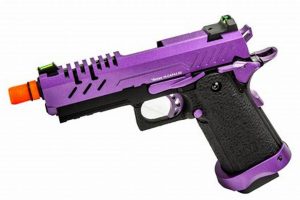
Tip 5: Consider Coloration and Markings: Certain locales require airsoft guns to have blaze orange tips or other identifying markings to distinguish them from real firearms. Complying with these requirements helps prevent confusion and potential misidentification by law enforcement.
Tip 6: Seek Legal Counsel if Uncertain: If ambiguity exists regarding the interpretation of local airsoft gun regulations, consulting with a qualified attorney is advisable. Legal professionals can provide expert guidance on compliance and mitigate potential legal risks.
Tip 7: Stay Informed of Changes: Airsoft gun regulations can change over time. Regularly review local laws and ordinances to ensure ongoing compliance.
Adherence to these guidelines fosters responsible airsoft gun ownership and minimizes the risk of legal issues. Knowledge of local regulations is paramount.
The subsequent sections will explore potential consequences of non-compliance and best practices for safe airsoft gun handling.
1. Local Ordinances

Local ordinances directly impact whether a license is required to possess or transport an airsoft gun within a specific municipality or county. These ordinances, enacted at the local level, often address issues specific to the community, potentially imposing restrictions more stringent than state or federal laws. For example, a city ordinance might mandate that all airsoft guns be registered with the local police department, effectively acting as a licensing requirement, even if the state does not require one. The absence of a state-level licensing requirement does not preclude a local government from instituting such a measure.
The practical significance of understanding local ordinances stems from the potential legal ramifications of non-compliance. Consider a scenario where a resident legally purchases an airsoft gun in a state without licensing laws. However, unbeknownst to them, their city has an ordinance requiring a permit for possession. Transporting the airsoft gun within the city limits without this permit would constitute a violation of the local ordinance, subjecting them to fines, confiscation of the device, or even legal action. Furthermore, local ordinances frequently address where airsoft guns can be discharged, further highlighting their importance.
In summary, local ordinances are a critical component in determining whether a license is needed for airsoft guns. They can impose additional restrictions beyond state and federal laws. Thoroughly researching and understanding these ordinances is crucial for ensuring compliance and avoiding legal repercussions, regardless of broader state regulations. The responsibility lies with the individual to stay informed about the specific ordinances applicable to their location.
2. State Regulations

State regulations serve as a primary determinant in establishing the legal framework surrounding airsoft guns, often dictating whether a license is required for their possession or transportation. These regulations vary significantly across different states, establishing a complex patchwork of laws that require careful navigation.
- Definition as Firearms:
Some states classify airsoft guns as firearms under their legal definitions, thereby subjecting them to the same licensing requirements as traditional firearms. This classification means that individuals must obtain a permit or license to possess or carry an airsoft gun, mirroring the process for real firearms. In jurisdictions like these, the state’s firearm laws directly govern airsoft gun ownership.
- Age Restrictions and Parental Consent:
Many states impose age restrictions on the purchase and possession of airsoft guns. These restrictions may require parental consent for minors to own or use airsoft guns, or they may prohibit minors from possessing them altogether. While not a direct licensing requirement, these age-related regulations often indirectly affect the need for adult supervision or guardianship, influencing how airsoft guns can be legally used by younger individuals.
- Transportation and Storage Laws:
States frequently enact laws regarding the transportation and storage of airsoft guns. These laws often mandate that airsoft guns be stored unloaded and in a locked container during transportation. Some states may also require airsoft guns to be stored in a secure location when not in use to prevent unauthorized access. Failure to comply with these laws can result in fines or legal penalties, highlighting the importance of understanding and adhering to state-specific requirements.
- Appearance and Markings:
State regulations frequently address the appearance of airsoft guns, particularly regarding markings to distinguish them from real firearms. Many states require airsoft guns to have a blaze orange tip or other identifying markings to prevent confusion and reduce the risk of misidentification by law enforcement. Compliance with these appearance-related regulations is essential for legal airsoft gun ownership and use, further emphasizing the impact of state regulations.
The intricacies of state regulations surrounding airsoft guns demonstrate the importance of thorough research and awareness. The varying classifications, restrictions, and requirements across different states underscore the need for airsoft enthusiasts to diligently investigate the specific laws in their jurisdiction to ensure compliance. The absence of a federal licensing requirement does not negate the need to adhere to state-level regulations, which significantly impact the legal landscape surrounding airsoft guns.
3. Federal Laws

Federal laws exert a limited, though not negligible, influence on the question of whether a license is needed to possess or transport an airsoft gun. Unlike firearms, airsoft guns are not typically regulated at the federal level in terms of licensing or registration. However, federal laws can affect the importation, interstate sale, and markings of these devices, indirectly impacting their legal status.
One key area where federal law intersects with airsoft gun regulations is in the realm of importation. The U.S. Customs and Border Protection (CBP) enforces federal regulations concerning the importation of items resembling firearms. These regulations often require that imported airsoft guns have specific markings, such as an orange tip, to distinguish them from real firearms. While this is not a licensing requirement, it is a federal mandate impacting the legal import and sale of airsoft guns within the United States. Failure to comply with these federal marking requirements can result in the seizure of the airsoft guns at the port of entry.
Furthermore, federal laws concerning interstate commerce can indirectly impact the distribution and sale of airsoft guns. While there are no federal licensing requirements for retailers selling airsoft guns, they must still comply with federal laws pertaining to commerce and trade. Any violation of these federal laws could potentially impact their ability to sell airsoft guns. Although the federal government does not directly mandate a license to carry an airsoft gun, it is crucial to understand that adherence to state and local regulations is paramount. These state and local rules often dictate whether a license or permit is necessary, superseding the relative lack of federal oversight in this area. Therefore, even in the absence of direct federal mandates, compliance with state and local laws is essential for lawful ownership and transportation of airsoft guns.
4. Age Restrictions

Age restrictions constitute a critical factor in determining the legality of possessing and using airsoft guns, often influencing whether a license or permit is required. These restrictions, imposed at the state or local level, reflect concerns regarding the maturity and responsibility of younger individuals in handling devices that resemble firearms.
- Minimum Age Thresholds
Many jurisdictions establish minimum age thresholds for owning or operating airsoft guns. These thresholds, typically ranging from 16 to 18 years of age, often correlate with the legal age for owning certain types of firearms. In such cases, individuals below the specified age may be prohibited from possessing an airsoft gun, regardless of whether a general licensing requirement exists for adults. Consequently, these age restrictions function as a de facto licensing requirement for minors, as they are effectively barred from legal ownership without parental consent or supervision in many areas.
- Parental Consent Requirements
Even in jurisdictions without explicit licensing requirements, parental consent provisions frequently apply to minors seeking to possess airsoft guns. These provisions mandate that individuals below a certain age obtain written permission from a parent or guardian before acquiring or using an airsoft gun. While not a formal licensing process, this requirement ensures that responsible adults are aware of and approve of the minor’s involvement with airsoft activities. Parental consent requirements may also extend to participation in organized airsoft events or activities, further emphasizing the role of adult supervision in regulating minors’ access to airsoft guns.
- Supervised Use Regulations
Some locales stipulate that minors using airsoft guns must be under the direct supervision of a responsible adult. This requirement aims to mitigate potential risks associated with unsupervised use, such as accidental injuries or misuse of the device. Supervised use regulations effectively restrict the freedom of minors to engage in airsoft activities independently, serving as a form of indirect control. Compliance with these regulations may be enforced through local ordinances or by event organizers who require adult supervision for participants below a certain age.
- Age-Based Restrictions on Types of Airsoft Guns
Certain regulations differentiate between types of airsoft guns based on age. For example, higher-powered airsoft guns may be restricted to individuals above a certain age, while lower-powered models may be accessible to younger users with parental consent. This tiered approach allows for a more nuanced control over airsoft gun ownership, acknowledging the varying levels of risk associated with different types of devices. Age-based restrictions on the types of airsoft guns that can be possessed further demonstrate the significance of these provisions in the broader legal landscape.
In conclusion, age restrictions play a pivotal role in determining the circumstances under which an individual may legally possess or use an airsoft gun. While not always constituting a direct licensing requirement, these restrictions effectively limit access for minors and often necessitate parental involvement or supervision. Understanding and adhering to these age-related regulations is essential for ensuring compliance with applicable laws and promoting responsible airsoft gun ownership.
5. Transportation Rules
Transportation rules are a critical consideration when determining whether a license or permit is required for airsoft guns. The regulations governing how an airsoft gun is transported often influence whether a licensing requirement applies, particularly if transportation restrictions are coupled with other ownership regulations.
- Locked Container Requirements
Many jurisdictions mandate that airsoft guns be transported in locked containers, such as cases or bags, to prevent easy access. This requirement can indirectly function as a factor in licensing decisions. For instance, if a jurisdiction requires a license to “carry” a weapon and defines “carry” as having a readily accessible weapon, transporting an airsoft gun in a locked container might exempt the individual from needing a license, as the weapon is not readily accessible. Conversely, failure to transport the airsoft gun in a locked container could trigger the licensing requirement, as it would then be considered readily accessible.
- Unloaded Condition Mandates
Transportation regulations often stipulate that airsoft guns must be transported unloaded, meaning without any BBs or projectiles in the magazine or firing chamber. This rule aims to reduce the risk of accidental discharge during transportation. The existence of an unloaded condition mandate can influence licensing requirements by affecting the perception of risk associated with transporting an airsoft gun. If a jurisdiction deems that an unloaded airsoft gun poses a reduced risk, it might not require a license for transportation, provided the gun remains unloaded. However, transporting a loaded airsoft gun may trigger a licensing requirement due to the increased perceived risk.
- Separation from Ammunition
Some transportation rules require that airsoft guns be transported separately from their ammunition, typically BBs or other projectiles. This separation aims to prevent the immediate reloading and use of the airsoft gun during transportation, further mitigating the risk of misuse. This requirement can be a factor in determining whether a license is necessary, as it affects the perceived imminence of potential danger. A jurisdiction might not require a license if the airsoft gun and its ammunition are transported separately, as the gun cannot be immediately used. Conversely, transporting the airsoft gun with readily available ammunition could trigger a licensing requirement due to the increased potential for immediate use.
- Open Carry Prohibitions
Certain jurisdictions prohibit the open carry of airsoft guns, meaning they cannot be visibly displayed during transportation. This restriction aims to prevent public alarm and confusion, as airsoft guns can resemble real firearms. The prohibition of open carry can influence licensing requirements by increasing the emphasis on concealed transport. If open carry is prohibited, and a license is required to carry a concealed weapon, transporting an airsoft gun concealed might trigger the need for a license. Conversely, if open carry is permitted (though likely with restrictions), a license might not be required for transportation, provided the airsoft gun is carried openly and in compliance with other applicable regulations.
In summary, transportation rules are intricately linked to the question of whether a license is needed for airsoft guns. The specific regulations regarding locked containers, unloaded conditions, ammunition separation, and open carry prohibitions all influence the perceived risk associated with transporting airsoft guns. Jurisdictions often tailor their licensing requirements based on these perceived risks, making transportation rules a key factor in determining whether a license is necessary for legal airsoft gun ownership and use.
6. Storage Requirements
Storage requirements for airsoft guns often directly influence whether a license or permit is deemed necessary. These regulations, designed to prevent unauthorized access and misuse, frequently interact with licensing laws, creating a complex framework for legal airsoft gun ownership.
- Secure Storage Mandates and Accessibility
Jurisdictions that mandate secure storage, such as locked gun safes or trigger locks, may have less stringent licensing requirements. The rationale is that secure storage reduces the risk of unauthorized use, mitigating the need for extensive licensing. Conversely, failure to adhere to secure storage requirements could trigger the necessity for a license, particularly if the jurisdiction views unsecured airsoft guns as a public safety risk.
- Impact of Storage Location on Licensing
The location where an airsoft gun is stored can impact licensing considerations. Storing an airsoft gun in a private residence might be subject to different regulations than storing it in a vehicle or public space. Jurisdictions may be more lenient with licensing requirements for airsoft guns stored securely within a private residence, assuming a lower risk of unauthorized access. However, storing an airsoft gun in a vehicle or public space could trigger stricter licensing requirements due to the increased potential for theft or misuse.
- Relationship to Child Access Prevention Laws
Child access prevention (CAP) laws, which aim to prevent children from accessing firearms and similar devices, can influence licensing requirements for airsoft guns. Jurisdictions with strong CAP laws may require additional safety measures, such as licensing or permits, to ensure that airsoft guns are stored securely and inaccessible to children. Failure to comply with CAP laws could result in legal penalties and potentially trigger licensing requirements that would not otherwise apply.
- Disclosures of Storage Practices
In some areas, individuals may be required to disclose their storage practices for airsoft guns as part of a licensing application. This disclosure allows authorities to assess the individual’s commitment to safe storage and responsible ownership. The information provided regarding storage practices can then be used to determine whether the individual meets the criteria for obtaining a license or permit. Dishonest or inadequate disclosures could result in denial of the license or revocation of existing permits.
The interplay between storage requirements and licensing underscores the emphasis on responsible airsoft gun ownership. Jurisdictions often tailor their licensing laws to account for storage practices, recognizing that secure and responsible storage is a key factor in mitigating potential risks. Compliance with storage regulations can, therefore, directly impact the need for a license, highlighting the importance of understanding and adhering to these rules.
Frequently Asked Questions
The following addresses common inquiries regarding the legal requirements for airsoft gun possession and transportation. Regulations vary; consult local authorities for precise details.
Question 1: Is a license universally required to possess an airsoft gun?
No. Licensing requirements are jurisdiction-specific. Some regions treat airsoft guns similarly to firearms, necessitating permits, while others have minimal regulations.
Question 2: Does federal law mandate licensing for airsoft guns?
Generally, no. Federal law primarily addresses importation and interstate commerce, not individual possession or transportation. State and local laws are the primary governing bodies.
Question 3: Do age restrictions affect the need for a license?
Age restrictions can indirectly influence licensing. Minors may be prohibited from possessing airsoft guns without parental consent or supervision, effectively acting as a restricted form of licensing.
Question 4: How do transportation regulations impact licensing requirements?
Transportation regulations, such as those mandating locked containers or unloaded conditions, affect the perceived risk. Compliance with these regulations might obviate the need for a license in certain jurisdictions.
Question 5: Are there penalties for non-compliance with airsoft gun regulations?
Yes. Penalties for violating airsoft gun regulations vary, ranging from fines and confiscation of the device to potential criminal charges, depending on the severity of the infraction and local laws.
Question 6: Where can accurate legal information regarding local airsoft gun regulations be obtained?
Consult local law enforcement agencies, municipal legal departments, or qualified attorneys specializing in firearms and weapons laws. These sources provide the most accurate and up-to-date information.
Thorough research of local laws is essential for responsible airsoft gun ownership. Ignorance of applicable regulations is not a valid defense against legal repercussions.
The next section will discuss best practices for the safe handling and storage of airsoft guns.
This exploration has illuminated the intricacies surrounding airsoft gun regulations, with a focus on “do you need a license to carry an airsoft gun”. The answer, as detailed, is not a universal yes or no. It hinges on a complex interplay of local ordinances, state regulations, and, to a lesser extent, federal laws. Age restrictions, transportation rules, and storage requirements further complicate the legal landscape. The responsibility for understanding and adhering to these regulations rests squarely on the individual.
Given the potentially severe consequences of non-compliance, including fines, confiscation, and even criminal charges, thorough research and proactive engagement with local authorities are not merely advisable but essential. Airsoft enthusiasts must prioritize legal compliance to ensure responsible participation in the sport and to avoid unintended legal repercussions. The future of airsoft hinges on the community’s commitment to safe and lawful practices, fostering a culture of responsibility and respect for the law.