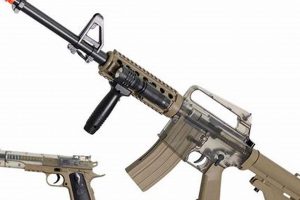
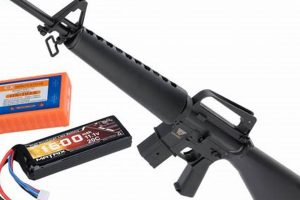
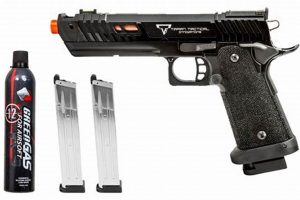
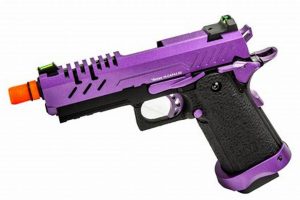
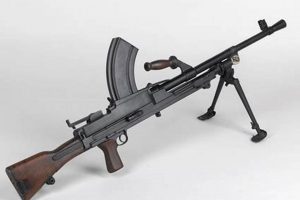
The viability of utilizing replica firearms designed for recreational skirmishes as a means of personal protection is a complex issue. These devices, typically firing plastic projectiles, are primarily intended for sporting activities and training simulations. Their effectiveness in deterring or incapacitating a threat is substantially lower compared to dedicated self-defense tools.
The primary purpose of these recreational devices differs significantly from that of tools designed for self-preservation. Historically, personal defense strategies have centered on methods offering a high probability of stopping an attacker, minimizing risk to the defender. These have included martial arts, pepper spray, and, in some cases, legally owned firearms. The use of objects not specifically designed for defense often presents significant limitations in practical application and legal considerations.
The following sections will delve into the specific reasons why relying on these replica firearms for personal safety presents significant risks, exploring potential legal ramifications, and examining more suitable alternative methods for self-preservation.
Considerations Regarding Airsoft Devices and Self-Defense
This section outlines critical factors to consider when evaluating the suitability of these replica firearms for personal protection. The information provided is intended to offer a balanced perspective on their limitations and potential risks associated with such use.
Tip 1: Assess the Risk of Escalation: Displaying a replica firearm, regardless of its functionality, may provoke a more aggressive response from an assailant. An attacker may perceive the device as a genuine firearm, leading to the use of lethal force against the defender.
Tip 2: Understand Legal Ramifications: Brandishing or using these devices in a manner that causes alarm or fear may result in criminal charges, even if the intent is self-defense. Laws vary by jurisdiction, and possessing or displaying replica firearms may be restricted or prohibited.
Tip 3: Recognize Limited Stopping Power: The projectiles fired by these devices typically lack the kinetic energy required to effectively incapacitate an attacker. They are designed for recreational purposes and generally do not inflict significant physical harm.
Tip 4: Evaluate Training Requirements: Proficiency in utilizing these devices for self-defense requires specialized training. Simply owning the device does not guarantee effectiveness in a high-stress, real-world situation.
Tip 5: Explore Alternative Self-Defense Options: Consider non-lethal alternatives such as pepper spray, personal alarms, or self-defense courses. These options may provide a more effective and legally sound means of protecting oneself.
Tip 6: Prioritize Situational Awareness: Maintaining awareness of surroundings and identifying potential threats before they escalate is a critical component of personal safety. Avoidance and de-escalation techniques are often the most effective forms of self-defense.
In summary, relying on these recreational devices for self-defense carries significant risks. A thorough assessment of the potential consequences, legal restrictions, and the availability of more effective alternatives is essential.
The subsequent section will provide further insights into the legal and ethical considerations surrounding the use of these replica firearms in self-defense scenarios.
1. Incapacitation Ineffectiveness

The core limitation undermining the proposition lies in their incapacitation ineffectiveness. These devices, designed for recreational activities, lack the kinetic energy necessary to reliably halt an aggressor. Projectiles, typically plastic BBs, inflict minimal pain and are unlikely to disrupt an attacker’s actions, particularly if the individual is under the influence of drugs, alcohol, or in a state of heightened adrenaline. Their design parameters prioritize safety in recreational settings over the necessity of inflicting substantial physical trauma.
The importance of incapacitation in self-defense scenarios cannot be overstated. An effective self-defense tool must reliably stop an attacker to prevent further harm. The absence of this capability with these replica firearms presents a critical deficiency. A real-world example illustrates this point: imagine an individual brandishing a replica firearm against an assailant intent on causing serious harm. The assailant, unimpeded by the low-impact projectiles, could continue the attack, potentially escalating the situation and causing the defender greater harm than if no weapon had been used at all. Thus the ineffectiveness creates a situation where the user has a false sense of security, and emboldens the attacker.
In conclusion, the incapacitation ineffectiveness of these devices renders them unsuitable for self-defense. This central failing significantly compromises their utility and raises substantial safety concerns. Understanding this limitation is paramount for making informed decisions about personal safety strategies, highlighting the need to explore more reliable and effective alternatives for self-preservation.
2. Legal Repercussions
The potential for significant legal repercussions directly impacts the feasibility. Brandishing or using these devices in a manner perceived as threatening or aggressive can result in criminal charges, irrespective of intent. Laws governing replica firearms vary widely by jurisdiction. Some regions may restrict or prohibit their possession, sale, or open carry. Mistaking a replica for a genuine firearm can lead to severe consequences, including charges of aggravated assault, brandishing a weapon, or even attempted homicide, depending on the specific circumstances and the perceived threat level. Furthermore, civil lawsuits may arise if the use of these devices results in injury or property damage.
The importance of understanding these legal ramifications cannot be overstated. Ignorance of the law is not a valid defense. A real-world example: an individual uses an these devices to deter a perceived threat, but the aggressor, believing it to be a real firearm, calls the police. The individual could face charges for brandishing a weapon, even if their intent was solely self-defense. Another possibility is in the event that the airsoft gun causes an injury. Regardless of what the reason for the attack, the other person can still press charges for the airsoft gun. The practical significance of this understanding lies in making informed decisions about personal safety strategies. Prioritizing legal compliance and avoiding actions that could be misinterpreted as aggressive or threatening are crucial. It helps to know your local gun laws when considering airsoft as a form of self defense.
In summary, the legal repercussions associated with the use of airsoft devices for self-defense present a significant barrier. These legal risks, coupled with the limited effectiveness of the devices, underscore the need for caution and careful consideration of alternative self-defense methods. Thoroughly researching and adhering to local laws regarding replica firearms is essential for avoiding unintended legal consequences and ensuring responsible behavior.
3. Escalation Risk
The potential for escalation represents a critical concern when evaluating the suitability. Presenting what appears to be a firearm, even if it is a non-lethal replica, can inadvertently provoke a more violent confrontation than might otherwise have occurred. This heightened risk stems from the perception and reaction of both the intended target and potential bystanders.
- Misidentification and Reaction
A primary risk is the misidentification of the device as a real firearm. Individuals confronted with what they believe to be a lethal threat may respond with lethal force themselves, either in self-defense or in defense of others. This scenario transforms a potentially non-lethal encounter into a potentially deadly one. For example, a store clerk faced with someone brandishing what appears to be a handgun might immediately draw their own weapon or activate an alarm, alerting others to the perceived threat.
- Law Enforcement Response
The presence of what appears to be a firearm can trigger a rapid and forceful response from law enforcement. Police officers arriving on the scene may not be able to immediately distinguish between a replica and a real firearm, leading them to use potentially lethal force to neutralize the perceived threat. This risk is particularly acute in situations involving active shooters or other high-stress scenarios. A situation of this nature can be viewed as a “suicide by cop” situation.
- Civilian Intervention
Bystanders witnessing the display of what appears to be a firearm may attempt to intervene, potentially escalating the situation. Their intervention could involve physical confrontation, attempts to disarm the individual, or calling out a warning that attracts further attention and risk. This increased commotion can further blur the lines between perceived threat and actual intent, increasing the likelihood of misinterpretation and violent response.
- Psychological Impact on the Aggressor
While the intention might be deterrence, displaying what appears to be a weapon could provoke an aggressor into a more determined and aggressive stance. They may feel compelled to prove their dominance or call the bluff, leading to a physical confrontation that would have been avoided otherwise. This psychological effect can negate any potential deterrent value and instead exacerbate the danger.
These considerations underscore the complexities of using these devices for personal protection. The escalation risk stems from the device’s potential to be misidentified as a genuine firearm, triggering a cascade of reactions from the intended target, law enforcement, and bystanders. These scenarios highlight the need for caution and careful consideration of alternative self-defense methods that carry a lower risk of escalating the situation to a potentially deadly confrontation.
4. Training Deficiency
The inherent limitations of relying on replica firearms for self-defense are significantly compounded by a deficiency in appropriate training. Proficiency in the safe and effective use of any self-defense tool requires specialized knowledge and practice. This includes understanding its operational mechanics, accuracy, limitations, and the legal ramifications associated with its use. The absence of adequate training can transform a potentially useful tool into a liability, increasing the risk to the user and others. Simply possessing an device provides no guarantee of competence in a high-stress, real-world self-defense scenario. Training Deficiency is a critical reason for why a person will question if they can defend themselves. This deficiency could be a reason a court determines the user was not acting in self defense.
The practical significance of proper training becomes apparent when considering the dynamic nature of self-defense situations. Such encounters are often characterized by high levels of stress, adrenaline, and uncertainty. Under these conditions, untrained individuals may experience cognitive impairment, muscle tremors, and difficulty making sound judgments. Effective training mitigates these effects by instilling muscle memory, promoting situational awareness, and developing decision-making skills under pressure. Consider a scenario where an untrained individual attempts to use an replica firearm against an assailant. The individual may fumble with the device, misjudge the distance, or fail to react appropriately to the assailant’s movements, thereby losing the opportunity to deter the attack. Conversely, a properly trained individual can quickly and accurately assess the situation, deploy the device effectively, and potentially de-escalate the encounter. It can also be a reason a person may use unnecessary force, because they do not how to effectively use the tool.
In summary, the Training Deficiency associated with the use of airsoft devices for self-defense presents a substantial obstacle. Specialized training is essential for developing the skills, knowledge, and situational awareness necessary for effective self-defense. Without such training, the use of these devices can increase the risk to the user and others. Prioritizing proper training and exploring alternative self-defense methods that align with an individual’s skill level and risk tolerance is crucial for making informed decisions about personal safety.
5. Stopping Power Limitations
The fundamental inadequacy of utilizing these recreational devices for self-defense stems directly from their inherent stopping power limitations. Designed primarily for recreational skirmishes and training simulations, the projectiles fired from these devices lack the kinetic energy required to reliably incapacitate an assailant. The low-velocity projectiles, typically plastic or biodegradable BBs, are intended to cause minimal discomfort, not to inflict debilitating injury. This limitation renders them ineffective in halting an aggressive individual, particularly those under the influence of drugs or alcohol or experiencing a surge of adrenaline. The primary objective of self-defense is to immediately neutralize a threat and prevent further harm; the absence of adequate stopping power undermines this critical function.
The direct consequence of these limitations is a diminished capacity to deter or disable an attacker. For example, consider a scenario where an individual attempts to use this type of device against a determined assailant wielding a knife. The impact of the BBs is unlikely to deter the assailant, who may continue the attack undeterred, and possibly enraged. This ineffective response can escalate the situation and place the defender in greater peril. Furthermore, the lack of stopping power may create a false sense of security, leading individuals to underestimate the actual threat they face and potentially making poor tactical decisions. It can give the user a false sense of security, thinking the other person will stop.
In conclusion, the stopping power limitations directly contradict the essential requirements of an effective self-defense tool. These devices are simply not designed to deliver the kinetic energy necessary to reliably incapacitate an attacker. This fundamental flaw raises significant concerns about their suitability for personal protection, underscoring the need to explore alternative methods of self-defense that offer a more reliable means of neutralizing a threat. Understanding the cause and effect relationship between this limitation and the viability of using these devices highlights the critical importance of choosing appropriate tools and strategies for personal safety. The user should consider alternatives, rather than a tool that cannot guarantee it will stop the enemy from doing what they intended.
6. Alternative Options Available
The question of whether airsoft guns can be used for self-defense is directly influenced by the availability and efficacy of alternative self-defense options. The limited stopping power and potential legal ramifications associated with airsoft devices render them a less desirable choice when compared to tools and strategies specifically designed for personal protection. The existence of more effective and legally sound alternatives mitigates the perceived need to rely on airsoft guns for self-defense. For instance, consider an individual facing a potential threat. Instead of resorting to an airsoft device, they might opt for pepper spray, a personal alarm, or a self-defense course, each offering a more reliable and legally defensible means of protection. The importance of readily available alternatives underlines the impracticality of relying on an airsoft gun in a dangerous situation.
The presence of “Alternative Options Available” is a key component when assessing the viability of utilizing an airsoft gun for self-defense. These alternatives often involve less legal risk and offer a greater probability of successfully deterring an assailant without causing long-term harm. For example, in jurisdictions where carrying a concealed firearm is permitted, a legally owned and properly licensed handgun represents a far more effective self-defense tool than a replica airsoft gun. Similarly, proficiency in martial arts provides individuals with the skills to defend themselves physically without resorting to any weapon at all. The legal and practical advantages of these alternatives highlight the deficiencies and risks associated with relying on airsoft guns for personal safety.
In summary, the availability of credible “Alternative Options Available” substantially diminishes the argument for using airsoft devices for self-defense. These alternatives offer a higher degree of effectiveness, carry fewer legal risks, and align more closely with the principles of responsible self-protection. The focus should remain on tools and strategies specifically designed and legally sanctioned for self-defense, rather than attempting to adapt recreational devices to a purpose for which they were not intended. Choosing the best possible tool to provide self-defense is paramount to your safety.
Frequently Asked Questions
This section addresses common inquiries surrounding the use of airsoft guns for self-defense, offering clear and objective answers based on legal considerations, practical limitations, and available alternatives.
Question 1: Does brandishing an airsoft gun constitute a criminal offense?
The act of displaying an airsoft gun in a threatening manner may lead to criminal charges. Laws vary by jurisdiction, and the perception of the device as a real firearm can result in charges such as aggravated assault, brandishing a weapon, or disturbing the peace. It depends on the current state of the person and how they are brandishing the device.
Question 2: Can an airsoft gun effectively incapacitate an attacker?
Airsoft guns lack the kinetic energy necessary to reliably incapacitate an assailant. The low-velocity projectiles are designed for recreational purposes and typically do not inflict significant physical harm. The lack of stopping power limits the effectiveness in a real-world self-defense scenario.
Question 3: Does owning an airsoft gun guarantee self-defense capabilities?
Simply possessing an airsoft gun does not equate to self-defense proficiency. Effective use requires specialized training, including understanding the device’s limitations, practicing tactical maneuvers, and developing situational awareness. Training is key to the effective use of anything. This also determines how the court views the situation.
Question 4: What are the legal consequences of mistakenly shooting someone with an airsoft gun?
Accidentally injuring someone with an airsoft gun can result in both criminal and civil liability. Charges may include assault, battery, or negligence, depending on the circumstances and the extent of the injury. Civil lawsuits may also be filed to recover medical expenses and other damages.
Question 5: Are there more effective alternatives to airsoft guns for self-defense?
Numerous alternatives offer a more reliable and legally sound means of self-protection. These options include pepper spray, personal alarms, self-defense courses, and, in jurisdictions where permitted, legally owned firearms. Knowing all your options will save you in the long run.
Question 6: Does using an airsoft gun for self-defense carry the risk of escalation?
Displaying an airsoft gun can provoke a more aggressive response from an assailant or bystanders. The device’s resemblance to a real firearm can lead to misidentification and a potentially lethal reaction, increasing the risk of escalation. Airsoft as defense should only be in your last resort.
In summary, utilizing airsoft guns for self-defense presents significant legal, practical, and ethical challenges. Exploring alternative methods of personal protection is crucial for ensuring both safety and legal compliance.
The following section will provide concluding thoughts and reiterate the importance of responsible decision-making in self-defense scenarios.
Conclusion
This exploration into whether airsoft guns can be used for self defense has illuminated critical limitations and potential risks. Their inadequate stopping power, coupled with legal ambiguities and the potential for escalating confrontations, renders them a questionable choice for personal protection. The availability of more effective and legally sound alternatives further diminishes their viability in self-defense scenarios. Ultimately, relying on these devices for personal safety introduces a level of uncertainty and risk that outweighs any perceived benefit.
Therefore, responsible citizens must prioritize informed decision-making when considering personal safety strategies. A comprehensive understanding of the law, the limitations of various self-defense tools, and the potential consequences of their use is essential. The focus should remain on methods that offer a reasonable expectation of safety while adhering to legal and ethical principles, ensuring that self-defense efforts do not inadvertently create greater harm.