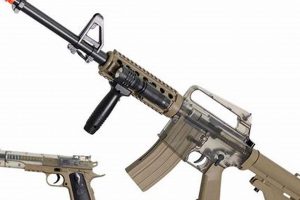
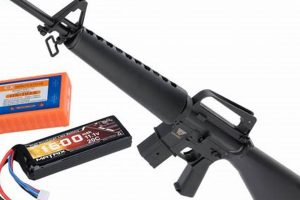
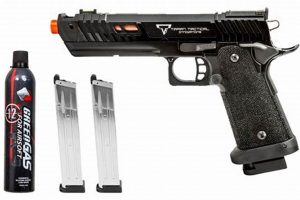
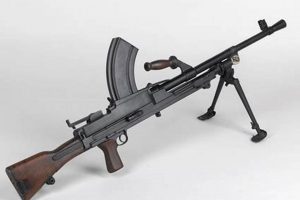
The inability of an airsoft gun to propel projectiles is a common issue encountered by users of these devices. This malfunction prevents the intended function of the equipment, rendering it unusable for its designed purpose of simulated combat or target practice.
Addressing this problem is crucial for maintaining the operability of airsoft equipment, ensuring user engagement and preventing potential frustration. Understanding the root causes of such malfunctions allows for timely repairs and preventative maintenance, thereby prolonging the lifespan of the device. Historically, troubleshooting these issues has been a necessity for airsoft enthusiasts, leading to a greater understanding of the mechanics involved.
The following sections will explore potential causes for this malfunction, diagnostic procedures, and common repair strategies, enabling users to identify and resolve issues effectively and safely.
Troubleshooting Projectile Propulsion Failure
This section provides guidance on diagnosing and addressing issues where an airsoft gun fails to discharge projectiles. Each tip offers a potential cause and corresponding solution to restore functionality.
Tip 1: Battery Charge Verification: A depleted battery is a common cause. Ensure the battery is fully charged using a compatible charger, verifying the voltage and amperage output match the battery’s specifications. Test with a known-good, fully charged battery to rule out battery failure.
Tip 2: Magazine Engagement Confirmation: An improperly seated magazine can disrupt the feeding mechanism. Fully seat the magazine, ensuring it clicks into place. Inspect the magazine catch for damage or wear that might prevent proper engagement.
Tip 3: BB Obstruction Inspection: Foreign objects or deformed BBs can block the barrel. Disassemble the gun following the manufacturer’s instructions and carefully inspect the barrel for obstructions. Use a cleaning rod to dislodge any lodged BBs.
Tip 4: Hop-Up Unit Adjustment: An incorrectly adjusted hop-up unit can impede BB travel. Adjust the hop-up incrementally, testing the gun’s performance after each adjustment. Refer to the owner’s manual for proper hop-up settings.
Tip 5: Motor Connection Integrity: Loose or corroded motor connections can prevent the motor from cycling. Inspect the motor connectors and wiring for damage or corrosion. Clean the connections with a contact cleaner and ensure they are securely attached.
Tip 6: Fuse Examination: A blown fuse interrupts the electrical circuit, preventing the gun from firing. Locate the fuse (typically within the battery compartment) and inspect it for continuity. Replace the fuse with one of the correct amperage rating.
Tip 7: Gearbox Inspection (Advanced): Internal gearbox issues, such as broken gears or a dislodged piston, require disassembly and inspection. This is generally recommended for experienced users or technicians. Look for signs of wear or damage on internal components.
These troubleshooting steps will help identify and resolve many common reasons for projectile propulsion failure. Remember to always prioritize safety and consult the owner’s manual before disassembling the airsoft gun.
Successfully addressing these issues allows for the continued use of the equipment and enhances the overall airsoft experience.
1. Battery charge level

The charge level of the battery is a primary determinant in the functional status of an electric airsoft gun. Insufficient charge directly impacts the ability of the electric motor to cycle, which is necessary to compress the piston and initiate the firing sequence. Without sufficient power, the motor may fail to turn, turn weakly, or stall mid-cycle. This renders the airsoft gun incapable of propelling BBs, resulting in a “won’t shoot” condition. A depleted battery can also cause erratic behavior, such as the gun firing intermittently or exhibiting reduced range and velocity when it does fire.
The relationship is causal: a depleted battery inhibits the motor, preventing the necessary mechanical actions for firing. The practical significance lies in the ease of diagnosis and correction. Checking the battery charge and ensuring it’s adequately charged is often the first step in troubleshooting a non-firing electric airsoft gun. Furthermore, using a compatible and properly functioning charger, matched to the battery’s voltage and amperage specifications, is essential. Regular battery maintenance, including proper charging and storage, can prevent this problem.
In summary, the battery charge level directly dictates the operational status of electric airsoft guns. A depleted battery is a common reason for failure, preventing the motor from initiating the firing sequence. Maintaining adequate charge through proper charging practices is crucial to ensuring consistent and reliable performance. Over time, batteries degrade, and even with proper care, replacement may become necessary to resolve persistent power-related firing issues.
2. Magazine feed path

The magazine feed path is a critical component in the functionality of an airsoft gun; its integrity directly influences the gun’s ability to discharge projectiles. A compromised feed path disrupts the consistent supply of BBs from the magazine to the firing chamber, resulting in a cessation of firing or, intermittently, a failure to fire each time the trigger is engaged. The airsoft gun’s failure to shoot can be directly attributed to problems within this pathway, impeding the delivery of ammunition to the firing mechanism.
Obstructions such as deformed BBs, dirt, or debris can block the magazine feed path. This blockage physically prevents BBs from entering the hop-up chamber, rendering the gun inoperable. Similarly, magazine spring tension plays a vital role; if the spring weakens, it may fail to push BBs up the magazine and into the feed path with sufficient force, again interrupting the flow of ammunition. An improperly seated magazine will also lead to feed path issues. Furthermore, misalignment between the magazine well and the hop-up unit can create a physical barrier, hindering BBs from properly entering the system. Such issues require careful examination and potential disassembly to correct, often involving cleaning the magazine and ensuring correct spring tension.
In summary, the magazine feed path is intrinsically linked to an airsoft gun’s firing capability. Blockages, weakened spring tension, improperly seated magazines, or misalignment between the magazine well and the hop-up unit are potential causes which result in the inability of the gun to shoot. Regular cleaning and proper maintenance of the magazine, along with ensuring correct magazine seating and alignment, are crucial to preventing such issues and maintaining consistent operation.
3. BB chamber obstruction

The presence of an obstruction within the BB chamber of an airsoft gun directly correlates with the failure of the weapon to discharge projectiles. This mechanical impediment prevents the intended propulsion of BBs, resulting in an inoperable state. The following points elaborate on the specific facets of this issue.
- Deformed BBs:
The introduction of misshapen or damaged BBs into the loading mechanism can initiate a blockage. These projectiles may not properly seat within the chamber, creating a physical obstruction that prevents subsequent rounds from entering or being propelled. For example, BBs exposed to excessive heat can warp, leading to a jam within the firing mechanism. This stoppage directly impacts the airsoft gun’s ability to shoot.
- Foreign Debris:
The accumulation of dirt, dust, or other foreign matter within the BB chamber can similarly impede the proper function of the gun. These materials can prevent BBs from seating correctly, obstruct the piston’s movement, or damage internal components. Field conditions, improper storage, or insufficient cleaning are common contributors to this type of obstruction. Consequently, the affected airsoft gun will not fire.
- Lubricant Accumulation:
Excessive or improperly applied lubricant can attract debris, leading to a sticky residue that adheres to BBs or internal chamber surfaces. This accumulation can hinder the BB’s smooth passage through the chamber, causing it to jam or misfire. Using only recommended lubricants in moderate amounts, along with regular cleaning, is essential to mitigate this issue. Failure to do so can result in a non-firing condition.
- Hop-Up Unit Interference:
While the hop-up unit is not directly part of the BB chamber, an improperly adjusted or damaged hop-up unit can create interference. If the hop-up bucking protrudes excessively into the chamber, it can obstruct the BB’s path. Similarly, if the hop-up unit is misaligned, it may cause BBs to become lodged between the chamber and the hop-up unit. These misalignments require careful adjustment and maintenance to ensure unimpeded projectile passage; otherwise, the airsoft gun will be unable to shoot.
In summary, a BB chamber obstruction, irrespective of its origin be it deformed BBs, foreign debris, lubricant buildup, or hop-up unit interference invariably leads to the cessation of firing. Regular maintenance, proper BB selection, and careful adjustment of internal components are vital to prevent these obstructions and ensure the continued functionality of the airsoft gun.
4. Hop-up unit setting

The hop-up unit setting directly impacts the trajectory and range of an airsoft gun. An incorrectly adjusted or malfunctioning hop-up unit can significantly hinder or completely prevent the discharge of projectiles, leading to a wont shoot condition. The hop-up unit imparts backspin to the BB as it exits the barrel. This backspin creates a lift force, counteracting gravity and extending the projectile’s range. If the hop-up is set too low, the BB will fall short due to insufficient lift. Conversely, if set too high, the BB will curve upwards excessively, again reducing range and potentially causing the BB to become lodged in the unit itself, thus obstructing the barrel.
A practical example of this is found in scenarios where users attempt to maximize range without understanding the mechanics of hop-up. Over-adjusting the unit to achieve a flatter trajectory can cause the BB to become trapped against the hop-up bucking, effectively sealing the barrel and preventing any subsequent BBs from firing. Additionally, if the hop-up unit is not properly aligned with the barrel, it can create an uneven application of backspin, causing the BB to veer sharply to one side or to become lodged within the mechanism. This blockage will then lead to a malfunction where no projectile is expelled. Regular maintenance, including cleaning the hop-up bucking and ensuring proper alignment, is therefore critical for consistent performance.
In summary, the hop-up unit setting is a critical factor in the functionality of an airsoft gun. Incorrect adjustment can result in diminished range, erratic trajectory, or a complete obstruction of the firing mechanism. Understanding the relationship between hop-up setting and BB trajectory, coupled with diligent maintenance, is essential for optimizing performance and preventing a wont shoot scenario. The challenge lies in achieving the optimal setting for a given BB weight and environmental conditions, which often requires experimentation and fine-tuning.
5. Motor circuit integrity

Motor circuit integrity is paramount to the operational status of an electric airsoft gun. A compromised circuit, characterized by breaks, loose connections, corrosion, or component failure, directly impedes the delivery of electrical power to the motor, thereby preventing it from initiating the firing sequence. The absence of a complete and functional circuit invariably results in the airsoft gun’s inability to discharge projectiles. For instance, a frayed wire within the circuit may intermittently disrupt power flow, leading to inconsistent firing or a complete cessation of operation. Similarly, corroded contacts within the switch assembly introduce resistance, reducing the voltage reaching the motor and hindering its ability to cycle effectively. A blown fuse, serving as a safety mechanism, severs the circuit entirely, preventing any power from reaching the motor and rendering the gun non-functional.
The diagnostic process for motor circuit integrity involves systematic testing of various components, including the battery connector, wiring harness, trigger switch, motor terminals, and fuse (if present). A multimeter is employed to measure voltage and continuity across these points, identifying areas of discontinuity or excessive resistance. Real-world scenarios frequently involve tracing broken wires hidden within the gun’s frame or identifying corroded terminals requiring cleaning or replacement. Furthermore, the motor brushes themselves, responsible for transferring electrical current to the motor’s commutator, are subject to wear and may require periodic inspection and replacement to maintain optimal circuit integrity. Damage to the motor windings themselves will also result in a failure to function. The importance of maintaining circuit integrity extends beyond merely restoring function; it also mitigates the risk of electrical shorts, overheating, and potential damage to other components within the airsoft gun.
In summary, maintaining the integrity of the motor circuit is crucial for ensuring the reliable operation of an electric airsoft gun. A compromised circuit directly prevents the motor from functioning, leading to a “won’t shoot” condition. Careful inspection, diagnostic testing, and timely repair or replacement of damaged components are essential for preserving circuit integrity and preventing operational failures. The challenge lies in identifying subtle breaks or corrosion within the intricate wiring harness, requiring a meticulous and methodical approach to troubleshooting. Addressing circuit issues promptly not only restores functionality but also enhances the overall safety and longevity of the airsoft gun.
6. Gearbox internal function

The internal functionality of an airsoft gun’s gearbox is central to its operational capability. Malfunctions within the gearbox directly correlate with the inability of the airsoft gun to discharge projectiles. Assessing the gearbox’s internal components and their interactions is a critical step in diagnosing why an airsoft gun fails to shoot.
- Piston Assembly Failure
The piston assembly, responsible for compressing air to propel the BB, is subject to wear and tear. A cracked piston head, worn piston o-ring, or stripped piston teeth can compromise the air seal or prevent the piston from properly engaging with the gears. If the piston fails to create sufficient air pressure, the BB will not be propelled, leading to a “won’t shoot” scenario. For example, after extended use, the piston o-ring may degrade, causing air leakage and reducing the force behind the BB.
- Gear Stripping or Breakage
The gears within the gearbox transmit power from the motor to the piston. If these gears become stripped or break, the transfer of energy is disrupted. A stripped sector gear, for instance, will fail to pull back the piston, rendering the firing mechanism inoperable. Gear stripping can occur due to excessive stress, improper motor height adjustment, or the use of high-powered springs. The absence of gear engagement directly prevents the gun from shooting.
- Cut-Off Lever Malfunction
The cut-off lever regulates the firing mode (semi-automatic or fully automatic) by disengaging the trigger mechanism. A malfunctioning cut-off lever can prevent the gun from firing in semi-automatic mode or cause it to fire uncontrollably in full-automatic mode. In a semi-automatic configuration, if the cut-off lever fails to reset properly after each shot, the trigger mechanism will remain disengaged, resulting in a failure to fire. Damage or misalignment of the cut-off lever can directly contribute to this problem.
- Anti-Reversal Latch Failure
The anti-reversal latch prevents the gears from rotating backward after the piston is released. If this latch fails to engage properly, the gears may spin backward, causing a jam or preventing the piston from fully cycling. A worn or broken anti-reversal latch can disrupt the timing of the gearbox, leading to inconsistent firing or a complete failure to shoot. For instance, if the latch spring weakens, the latch may not engage quickly enough to stop the gears, resulting in a gear jam and a non-functional airsoft gun.
These facets of gearbox internal function underscore the critical role the gearbox plays in an airsoft gun’s ability to shoot. Mechanical failures within the gearbox, such as piston assembly issues, gear stripping, cut-off lever malfunctions, or anti-reversal latch failure, directly result in the gun’s inability to propel projectiles. Regular maintenance, proper component selection, and timely repairs are essential for ensuring the continued functionality of the gearbox and, consequently, the operational status of the airsoft gun. Recognizing these potential problems is vital in diagnosing and resolving why an airsoft gun might not be firing.
7. Air seal integrity

Air seal integrity within an airsoft gun is paramount to its functionality. A compromised air seal directly diminishes the weapon’s ability to generate the necessary pressure to propel a BB, resulting in a diminished range, reduced velocity, or a complete inability to fire. The following points explore how specific aspects of air seal integrity directly impact the “my airsoft gun won’t shoot” scenario.
- Piston O-Ring Condition
The piston O-ring is responsible for creating a tight seal between the piston head and the cylinder. If the O-ring is worn, cracked, or improperly lubricated, air will leak past the piston during compression. This leakage reduces the amount of pressure available to propel the BB, leading to a loss of power and, in severe cases, preventing the gun from firing altogether. For instance, a dried-out O-ring on a piston within a V2 gearbox will allow air to escape, rendering the system unable to generate sufficient force for projection.
- Cylinder Head Seal
The cylinder head, where the air is compressed, must form a secure seal with the cylinder. Cracks, deformities, or loose connections at the cylinder head can result in air leakage. This leakage diminishes the air pressure necessary for proper BB propulsion. A cracked cylinder head, even with a functional piston O-ring, diminishes projection velocity.
- Nozzle Seal
The nozzle directs the compressed air from the cylinder to the hop-up chamber, where it propels the BB. The nozzle seal, typically achieved through a rubber O-ring or similar mechanism, ensures minimal air loss during this transfer. If the nozzle seal is damaged or misaligned, air will escape before reaching the BB, resulting in reduced power or a complete failure to fire. The integrity of the nozzle seal is vital to properly contain all the air for projectile launch.
- Hop-Up Chamber to Nozzle Seal
The interface between the nozzle and the hop-up chamber is another critical area for air seal integrity. A poor seal at this interface allows air to leak out around the BB before it is propelled down the barrel. Misalignment, worn buckings, or improper fit between the nozzle and hop-up unit can cause this leakage. Insufficient contact with the hop-up unit creates a gap where the gas can escape before properly launching the bb, thus a seal there is critical.
Each of these factors contributes significantly to the “my airsoft gun won’t shoot” situation. Air seal integrity is a cumulative effect. The failure of any single component in the sealing system can compromise the entire system and dramatically reduce performance. Regular maintenance, including proper lubrication, inspection for wear and tear, and timely replacement of damaged components, is critical to preserving air seal integrity and ensuring consistent and reliable performance from any airsoft gun. Maintaining an air seal means that you will be able to continue to use your device.
Frequently Asked Questions
This section addresses common inquiries regarding the malfunction of airsoft guns that fail to discharge projectiles. The information provided aims to clarify the underlying causes and potential solutions for this issue.
Question 1: Is it common for airsoft guns to cease firing unexpectedly?
Yes, sudden cessation of firing is a relatively frequent occurrence with airsoft guns. The mechanical nature of these devices, coupled with the varying quality of components, makes them susceptible to malfunctions. Contributing factors include battery issues, magazine problems, and internal mechanical failures.
Question 2: What is the most frequent cause of an airsoft gun’s failure to shoot?
The most common cause is a depleted or faulty battery in electric airsoft guns. Without sufficient power, the motor cannot cycle, preventing the firing sequence from initiating. Ensuring a fully charged and functional battery is often the first step in troubleshooting this issue.
Question 3: Can the type of BB used affect whether an airsoft gun will fire?
Yes, the quality and type of BBs can significantly impact performance. Deformed, low-quality, or improperly sized BBs can cause jams within the magazine or barrel, preventing the gun from firing. Using high-quality BBs of the correct size is crucial.
Question 4: What internal components are most prone to failure, leading to a “won’t shoot” situation?
Several internal components are susceptible to failure, including the piston assembly (particularly the o-ring), gears within the gearbox, and the motor. Wear and tear on these components can disrupt the firing mechanism and prevent the gun from operating correctly.
Question 5: Is it possible to repair a non-firing airsoft gun without specialized tools?
Some basic troubleshooting steps, such as checking the battery, magazine, and hop-up unit, can be performed without specialized tools. However, more complex repairs, involving disassembly of the gearbox or replacement of internal components, typically require specialized tools and expertise.
Question 6: How can the likelihood of experiencing a “won’t shoot” scenario be minimized?
Preventative maintenance is key. This includes regularly cleaning the airsoft gun, using high-quality BBs, properly charging and storing batteries, and periodically inspecting internal components for wear and tear. Adhering to the manufacturer’s recommendations for maintenance and usage also contributes to longevity and reliability.
The preceding questions and answers provide a concise overview of common issues and solutions related to airsoft guns that fail to discharge projectiles. The focus remains on identifying potential causes and offering practical guidance to address the malfunction.
The subsequent section provides a conclusion summarizing the key points of this article.
Conclusion
The investigation into circumstances where an airsoft gun fails to discharge, represented by “my airsoft gun won’t shoot,” has revealed a spectrum of potential causes ranging from superficial issues like battery depletion and magazine misfeeds to intricate mechanical malfunctions within the gearbox. Addressing the underlying reason for such failure requires a systematic approach, involving careful inspection, targeted troubleshooting, and appropriate repairs or component replacements.
The sustained operational effectiveness of airsoft equipment necessitates proactive maintenance, correct component selection, and adherence to manufacturer guidelines. By understanding the root causes of projectile propulsion failure and implementing preventative measures, users can mitigate the likelihood of encountering this issue, ensuring reliable performance and extended equipment lifespan. Continued awareness and responsible practices will preserve the functionality and enjoyment derived from the use of these devices.