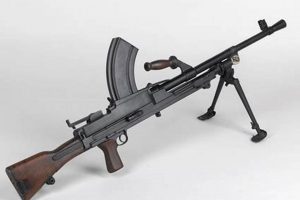
The legality of airsoft guns capable of automatic fire varies significantly depending on jurisdiction. These devices, which replicate real firearms but fire plastic projectiles, are subject to a complex web of regulations that consider factors such as projectile velocity, intended use, and overall appearance. Possession, sale, and usage restrictions can differ greatly between countries, states, and even municipalities. For example, some regions may permit ownership of automatic airsoft guns for individuals over a certain age, while others ban them outright or require specific licensing and registration.
Understanding the legal framework surrounding these devices is crucial for responsible airsoft participants and retailers. Ignoring the applicable laws can result in serious consequences, including fines, confiscation of equipment, and even criminal charges. Furthermore, knowledge of these regulations promotes safe practices and helps to avoid misinterpretations or incidents that could lead to stricter controls. The historical development of these regulations often reflects a balancing act between recreational interests, public safety concerns, and the potential for misuse.
This article will delve into specific legal considerations regarding airsoft guns with automatic firing capabilities, examining the factors that influence their classification and regulation across different regions. It will provide an overview of common restrictions, licensing requirements, and potential liabilities associated with these devices, offering a resource for those seeking clarity on the legal landscape.
Adherence to relevant regulations is paramount when dealing with airsoft guns capable of automatic fire. The following tips provide guidance for ensuring compliance and avoiding potential legal issues.
Tip 1: Conduct Thorough Research: Prior to purchasing or using an automatic airsoft gun, research the specific laws and regulations applicable to the location. This includes reviewing state, local, and even homeowner association rules.
Tip 2: Understand Velocity Restrictions: Many jurisdictions impose velocity limits on airsoft guns. Automatic airsoft guns may be subject to lower velocity thresholds than their semi-automatic counterparts due to their higher rate of fire. Verify the velocity of the airsoft gun and ensure it complies with local limits.
Tip 3: Obtain Necessary Licenses or Permits: Some regions require individuals to obtain a license or permit to own or use airsoft guns, particularly those capable of automatic fire. Investigate whether such requirements exist and comply accordingly.
Tip 4: Transport Airsoft Guns Responsibly: When transporting an automatic airsoft gun, keep it unloaded and stored in a case or container. Avoid displaying the airsoft gun in public, as this could cause alarm or misunderstanding.
Tip 5: Limit Use to Designated Areas: Only use automatic airsoft guns in designated areas, such as organized airsoft fields or private property with the owner’s permission. Avoid using them in public parks, schools, or other unauthorized locations.
Tip 6: Review Insurance Coverage: Individuals should verify whether their homeowner’s or renter’s insurance policy provides coverage for incidents involving airsoft guns. If not, consider obtaining supplemental insurance to protect against potential liabilities.
Tip 7: Stay Informed of Legal Updates: Laws and regulations pertaining to airsoft guns are subject to change. Regularly monitor relevant legal resources and news outlets for updates that may impact ownership or usage.
By adhering to these tips, individuals can help ensure responsible and lawful engagement with airsoft guns capable of automatic fire, minimizing the risk of legal complications.
The information presented serves as a general guide and does not constitute legal advice. Consult with a legal professional for specific guidance on navigating relevant regulations.
1. Local Ordinances

Local ordinances represent a critical, and often the most restrictive, layer in determining the permissibility of full-auto airsoft guns. While federal regulations may establish broad guidelines, local jurisdictions, including cities, counties, and townships, frequently enact more specific and stringent rules based on community needs and concerns. These ordinances directly influence whether full-auto airsoft guns can be legally owned, possessed, or used within those boundaries. The consequence of ignoring local ordinances can range from confiscation of the airsoft gun to fines and potential legal charges, even if federal or state laws are seemingly less restrictive.
The importance of local ordinances stems from their responsiveness to unique community contexts. For example, a densely populated urban area might prohibit full-auto airsoft guns altogether due to safety concerns and potential misidentification with actual firearms. Conversely, a rural county with limited population density might permit their use within designated areas or on private property with landowner consent. A practical example is the city of Chicago, which maintains stricter regulations on air guns, including airsoft guns, compared to the state of Illinois as a whole. Conversely, some rural Texan counties have virtually no restrictions on airsoft gun ownership or usage on private lands. This variation highlights the need to investigate regulations at the granular, local level.
In summary, the phrase “full auto airsoft guns are legal” is invariably qualified by the supremacy of local ordinances. These local rules often reflect the immediate concerns and priorities of a given community, and their enforcement directly impacts the ability to legally own and operate these devices. Therefore, users must meticulously research and comply with all applicable local ordinances, irrespective of broader federal or state statutes, to ensure adherence to the law. The challenge lies in the often-fragmented nature of these local rules, requiring individuals to consult municipal codes and local law enforcement agencies for clarification.
2. Federal Regulations

Federal regulations play a less direct, yet crucial, role in determining if airsoft guns with automatic firing capabilities are legal. While not explicitly regulating airsoft guns as firearms, federal laws impact their import, commerce, and overall classification, setting a baseline that states and localities then build upon.
- Commerce and Interstate Sales
Federal law governs the interstate sale and transportation of airsoft guns. The Gun Control Act (GCA) defines “firearms” and imposes regulations on their sale and transfer. While airsoft guns are generally not considered firearms under the GCA, the Bureau of Alcohol, Tobacco, Firearms and Explosives (ATF) has the authority to classify specific models as firearms if they are readily convertible to expel a projectile by the action of an explosive. This determination would subject them to the GCA’s more stringent regulations, including background checks and serialization requirements. If an airsoft gun, even a full-auto one, is not classified as a firearm, its commerce is generally less restricted at the federal level. However, sellers must still comply with any applicable state and local laws.
- Import Regulations
The importation of airsoft guns is subject to regulations administered by U.S. Customs and Border Protection (CBP). CBP has the authority to inspect imported airsoft guns to ensure they comply with all applicable federal laws and regulations. Airsoft guns that closely resemble actual firearms may be subject to stricter scrutiny or even prohibited from import if they violate federal laws concerning the importation of imitation firearms. The markings and coloration of airsoft guns often come under review to ensure they meet federal standards designed to prevent confusion with real weapons. The intent of these regulations is to minimize the risk of importing items that could be used to deceive law enforcement or pose a public safety risk.
- National Firearms Act (NFA) Considerations
The National Firearms Act (NFA) regulates certain categories of firearms, including machine guns. While airsoft guns are generally not subject to the NFA, a full-auto airsoft gun could potentially fall under its purview if it is determined to be readily convertible into a machine gun or if it is designed to closely replicate the function of a machine gun. Such a determination would subject the airsoft gun to the NFA’s stringent requirements, including registration, transfer restrictions, and the payment of transfer taxes. This is a highly unlikely scenario, but manufacturers and importers must be aware of the potential for federal classification under the NFA if an airsoft gun possesses design features that closely mimic a real machine gun.
In summary, federal regulations establish a baseline for the legality of full-auto airsoft guns, primarily focusing on commerce, importation, and potential classification as firearms or NFA items. However, states and local jurisdictions have significant latitude to enact more restrictive laws governing their possession, sale, and use. Therefore, while federal laws offer a general framework, the practical determination of whether “full auto airsoft guns are legal” largely depends on the specific regulations in place at the state and local levels.
3. Age Restrictions
Age restrictions constitute a critical component in the legal framework governing airsoft guns, particularly those capable of automatic fire. These restrictions directly impact the legality of ownership and usage based on the age of the individual, reflecting concerns about maturity, responsibility, and potential misuse of the devices.
- Minimum Age for Purchase and Possession
Many jurisdictions impose a minimum age requirement for purchasing or possessing airsoft guns, often ranging from 16 to 18 years old. This age threshold is based on the assumption that individuals below this age may lack the judgment and maturity to handle these devices safely and responsibly. For instance, some states may allow 16-year-olds to possess airsoft guns but require parental consent or supervision, while others may strictly prohibit individuals under 18 from possessing them altogether. These restrictions directly affect whether “full auto airsoft guns are legal” for individuals within these age brackets.
- Parental Consent and Supervision
Even in jurisdictions that allow younger individuals to possess airsoft guns, parental consent and supervision often play a crucial role. Laws may require minors to obtain explicit parental permission before purchasing or using these devices. Furthermore, parental supervision may be mandated during usage, especially in public areas or organized airsoft events. The absence of proper parental consent or supervision can render the use of full-auto airsoft guns illegal for minors, potentially leading to legal repercussions for both the minor and the parents.
- Age-Based Restrictions on Automatic Functionality
Some jurisdictions may impose stricter age restrictions on airsoft guns with automatic firing capabilities compared to semi-automatic models. The rationale is that the increased rate of fire associated with automatic airsoft guns presents a greater risk of accidental injury or misuse, necessitating stricter controls for younger users. For example, a state might allow individuals over 16 to possess semi-automatic airsoft guns but require them to be 18 or older to possess full-auto models. This differential treatment directly influences whether “full auto airsoft guns are legal” for certain age groups.
- Legal Consequences for Violations
Violations of age restrictions related to airsoft guns can result in various legal consequences, including fines, confiscation of the airsoft gun, and even criminal charges. The severity of the penalties may vary depending on the specific jurisdiction and the nature of the violation. For example, a minor caught possessing a full-auto airsoft gun in a prohibited area could face fines and a juvenile record, while the parents could be held liable for negligence or contributing to the delinquency of a minor. These legal consequences serve as a deterrent and reinforce the importance of adhering to age-related restrictions.
In summary, age restrictions are a critical element in the legal landscape surrounding airsoft guns, especially those with automatic capabilities. They directly impact the legality of ownership and usage based on the individual’s age, reflecting concerns about maturity, responsibility, and potential misuse. Adherence to these restrictions is essential to ensure responsible and lawful engagement with airsoft guns and to avoid potential legal ramifications.
4. Velocity Limits

Velocity limits are a fundamental consideration in determining the legality of airsoft guns, particularly those with automatic firing capabilities. These limits, typically measured in feet per second (FPS) using 0.20g BBs, are designed to mitigate the risk of injury and ensure safe recreational use. Jurisdictions implement velocity caps to balance the enjoyment of the sport with public safety concerns.
- Legal Thresholds and Classification
Many jurisdictions establish specific FPS thresholds that differentiate between airsoft guns and more heavily regulated devices. An airsoft gun exceeding a certain FPS may be reclassified as a firearm or a weapon, thereby subjecting it to more stringent regulations, including background checks, registration requirements, and restrictions on ownership. For example, some localities may define any airsoft gun exceeding 350 FPS as a weapon, regardless of its automatic firing capabilities. This distinction is crucial in determining whether an airsoft gun, including a full-auto model, is legal to possess and use.
- Impact on Full-Auto Functionality
The automatic firing capability of an airsoft gun can further influence the application of velocity limits. Some jurisdictions impose lower FPS caps on full-auto airsoft guns compared to their semi-automatic counterparts. This is due to the increased risk of injury associated with the higher rate of fire. A full-auto airsoft gun operating near the legal FPS limit could potentially cause more severe injuries in a short period compared to a semi-automatic model. Therefore, the interaction between velocity and automatic functionality is a critical factor in determining the legality of these devices.
- Enforcement and Compliance
Enforcement of velocity limits is typically carried out through random inspections at airsoft fields or during law enforcement investigations. Airsoft guns are tested using chronographs to measure their FPS. Non-compliance with velocity limits can result in penalties such as fines, confiscation of the airsoft gun, or even criminal charges, depending on the jurisdiction. Responsible airsoft participants often self-regulate by using chronographs to ensure their airsoft guns comply with local velocity limits before engaging in gameplay.
- Variations Across Jurisdictions
Velocity limits for airsoft guns vary considerably across different regions. Some states or countries may have strict FPS caps, while others may have more lenient regulations or no specific limits at all. This jurisdictional variation necessitates thorough research before purchasing, possessing, or using an airsoft gun in a specific location. For instance, an airsoft gun that is legal in one state due to its FPS may be illegal in another state with stricter velocity limits. This geographical disparity underscores the importance of understanding local regulations to ensure legal compliance.
In conclusion, velocity limits are a cornerstone of airsoft gun regulations, significantly impacting whether “full auto airsoft guns are legal” in a given jurisdiction. The interplay between FPS thresholds, automatic functionality, enforcement practices, and jurisdictional variations creates a complex legal landscape that requires careful navigation to ensure responsible and lawful airsoft participation. Ignorance of these velocity limits can lead to severe legal consequences.
5. Usage Zones
The designation of specific usage zones represents a critical factor in determining the legality of airsoft guns capable of automatic fire. These zones, defined by legal and regulatory frameworks, establish the permissible locations for operating these devices, reflecting concerns for public safety and property rights.
- Designated Airsoft Fields
Designated airsoft fields are specifically designed and operated for airsoft gameplay. These fields typically have safety regulations, including mandatory eye protection and velocity limits, and they often require participants to sign waivers acknowledging the inherent risks involved. Full-auto airsoft guns are commonly permitted on these fields, provided they adhere to the field’s specific rules and regulations. The legal permissibility within these zones stems from the controlled environment and the assumption of risk by participants. However, even on designated fields, violations of safety rules or local ordinances can result in legal consequences.
- Private Property with Consent
Using full-auto airsoft guns on private property is generally permissible, provided the owner of the property has given explicit consent. This allowance hinges on the principle of property rights and the absence of any local ordinances prohibiting such activity. However, even with consent, the use of airsoft guns on private property must not create a public nuisance or endanger others. For example, discharging airsoft guns in a manner that causes projectiles to cross property lines or strike passersby can result in legal liability. Moreover, some jurisdictions may require specific safety measures, such as backstops, to prevent projectiles from leaving the property.
- Prohibited Public Areas
Public areas, such as parks, schools, and sidewalks, are typically prohibited for the use of full-auto airsoft guns. This prohibition stems from concerns for public safety and the potential for misidentification with actual firearms. The discharge of airsoft guns in these areas can cause alarm, panic, and even police intervention. Violations of these prohibitions can result in fines, confiscation of the airsoft gun, and potential criminal charges. The rationale is to prevent any situation that could be perceived as a threat to public order or safety.
- Indoor Shooting Ranges
Indoor shooting ranges may permit the use of airsoft guns, including full-auto models, depending on their specific policies and licensing requirements. These ranges provide a controlled environment with safety protocols designed to minimize the risk of injury. However, not all shooting ranges allow airsoft guns, and those that do may impose specific restrictions on the type of airsoft guns permitted, the projectiles used, and the firing modes allowed. Compliance with the range’s rules and regulations is essential to ensure legal and safe use.
The legality of utilizing full-auto airsoft guns is inextricably linked to the designated usage zone. Each type of zone carries its own set of regulations, permissions, and prohibitions, ultimately dictating whether the use of these devices is lawful. Adherence to these zone-specific rules is paramount to responsible airsoft participation and the avoidance of legal complications.
6. Transportation Laws

Transportation laws directly influence the legality of full-auto airsoft guns by governing their movement and handling within a jurisdiction. Even if possession is permitted, improper transportation can lead to legal repercussions. These regulations address concerns related to public safety, aiming to prevent the misuse or misidentification of airsoft guns as real firearms during transit. The specific requirements vary significantly, but commonly include stipulations regarding storage, concealment, and accessibility during transport. Failure to comply with these regulations can negate the permissibility of owning a full-auto airsoft gun, resulting in fines, confiscation, or even criminal charges. The effectiveness of transportation laws in upholding the “are full auto airsoft guns legal” concept rests on the premise that responsible handling and secure transport are crucial elements of lawful ownership.
One prevalent example is the requirement to transport airsoft guns unloaded and encased. Many jurisdictions mandate that magazines be removed and the airsoft gun be stored in a closed container, such as a gun case or a padded bag. This prevents immediate use and reduces the likelihood of misinterpretation by law enforcement or the public. Further, some regulations prohibit transporting airsoft guns in plain view or in the passenger compartment of a vehicle, requiring them to be placed in the trunk or another inaccessible area. Real-world incidents involving individuals openly carrying airsoft guns, resulting in police intervention and potential escalation, underscore the practical importance of adhering to these transportation guidelines. These examples highlight the cause-and-effect relationship: non-compliance with transportation laws can lead to the airsoft gun’s legal status shifting from permissible to unlawful.
In summary, transportation laws are an indispensable component of determining whether “are full auto airsoft guns legal” within a particular region. While possession may be sanctioned, neglecting proper transportation protocols can lead to legal jeopardy. The practical significance of understanding and adhering to these regulations lies in ensuring safe and responsible handling, preventing misidentification, and mitigating the risk of legal consequences. Challenges remain in the form of varying regulations across jurisdictions, necessitating thorough research and compliance with local laws prior to transporting full-auto airsoft guns.
Frequently Asked Questions
The following questions address common inquiries regarding the legal status of airsoft guns with automatic firing capabilities. These responses are intended to provide general guidance and should not be construed as legal advice.
Question 1: Is there a blanket federal law that either legalizes or prohibits all automatic airsoft guns across the United States?
No. Federal laws primarily regulate the importation and interstate commerce of airsoft guns. Individual states and local jurisdictions have the authority to enact their own laws governing possession, sale, and use.
Question 2: If a state allows the ownership of full-auto firearms with the proper permits, does that automatically extend to full-auto airsoft guns?
Not necessarily. Firearm laws and airsoft gun regulations are often distinct. The permissibility of full-auto firearms does not guarantee the legality of full-auto airsoft guns. Separate regulations specifically addressing airsoft guns must be consulted.
Question 3: What is the primary legal risk associated with modifying a semi-automatic airsoft gun to function in full-auto?
Modifying an airsoft gun to fire automatically may violate local or state laws. Such modifications can result in the device being classified differently, potentially subjecting it to more stringent regulations or outright prohibition. The act of modification itself may also be illegal.
Question 4: Can a minor legally possess a full-auto airsoft gun if they have parental consent?
Parental consent does not automatically override age restrictions. Many jurisdictions have minimum age requirements for possessing airsoft guns, irrespective of parental permission. Violations can result in legal consequences for both the minor and the parents.
Question 5: If an airsoft field allows full-auto fire, does that guarantee compliance with all applicable laws?
No. While an airsoft field’s internal rules may permit full-auto fire, participants are still responsible for complying with all federal, state, and local laws. The field’s rules do not supersede legal requirements.
Question 6: What documentation should be retained to demonstrate legal compliance when owning or transporting a full-auto airsoft gun?
Documentation may include proof of age, proof of purchase, any required permits or licenses, and records of chronograph testing to verify compliance with velocity limits. Knowledge of local ordinances is also essential.
Legal compliance regarding automatic airsoft guns is a nuanced matter dependent on location and adherence to specific regulations. It is imperative to verify the legal landscape in your specific area.
The subsequent article section will provide resources for researching the regulations in your jurisdiction.
The examination of “are full auto airsoft guns legal” reveals a landscape marked by significant jurisdictional variation. From federal guidelines primarily addressing commerce and importation, to state-level age and velocity restrictions, and ultimately to the often-most-restrictive local ordinances, the legal permissibility hinges on adherence to a multi-layered regulatory framework. Factors such as designated usage zones and transportation laws further complicate the matter, necessitating meticulous research and responsible conduct. The information detailed in this article is not exhaustive, and relying solely on this knowledge will not ensure complete compliance to any specific legal case.
Given the potential for legal ramifications stemming from misunderstanding or non-compliance, individuals are strongly encouraged to consult with legal professionals familiar with relevant regulations. This proactive approach is essential for safeguarding against potential penalties and promoting the responsible enjoyment of airsoft activities. Staying informed and seeking expert guidance remains paramount in navigating the legal complexities surrounding these devices.