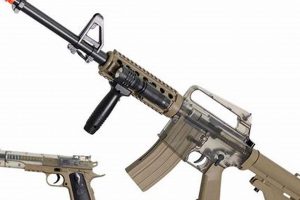
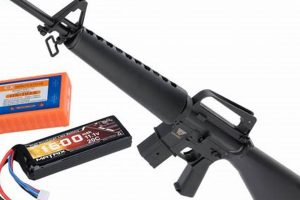
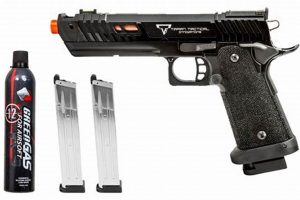
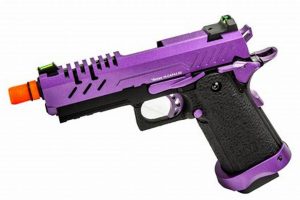
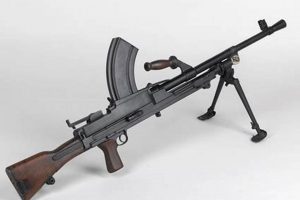
The inquiry about transporting realistic replica firearms on commercial aircraft is a common one. Airsoft devices, while designed to fire plastic projectiles, often closely resemble actual firearms, raising significant security concerns. Consequently, strict regulations govern their transportation, demanding careful adherence to specific procedures.
Understanding these regulations is paramount to avoid potential legal ramifications and travel disruptions. The primary benefit of adhering to these rules is ensuring the safety and security of all passengers and crew. Historically, the heightened security measures following significant events have shaped and refined these regulations, reflecting a proactive approach to mitigating risks associated with look-alike weapons.
Therefore, it is essential to investigate the specific guidelines established by both the Transportation Security Administration (TSA) and the individual airline. Compliance generally involves declaring the item, packaging it securely, and transporting it in checked baggage only. Furthermore, it is prudent to research the destination’s local laws regarding possession and transportation of such items before travel.
Transporting Airsoft Devices
Navigating the regulations surrounding airsoft devices requires careful planning and strict adherence to established protocols. The following tips offer guidance to ensure compliance and prevent travel complications.
Tip 1: Declare the Item: Always declare the airsoft device to the airline representative during check-in. This proactive step demonstrates transparency and allows for proper handling of the item.
Tip 2: Utilize Checked Baggage: Airsoft devices are strictly prohibited in carry-on luggage. They must be transported within checked baggage, minimizing the risk of confusion or alarm during security screenings.
Tip 3: Employ Secure Packaging: Ensure the airsoft device is unloaded and securely encased in a hard-sided container. Padding the interior protects the item from damage during transit.
Tip 4: Review TSA Guidelines: The Transportation Security Administration provides specific regulations regarding the transportation of replica firearms. Consult the TSA website for the most up-to-date information.
Tip 5: Confirm Airline Policies: Each airline may have its own specific policies regarding airsoft devices. Contact the airline directly to verify their requirements prior to travel.
Tip 6: Research Destination Laws: Before traveling, investigate the laws concerning airsoft devices in the destination location. Compliance with local regulations is crucial to avoid legal issues upon arrival.
Tip 7: Remove Batteries and Gas Canisters: If the airsoft device is battery-powered or uses gas canisters, remove these items before packing. Certain batteries and pressurized containers are prohibited or restricted on aircraft.
Adhering to these guidelines fosters a secure and compliant travel experience. Careful planning and diligent execution are essential for transporting airsoft devices on commercial airlines.
By meticulously following these recommendations, travelers can significantly reduce the risk of travel delays or legal complications associated with transporting airsoft devices. Proactive preparation is the cornerstone of a seamless journey.
1. Checked baggage only

The stipulation that airsoft devices be transported solely within checked baggage is a direct consequence of security protocols designed to mitigate potential threats on board commercial aircraft. The resemblance of many airsoft devices to real firearms necessitates strict control over their presence in passenger areas. Allowing such items in carry-on luggage presents an unacceptable risk of misinterpretation, potential for misuse, or the generation of unwarranted panic among passengers and crew.
The practical significance of this regulation is evident in real-life scenarios. Imagine a passenger attempting to board with an airsoft pistol in their carry-on. Security personnel would be obligated to treat it as a potential threat, leading to significant delays, thorough investigation, and potential legal repercussions for the individual. Furthermore, the presence of the item could cause widespread anxiety among fellow travelers, disrupting the entire flight. Enforcing the “checked baggage only” rule is a preemptive measure that prevents such situations from arising.
In conclusion, the “checked baggage only” requirement is not merely a procedural hurdle but a critical component of aviation security. It addresses the inherent risks associated with realistic replica firearms and ensures a safer environment for all passengers. Failure to comply with this requirement can lead to significant consequences, highlighting the importance of understanding and adhering to all relevant regulations pertaining to the transportation of airsoft devices.
2. Declare the item

The act of declaring an airsoft device is intrinsically linked to the overarching inquiry regarding its permissibility on aircraft. It represents the initial and arguably most critical step in complying with regulations. Non-declaration can automatically transform a potentially permissible activity into a violation, irrespective of adherence to other security protocols.
For example, an individual might meticulously pack an airsoft device in a hard-sided case, unloaded, and with batteries removed. However, if this item is not declared to the airline representative during check-in, it becomes concealed, raising immediate suspicion should it be discovered during security screening. This concealment can be interpreted as an intent to circumvent security measures, leading to legal consequences. Conversely, declaring the item allows airport security and airline staff to appropriately assess the situation and guide the passenger through the correct procedures.
Therefore, declaring the item is not merely a formality; it’s a demonstration of transparency and a commitment to following regulations. It establishes a foundation of trust and allows for the appropriate handling of potentially sensitive items. Without this declaration, the question of whether an airsoft device is permissible becomes moot, overshadowed by the act of concealment. Understanding the crucial role of declaration is therefore essential for anyone considering transporting such items via air travel.
3. Secure hard case

The requirement for a secure hard case is a direct response to the safety and security concerns associated with the transportation of items that resemble firearms. When considering whether an airsoft device is permissible on an aircraft, the utilization of a secure hard case serves as a critical safety measure. Its function is twofold: to prevent accidental damage to the item during transit and to prevent unauthorized access, mitigating the risk of the airsoft device being mistaken for a real weapon or being used inappropriately.
Consider a scenario where an airsoft device is transported in flimsy packaging. The potential for damage during the handling process is significantly increased. Furthermore, the lack of a secure enclosure could lead to accidental discharge or exposure, causing alarm and potentially triggering a security incident. By contrast, a robust, hard-sided case provides a protective barrier, minimizing the risk of damage and preventing the device from being readily accessible. This significantly contributes to maintaining order and security throughout the transportation process, complying with TSA guidelines and airline policies.
In summary, the secure hard case requirement is not merely a suggestion but a mandated component of safely transporting airsoft devices. It is a tangible expression of the commitment to preventing accidents, deterring misuse, and ensuring the overall safety and security of air travel. The presence of a suitable case signals responsible handling and facilitates compliance with transportation regulations, directly influencing the decision on whether the item may be permitted on the aircraft.
4. TSA regulations

Transportation Security Administration (TSA) regulations are the primary determinant in establishing the permissibility of transporting airsoft devices on commercial airlines. These regulations are designed to protect passengers and crew by mitigating potential security threats, and strict adherence is mandatory.
- Firearm Replicas Defined
TSA regulations categorize airsoft devices that closely resemble real firearms as firearm replicas. These items are subject to specific handling protocols distinct from ordinary baggage. The crucial implication is that airsoft devices cannot be treated as regular luggage and must adhere to stringent guidelines to be considered for transport. A violation of this definition could result in confiscation or further legal action.
- Checked Baggage Requirement
TSA explicitly mandates that all firearm replicas, including airsoft devices, must be transported in checked baggage. This regulation aims to prevent these items from entering the passenger cabin, thereby eliminating the potential for in-flight incidents. An example includes denial of boarding if an airsoft device is found in carry-on luggage. The implication is a strict adherence to this mandate for anyone attempting to transport this item.
- Secure Case Provisions
TSA regulations stipulate that any firearm replica in checked baggage must be encased in a hard-sided container to prevent damage or accidental discharge during transit. The case must be lockable and securely fastened to prevent unauthorized access. The impact involves ensuring the secure packaging of the device, which is a mandatory measure for consideration of air travel for airsoft devices.
- Declaration and Notification Protocols
TSA guidelines often advise passengers to declare any firearm replica, including airsoft devices, to the airline during check-in. While not explicitly mandated in all cases, this proactive step can help avoid misunderstandings and ensure compliance with airline-specific policies. Transparency and proactive declaration contribute to smooth processing and minimize potential delays and prevents any misinterpretation.
Therefore, understanding and abiding by TSA regulations is paramount for anyone considering transporting airsoft devices on commercial aircraft. Failure to adhere to these regulations can lead to travel disruptions, confiscation of the item, or potential legal ramifications. Each regulation serves as a necessary component of aviation safety, directly influencing the final decision on whether an airsoft device can be brought on a plane.
5. Airline policies
Airline policies are a crucial consideration in determining the permissibility of transporting airsoft devices. While TSA regulations provide a baseline for security, airlines possess the autonomy to impose more stringent requirements or outright prohibit certain items, thereby directly influencing whether an airsoft device can be brought onto a specific flight.
- Varied Restrictions on Replica Firearms
Airlines may have varying interpretations and restrictions on replica firearms, including airsoft devices. While one airline might permit transportation within checked baggage under specific conditions, another could completely prohibit them due to safety concerns or internal risk assessments. For instance, an airline serving regions with heightened security risks might implement stricter policies than one operating solely within domestic routes. Understanding these discrepancies is paramount, as adherence to TSA guidelines alone does not guarantee acceptance by a specific airline.
- Packaging and Container Requirements
Beyond the TSA requirement of a hard-sided case, individual airlines may stipulate specific dimensions, locking mechanisms, or internal padding requirements for the container housing an airsoft device. Some airlines might mandate that the case is tamper-evident or requires a declaration tag. Non-compliance with these specific requirements, even if the TSA standards are met, can lead to refusal of transport. An instance of this might involve an airline requiring a specific type of padlock or a detailed inventory list of the case’s contents.
- Ammunition and Power Source Regulations
Airlines frequently have specific regulations concerning the transportation of ammunition or power sources associated with airsoft devices, such as BBs, CO2 cartridges, or batteries. Some airlines may outright prohibit these items, while others impose strict limitations on quantity and packaging. For example, an airline might allow a limited number of sealed CO2 cartridges to be transported in checked baggage but prohibit loose BBs. Passengers are responsible for researching and adhering to these regulations to avoid confiscation of their items or denial of transport.
- Declaration and Notification Procedures
While TSA advises declaration, airlines may have their own specific procedures for notifying them about the presence of an airsoft device in checked baggage. Some airlines require passengers to complete a declaration form at the check-in counter, while others may require advance notification through their customer service channels. Failure to adhere to these notification procedures can result in delays or refusal of transport. An example could involve needing to sign a waiver acknowledging the airline’s policies regarding replica firearms.
In conclusion, understanding the TSA regulation is not sufficient to determine the permissibility of bringing an airsoft device on a plane. Airline-specific policies function as additional layers of regulation, imposing further restrictions and requirements on transportation. Passengers must proactively research and comply with these policies to ensure a smooth and compliant travel experience. Neglecting this step significantly increases the risk of travel disruptions, item confiscation, or denial of boarding.
6. Destination laws
The legal landscape surrounding airsoft devices varies significantly across jurisdictions. This variance directly impacts the question of permissibility, making destination laws a crucial consideration. Irrespective of compliance with TSA regulations and airline policies at the point of origin, possession and transportation of an airsoft device may be illegal at the destination, rendering the initial journey a violation of local statutes upon arrival. Therefore, the inquiry is fundamentally incomplete without a thorough understanding of applicable local laws.
Consider a scenario where an individual successfully transports an airsoft device from one state to another, adhering to all TSA and airline guidelines. Upon arrival, however, local laws may classify the device as an illegal imitation firearm, resulting in confiscation, fines, or even criminal charges. This outcome stems from differing legal definitions and regulatory frameworks regarding replica firearms. For example, some jurisdictions may require specific markings to differentiate airsoft devices from actual firearms, while others may prohibit their possession altogether without a permit. The effect is a complex web of regulations, demanding meticulous research to ensure legality throughout the entire travel process.
In conclusion, destination laws are an indispensable component in determining whether transporting an airsoft device is permissible. Ignoring these laws can negate all prior compliance efforts, resulting in legal repercussions and travel disruptions. A comprehensive understanding of applicable local regulations, obtained prior to departure, is therefore essential to ensure a legally compliant and trouble-free journey, irrespective of initial compliance with federal regulations and airline policies.
7. Unloaded, batteries removed

The condition of an airsoft device being unloaded with batteries removed is a non-negotiable prerequisite for its potential transportation on commercial airlines. This measure directly addresses critical safety and security concerns. An unloaded state mitigates the risk of accidental discharge during handling and transit. Similarly, removing batteries prevents unintended activation of electronic components, further reducing the possibility of malfunctions or accidental operation. Failure to comply with this aspect constitutes an immediate impediment to the transportation of the device.
A real-life example highlights the practical significance. Consider an airsoft device inadvertently activating within checked baggage due to an unremoved battery. The resulting noise or projectile discharge could trigger a security alert, leading to baggage searches, flight delays, and potential legal ramifications for the owner. The same principle applies to an un-unloaded airsoft device. The very idea of un-unloaded airsoft device alone is enough for authorities to be alerted and will not allowed an airsoft device to be transported on commercial aircraft. The unloaded state and the battery’s removal ensures this will be reduced. These preventive measures demonstrate a commitment to safety and adherence to regulations. Adherence to these provisions contributes significantly to the decision-making process regarding transport approval.
In summary, ensuring an airsoft device is unloaded and has its batteries removed is not merely a procedural step, but a fundamental safety requirement. It mitigates risks, enhances security, and significantly increases the likelihood of compliant transport, subject to adherence to all other applicable regulations. The “Unloaded, batteries removed” stipulation is an integral link in determining whether “can i bring airsoft gun on the plane” ultimately receives an affirmative answer.
Frequently Asked Questions
The following questions and answers address common concerns regarding the transportation of airsoft devices on commercial airlines. This information is intended to provide clarity and guidance for compliant travel.
Question 1: Is it permissible to transport an airsoft device in carry-on luggage?
No. Airsoft devices are strictly prohibited in carry-on luggage. They must be transported within checked baggage only, as per Transportation Security Administration (TSA) regulations and airline policies.
Question 2: What constitutes adequate packaging for an airsoft device in checked baggage?
Airsoft devices must be encased in a secure, hard-sided container. This container should be lockable and adequately padded to prevent damage during transit. Specific requirements may vary by airline, so verification is recommended.
Question 3: Is it necessary to declare an airsoft device to the airline during check-in?
Yes. Declaration is a crucial step. Inform the airline representative about the presence of the airsoft device. Transparency fosters compliance and allows for proper handling.
Question 4: Are there restrictions on transporting batteries or compressed gas canisters associated with airsoft devices?
Yes. Airlines often impose restrictions on these items. Batteries may need to be removed from the device, and compressed gas canisters may be prohibited or subject to quantity limitations. Consult airline-specific policies for detailed information.
Question 5: Do local laws at the destination affect the permissibility of transporting an airsoft device?
Yes. Destination laws are paramount. Even if compliant with TSA and airline policies, possession or transportation may be illegal at the destination. Researching local regulations before travel is essential.
Question 6: What are the potential consequences of failing to comply with regulations?
Non-compliance can result in travel delays, confiscation of the airsoft device, fines, or even legal charges. Strict adherence to all applicable regulations is strongly advised.
These FAQs underscore the importance of careful planning and diligent execution when transporting airsoft devices on commercial airlines. Proactive preparation is essential for a seamless and compliant journey.
The next section will provide a concluding summary of the key points.
Conclusion
The central question of whether an airsoft device can be transported on an aircraft is definitively not a matter of simple allowance. A complex interplay of regulations governs this activity. The TSA’s requirements, airline policies, and destination laws form a multi-layered framework demanding strict adherence. Checked baggage transport, declaration, secure casing, the removal of batteries, and unloaded status constitute mandatory components. Neglecting any aspect of this framework introduces the risk of significant consequences.
Prudence dictates meticulous planning and proactive engagement with all applicable regulations before attempting to transport such items via air travel. Passengers bear the ultimate responsibility for ensuring full compliance. The inherent risks and potential legal ramifications warrant careful consideration and diligent preparation. The landscape is subject to change, so staying informed through official sources remains crucial. Prioritize safety, compliance, and responsible handling to avoid complications and uphold the integrity of air travel security.