![Airsoft Guns: Do You Need a License? [Guide]](data:image/svg+xml;base64,PHN2ZyB4bWxucz0iaHR0cDovL3d3dy53My5vcmcvMjAwMC9zdmciIHdpZHRoPSI0NzQiIGhlaWdodD0iNzQiIHZpZXdCb3g9IjAgMCA0NzQgNzQiPjxyZWN0IHdpZHRoPSIxMDAlIiBoZWlnaHQ9IjEwMCUiIHN0eWxlPSJmaWxsOiNjZmQ0ZGI7ZmlsbC1vcGFjaXR5OiAwLjE7Ii8+PC9zdmc+ "Airsoft Guns: Do You Need a License? [Guide] Ultimate Airsoft Guide for Beginners, Tactics & Gear Reviews")
The necessity of permits or authorizations to possess or operate airsoft devices varies significantly across jurisdictions. The legal framework surrounding these items is not uniform, leading to a complex landscape for enthusiasts and retailers. Understanding the specific requirements within a given locality is paramount to ensure compliance and avoid potential legal repercussions. An example is that one state might require registration for airsoft replicas mimicking real firearms, while another might have no such stipulations.
The relevance of this topic stems from the increasing popularity of airsoft as a recreational activity and training tool. Its growth necessitates clarity regarding legal obligations to foster responsible participation and prevent misuse. Historically, the regulation of airsoft has evolved alongside advancements in replica technology and a heightened awareness of public safety concerns. This evolution continues to shape the current legal environment, impacting both individual players and organized airsoft events.
Therefore, the following discussion will delve into the key factors determining whether permission is mandated, the typical requirements involved, and resources available for confirming local regulations. These aspects are essential for navigating the legal complexities associated with airsoft and ensuring adherence to applicable laws.
The following guidance assists in understanding the legal considerations pertaining to airsoft devices, focusing on the common question of whether permission is necessary for their ownership or use. This information is intended for educational purposes and should not be considered legal advice.
Tip 1: Research Local Ordinances: Begin by consulting municipal and county ordinances. These local laws frequently contain specific provisions regarding airsoft devices that may supersede or supplement state regulations.
Tip 2: Investigate State Statutes: State laws often categorize airsoft guns differently from firearms, but may still impose restrictions on their sale, possession, or use by minors. Review relevant state legislation to understand the legal framework.
Tip 3: Contact Law Enforcement Agencies: Contacting local police departments or sheriff’s offices can provide clarity on the practical enforcement of regulations in a specific area. They can also clarify any ambiguities in the written law.
Tip 4: Consult Legal Professionals: When uncertainty persists or complex legal questions arise, seek advice from an attorney experienced in firearms or replica weapons law. Their expertise can provide tailored guidance.
Tip 5: Verify Retailer Information: Reputable airsoft retailers typically possess knowledge of local and state laws and may be able to provide relevant information or warnings regarding legal requirements.
Tip 6: Scrutinize Airsoft Event Regulations: Organized airsoft events frequently have their own sets of rules and regulations, which may include specific requirements regarding weapon types, safety gear, and legal compliance.
Tip 7: Stay Informed of Changes: Laws pertaining to airsoft devices can change over time. Regularly review local and state regulations to remain informed of any updates or modifications.
Understanding applicable regulations, including any related to needing permission, can ensure responsible airsoft participation. Adherence to these directives prevents unintended legal complications.
The following sections will further expand upon these points and provide additional resources for ensuring compliance with all applicable laws.
1. Local ordinances

Local ordinances represent a critical layer of regulation impacting whether permission is needed for airsoft devices. These laws, enacted at the municipal or county level, often address issues specific to the community’s needs and concerns, potentially adding requirements beyond state or federal mandates. The effect is a patchwork of regulations, varying significantly from one locality to another.
- Scope of Regulation
Local ordinances may define airsoft guns differently than state law, thereby altering their regulated status. Some might treat realistic replicas more stringently, requiring registration or permits analogous to firearms. Conversely, others may focus on public safety, restricting the use of airsoft devices in parks or other populated areas regardless of state law.
- Permit Requirements
Certain municipalities mandate a permit for the possession, sale, or use of airsoft guns within their boundaries. These permits often involve background checks, safety courses, or age verification. Failure to obtain the necessary permit can result in fines, confiscation of the device, or even legal prosecution, despite compliance with state laws.
- Discharge Restrictions
Many local ordinances address the discharge of airsoft guns, prohibiting their use in residential areas, near schools, or on public property. These restrictions are designed to minimize the risk of injury or property damage and to prevent alarm or misunderstanding among the public. Violations can lead to significant penalties.
- Zoning Regulations
Local zoning regulations can affect airsoft-related businesses, such as retail stores selling airsoft guns or indoor airsoft arenas. These regulations may restrict the location or operation of such businesses, requiring special permits or adherence to specific safety standards. This indirectly affects the accessibility and legality of airsoft activities within the community.
In essence, local ordinances constitute a vital consideration for determining whether a permit or specific permissions are needed for airsoft devices. Due diligence in researching and understanding these local laws is essential for responsible ownership and use, as they often introduce requirements not found at the state or federal level. Ignoring these local regulations can lead to legal consequences, even if all other requirements are met.
2. State legislation

State legislation plays a pivotal role in determining authorization requirements for airsoft devices. This level of law establishes baseline regulations regarding the sale, possession, use, and transportation of these items, often defining the scope of local control. State laws can directly mandate permits or licenses for airsoft devices, particularly those resembling actual firearms. For instance, certain states classify airsoft guns as “imitation firearms” and subject them to similar restrictions as conventional firearms, including mandatory registration or licensing for ownership. The absence of state-level regulation does not necessarily imply complete freedom, as local ordinances may still impose restrictions. However, a restrictive state law invariably necessitates adherence, regardless of local leniency. Understanding state legislation is a fundamental step in ascertaining legal obligations regarding airsoft devices.
Real-world examples illustrate the influence of state legislation. In California, airsoft guns must be brightly colored to distinguish them from real firearms, and sale or transfer to minors without parental consent is prohibited. New York State has specific laws regarding the possession and use of airsoft guns, especially in New York City, where they are treated similarly to firearms. Conversely, other states have minimal regulations, focusing primarily on age restrictions for purchase. The practical significance lies in avoiding legal repercussions. Transporting an airsoft device across state lines, for example, requires knowledge of both the origin and destination states’ laws to prevent violations. Furthermore, participating in organized airsoft events often necessitates compliance with the host state’s regulations regarding weapon modifications, permissible projectile velocity, and required safety gear.
In conclusion, state legislation constitutes a crucial component of the regulatory landscape surrounding airsoft devices. It sets a foundational legal framework that interacts with, and is sometimes superseded by, local ordinances. Navigating this complex interplay requires careful research and a thorough understanding of both state and local laws. The challenges arise from the diverse approaches states adopt in regulating these devices, necessitating diligence in verifying specific legal requirements. Accurate knowledge of state legislation is essential for responsible airsoft ownership and participation, mitigating the risk of legal complications.
3. Age restrictions

Age restrictions are directly pertinent to the necessity of permits or authorizations for airsoft devices. These regulations often delineate specific age thresholds for possession, purchase, and use, impacting whether an individual requires adult supervision or formal permission to engage in airsoft activities.
- Minimum Age for Purchase
Many jurisdictions impose a minimum age for purchasing airsoft guns, often ranging from 16 to 18 years. This restriction frequently stems from concerns about the potential misuse of these devices and the perceived need for maturity and responsible handling. Individuals below this age may be prohibited from purchasing airsoft guns independently, regardless of parental consent. In some cases, retailers may require proof of age before completing a sale, reflecting a commitment to complying with legal requirements.
- Supervised Use for Minors
Even if a minor can legally possess an airsoft gun, its use may be restricted to supervised settings. Adult supervision is often mandated in public areas or during organized airsoft events to ensure adherence to safety protocols and responsible behavior. This requirement may be explicitly stated in local ordinances or event rules, highlighting the importance of adult oversight in mitigating risks associated with airsoft activities. Failure to comply with supervision requirements can result in penalties for both the minor and the supervising adult.
- Impact on Permit Eligibility
In jurisdictions requiring permits or licenses for airsoft guns, age restrictions can affect eligibility. Minors may be ineligible to obtain a permit independently, even if they meet other criteria. Instead, a parent or guardian may be required to apply for the permit on their behalf, assuming responsibility for the minor’s safe and lawful use of the airsoft gun. This system reflects the legal framework’s intent to limit access to potentially dangerous items based on age and maturity.
- Exceptions and Variations
Certain exceptions or variations may exist regarding age restrictions. For instance, some states allow minors to possess airsoft guns for hunting or target practice under specific circumstances, such as participation in a supervised program or obtaining a special permit. However, these exceptions are often narrowly defined and subject to stringent conditions. Additionally, the interpretation and enforcement of age restrictions can vary between jurisdictions, necessitating careful research of local regulations.
Therefore, age restrictions directly influence whether an individual must obtain authorization for airsoft devices. These regulations often serve as a gateway, determining permit eligibility or mandating adult supervision. Understanding and complying with these age-related requirements is crucial for lawful participation in airsoft activities.
4. Transportation laws
Transportation laws significantly influence authorization requirements for airsoft devices. These laws regulate how these items may be legally moved from one location to another, potentially necessitating permits or specific handling procedures. Understanding these regulations is critical for airsoft participants to avoid legal complications during transportation.
- Concealed Carry Restrictions
Many jurisdictions prohibit the concealed carry of airsoft devices, treating them similarly to firearms in this regard. This means transporting an airsoft gun in a manner that it is not readily visible, such as in a backpack or under a seat, may be illegal without proper authorization. The rationale is to prevent misidentification and potential alarm among the public. Violation of these restrictions can result in fines, confiscation of the device, or even criminal charges.
- Case and Storage Requirements
Transportation laws often mandate that airsoft guns be transported in a case or container, unloaded, and stored separately from ammunition (if applicable). This requirement is designed to minimize the risk of accidental discharge or unauthorized use during transport. The specific type of case or container may be specified by law, requiring a hard-sided case or a locked container. Failure to comply with these storage requirements can lead to legal penalties.
- Interstate Transport Regulations
Transporting airsoft devices across state lines introduces further complexity, as regulations vary significantly between states. Some states may require permits or licenses for airsoft guns that are not required in the origin state. It is essential to research and comply with the laws of both the origin and destination states to avoid legal issues. This includes understanding restrictions on specific types of airsoft guns or modifications, which may be legal in one state but prohibited in another.
- Vehicle-Specific Rules
Some transportation laws address the transport of airsoft devices within vehicles. These rules may prohibit having an airsoft gun readily accessible to the driver or passengers, requiring it to be stored in the trunk or a locked container. Additionally, some jurisdictions may prohibit the display of airsoft guns in vehicle windows. These regulations aim to prevent accidental shootings and deter theft. Violations can result in fines, vehicle impoundment, or even criminal charges.
In summation, transportation laws exert a substantial influence on whether authorization is needed for airsoft devices. Compliance with these regulations, including concealed carry restrictions, case and storage requirements, interstate transport regulations, and vehicle-specific rules, is paramount for responsible airsoft participation. The interplay between these factors determines the specific legal obligations during transportation, necessitating thorough research and adherence to all applicable laws to avoid legal repercussions.
5. Storage regulations
Storage regulations constitute a significant factor influencing the necessity of permits or authorizations for airsoft devices. The safe and secure storage of these items is often mandated by law to prevent unauthorized access, theft, or accidental discharge, especially when children or unauthorized individuals are present. These regulations can be directly linked to authorization requirements. For example, jurisdictions might require individuals to obtain a permit to possess airsoft guns if they cannot demonstrate compliance with specific storage requirements, such as storing the devices in a locked container or trigger lock. Conversely, compliance with stringent storage protocols might be a condition for obtaining or maintaining a permit.
The practical significance of this connection is evident in various scenarios. Families with children, for instance, are often subject to stricter storage requirements, potentially influencing their need for a permit. A parent’s inability to secure the airsoft device properly could lead to denial of a permit or legal penalties if the device is accessed by a child and causes harm. Similarly, individuals living in shared housing or multi-unit dwellings may face specific storage regulations due to the increased risk of theft or unauthorized access, again affecting permit requirements. Real-world examples include cases where individuals have faced legal repercussions for failing to store airsoft guns safely, leading to accidental injuries or thefts. These incidents underscore the importance of understanding and adhering to storage regulations, which are often interwoven with the legal framework governing airsoft ownership.
In summary, storage regulations act as a key determinant in the authorization process for airsoft devices. The ability to demonstrate secure storage practices can be a prerequisite for obtaining or maintaining a permit, while failure to comply with these regulations can lead to legal consequences and potentially affect permit eligibility. The challenge lies in navigating the diverse and often complex storage requirements imposed by different jurisdictions. Therefore, thorough research and adherence to applicable storage regulations are essential for responsible airsoft ownership and mitigating legal risks.
6. Federal guidelines

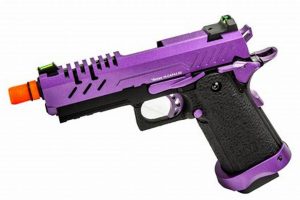
Federal guidelines pertaining to airsoft devices primarily address importation and interstate commerce, indirectly influencing authorization requirements at the state and local levels. These guidelines, primarily enforced by agencies such as Customs and Border Protection (CBP), classify airsoft guns as “replica firearms” under federal law. While federal law does not mandate licensing for airsoft gun ownership itself, it stipulates that these devices must meet specific criteria for importation. These include orange tips or markings to distinguish them from actual firearms. Non-compliance results in seizure and potential penalties. The effect is that states and localities may then impose further restrictions, building upon this federal baseline.
The importance of federal guidelines stems from their role in preventing the unregulated influx of airsoft devices, particularly those realistically resembling firearms. Without these regulations, the potential for misuse and confusion by law enforcement would increase significantly. For instance, federal guidelines ensure that imported airsoft guns are readily identifiable as non-lethal replicas, minimizing the risk of misidentification during police encounters. Furthermore, federal laws prohibit the importation of airsoft guns that are easily convertible into functional firearms, preventing the proliferation of potentially dangerous weapons. This impacts the market availability of certain airsoft models, thus indirectly affecting authorization requirements at the state level, as states may have more stringent rules for realistic replicas.
In conclusion, while federal guidelines do not directly mandate licenses for airsoft gun possession, they establish a foundation for state and local regulations. By controlling importation and interstate commerce, these guidelines influence the types of airsoft devices available and the legal framework surrounding their ownership. This indirect influence makes understanding federal regulations essential for navigating the complexities of airsoft laws and ensuring compliance at all levels. The challenge lies in coordinating federal, state, and local regulations to create a consistent and enforceable legal framework.
7. Specific airsoft type
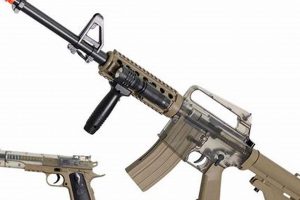
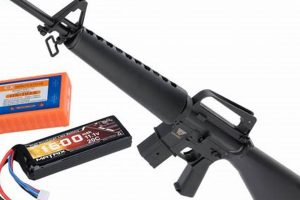
The specific design and functionality of an airsoft device significantly influence whether a permit or license is required. The realism of the replica, projectile velocity, and intended use can each trigger different regulatory responses. High-powered airsoft rifles that closely mimic actual firearms often face stricter scrutiny than less realistic or lower-velocity models. The more closely an airsoft gun resembles a real firearm in appearance and performance, the higher the likelihood of regulations similar to those governing actual firearms, potentially including licensing requirements. An example is airsoft guns designed to operate similarly to real firearms; some jurisdictions consider them requiring permits and regulation similar to firearms.
Airsoft guns intended for competitive use on designated fields may be subject to different regulations than those designed for recreational use in private settings. Organized airsoft events often have specific rules regarding weapon types and velocity limits. These rules, though not always codified in law, can influence the legal permissibility of possessing or using a specific airsoft type within that context. For instance, an airsoft sniper rifle exceeding a certain velocity threshold may be banned from a particular event, which may carry legal weight if the event has local authority approval, even if the device itself isn’t technically illegal to own.
In conclusion, the specific attributes of an airsoft device directly impact its regulatory status. Realism, velocity, and intended use function as key determinants in assessing whether authorization is necessary. Understanding these aspects is crucial for responsible airsoft participation and avoiding legal complications. The complexity arises from the diverse range of airsoft types available and the varying regulatory approaches adopted across different jurisdictions. Therefore, due diligence in researching and understanding the specific laws pertaining to each type is essential.
Frequently Asked Questions
The following addresses common inquiries regarding the legal requirements for owning and operating airsoft devices. This information is for educational purposes and does not constitute legal advice.
Question 1: Are airsoft guns considered firearms under federal law?
Federal law generally classifies airsoft devices as “replica firearms,” not firearms. This distinction affects import regulations and certain interstate commerce laws. However, individual states may classify airsoft guns differently, potentially subjecting them to regulations similar to firearms.
Question 2: Does the orange tip on an airsoft gun guarantee its legality?
The presence of an orange tip, required by federal law for imported airsoft guns, signifies that the device is a replica. However, it does not guarantee legal compliance. State and local laws may impose additional restrictions regardless of the orange tip.
Question 3: If a state does not require a license, are local ordinances irrelevant?
No. Even if a state does not mandate licensing for airsoft devices, local ordinances may impose additional requirements. Municipalities and counties often enact laws specific to their community, potentially including registration or permit mandates.
Question 4: Can minors legally possess airsoft guns without adult supervision?
Age restrictions vary significantly by jurisdiction. Many states and municipalities prohibit minors from possessing airsoft guns without adult supervision. Legal guardianship may be required for purchase, possession, and use.
Question 5: Are airsoft guns permissible in checked baggage on commercial flights?
Airlines generally permit airsoft guns in checked baggage, provided they are unloaded, properly cased, and declared to the airline. However, travelers should verify specific airline policies and comply with TSA regulations. Carrying airsoft guns in carry-on baggage is typically prohibited.
Question 6: Is it legal to modify an airsoft gun to resemble a real firearm more closely?
Modifying an airsoft gun to remove distinguishing markings or enhance its realism may violate federal, state, or local laws. Such modifications can lead to misidentification by law enforcement and potentially result in legal penalties. Tampering with safety features is strictly prohibited.
This FAQ provides a general overview. Specific regulations vary widely; therefore, consulting with local law enforcement or legal counsel is advisable.
The following section will provide concluding insights and additional resources.
Conclusion
The preceding exploration of “do you need license for airsoft guns” reveals a complex legal landscape. Authorization requirements for airsoft devices are contingent upon multiple factors, encompassing local ordinances, state legislation, age restrictions, transportation laws, storage regulations, federal guidelines, and the specific airsoft type. Due diligence is essential to ascertain the precise legal obligations within a given jurisdiction. Misunderstanding or neglect of these regulations can result in legal penalties, including fines, confiscation, or criminal charges.
Therefore, responsible airsoft participation demands a proactive approach to understanding and adhering to all applicable laws. Individuals should consult local authorities, legal professionals, and reputable retailers to ensure compliance. Given the dynamic nature of legal frameworks, continuous monitoring of regulatory changes is critical to maintaining lawful airsoft practices. The potential consequences of non-compliance underscore the importance of informed decision-making and responsible conduct within the airsoft community.