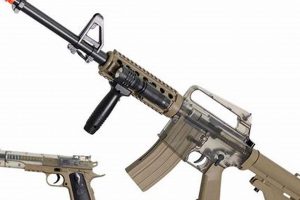
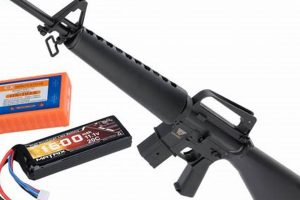
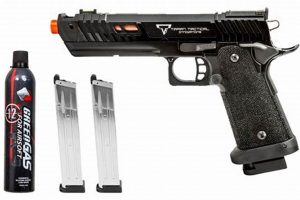
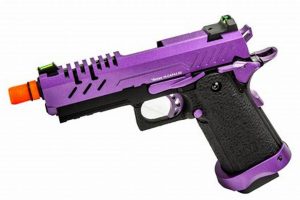
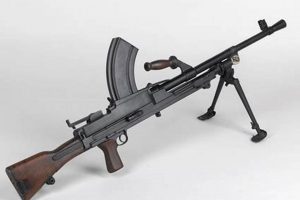
The allowance of realistic toy firearms replicating actual weapons on Department of Defense installations is a complex issue governed by regulations emphasizing safety and security. These devices, often used in recreational simulations, present unique challenges in maintaining order and preventing confusion among military personnel and civilian employees.
The primary concern is the potential for misidentification. Such items could easily be mistaken for real firearms, triggering serious security responses and potentially leading to dangerous confrontations. Furthermore, the use of these devices could be perceived as a threat, undermining the sense of safety and security that military communities strive to maintain. Historical incidents involving realistic toy weapons leading to misunderstandings and escalated situations underscore the need for clear policies.
Therefore, the permissibility of these items on military bases is subject to specific regulations and command policies that vary by installation. These regulations frequently address factors such as storage, transportation, and usage, ensuring accountability and minimizing risk. Understanding these rules is essential for anyone residing on or visiting a military base.
Guidance Regarding Replicas of Firearms on Military Installations
Adhering to established guidelines is paramount when considering bringing realistic toy firearms onto a military installation. Compliance ensures safety and mitigates potential security incidents.
Tip 1: Consult Installation Regulations: Contact the Provost Marshal’s Office or base security personnel to obtain the most current policies regarding replicas of firearms. Regulations vary significantly between installations and commands.
Tip 2: Comply with Storage Requirements: If permitted, store the item in designated areas, often requiring it to be unloaded and secured, potentially disassembled, and transported in a locked container.
Tip 3: Transport with Caution: When transporting the item, ensure it is not visible and is contained within a case or bag. Avoid brandishing or displaying the item in public areas.
Tip 4: Refrain from Modifications: Do not modify the item to make it appear more realistic or easily mistaken for a real firearm. Any alterations could result in immediate confiscation and potential legal repercussions.
Tip 5: Supervise Use: If usage is authorized at designated areas, ensure strict adherence to safety protocols, including the use of appropriate protective gear. Supervise all activities involving the item to prevent misuse or accidental injuries.
Tip 6: Report Concerns: If suspicious activity involving realistic toy firearms is observed, promptly report it to the appropriate authorities. Timely reporting can help prevent potential security breaches.
Tip 7: Be Aware of Prohibited Zones: Understand that certain areas on a military installation, such as housing areas, schools, and sensitive operational sites, may be strictly off-limits for any activity involving realistic toy firearms.
Strict adherence to these guidelines and proactive communication with installation authorities will help to avoid misunderstandings and ensure the safety and security of the military community. Ignorance of the rules is not an acceptable defense.
The preceding guidelines provide a framework for understanding the complexities involved in the possession of realistic toy firearms on military bases. It is essential to always prioritize safety and security by staying informed and adhering to all applicable regulations.
1. Installation Policy

The query regarding the presence of airsoft guns on military bases is directly governed by individual installation policy. These policies, established by the commanding officer or designated authority, dictate whether such items are permitted, and if so, under what conditions. An installation’s policy serves as the foundational legal basis for regulating potentially hazardous items and maintaining order. For instance, one base might prohibit all airsoft guns due to high security concerns, while another might allow them only in designated recreational areas and with strict adherence to safety protocols.
The stringency of an installation’s policy often reflects its overall security posture, the nature of its mission, and the demographics of its population. Bases with a high concentration of families, for example, may adopt more restrictive policies to minimize the risk of accidental injury. Conversely, training facilities might permit airsoft activities under controlled circumstances for training purposes, such as simulating close-quarters combat scenarios. Furthermore, historical incidents involving replica firearms on or near the installation often influence the creation or revision of these policies, leading to stricter enforcement and greater oversight.
In essence, the answer to whether airsoft guns are permitted on a military base resides entirely within the specific installation policy. Proactive engagement with the installation’s Provost Marshal’s Office or security personnel is paramount to ascertain the current regulations and ensure compliance. Failure to adhere to these policies can result in disciplinary action, including confiscation of the airsoft gun and potential legal repercussions. Therefore, understanding and adhering to the relevant installation policy is not merely a recommendation, but a crucial responsibility.
2. Storage requirements
Storage requirements represent a critical factor in determining whether airsoft guns are permitted on a military base. If installation policy allows these devices, stringent storage protocols are invariably mandated. These protocols are not arbitrary; they are a direct response to mitigating the risk of theft, accidental discharge, and misidentification. The requirements serve as a cornerstone of safety and security, directly impacting the potential for accidents or security breaches. For example, a common storage requirement dictates that airsoft guns must be stored unloaded, with the battery removed, and secured in a locked container. Failure to comply with this specific requirement, even if the device is legally owned, can result in immediate confiscation and disciplinary action.
The specific storage protocols are multifaceted, encompassing the type of container required (e.g., hard-sided case, gun safe), the location of storage (e.g., designated armory, private residence), and the accountability for the device (e.g., registration with base security). Certain installations might require periodic inspections to verify compliance with storage standards. The rational is not solely to prevent misuse by the owner, but also to ensure the devices do not fall into the wrong hands. Real-world incidents have demonstrated the dire consequences of unsecured firearms, whether real or replica, leading to criminal activity or accidental injuries. The existence of comprehensive storage policies, and their rigorous enforcement, is therefore a key aspect of responsible weapon ownership, even for recreational items like airsoft guns.
In summation, the capacity to meet stringent storage requirements acts as a de facto prerequisite for possessing airsoft guns on a military base. The purpose is the mitigation of risks to all personnel, ensuring compliance, and maintaining safety and security throughout the installation. The understanding of storage requirements is not just about knowing the rules; it’s about grasping the importance of those rules in the overall context of maintaining a secure military environment. The restrictions directly influence whether airsoft guns may be present.
3. Transportation protocols

Transportation protocols significantly affect whether airsoft guns are permitted on a military installation. Even if possession and storage are authorized, failure to adhere to stringent transportation rules will negate those allowances. These protocols are implemented to prevent misidentification of the items as real firearms, reducing the risk of triggering security responses. The protocols mandate that airsoft guns must be transported unloaded, concealed within a closed case or bag, and often disassembled. For instance, transporting an airsoft gun openly in a vehicle on a military base will likely result in immediate confiscation and potential disciplinary action, irrespective of whether the individual possesses authorization for its ownership and storage.
The specific requirements often detail the types of acceptable containers, the permitted routes of travel, and the times of day when transportation is allowed. The rationale stems from the need to maintain a secure environment and minimize the potential for misunderstandings. Consider the situation where an individual is moving from one on-base residence to another: the airsoft gun must still be transported in accordance with the established protocols, regardless of the short distance involved. The rules also extend to instances where an individual is transporting the item for off-base repairs or recreational use at an authorized range. Any deviation from these protocols carries the risk of being perceived as a threat, jeopardizing the safety and security of the installation.
In summary, strict adherence to transportation protocols is a prerequisite for possessing airsoft guns on a military base. Compliance serves as a demonstration of responsible ownership and a commitment to maintaining a safe and secure environment. Understanding and adhering to the specific transportation protocols outlined by the installation policy is not merely advisable; it is a non-negotiable aspect of responsible behavior. It is a direct cause and effect: following these protocols will determine whether such items are permitted, reinforcing the connection to the broader issue.
4. Authorized Usage
The allowance of airsoft guns on a military base is critically linked to authorized usage policies. These policies define where, when, and how airsoft guns can be used, directly influencing whether their presence is permissible at all. Unauthorized use will inevitably lead to prohibition.
- Designated Areas and Times
Authorizations usually specify distinct areas for airsoft activities, such as designated ranges or recreational fields. These areas are often subject to strict scheduling, limiting use to specific days or hours. An example would be a designated field only available on weekends under supervision of a range officer. Outside these parameters, possession or use is typically prohibited.
- Required Safety Equipment and Procedures
Authorized usage invariably mandates the use of approved safety equipment, including eye protection and face masks, and adherence to specific procedures, such as gun handling and cease-fire protocols. Failure to use required safety equipment could result in immediate suspension of privileges. Examples include mandatory eye protection exceeding ANSI Z87.1 standards and pre-use safety briefings.
- Prohibited Activities and Modifications
Usage policies explicitly prohibit certain activities, such as simulated combat scenarios outside designated areas or modifications to the airsoft gun that increase its projectile velocity beyond approved limits. An example of a prohibited activity could be practicing tactical maneuvers in unauthorized areas such as housing areas. Modifying the airsoft gun might include increasing its velocity beyond the regulated maximum for the specific authorized location.
- Supervision and Training Requirements
Authorized usage may require adult supervision or participation in mandatory training courses to ensure safe handling and adherence to regulations. For instance, a minor using an airsoft gun might be required to have a parent or guardian present. The training could cover safe handling practices, range safety rules, and legal liabilities.
In essence, authorized usage forms a fundamental basis for the permissibility of airsoft guns on a military installation. The capability to meet established authorized usage will decide whether such items are permitted, reinforcing the connection to the broader issue. The more restricted the usage parameters, the more likely airsoft guns will be allowed under controlled circumstances.
5. Security risks
The permissibility of realistic toy firearms, such as airsoft guns, on military installations is fundamentally contingent upon the assessment and mitigation of associated security risks. The presence of these items inherently introduces several potential threats that must be addressed through policy and enforcement. Foremost among these risks is the potential for misidentification. Even a trained observer, under duress, might mistake an airsoft gun for a real firearm, triggering an unwarranted security response. Such incidents can escalate rapidly, placing both military personnel and civilians at risk. The financial consequences of an incident triggered by a replica weapon can also be substantial. A real-world instance of a civilian brandishing a realistic-looking toy gun near a military checkpoint led to a base-wide lockdown, consuming significant resources for security sweeps and investigations.
Another critical security risk is the potential for the use of airsoft guns in simulated attacks or unauthorized training exercises. Military installations must maintain a high state of readiness, and unauthorized drills can disrupt operations and create confusion. The risk is heightened during periods of increased security alerts. The storage of airsoft guns also presents a concern, as unsecured items could be stolen and used for illicit purposes, both on and off base. Regulations typically require airsoft guns to be stored unloaded and in locked containers, mirroring requirements for real firearms, underscoring the parallel security concerns. The ease with which airsoft guns can be modified to resemble real firearms more closely further complicates the situation, as modifications can make visual identification even more challenging.
The impact of security risks directly affects the answer to the question of whether airsoft guns can be allowed on a military base. Installations must balance the recreational interests of personnel and their families with the overriding need to maintain security and operational readiness. Consequently, the policies governing airsoft guns are often restrictive, mandating strict storage, transportation, and usage protocols. The evaluation of security risks is not a static process; it requires ongoing monitoring and adaptation based on emerging threats and incident data. Understanding the link between security risks and airsoft gun policies is vital for all individuals residing on or visiting military installations. It reinforces the necessity of adhering to regulations and prioritizing safety and security.
6. Legal consequences
The question of possessing realistic toy firearms, such as airsoft guns, on military bases is inextricably linked to potential legal repercussions. Violations of installation policies or applicable laws can result in a range of consequences, from administrative actions to criminal charges. The severity of these consequences underscores the importance of understanding and adhering to relevant regulations.
- Confiscation and Disciplinary Action
The most immediate legal consequence of violating airsoft gun policies on a military base is the confiscation of the item. Military personnel found in non-compliance may face disciplinary actions under the Uniform Code of Military Justice (UCMJ). Actions may include reprimands, loss of privileges, or even more severe penalties, depending on the nature and severity of the infraction. For example, if a service member is found to have illegally modified an airsoft gun to increase its projectile velocity, this could be construed as a violation of safety regulations and result in a reduction in rank or pay.
- Federal and State Laws
In addition to military regulations, federal and state laws may apply. Some states have specific laws regulating airsoft guns, including requirements for safe storage, transportation, and usage. Violations of these laws on a military installation could lead to criminal charges in civilian courts. An instance of brandishing an airsoft gun in a manner that causes fear or alarm could result in charges of aggravated assault, depending on the jurisdiction. The presence of these overlapping jurisdictions creates a complex legal environment requiring strict compliance.
- Base Restrictions and Trespassing
Military bases have the authority to establish restrictions on items brought onto the property. A civilian found in violation of these restrictions could face charges of trespassing. Furthermore, actions taken with an airsoft gun that are deemed threatening can lead to charges relating to assault or menacing, which could carry significant fines and imprisonment. For instance, a civilian entering a military base with an undeclared airsoft gun could be arrested and charged with violating base regulations, potentially leading to a ban from the installation.
- Civil Liability
Beyond criminal charges, individuals who misuse airsoft guns on military bases may face civil liability for any resulting damages or injuries. If an individual is injured as a result of negligence or recklessness involving an airsoft gun, the responsible party could be sued for damages. An example could be an individual struck by an airsoft pellet due to negligence. Civil lawsuits can result in significant financial judgments, adding another layer of potential legal ramifications.
The spectrum of legal consequences highlights the serious nature of airsoft gun regulations on military bases. These facets emphasize the need for strict adherence to installation policies and applicable laws, ensuring safety and minimizing potential legal repercussions. Understanding these aspects is crucial for military personnel, their families, and civilians visiting or residing on military installations.
Frequently Asked Questions Regarding Airsoft Guns on Military Bases
The following questions address common concerns regarding the possession and use of airsoft guns on military installations. The answers provided reflect general principles, and specific installation policies should always be consulted for definitive guidance.
Question 1: Are airsoft guns permitted on all military bases?
No, the permissibility of airsoft guns varies significantly between different military installations. Each base establishes its own policies regarding these items, which are influenced by factors such as security considerations, mission requirements, and local regulations. Contacting the Provost Marshal’s Office or base security is necessary to ascertain the specific regulations.
Question 2: What are the common storage requirements for airsoft guns on military bases?
If permitted, airsoft guns typically must be stored unloaded, with the battery removed (if applicable), and secured in a locked container. The specific type of container may be specified by the installation, and the storage location may be subject to inspection. Registration of the airsoft gun with base security may also be required.
Question 3: How should airsoft guns be transported on a military base?
When transporting an airsoft gun, it must be concealed within a closed case or bag. Openly displaying the item is generally prohibited. Transportation routes and times may also be restricted by installation policy. It is essential to keep a copy of any registration documents or authorization permits with the item during transport.
Question 4: Where can airsoft guns be used on a military base?
Usage is restricted to designated areas, such as approved ranges or recreational fields. Use in housing areas, near sensitive operational sites, or in other unauthorized locations is strictly prohibited. The use of appropriate safety equipment, including eye protection and face masks, is mandatory in authorized areas.
Question 5: What activities are prohibited with airsoft guns on military bases?
Prohibited activities include simulated combat scenarios outside designated areas, modifications to the airsoft gun that increase its projectile velocity, and any behavior that could be perceived as threatening or disruptive. Unauthorized selling or trading of airsoft guns on base may also be prohibited.
Question 6: What are the potential legal consequences of violating airsoft gun policies on a military base?
Violations can result in confiscation of the airsoft gun, disciplinary actions for military personnel under the UCMJ, and potential criminal charges under federal or state law. Depending on the severity of the violation, civil liability for damages or injuries may also result. Trespassing or other charges might apply if the item is brought onto the base illegally.
Compliance with installation policies and applicable laws is paramount. Individuals are responsible for staying informed about current regulations. Prioritizing safety and security is essential.
The policies are not static. Future sections will discuss any changes to this information.
Conclusion
The exploration of whether the presence of realistic toy firearms is permissible on military installations reveals a nuanced and multifaceted landscape. The definitive answer is not a universal “yes” or “no,” but rather a conditional “it depends.” It hinges on a complex interplay of factors, including specific installation policies, storage requirements, transportation protocols, authorized usage guidelines, security risk assessments, and potential legal consequences. These elements collectively dictate whether these devices can be possessed and used on a given military base.
Ultimately, maintaining safety and security remains paramount. Therefore, it is incumbent upon all individuals residing on or visiting military installations to proactively seek and adhere to the governing regulations. A thorough understanding of these regulations is not merely a recommendation, but a fundamental responsibility, ensuring the well-being of the entire community and the integrity of military operations. Continued vigilance and a commitment to compliance are essential in navigating this complex issue and upholding the security standards that define military environments.