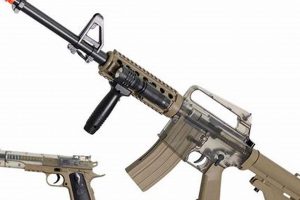
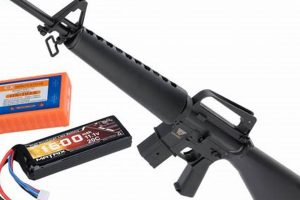
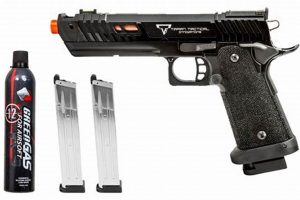
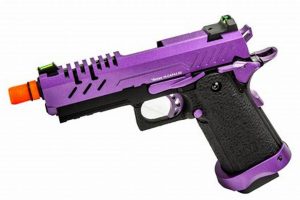
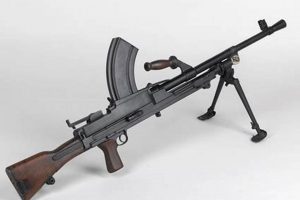
The application of aerosolized pigment to airsoft replicas allows for customization and camouflage. This process involves applying a thin, even coating of specially formulated paint to the exterior of the airsoft gun. The purpose is often to alter the appearance of the replica to match specific environments or personal preferences. For instance, a user might apply a camouflage pattern for woodland scenarios or a bright color for enhanced visibility during indoor games.
Altering the visual profile of airsoft devices offers tactical advantages by providing concealment in diverse terrains. Furthermore, it permits players to personalize their gear, fostering a sense of individuality and team cohesion. Historically, resourceful players have modified their equipment’s appearance to gain a competitive edge and distinguish themselves on the field.
The subsequent sections will delve into selecting appropriate products, preparing the airsoft device for application, executing proper painting techniques, and ensuring long-lasting results through protective measures.
Application Guidance for Airsoft Replica Coatings
The following guidance ensures optimal results when modifying the aesthetic of airsoft replicas using aerosolized coatings. Adherence to these recommendations contributes to durability, realistic appearance, and long-term user satisfaction.
Tip 1: Surface Preparation is Paramount: Thoroughly clean the airsoft device with a degreasing agent. Residue, oils, or silicones impede adhesion. Sanding smooth surfaces with fine-grit sandpaper (400-600 grit) provides a mechanical bond for the coating.
Tip 2: Select Appropriate Formulation: Opt for paints specifically designed for plastics and airsoft materials. These formulations exhibit greater flexibility and resist chipping or cracking under stress. Test the product on an inconspicuous area before full application to assess compatibility.
Tip 3: Apply Thin, Even Coats: Multiple thin coats are superior to a single thick coat. This prevents runs, drips, and prolonged drying times. Allow each coat to dry completely before applying the next, typically 15-30 minutes depending on environmental conditions and product specifications.
Tip 4: Maintain Proper Distance: Hold the aerosol can approximately 8-10 inches from the surface. This distance ensures an even application and prevents pooling. Varying the distance can lead to uneven texture and potential defects.
Tip 5: Utilize Stencils for Camouflage Patterns: Employ stencils to achieve complex camouflage designs. Secure the stencils firmly to prevent bleed-through and maintain sharp lines. Several layers and colors may be required for optimal camouflage effect.
Tip 6: Protect Critical Components: Mask or remove sensitive components, such as hop-up units, barrels, and sights, before commencing the application process. Overspray can impede functionality and require extensive cleaning or replacement of these parts.
Tip 7: Allow Adequate Curing Time: After application, allow the paint to cure completely, as specified by the manufacturer’s instructions. Curing time often extends beyond the dry-to-touch timeframe and is crucial for achieving optimal durability and adhesion.
Consistent execution of these techniques enhances both the aesthetic and functional longevity of modified airsoft devices. Proper planning and careful application contribute significantly to a professional-looking and durable finish.
The subsequent sections will cover maintenance practices to preserve the coating and address common issues encountered during and after the painting process.
1. Surface Preparation

Surface preparation is a foundational step in achieving a durable and aesthetically pleasing finish when applying aerosolized coatings to airsoft replicas. Neglecting this phase compromises the paint’s adhesion and longevity, leading to premature wear and an unsatisfactory appearance. Proper preparation ensures the coating bonds effectively with the underlying material.
- Cleaning and Degreasing
The removal of surface contaminants, such as oils, silicones, and dirt, is critical. These substances create a barrier between the paint and the substrate, preventing proper bonding. Isopropyl alcohol or specialized degreasers are typically employed. Inadequate cleaning results in paint beading, peeling, or fisheye effects, compromising the finish’s integrity. For instance, fingerprint oils left on the surface prior to painting will invariably cause paint adhesion issues and a visibly flawed result.
- Sanding and Abrasion
Creating a textured surface enhances the mechanical bond between the paint and the airsoft replica’s material. Fine-grit sandpaper (typically 400-600 grit) is used to lightly abrade smooth surfaces, providing the paint with “tooth” to grip. Without sufficient abrasion, the paint film lacks a stable foundation, increasing the risk of chipping or peeling upon impact or flexing. Applying paint to a completely smooth surface without sanding significantly increases the likelihood of coating failure.
- Masking and Protection
Protecting areas not intended for painting is a critical aspect of surface preparation. This includes covering sensitive components, such as internal mechanisms, hop-up units, and threaded sections, with masking tape or liquid masking film. Overspray on these components can impede functionality or damage delicate parts, necessitating costly repairs or replacements. Masking ensures that only the intended surfaces receive the coating, preserving the functionality and reliability of the airsoft replica.
- Priming (Optional but Recommended)
Applying a primer coat after cleaning and sanding provides a uniform base for the final color coat. Primers improve adhesion, enhance color vibrancy, and can fill minor imperfections in the surface. Using a primer specifically formulated for plastics is advisable to ensure compatibility and prevent adverse reactions. The use of a primer coat significantly improves the overall durability and finish quality, especially on complex surfaces or when changing the color of the replica drastically.
The combined effect of these preparation steps establishes a solid foundation for the application of paint to airsoft replicas. Adherence to these practices ensures a durable, professional-looking finish that withstands the rigors of gameplay and enhances the overall aesthetic appeal of the modified airsoft device. Ignoring the importance of thorough surface preparation inevitably results in compromised coating performance and a diminished user experience.
2. Paint Compatibility
The selection of appropriate paint formulations is paramount when applying aerosolized coatings to airsoft replicas. Incompatibility between the paint and the underlying substrate material results in compromised adhesion, premature degradation, and ultimately, an unsatisfactory aesthetic outcome. This necessitates a careful consideration of material properties and chemical interactions.
- ABS Plastic Compatibility
Many airsoft replicas are constructed from Acrylonitrile Butadiene Styrene (ABS) plastic. Paints containing strong solvents, such as lacquer thinner, can dissolve or weaken ABS, leading to warping, cracking, or complete structural failure. Therefore, formulations specifically designed for plastic substrates, typically acrylic-based or enamel-based with milder solvents, are essential. For example, utilizing automotive lacquer directly on an ABS receiver could cause irreversible damage.
- Metal Alloy Compatibility
Certain components of airsoft replicas, such as barrels, sights, and some internal parts, are manufactured from metal alloys like aluminum or steel. Paints designed for plastics may not adhere adequately to these metal surfaces, resulting in chipping or peeling. Primers formulated for metal substrates can improve adhesion. Using a self-etching primer on metal components before applying the color coat is recommended for optimal results.
- Flexibility and Impact Resistance
Airsoft replicas are subject to impacts and flexing during gameplay. Rigid paints are prone to cracking or chipping under these conditions. Formulations with inherent flexibility or those incorporating additives to enhance flexibility provide greater durability and longevity. The selection of a paint with a high elongation factor will mitigate the risk of damage during normal use.
- Chemical Resistance
Airsoft replicas are often exposed to lubricants, cleaning agents, and other chemicals. Paints resistant to these substances are crucial for maintaining the integrity of the finish. Testing the paint’s resistance to common cleaning solutions on an inconspicuous area before full application is advisable. A finish that readily dissolves or discolors upon contact with silicone oil, for instance, is unsuitable for airsoft replica customization.
The interplay of these factors underscores the importance of verifying paint compatibility with the specific materials comprising the airsoft replica. Choosing a paint without careful consideration of these chemical and physical properties will likely lead to premature failure and a compromised aesthetic. Employing paints explicitly designed for airsoft or model applications, often labeled as “airsoft safe,” minimizes the risk of incompatibility and ensures a more durable and visually appealing result.
3. Application Technique

The effectiveness of aerosolized coatings on airsoft replicas is directly contingent upon the application technique employed. Improper technique, irrespective of paint quality, results in an unsatisfactory finish, characterized by runs, drips, uneven coverage, and compromised durability. Conversely, meticulous application yields a professional-grade aesthetic and enhances the longevity of the modification.
Thin, even coats are a cornerstone of proper application. Multiple light layers allow for controlled build-up of color and minimize the risk of imperfections. Holding the aerosol can at a consistent distance (approximately 8-10 inches) and maintaining a smooth, sweeping motion prevents pooling and ensures uniform coverage. Failure to adhere to these principles often leads to excessive paint accumulation in certain areas, resulting in runs and a textured, uneven surface. For example, attempting to achieve full color coverage in a single, heavy coat invariably results in drips and prolonged drying times, ultimately degrading the overall finish quality.
Environmental factors also influence the outcome. Optimal application occurs within a controlled environment, characterized by moderate temperature and low humidity. Extreme temperatures or high humidity levels can affect paint drying times and adhesion properties, leading to a compromised finish. For instance, painting an airsoft replica outdoors on a humid day may result in a hazy or tacky surface, hindering the paint’s ability to properly cure. In summary, diligent attention to application technique, encompassing both physical execution and environmental considerations, is paramount for achieving a durable and aesthetically pleasing coating on airsoft replicas.
4. Camouflage Patterns

The application of camouflage patterns to airsoft replicas using aerosolized coatings serves a practical function beyond mere aesthetics. It aims to reduce visual detectability in diverse environments, thereby providing a tactical advantage during gameplay. The effectiveness of these patterns hinges on their ability to disrupt the replica’s outline and blend with the surrounding terrain.
- Digital Camouflage (MARPAT, CADPAT)
Digital camouflage patterns employ small, pixelated shapes to mimic the texture and color variations found in natural environments. These patterns are designed to be effective at multiple ranges and against a variety of backgrounds. When applied to airsoft replicas, digital camouflage disrupts the weapon’s silhouette, making it more difficult to discern against foliage, rocky terrain, or urban environments. For example, MARPAT (Marine Pattern) utilizes a combination of green, brown, and tan pixels optimized for woodland and desert environments.
- Woodland Camouflage (M81 Woodland)
Woodland camouflage, characterized by its high-contrast, organic shapes, is tailored for forested environments. It typically incorporates colors such as green, brown, black, and tan. Applying this pattern to airsoft replicas effectively conceals the weapon within dense vegetation, breaking up its outline and minimizing its visibility. The M81 Woodland pattern, a classic example, remains effective in temperate and subtropical woodland settings.
- Multicam
Multicam is a multi-environment camouflage pattern designed to perform well across a wide range of terrains. It utilizes a gradient of blended colors, including greens, browns, and tans, to adapt to varying lighting conditions and background complexities. Airsoft replicas adorned with Multicam exhibit enhanced concealment capabilities in transitional environments, such as scrublands and mixed forests. Its widespread adoption by military and law enforcement agencies attests to its versatility.
- Stencils and Custom Patterns
The application of custom camouflage patterns to airsoft replicas allows for tailored concealment solutions. Stencils, either commercially produced or homemade, enable the creation of intricate designs that mimic specific local environments. These patterns can incorporate unique color combinations and shapes to optimize camouflage effectiveness in particular terrains. For example, a player operating primarily in a desert environment might employ a custom pattern incorporating shades of sand, beige, and light brown.
The judicious selection and application of camouflage patterns, using appropriate aerosolized coatings, significantly enhance the concealment capabilities of airsoft replicas. Whether employing established patterns or creating custom designs, the ultimate goal is to minimize visual detectability and gain a tactical advantage within the intended operational environment. The effectiveness hinges not only on the pattern itself but also on the proper application techniques and the selection of colors that closely match the surrounding terrain.
5. Component Protection

Component protection is an indispensable element within the practice of applying aerosolized coatings to airsoft replicas. The application of spray paint to these devices, while aesthetically driven or tactically motivated, introduces the inherent risk of overspray and subsequent malfunction of critical internal mechanisms. Neglecting component protection during this process can result in significant functional impairment and necessitate costly repairs or replacements. The causal relationship is direct: inadequate protection leads to contamination, which results in operational degradation. For example, failing to shield the hop-up unit can introduce paint particles into the system, directly affecting the replicas accuracy and range. Similarly, paint ingress into the gearbox mechanism can impede its smooth operation, potentially leading to complete failure. Therefore, the practice of protecting sensitive components is not merely an optional step, but a crucial preventative measure within the entire customization process.
The practical application of component protection manifests in several techniques, primarily masking and removal. Masking involves the careful application of specialized tapes or liquid masking agents to surfaces intended to remain uncoated. These materials provide a barrier against overspray, preventing paint from reaching sensitive areas. Removal, conversely, involves the disassembly of the airsoft replica to physically isolate components from the painting process. This approach is particularly applicable to intricate mechanisms, such as gearboxes or electronic firing control systems, where masking may prove inadequate. The selection of appropriate masking materials is crucial; low-tack tapes prevent residue buildup and ensure clean removal, while liquid masking agents provide conformity to complex shapes. Proper execution of either masking or removal is a prerequisite for a successful paint application process, mitigating the risk of compromised performance and extending the lifespan of the airsoft replica.
In conclusion, component protection, while seemingly a peripheral concern, forms an integral part of the overall process of using aerosolized coatings on airsoft replicas. The potential for functional impairment arising from neglected protection underscores its significance. Challenges exist in balancing the aesthetic goals of customization with the imperative to safeguard delicate internal mechanisms. However, understanding the causal relationship between component protection and operational integrity allows users to mitigate risks and achieve both visual enhancement and sustained performance from their modified airsoft devices. Addressing this aspect is crucial for ensuring the longevity and functionality of customized airsoft replicas, making it a fundamental consideration for anyone undertaking such modifications.
6. Curing Time
Curing time represents a critical phase in the application of aerosolized coatings to airsoft replicas, directly influencing the durability and overall quality of the finished product. It extends beyond the superficial “dry to the touch” stage and involves the complete crosslinking and hardening of the paint film. Insufficient curing undermines the integrity of the coating, rendering it susceptible to damage and detracting from the intended aesthetic.
- Polymerization and Crosslinking
Curing facilitates the chemical processes of polymerization and crosslinking within the paint film. Polymerization refers to the linking of individual monomers to form long-chain polymers, while crosslinking establishes bonds between these polymer chains. These processes result in a hardened, more durable paint film with enhanced resistance to abrasion, impact, and chemical exposure. For example, an acrylic-based paint applied to an airsoft replica requires adequate curing time to achieve its maximum hardness and prevent chipping during gameplay. Without sufficient curing, the paint remains soft and vulnerable.
- Solvent Evaporation
The curing process also involves the complete evaporation of solvents from the paint film. Residual solvents trapped within the film weaken its structure and compromise its adhesion to the underlying substrate. This can lead to blistering, cracking, or peeling of the paint over time. For example, if a lacquer-based paint is applied too thickly or not allowed to cure properly, trapped solvents can cause the finish to become tacky or develop surface imperfections. Proper ventilation and adherence to the manufacturer’s recommended curing times are crucial for ensuring complete solvent evaporation.
- Environmental Factors
Environmental conditions, such as temperature and humidity, significantly influence the curing time of paints applied to airsoft replicas. Lower temperatures slow down the rate of polymerization and solvent evaporation, extending the required curing time. High humidity can also impede solvent evaporation and promote the formation of condensation on the paint surface, leading to a compromised finish. For example, an airsoft replica painted in a cold, humid environment may require significantly longer curing time compared to one painted in a warm, dry environment to achieve optimal hardness and adhesion.
- Impact on Durability and Longevity
Proper curing directly translates to enhanced durability and longevity of the painted surface on airsoft replicas. A fully cured paint film exhibits increased resistance to scratches, abrasions, and chemical exposure, ensuring that the customized finish withstands the rigors of regular use and maintains its aesthetic appeal over time. In contrast, an inadequately cured paint film is prone to premature wear and degradation, requiring frequent touch-ups or complete re-application. The long-term value and satisfaction derived from customizing an airsoft replica are therefore intrinsically linked to the proper execution of the curing process.
The preceding facets underscore the importance of adhering to recommended curing times for aerosolized coatings applied to airsoft replicas. While the temptation to expedite the process may be strong, particularly for impatient users, neglecting this critical phase ultimately diminishes the quality, durability, and long-term aesthetic appeal of the modified airsoft device. The investment of time and attention to proper curing yields a significantly more robust and visually satisfying result, enhancing the overall user experience.
7. Durability Enhancement
Durability enhancement is a primary consideration when employing aerosolized coatings on airsoft replicas. The application of these coatings is not solely for aesthetic modification; it also serves as a potential protective measure against wear, abrasion, and environmental factors, contingent upon appropriate product selection and application techniques.
- Abrasion Resistance
Coatings formulated for abrasion resistance minimize surface wear caused by friction and contact with external elements. Airsoft replicas, frequently subjected to handling and interaction with terrain, benefit from this characteristic. Certain polyurethane-based paints, for instance, exhibit superior abrasion resistance compared to standard acrylic formulations. This enhanced resistance translates to a prolonged aesthetic lifespan and reduced susceptibility to cosmetic damage during regular use.
- Impact Resistance
Impact resistance refers to the coating’s ability to withstand forceful impacts without chipping, cracking, or delaminating. Airsoft replicas, particularly those used in intense gameplay scenarios, are prone to impacts from BBs, branches, and other objects. Coatings incorporating flexible polymers or impact modifiers can dissipate energy and prevent structural damage to the paint film. Applying multiple thin coats, as opposed to a single thick coat, contributes to improved impact resistance.
- UV Protection
Ultraviolet (UV) radiation can cause fading, discoloration, and degradation of many paint formulations over time. Airsoft replicas frequently used outdoors are susceptible to UV damage. Coatings containing UV inhibitors or stabilizers mitigate the harmful effects of UV radiation, preserving the original color and finish. This protection is especially critical for darker colors, which tend to fade more rapidly under UV exposure.
- Chemical Resistance
Airsoft replicas are often exposed to various chemicals, including lubricants, cleaning agents, and solvents. Coatings with chemical resistance protect the underlying surface from damage caused by these substances. Epoxy-based paints, for example, demonstrate excellent resistance to a wide range of chemicals. This resistance prevents staining, softening, or dissolution of the paint film, maintaining the integrity of the coating and preserving the aesthetic appearance of the replica.
These facets of durability enhancement collectively contribute to the extended lifespan and sustained aesthetic quality of airsoft replicas modified with aerosolized coatings. The selection of appropriate paint formulations, coupled with meticulous application and proper curing techniques, is paramount for realizing these benefits and maximizing the long-term value of the customization process. Failure to prioritize durability considerations results in premature wear, diminished aesthetic appeal, and the need for frequent re-application, thereby negating the initial investment of time and resources.
Frequently Asked Questions
This section addresses common inquiries regarding the application of aerosolized coatings to airsoft replicas, providing concise and informative answers to prevalent concerns.
Question 1: What types of paint are most suitable for airsoft replicas?
Paints specifically formulated for plastics, such as acrylic-based or enamel-based formulations with mild solvents, are generally recommended. These exhibit greater flexibility and minimize the risk of damaging ABS plastic components common in airsoft replicas.
Question 2: How can one ensure proper adhesion of the paint to the airsoft replica’s surface?
Thorough surface preparation is paramount. This includes cleaning the surface with a degreasing agent to remove oils and contaminants, followed by light abrasion with fine-grit sandpaper to provide a mechanical bond for the paint.
Question 3: What precautions should be taken to protect internal components during the painting process?
Sensitive components, such as hop-up units, barrels, and gearboxes, should be carefully masked or removed entirely before commencing the application of spray paint. Overspray can impede functionality and necessitate costly repairs.
Question 4: How many coats of paint are recommended for optimal results?
Multiple thin coats are generally preferred over a single thick coat. This approach prevents runs and drips, promotes even coverage, and allows for proper drying between applications.
Question 5: What is the ideal distance to maintain between the aerosol can and the airsoft replica during painting?
A distance of approximately 8-10 inches is typically recommended. This distance ensures even distribution of the paint and minimizes the risk of pooling or uneven texture.
Question 6: How long should the paint be allowed to cure after application?
The paint should be allowed to cure completely, following the manufacturer’s instructions. Curing time often extends beyond the “dry to the touch” timeframe and is essential for achieving optimal durability and adhesion.
In summary, careful product selection, meticulous surface preparation, proper application techniques, and adherence to recommended curing times are crucial for achieving a durable and aesthetically pleasing finish when using aerosolized coatings on airsoft replicas.
The following section will delve into advanced techniques for achieving specialized finishes and effects on airsoft replicas.
Spray Paint for Airsoft Guns
The preceding discussion has elucidated critical aspects of utilizing aerosolized coatings on airsoft replicas. Surface preparation, paint compatibility, application technique, component protection, curing time, and durability enhancement constitute interconnected elements that determine the final outcome. A comprehensive understanding of these factors is essential for achieving both aesthetic objectives and functional longevity. Emphasis has been placed on the importance of selecting appropriate materials, employing meticulous techniques, and adhering to manufacturer guidelines to mitigate the risks associated with improper application.
The informed and responsible application of spray paint for airsoft guns enables personalization and tactical adaptation, while simultaneously demanding a commitment to preserving the operational integrity of the modified device. Continued adherence to best practices and a focus on product innovation will further refine the process, enhancing both the user experience and the overall quality of customized airsoft replicas. The future of airsoft modification lies in balancing creative expression with technical proficiency, ensuring that aesthetic enhancements do not compromise functional reliability.