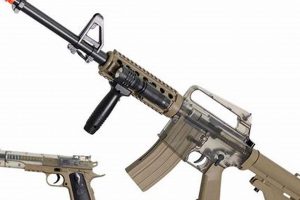
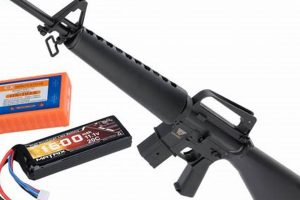
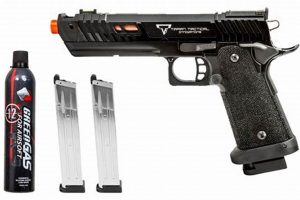
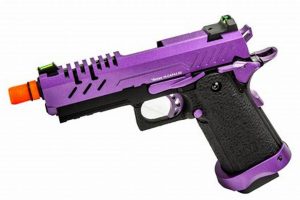
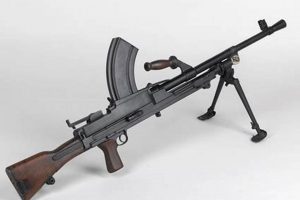
The process of applying a coating via aerosol to an imitation firearm replica is a common method for customizing its appearance. This technique allows for altering the base color, adding camouflage patterns, or creating a weathered aesthetic, enhancing the realism or personalizing the item’s visual design. For example, one might use multiple shades of green, brown, and tan to achieve a woodland camouflage effect on the surface of the replica firearm.
Customizing these recreational items provides several advantages. It allows individuals to distinguish their equipment from others on the field, reducing the likelihood of accidental swaps. Furthermore, a carefully applied finish can protect the underlying material from minor scratches and abrasions encountered during gameplay. Historically, applying bespoke finishes to such items has mirrored trends in military camouflage and firearms customization, with users seeking to replicate or adapt those styles.
The following sections will delve into the preparation steps necessary for a successful outcome, explore various techniques for creating different visual effects, outline the required materials and safety precautions, and provide guidance on maintaining the altered finish to ensure its longevity.
Enhancing the Appearance of Recreational Replica Firearms
Achieving a durable and aesthetically pleasing finish on recreational replica firearms requires careful planning and execution. The following tips offer guidance for optimizing the application process and ensuring a professional result.
Tip 1: Disassemble Components Prior to Application. Complete disassembly allows for access to all surfaces, prevents overspray on internal mechanisms, and ensures a consistent finish. For example, remove the magazine, stock, and any accessories before commencing work.
Tip 2: Thoroughly Degrease and Clean Surfaces. Residue, oil, or contaminants will impede adhesion and compromise the final finish. Use a dedicated degreaser and clean cloth to prepare the surface. Isopropyl alcohol can be effective for removing fingerprints.
Tip 3: Apply Thin, Even Coats. Multiple thin coats are preferable to a single thick coat, which can lead to runs, drips, and extended drying times. Allow each coat to dry completely before applying the next.
Tip 4: Maintain Consistent Distance and Angle. Holding the can at a consistent distance (typically 8-10 inches) and a perpendicular angle to the surface ensures even distribution and prevents uneven texture.
Tip 5: Utilize Proper Ventilation and Respiratory Protection. Aerosolized particles and fumes can be harmful. Work in a well-ventilated area and wear a respirator or mask with appropriate filtration.
Tip 6: Allow Sufficient Drying Time. Rushing the drying process can lead to smudging or peeling. Adhere to the manufacturer’s recommended drying times for optimal results.
Tip 7: Consider a Protective Clear Coat. A clear coat adds a layer of protection against scratches and abrasion, extending the lifespan of the applied finish. Choose a clear coat compatible with the underlying paint.
These tips, when followed diligently, contribute to a more professional, durable, and visually appealing finish on recreational replica firearms. Proper preparation, application technique, and safety precautions are paramount.
The subsequent sections will address more advanced techniques and customization options for achieving unique visual effects.
1. Preparation Importance

Effective surface preparation is paramount to the successful application of aerosol coatings on recreational replica firearms. The quality of the finished product is directly correlated with the thoroughness of the preparation process. Failure to adequately prepare the surface can result in compromised adhesion, uneven finishes, and premature deterioration of the applied coating. For example, if residual mold release agents remain on a polymer replica, the paint will likely flake or peel, regardless of the quality of the paint itself.
Preparation encompasses several critical steps. Disassembly allows for access to all surfaces and prevents overspray onto internal components. Cleaning with a degreasing agent removes oils, dirt, and other contaminants that impede paint adhesion. Light abrasion, using fine-grit sandpaper or a Scotch-Brite pad, creates a textured surface that promotes mechanical bonding between the paint and the substrate. Priming, particularly on non-porous materials like metal or smooth plastic, provides a uniform base for the subsequent color coats and further enhances adhesion. Consider the scenario where a user bypasses degreasing and directly applies paint to a surface contaminated with silicone lubricant; the paint will likely bead up and create an uneven, unsatisfactory result. This highlights the tangible impact of preparation on the outcome.
In conclusion, prioritizing thorough preparation is not merely an optional step but a foundational element in achieving a durable and aesthetically pleasing finish on recreational replica firearms. The time invested in proper preparation directly translates to improved paint adhesion, a smoother finish, and extended longevity of the customized appearance. Disregarding these preparatory measures ultimately undermines the entire endeavor, leading to suboptimal results and potential material waste.
2. Paint Compatibility
The selection of appropriate coating materials is paramount in the context of altering the surface finish of recreational replica firearms. Incompatibility between the applied paint and the replica’s underlying material can lead to several detrimental effects, compromising both the aesthetic appeal and the structural integrity of the item. For instance, certain solvent-based paints may react adversely with acrylonitrile butadiene styrene (ABS) plastics, a common material in such replicas, causing softening, cracking, or even complete dissolution of the plastic components. Conversely, using paints designed for metal surfaces on polymer replicas may result in poor adhesion and a finish that is prone to chipping and peeling. A carefully considered selection process mitigates these risks.
Effective paint compatibility necessitates identifying the materials comprising the replica firearm. Common materials include various types of plastics (ABS, nylon, polycarbonate), metals (aluminum alloys, steel), and composites. Once the materials are identified, one must research compatible paint formulations. Paints specifically formulated for plastics, often labeled as “plastic paints” or “adhesion promoters,” typically contain additives that enhance bonding to plastic surfaces. Similarly, paints intended for metal substrates often include primers that provide corrosion resistance and improve paint adhesion. For example, Cerakote, while durable, requires professional application and may not be suitable for all replica materials, whereas readily available acrylic-based paints offer broader compatibility and ease of use.
Ultimately, the successful execution of customizing these recreational items depends on a thorough understanding of the interplay between paint chemistry and the replica’s material composition. Neglecting compatibility considerations can result in irreversible damage and wasted resources. Prioritizing this aspect ensures a durable, aesthetically pleasing, and structurally sound modification. The practical implication of understanding paint compatibility extends beyond mere appearance; it ensures the longevity and continued functionality of the recreational replica firearm.
3. Application Technique

The method employed in applying aerosol coatings significantly impacts the final appearance and durability of a customized recreational replica firearm. A suboptimal technique can lead to uneven coverage, runs, drips, and compromised adhesion, negating the benefits of careful preparation and compatible materials. The following facets detail critical aspects of application technique.
- Distance and Angle Control
Maintaining a consistent distance (typically 8-10 inches) and a perpendicular angle to the surface is critical for even paint distribution. Deviations in distance can result in localized pooling or inadequate coverage. An inconsistent angle can cause uneven layering and streaking. For instance, holding the can too close to the surface leads to excessive paint deposition, increasing the likelihood of runs and sags.
- Movement Speed and Overlap
The speed at which the aerosol can is moved across the surface influences paint thickness and uniformity. A slow movement speed results in a heavier coat, while a fast movement speed produces a thinner coat. Overlapping each pass by approximately 50% ensures complete coverage and prevents gaps or stripes. Failure to maintain a consistent movement speed and overlap leads to an inconsistent finish with varying paint thicknesses.
- Trigger Control and Atomization
Proper trigger control is essential for achieving optimal atomization of the paint. Fully depressing the trigger ensures a consistent spray pattern and adequate atomization, breaking the paint into fine particles for even distribution. Partial trigger depression can lead to sputtering and an uneven texture. Correct atomization minimizes the likelihood of orange peel or other surface imperfections. For instance, a worn or clogged spray nozzle can disrupt atomization, regardless of trigger control, necessitating nozzle replacement or cleaning.
- Environmental Considerations
Ambient temperature and humidity levels influence paint drying time and adhesion. Applying paint in excessively humid conditions can hinder the drying process and lead to a cloudy or milky finish. Low temperatures can increase paint viscosity, resulting in a thicker, less uniform application. Ideally, the application environment should be well-ventilated and within the manufacturer’s recommended temperature and humidity ranges. Direct sunlight can also affect drying, potentially causing premature surface drying and trapping solvents underneath.
In summary, the application technique constitutes a critical factor in the customization process of recreational replica firearms. Maintaining consistent distance, angle, movement speed, and trigger control, while accounting for environmental conditions, significantly contributes to achieving a durable, aesthetically pleasing, and professional-looking finish.
4. Drying Time
The duration required for a coating to cure or harden represents a critical parameter in the process of applying aerosol paints to recreational replica firearms. Inadequate attention to drying time can lead to compromised finishes, necessitating rework and potentially damaging the replica itself. Adhering to recommended drying times ensures optimal paint adhesion, hardness, and overall durability.
- Environmental Factors’ Influence
Ambient temperature and humidity levels exert a significant influence on drying time. Elevated humidity can impede solvent evaporation, prolonging the drying process and potentially resulting in a hazy or milky finish. Conversely, low temperatures can increase paint viscosity, slowing the curing process. Therefore, application should ideally occur within the manufacturer’s specified temperature and humidity ranges. For instance, a paint that typically dries in 24 hours at 70F (21C) may require significantly longer in a humid environment or at lower temperatures.
- Paint Formulation Variations
Different paint formulations exhibit varying drying characteristics. Acrylic-based paints generally dry faster than enamel-based paints. Furthermore, the addition of hardeners or catalysts can accelerate the curing process. Consulting the paint manufacturer’s data sheet is essential for determining the recommended drying time for a specific product. An example is two-part epoxy paints, which, while offering superior durability, require precise mixing ratios and extended curing times compared to single-component acrylics.
- Coating Thickness Impact
The thickness of the applied paint layer directly affects drying time. Thicker coats require longer to dry than thinner coats. Applying multiple thin coats, allowing each to dry completely before applying the next, is preferable to applying a single thick coat. A thick coat can trap solvents underneath the surface, leading to a soft, tacky finish even after extended drying periods. For example, applying a single, heavy coat of clear coat to achieve a glossy finish often results in runs, sags, and prolonged drying times, whereas several light coats yield a smoother, more durable result.
- Curing vs. Drying Distinctions
While the terms are often used interchangeably, drying and curing represent distinct processes. Drying refers to the evaporation of solvents from the paint, while curing involves a chemical reaction that hardens the paint film. Some paints, particularly those with hardeners or catalysts, require a longer curing time after the initial drying period to achieve optimal hardness and resistance to solvents and abrasion. Rushing the curing process can compromise the paint’s long-term durability and resistance to wear. Cerakote, for example, requires heat curing to achieve its specified hardness and chemical resistance properties.
Ultimately, a thorough understanding of the factors influencing drying time is essential for achieving a durable and aesthetically pleasing finish on recreational replica firearms. Adhering to manufacturer’s recommendations, controlling environmental conditions, and allowing sufficient drying and curing time are critical for maximizing the longevity and performance of the applied coating. Disregarding these considerations can lead to unsatisfactory results and potential damage to the replica itself.
5. Protective Sealing

Protective sealing, in the context of applying aerosol coatings to recreational replica firearms, represents a critical final stage that directly influences the longevity and aesthetic quality of the customized finish. The application of a sealant or clear coat serves as a barrier against environmental factors, physical abrasion, and chemical exposure, thereby safeguarding the underlying paint layers. Without adequate sealing, the applied finish is vulnerable to chipping, scratching, fading, and degradation from handling or exposure to UV radiation. For instance, a replica firearm frequently used in outdoor simulations, if not properly sealed, may exhibit significant wear and tear within a short period, particularly in high-contact areas. The sealant effectively acts as a sacrificial layer, absorbing the brunt of external forces and preserving the integrity of the colored layers beneath.
Various types of protective sealants are available, each offering different levels of protection and aesthetic properties. Options include acrylic-based clear coats, polyurethane sealants, and specialized ceramic coatings. The choice of sealant depends on the desired level of durability, gloss level (matte, satin, gloss), and compatibility with the underlying paint. Polyurethane sealants, for example, provide enhanced abrasion resistance compared to acrylic-based options but may require more specialized application techniques. The practical application of a protective sealant extends beyond mere cosmetic preservation; it also contributes to the overall value and usability of the customized replica firearm. A well-sealed finish is easier to clean, less prone to staining, and more resistant to the effects of moisture and solvents, ensuring that the replica remains in optimal condition for extended periods.
In conclusion, protective sealing is an indispensable component of the aerosol coating process for recreational replica firearms. It provides a tangible benefit by significantly extending the lifespan of the custom finish and protecting it from environmental damage and physical wear. The selection of an appropriate sealant, coupled with proper application techniques, ensures that the replica maintains its aesthetic appeal and functional integrity over time. Neglecting this final step undermines the effort invested in surface preparation, paint selection, and application technique, ultimately leading to a less durable and visually appealing outcome.
Frequently Asked Questions Regarding Applying Aerosol Coatings to Replica Firearms
The following addresses common inquiries and misconceptions surrounding the practice of altering the aesthetic appearance of recreational replica firearms through the application of aerosol-based coatings.
Question 1: Is it legal to alter the appearance of a replica firearm with aerosol coatings?
Legality varies by jurisdiction. Certain regulations mandate specific markings or coloration to differentiate replica firearms from genuine firearms. Prior to modification, consult local laws and regulations to ensure compliance. Failure to comply may result in legal penalties.
Question 2: What safety precautions should be observed when applying aerosol coatings?
Adequate ventilation is paramount to mitigate exposure to harmful fumes. Respiratory protection, such as a properly fitted respirator, is recommended. Eye protection, such as safety glasses or goggles, should be worn to prevent exposure to aerosolized particles. Application should occur in a designated area, away from open flames or potential ignition sources.
Question 3: How should a recreational replica firearm be prepared prior to the application of aerosol coatings?
Disassembly is recommended to allow access to all surfaces. Thorough cleaning with a degreasing agent removes contaminants that may impede paint adhesion. Light abrasion, using fine-grit sandpaper or a Scotch-Brite pad, creates a textured surface for enhanced bonding. Priming provides a uniform base for subsequent color coats.
Question 4: What type of aerosol coating is most suitable for recreational replica firearms?
The optimal coating depends on the replica’s material composition. Paints specifically formulated for plastics or metals, as applicable, are recommended. Acrylic-based paints offer versatility and ease of use. Enamel-based paints provide enhanced durability. Specialized coatings, such as Cerakote, offer superior resistance to abrasion and chemicals but typically require professional application.
Question 5: How can runs and drips be avoided during the application of aerosol coatings?
Applying multiple thin, even coats is preferable to a single thick coat. Maintaining a consistent distance and angle to the surface ensures uniform distribution. Avoiding excessive trigger pressure prevents over-application. Should runs or drips occur, allow the paint to dry completely and then sand the affected area smooth prior to re-application.
Question 6: How can the durability of the aerosol coating be enhanced?
Proper surface preparation is critical for optimal paint adhesion. Selecting a durable paint formulation, such as an enamel-based or ceramic-reinforced coating, improves resistance to abrasion and chemicals. Applying a protective clear coat provides an additional layer of protection against scratches and UV damage. Allowing sufficient drying and curing time ensures complete hardening of the paint film.
Proper technique and material selection are key when altering the appearance of these items. Addressing safety concerns and ensuring adherence to legal regulations are crucial aspects of the alteration process.
The next section will focus on advanced customization techniques for enhancing the aesthetic appeal of replica firearms.
Spray Painting Airsoft Gun
This exposition has detailed the process of surface modification using aerosolized coatings on recreational replica firearms. The information presented encompasses essential preparatory measures, material compatibility considerations, proper application methodologies, the impact of drying times, and the necessity of protective sealing. Each element contributes significantly to the final aesthetic and functional outcome of the customization endeavor. Proper execution requires adherence to established techniques and safety protocols to ensure a durable and visually satisfactory result.
Therefore, it is imperative that individuals contemplating the alteration of replica firearm finishes carefully assess the presented guidelines and prioritize both safety and precision in their execution. Thoughtful application of the principles outlined herein will not only enhance the appearance of these items but also ensure their longevity and continued usability, provided all legal obligations and safety requirements are met. Further research and continuous improvement of technique are encouraged to achieve optimal results in this pursuit.