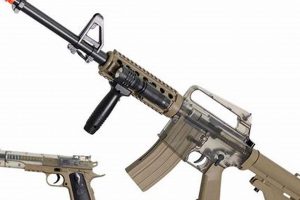
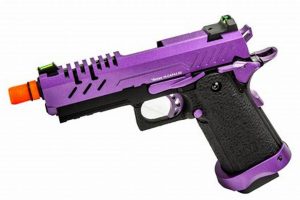
The determination of a suitable age for participation in airsoft activities and the possession of associated equipment hinges on a confluence of factors, including legal regulations, maturity levels, and safety considerations. This criterion governs who can handle and utilize airsoft replicas, impacting accessibility and responsible usage. For example, certain jurisdictions mandate individuals be 18 years or older to purchase airsoft guns, while supervised play may be permitted for younger participants in controlled environments.
Establishing guidelines is vital for mitigating risks and fostering a culture of responsible sporting behavior. These guidelines protect younger individuals from potential harm stemming from misuse and promotes adherence to established rules of engagement within the airsoft community. Historically, the evolution of these age restrictions has mirrored the growth and increasing popularity of airsoft as a recreational activity and competitive sport, necessitating structured frameworks to ensure safe participation.
Understanding the rationale behind these rules is fundamental for participants and stakeholders alike. Further sections will explore varying regulations across different regions, the impact of maturity on safe handling practices, and the role of parental or guardian supervision in fostering responsible airsoft participation.
Guidance on Age-Related Considerations
This section offers guidelines for navigating the intersection of youth, airsoft participation, and responsible gun handling. These tips are designed to foster a secure and enjoyable experience within the sport.
Tip 1: Adhere to Local Laws: Compliance with all local and regional statutes regarding the possession and use of airsoft devices is paramount. Laws dictate minimum age requirements, permissible locations for usage, and the legality of specific replica types. Before engaging in airsoft activities, verify jurisdictional regulations.
Tip 2: Assess Maturity Level: Chronological age is not the sole determinant of responsible airsoft participation. Consider an individual’s ability to understand and follow safety protocols, demonstrate respect for others, and exercise sound judgment. A mature minor may be better suited to airsoft than an immature adult.
Tip 3: Prioritize Protective Gear: Regardless of age, the consistent use of appropriate protective equipment, including eye protection, face masks, and body armor, is non-negotiable. These precautions mitigate the risk of injury during gameplay.
Tip 4: Supervise Younger Participants: Adults overseeing younger individuals engaged in airsoft must actively monitor gameplay, enforce safety rules, and intervene to prevent unsafe behavior. Supervision should be constant and attentive.
Tip 5: Emphasize Safe Handling Practices: Teach and reinforce the importance of treating all airsoft replicas as if they were real firearms. This includes proper storage, handling, and transportation procedures. Education on these protocols is critical.
Tip 6: Choose Appropriate Game Environments: Select airsoft fields and arenas that are suitable for the skill level and maturity of all participants. Beginners should start in controlled environments with experienced players and established safety guidelines.
Tip 7: Foster a Culture of Responsibility: Promote a positive attitude toward responsible gun ownership and sportsmanship within the airsoft community. This includes respecting opponents, adhering to the rules, and prioritizing safety above all else.
Implementing these guidelines ensures that participation remains a positive experience, while upholding the safety and integrity of the sport.
The following section will address potential legal and ethical implications associated with ignoring age-related restrictions.
1. Minimum legal age

The establishment of a minimum legal age directly impacts the practice of airsoft activities by defining who can legally purchase, possess, and utilize airsoft devices. The age restriction acts as a regulatory control, aiming to mitigate potential risks associated with inexperienced or immature handling of equipment that, while not lethal, can cause injury. Non-compliance with these age-based laws can lead to legal repercussions for both the individual and any supervising adults, highlighting the causal relationship between legislative frameworks and participant accountability. For instance, a scenario where a minor purchases an airsoft gun against regulations can result in fines, confiscation of the device, and potential charges against the vendor or parent. This illustrates the practical significance of understanding and adhering to the legal age limit.
The importance of a minimum legal age as a component within the broader concept of regulated activity extends beyond mere compliance. It sets a precedent for responsible behavior and instills a sense of accountability from a young age. Consider airsoft fields that strictly enforce age verification protocols: these fields are creating safer environments and fostering a culture where responsible handling is prioritized. Further, manufacturers often adhere to these age parameters in their marketing and distribution strategies, reinforcing the legal standard. This demonstrates a concerted effort by various stakeholders to uphold safety standards and the law.
In summary, the minimum legal age serves as a foundational component in the regulatory landscape surrounding airsoft. Challenges remain in enforcing these regulations consistently across different jurisdictions and online platforms, but the overarching principle remains crucial. Understanding the legal age is more than just a matter of compliance; it is an integral part of ensuring responsible participation and promoting a safe environment for all involved in this activity.
2. Parental/Guardian consent

Parental or guardian consent serves as a crucial mechanism in regulating participation, especially when individuals are below the legally defined age threshold. This consent acknowledges the adult’s responsibility to assess the minor’s maturity level, comprehension of safety procedures, and overall suitability for engaging in airsoft activities. This acknowledgment functions as a safeguard, creating a system in which youth involvement is deliberate and supervised. For example, an airsoft field may require a signed waiver from a parent or guardian before allowing a 15-year-old to participate, effectively placing the onus on the adult to ensure the child is prepared and will adhere to the established safety protocols.
The significance of consent extends beyond simple permission; it empowers the parent or guardian to actively participate in the youth’s airsoft experience. It encourages conversations about safe gun handling, responsible behavior on the field, and the potential risks associated with the activity. A parent, for example, might attend safety training sessions with their child or actively monitor their gameplay, reinforcing positive habits and ensuring continuous adherence to safety rules. Furthermore, the consent process allows parents to investigate the airsoft facilities, assess the level of supervision provided, and verify compliance with relevant laws and regulations.
In conclusion, parental or guardian consent is not merely a formality but a vital component in managing youth engagement with airsoft. It introduces a layer of adult oversight, promotes responsible decision-making, and fosters a culture of safety. Challenges remain, however, in ensuring consent is genuinely informed and not merely a signature on a form. The effectiveness of parental consent hinges on active engagement and continuous supervision, ensuring that youth participation remains both safe and responsible.
3. Supervision standards

Supervision standards are inextricably linked to age considerations within airsoft, functioning as a critical mitigating factor for younger participants. As age restrictions are often implemented to account for varying levels of maturity and responsible decision-making, adult oversight serves as a compensatory mechanism. In instances where laws permit individuals below a specified age to engage in airsoft activities, heightened supervision becomes paramount to ensuring adherence to safety protocols and minimizing potential hazards. For example, a regulated airsoft field might stipulate that participants under 16 years of age must be under the direct supervision of a responsible adult at all times during gameplay, requiring close proximity and active monitoring.
The practical application of robust parameters significantly impacts the safety and integrity of airsoft experiences for younger players. These measures might include pre-game safety briefings conducted jointly with both the minor and the supervising adult, mandatory use of protective gear, and strict enforcement of rules regarding muzzle velocity and prohibited actions. Furthermore, properly structured adult monitoring can help prevent unsafe behaviors, such as reckless maneuvering, unsportsmanlike conduct, or misuse of airsoft equipment. In contrast, inadequate supervision may lead to a heightened risk of accidents, injuries, and the development of negative habits among younger participants. For example, if an adult fails to enforce eye protection requirements or allows a minor to engage in unsupervised target practice, the likelihood of injury significantly increases.
In summary, supervision standards form a core element within the broader framework of age considerations in the context of airsoft, enabling younger individuals to participate safely while mitigating the potential risks associated with limited experience and judgment. The effectiveness of these parameters depends on several factors, including the clarity of the guidelines, the diligence of supervising adults, and consistent enforcement by airsoft field operators. Adherence to these standards is essential to foster a culture of responsibility and ensure the well-being of all participants.
4. Maturity assessment

Maturity assessment constitutes a critical, albeit subjective, component in determining an individual’s readiness to participate in airsoft activities, frequently supplementing or even superseding chronological age restrictions. While legal parameters may establish minimum age thresholds, the capacity to handle equipment responsibly and adhere to safety protocols relies heavily on cognitive and emotional maturity, necessitating evaluative considerations beyond simple age verification.
- Understanding of Rules and Regulations
An individual’s capacity to internalize and consistently apply established guidelines dictates the safety of airsoft interactions. Demonstrated comprehension of field rules, equipment handling procedures, and ethical gameplay principles exemplifies a responsible participant. For example, a participant who consistently disregards safe zone protocols or fails to acknowledge hit confirmations exhibits a lack of maturity, regardless of chronological age, making participation potentially unsafe for themselves and others.
- Impulse Control and Emotional Regulation
Airsoft, like any competitive activity, can elicit strong emotions. The ability to manage frustration, control aggressive impulses, and maintain composure under pressure is crucial for preventing unsafe or unsportsmanlike conduct. An immature individual prone to emotional outbursts or retaliatory actions may pose a risk to others on the field. Conversely, a mature player demonstrates restraint, respects opponents, and resolves conflicts peacefully, thereby contributing to a positive and safe environment.
- Consequence Awareness and Responsibility
Grasping the potential ramifications of actions and accepting accountability for one’s behavior forms a cornerstone of responsible airsoft participation. An individual capable of anticipating the potential consequences of unsafe handling or rule violations, and willing to accept responsibility for any resulting harm, exhibits a level of maturity necessary for engaging in this activity. For example, recognizing the risk of eye injury from improper eye protection and diligently adhering to safety measures demonstrates consequence awareness and responsibility.
- Respect for Equipment and Environment
Treating airsoft equipment with care and respecting the game environment reflects a sense of responsibility and maturity. Neglecting maintenance, damaging property, or disregarding environmental regulations demonstrates a lack of consideration for the equipment and the setting in which the activity takes place. Conversely, a mature individual handles equipment responsibly, maintains it properly, and respects the physical environment, contributing to the longevity of both the equipment and the activity itself.
These maturity assessment factors provide a more nuanced perspective on determining airsoft participation eligibility. While age-based laws offer a baseline standard, the capacity to demonstrate responsible behavior, exhibit self-control, and comprehend potential consequences offers a more accurate gauge of readiness. Therefore, integrating elements of maturity assessment alongside age verification protocols enhances the safety and integrity of airsoft engagement for all participants.
5. Field regulations
Field regulations serve as a crucial extension of laws governing participation, particularly concerning age. These rules, implemented by individual airsoft field operators, often incorporate additional safety requirements and operational procedures tailored to the specific environment and anticipated participants. As a result, field regulations directly influence the implementation of age restrictions, translating broad legal statutes into practical on-site guidelines. For instance, while a state may permit individuals aged 16 and above to operate airsoft guns, a specific field could stipulate a minimum age of 18, or require those under 18 to participate under the direct supervision of a guardian and with restricted replica power levels. The causal relationship is clear: age thresholds influence the stringency and nature of field rules, as operators strive to manage safety risks and ensure compliance with both legal and self-imposed parameters.
The practical significance of field regulations in the context of age revolves around risk mitigation. Field operators possess firsthand knowledge of the specific challenges posed by their environments, allowing them to formulate rules that address potential hazards more effectively than broad legal stipulations alone. Consider an outdoor field with dense vegetation and uneven terrain. Operators might institute stricter age limits or mandate enhanced protective gear to counter the increased risks of falls and obscured visibility for younger players. Similarly, an indoor CQB (Close Quarters Battle) arena could impose lower velocity limits and mandatory full-face protection to minimize the impact of close-range engagements, especially for younger participants with potentially slower reaction times. This adaptability ensures a more secure experience tailored to the characteristics of the playing field and the cognitive and physical abilities of individuals within specified age brackets.
In conclusion, field regulations play a vital role in operationalizing age-related restrictions, tailoring broad legal standards to the realities of specific airsoft environments. This localized approach ensures that guidelines effectively address the particular risks inherent in each field. The effective integration of age limits with nuanced rules contributes to a safer and more enjoyable environment. This emphasis on field-specific adaptation highlights the commitment to responsible airsoft participation within the community.
6. Safety training

Safety training constitutes an essential element in the context of age considerations. It provides individuals with the knowledge and skills necessary to handle airsoft equipment responsibly and participate safely, particularly for those below the age typically associated with full legal autonomy.
- Fundamental Airsoft Equipment Knowledge
Safety training educates participants on the proper handling, maintenance, and storage of airsoft devices and related accessories. It includes identifying different types of airsoft guns, understanding their mechanisms, and recognizing potential malfunctions. For instance, trainees learn how to safely load and unload magazines, adjust hop-up systems, and perform basic maintenance to ensure proper functioning. This knowledge is particularly crucial for younger participants who may lack prior experience or understanding of these complex devices. Supervised instruction facilitates the internalization of correct procedures, reducing the risk of accidental discharges or equipment misuse.
- Protective Gear and Injury Prevention
A core component of safety training emphasizes the importance of protective gear and its correct usage. Trainees learn about different types of protective equipment, including eye protection, face masks, vests, and gloves, and understand the specific risks they mitigate. Instruction includes proper fitting, maintenance, and limitations of this gear. For example, trainees learn that ANSI-rated eye protection is mandatory and must be worn at all times on the field, regardless of weather conditions. This rigorous approach to safety minimizes the likelihood of injuries, especially among younger players who may be more vulnerable due to their physical development and lack of experience.
- Rules of Engagement and Ethical Gameplay
Safety training extends beyond equipment handling to encompass the rules of engagement and ethical conduct within airsoft. Trainees learn about fair play, respecting opponents, calling hits accurately, and adhering to field regulations. Instruction covers topics such as minimum engagement distances, prohibited areas, and proper communication protocols. For example, trainees learn that blind firing is strictly prohibited, and that they must clearly call “hit” when struck by a BB. Emphasizing ethical gameplay fosters a positive and respectful environment, encouraging responsible behavior among all participants, especially young individuals learning the nuances of sportsmanship.
- Emergency Procedures and First Aid
Safety training equips participants with the knowledge and skills to respond effectively in emergency situations. Instruction includes basic first aid techniques, such as treating minor injuries, recognizing signs of heatstroke or dehydration, and contacting emergency services. Trainees learn about field evacuation procedures, communication protocols, and the location of first aid kits. For instance, trainees learn how to apply a basic bandage to a minor cut or scrape and how to alert field staff in the event of a more serious injury. Preparedness for emergencies enhances the overall safety of airsoft activities, particularly for younger participants who may be more susceptible to injuries or require assistance in crisis situations.
The integration of safety training and age considerations in airsoft creates a safer and more responsible environment for all participants. Tailoring training content to accommodate different age groups and experience levels ensures that all individuals possess the necessary knowledge and skills to engage in airsoft safely and ethically. This proactive approach to safety mitigates risks, promotes responsible gun handling, and fosters a culture of respect within the airsoft community.
7. Regional variations
Regulations concerning participation differ substantially across regions, impacting legal parameters related to “age for airsoft guns.” This variance underscores the importance of understanding specific local laws and ordinances before engaging in the activity.
- Minimum Age Discrepancies
Minimum age requirements for airsoft ownership and participation vary widely across jurisdictions. Some regions may permit individuals as young as 16 to possess airsoft devices, while others require them to be 18 or older. These differences are often rooted in divergent interpretations of risk assessment and community safety. For example, in certain European countries, airsoft is treated more like a regulated sport, with younger participants allowed under supervision and with velocity restrictions, whereas some states in the U.S. categorize them similarly to BB guns, imposing higher age limits. These discrepancies significantly affect accessibility and necessitate thorough research before engaging in airsoft activities across different locations.
- Parental Consent Protocols
Protocols regarding parental or guardian consent for underage participants fluctuate geographically. Certain regions might mandate written consent from a parent or guardian for individuals below a specified age to participate in airsoft events. Others may only require verbal consent or rely on the presence of a supervising adult. Such variations impact the legal responsibility and supervision levels required for minors to engage in airsoft activities. Consider a scenario where a minor travels across state lines to participate in an airsoft event; the event organizer must verify compliance with the consent laws of both the minor’s state of residence and the state in which the event is held.
- Velocity and Power Restrictions
Regional laws often dictate maximum allowable velocities and power levels for airsoft guns. These restrictions are designed to mitigate the risk of injury and often correlate with age-based regulations. Jurisdictions may enforce stricter limitations on the velocity of airsoft guns used by younger participants, effectively reducing the potential for harm. For instance, some regions may cap velocity for players under 18 at a lower feet-per-second (FPS) level than for adult players, requiring fields to implement separate chronographs and verification processes. These velocity differences influence the type of replicas permitted and the safety protocols enforced at airsoft fields, particularly concerning age-specific guidelines.
- Definition of Airsoft Devices
The legal definition of “airsoft gun” varies across different regions. Some jurisdictions classify them as toys, while others categorize them as replica firearms or air guns, impacting the applicable regulations, including those related to age. For example, in areas where airsoft guns are considered replica firearms, they may be subject to stricter storage, transportation, and usage rules, potentially impacting age requirements. This difference in classification dictates how law enforcement treats these devices and can significantly affect accessibility and legal compliance for airsoft enthusiasts of all ages, particularly in cross-border scenarios.
These disparities reveal the multifaceted nature of “age for airsoft guns” regulations, reinforcing the necessity for careful adherence to local and regional laws to ensure responsible and legal participation. Understanding these variations ensures compliance. and promotes safety, mitigating potential risks and legal ramifications associated with non-compliance.
Frequently Asked Questions
This section addresses common inquiries regarding age-related regulations and guidelines for participation, providing factual information to ensure responsible engagement.
Question 1: What is the minimum age to purchase an airsoft gun in the United States?
The minimum age to purchase an airsoft gun varies by state and local laws. While federal law does not set a minimum age, many states and municipalities require purchasers to be 18 years or older. Always consult local regulations.
Question 2: Can a minor use an airsoft gun under adult supervision?
The legality of a minor using an airsoft gun under adult supervision is dependent on jurisdictional laws. Some regions permit supervised use on private property, while others maintain age restrictions regardless of supervision. Compliance is essential.
Question 3: Are there specific types of airsoft guns that are restricted based on age?
Certain jurisdictions may restrict the purchase or use of high-powered airsoft guns based on age. Lower velocity or power limits for younger participants aim to mitigate injury risks. Field regulations may also implement such restrictions.
Question 4: What are the potential legal consequences of violating age restrictions related to airsoft guns?
Violating age restrictions can result in fines, confiscation of the airsoft device, and potential legal charges for both the minor and supervising adults. The severity of the consequences depends on the specific jurisdiction and the nature of the violation.
Question 5: How do airsoft field operators enforce age regulations?
Airsoft field operators typically enforce regulations by requiring participants to provide valid identification to verify age. Parental consent forms may also be required for minors, and supervision protocols are often enforced.
Question 6: Is safety training mandatory for young airsoft participants?
While not always legally mandated, safety training is highly recommended for all airsoft participants, especially young individuals. Many fields require or offer safety briefings to ensure responsible handling and adherence to rules.
This FAQ section provides general guidance; consulting local laws and regulations for accurate and up-to-date information is always necessary.
The following section summarizes key considerations for responsible participation within this activity, integrating both legal and safety elements.
Age for Airsoft Guns
The preceding sections have explored the intricate nature of age-related guidelines pertaining to airsoft. Regulations surrounding minimum age requirements, parental consent, supervision standards, maturity assessment, field regulations, safety training, and regional variations constitute a multi-layered framework designed to promote responsible participation. Adherence to these guidelines serves as a cornerstone for mitigating risks and fostering a culture of respect within the airsoft community.
Given the potential for both physical harm and legal ramifications associated with non-compliance, a comprehensive understanding of applicable laws and best practices is paramount. Stakeholders, including participants, parents, field operators, and lawmakers, should remain vigilant in upholding these standards to ensure the continued safety and integrity of this recreational activity. A commitment to responsible practices is not merely a matter of compliance, but a collective responsibility to protect individuals and uphold the spirit of fair play.