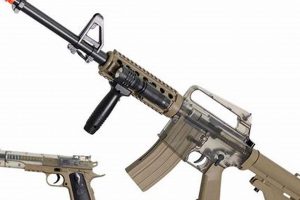
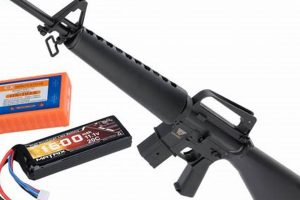
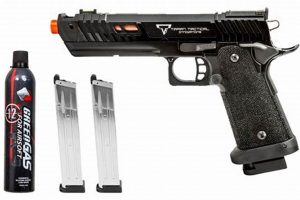
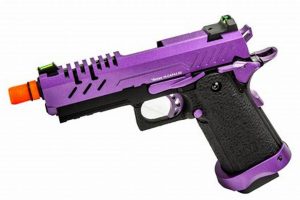
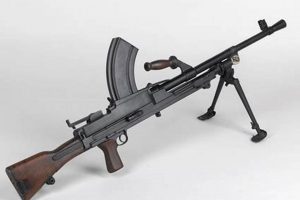
High-end airsoft replicas, often procured from United States-based retailers, represent a significant investment for serious players. These advanced models typically feature enhanced durability, greater accuracy, and improved performance compared to entry-level options. An example would be a meticulously crafted M4 variant with upgraded internal components designed for competitive scenarios.
The importance of these premium-grade items lies in their ability to provide a competitive edge and a more realistic training experience. The enhanced build quality ensures longevity, while the improved accuracy allows for more effective target engagement. Historically, the demand for such products has grown alongside the increasing popularity of organized airsoft competitions and tactical simulations within the U.S.
Therefore, understanding the nuances of selecting and maintaining these specialized devices becomes crucial for individuals seeking optimal performance in airsoft activities. Subsequent discussion will delve into the key features to consider, the types of upgrades available, and the responsible handling practices necessary for owning advanced airsoft equipment.
Essential Considerations for High-Performance Airsoft Replicas
Optimizing the performance and longevity of advanced airsoft devices requires adherence to specific practices and a thorough understanding of their components. The following guidelines are designed to assist users in maximizing their investment.
Tip 1: Internal Component Assessment. Prior to purchase, scrutinize the internal mechanics of the replica. High-grade gearboxes, precision inner barrels, and reinforced pistons are indicative of a quality build. For example, stainless steel inner barrels offer enhanced accuracy compared to brass variants.
Tip 2: Battery Selection and Maintenance. The selection of appropriate batteries is crucial. Lithium Polymer (LiPo) batteries are commonly used due to their high energy density; however, they require careful handling and charging to prevent damage. Employ a dedicated LiPo balance charger and adhere strictly to manufacturer specifications.
Tip 3: Hop-Up Unit Calibration. The hop-up unit imparts backspin to the BB, extending its range and accuracy. Proper calibration is essential. Start with a low setting and gradually increase until the BB trajectory is optimized for the desired distance.
Tip 4: Regular Cleaning and Lubrication. Consistent maintenance is paramount. After each use, clean the barrel and apply appropriate lubrication to internal components. Silicone oil is generally recommended for most parts, but consult the manufacturer’s guidelines for specific recommendations.
Tip 5: Gearbox Shimming. Precise gearbox shimming ensures smooth gear operation and reduces wear. Improper shimming can lead to premature component failure. Consider professional assistance if unfamiliar with this process.
Tip 6: BB Quality Matters. Employ high-quality, seamless BBs. Lower-grade BBs can exhibit imperfections that negatively impact accuracy and potentially damage the internal mechanisms of the device.
Adhering to these recommendations will not only enhance the performance of advanced airsoft devices but also significantly extend their operational lifespan. Proper maintenance and informed decision-making are key to maximizing the value of the investment.
The following sections will explore the legal and ethical considerations surrounding the ownership and use of these specialized airsoft devices.
1. Precision Engineering

Precision engineering forms the bedrock upon which high-end airsoft replicas from U.S. retailers are built. It directly influences the accuracy, reliability, and overall performance of these devices, differentiating them from standard models.
- Tolerance Control in Component Manufacturing
Precise control over manufacturing tolerances ensures that internal components fit together seamlessly. This minimizes friction, reduces wear, and optimizes power transfer within the gearbox. For instance, tighter tolerances in the alignment of the piston and cylinder assembly result in more consistent air compression and, consequently, more uniform projectile velocity. This is crucial for accurate shot placement in competitive scenarios. Improper tolerances can lead to air leaks, inconsistent power output, and premature component failure.
- Barrel Manufacturing and Bore Consistency
The consistency of the inner barrel bore directly impacts projectile trajectory. Precision-engineered barrels utilize advanced manufacturing techniques to create a smooth and uniform internal surface, minimizing friction and promoting a stable spin imparted by the hop-up unit. A high-quality stainless steel barrel, for example, is typically honed to a precise inner diameter with minimal variation along its length. Inconsistent bore dimensions can induce deviations in the BB’s flight path, leading to unpredictable shot placement.
- Gearbox Assembly and Shimming
The gearbox, the heart of an electric airsoft replica, necessitates meticulous assembly and shimming for optimal performance. Precision shimming involves the strategic placement of shims to ensure proper gear alignment and minimize friction. Correctly shimmed gears mesh smoothly, reducing stress on the motor and battery, while maximizing energy transfer to the piston. Incorrect shimming can cause excessive noise, increased motor strain, and eventual gearbox failure, especially under high-stress conditions in competitive play.
- Hop-Up Unit Design and Adjustment
The hop-up unit applies backspin to the BB, extending its range and counteracting gravity. Precision engineering in the hop-up unit design ensures consistent and repeatable backspin application. This requires tight tolerances in the bucking (the rubber component that contacts the BB) and a precise adjustment mechanism. A well-engineered hop-up unit allows for fine-tuning of the backspin effect, enabling the user to optimize the BB’s trajectory for various ranges and environmental conditions. A poorly designed or manufactured hop-up unit will result in inconsistent backspin, leading to erratic shot patterns.
The facets of precision engineering, from component tolerances to hop-up unit design, are inextricably linked to the performance and longevity of high-end airsoft replicas available from United States retailers. Devices demonstrating superior precision engineering command a higher price point, reflecting the enhanced performance and reliability they offer to serious airsoft players.
2. Performance Enhancement

Performance enhancement, in the context of advanced airsoft devices procured from United States-based retailers, represents a collection of modifications and upgrades intended to optimize the operational capabilities of the replica. These enhancements directly influence factors such as accuracy, range, rate of fire, and overall reliability, allowing users to gain a competitive advantage and achieve superior results in airsoft activities.
- High-Torque Motor Installation
The installation of a high-torque motor offers a significant increase in trigger response and rate of fire. A motor with stronger magnets and optimized armature windings can cycle the gearbox more rapidly, enabling faster follow-up shots and improved responsiveness in close-quarters combat. For example, replacing a stock motor with a neodymium magnet motor can increase the rate of fire by 20-30% while also improving battery efficiency. This enhancement is critical for players seeking to maintain a high level of sustained fire during skirmishes.
- Inner Barrel Upgrade
Upgrading the inner barrel to a tighter bore, precision-made model significantly improves accuracy and consistency. A barrel with a smaller inner diameter, coupled with a smoother internal surface, reduces air leakage around the BB and promotes a more consistent trajectory. Stainless steel barrels, often lapped and polished to a mirror finish, are a common choice for performance enhancement. This upgrade leads to tighter groupings at longer distances, providing a competitive edge in engagements requiring precision.
- Hop-Up Unit Modification
Modifying the hop-up unit allows for more precise control over the backspin applied to the BB, directly impacting range and accuracy. Upgrading the hop-up bucking (the rubber component that contacts the BB) to a higher-quality material, such as silicone or enhanced rubber compounds, improves the consistency of the backspin effect. Furthermore, installing an adjustable hop-up unit with finer increments enables the user to fine-tune the BB’s trajectory for optimal performance at varying distances. This level of control is essential for adapting to different field conditions and engagement ranges.
- Gearbox Reinforcement and Optimization
Reinforcing and optimizing the gearbox ensures greater reliability and longevity, especially under the stress of high-performance operation. Replacing vulnerable components, such as the piston, gears, and tappet plate, with reinforced versions made from stronger materials, such as steel or aluminum, prevents premature failure. Additionally, optimizing the gearbox through proper shimming, lubrication, and air seal adjustments maximizes efficiency and minimizes wear. This combination of reinforcement and optimization is critical for maintaining consistent performance and preventing costly repairs in the long term.
These facets of performance enhancement, when implemented strategically, transform standard airsoft replicas into high-performance tools capable of delivering a distinct competitive advantage. The investment in these upgrades reflects a commitment to achieving superior results and maximizing the potential of airsoft equipment available through professional channels in the US market.
3. Material Quality
Material quality represents a critical determinant of the performance, durability, and overall value associated with advanced airsoft devices sold by professional United States retailers. The materials used in constructing these replicas directly impact their ability to withstand the rigors of competitive use, resist environmental degradation, and maintain operational consistency over an extended lifespan. For instance, the employment of aircraft-grade aluminum in the receiver and outer barrel contributes to structural integrity and resistance to warping under stress, a frequent occurrence in intense gameplay scenarios. Conversely, reliance on lower-grade polymers or inferior metal alloys can lead to premature failure, impacting accuracy and rendering the device unreliable.
The selection of appropriate materials also influences internal component performance. For example, the use of high-strength steel in gearbox gears ensures resistance to wear and tear under high-stress conditions, contributing to consistent rate of fire and extending the gearbox’s lifespan. Similarly, the choice of high-durometer rubber compounds for hop-up buckings ensures consistent backspin application, enhancing accuracy and range. The interplay between material quality and component functionality underscores the importance of scrutinizing specifications when evaluating a potential purchase. Deficiencies in material selection often manifest as reduced accuracy, increased maintenance requirements, and a diminished overall lifespan, negating the initial cost savings.
In summary, material quality stands as a foundational element in the evaluation of high-end airsoft replicas from reputable US retailers. Investing in devices constructed from durable, high-performance materials translates directly into enhanced reliability, longevity, and ultimately, a more satisfying user experience. While initial cost may be higher, the long-term benefits of superior material quality outweigh the risks associated with compromising on this essential aspect. A thorough understanding of material properties and their impact on performance is therefore crucial for making informed purchasing decisions and maximizing the value of advanced airsoft equipment.
4. Upgrade Compatibility
Upgrade compatibility, a cornerstone of the professional airsoft gun market in the United States, directly influences the long-term value and performance potential of these devices. The ability to readily modify and enhance an airsoft replica distinguishes it from less sophisticated offerings and allows users to tailor their equipment to specific needs and play styles. This compatibility stems from adherence to industry standards, allowing components from various manufacturers to be interchanged and integrated. A lack of upgrade compatibility limits customization options, restricting users to proprietary parts and potentially hindering their ability to maintain or improve the replica’s performance over time. For example, a high-end M4 variant designed with Tokyo Marui-spec compatibility allows users to easily swap out internal components, such as gearboxes, motors, and hop-up units, with a wide range of aftermarket options. Conversely, a replica with a proprietary design would require specialized parts, potentially increasing costs and limiting availability.
The significance of upgrade compatibility extends beyond simple parts replacement. It enables users to incrementally improve their airsoft replicas, addressing specific weaknesses or optimizing performance characteristics. This can involve upgrading the inner barrel for enhanced accuracy, installing a high-torque motor for faster trigger response, or reinforcing internal components to withstand the stresses of high-powered operation. Compatibility with standardized accessories, such as optics, lasers, and foregrips, further enhances the versatility and adaptability of these devices. A user participating in a milsim event, for instance, might choose to upgrade their rifle with a magnified optic for improved target acquisition at longer ranges and a vertical foregrip for enhanced stability. This level of customization is only possible with a device designed for broad upgrade compatibility.
In conclusion, upgrade compatibility represents a critical attribute of professional-grade airsoft guns in the US market. It facilitates ongoing maintenance, performance enhancement, and customization, ensuring that these devices remain relevant and competitive over time. The willingness of manufacturers to embrace open standards and prioritize compatibility directly benefits consumers by providing a wider range of options and enabling them to maximize the value of their investment. Conversely, a lack of upgrade compatibility can limit a replica’s lifespan and restrict its potential, ultimately hindering its appeal to serious airsoft players.
5. Regulatory Compliance

Regulatory compliance constitutes a critical aspect of the professional airsoft gun market in the United States, governing the manufacturing, importation, sale, and use of these devices. Adherence to federal, state, and local regulations is non-negotiable for both retailers and consumers, ensuring safe and responsible participation in the sport. Failure to comply can result in significant legal and financial repercussions.
- Federal Law: Marking Requirements (15 U.S. Code 5001)
Federal law mandates that all airsoft guns imported into or manufactured within the United States must be marked with a blaze orange tip, no less than 6mm in length, affixed to the muzzle. This marking serves to visually distinguish airsoft guns from real firearms, mitigating the risk of misidentification by law enforcement and the general public. The absence of this marking on professional airsoft guns offered for sale in the U.S. would be a direct violation of federal law, subjecting the retailer to potential fines and legal action. Consumers should verify the presence of this marking before purchasing any airsoft gun from U.S.-based retailers.
- State and Local Laws: Restrictions on Possession and Use
In addition to federal regulations, numerous state and local jurisdictions have enacted their own laws governing the possession, transportation, and use of airsoft guns. These laws may restrict the age of individuals permitted to possess airsoft guns, limit the areas where they can be discharged, or prohibit the open carry of airsoft guns in public places. For example, some cities may require airsoft guns to be transported in closed containers to prevent alarm or misinterpretation. Retailers selling professional airsoft guns in the U.S. have a responsibility to be aware of and comply with all applicable state and local laws, and they should inform their customers of these regulations. Consumers should also familiarize themselves with the relevant laws in their area before purchasing or using airsoft guns.
- Import Regulations: Compliance with Customs and Border Protection (CBP)
The importation of airsoft guns into the United States is subject to stringent regulations enforced by Customs and Border Protection (CBP). Importers must comply with all applicable federal laws, including the marking requirements outlined in 15 U.S. Code 5001. CBP officers have the authority to inspect imported shipments of airsoft guns to ensure compliance with these regulations. Airsoft guns that do not meet federal standards may be seized and destroyed. Professional airsoft gun retailers who import products directly must maintain meticulous records and comply with all CBP requirements to avoid penalties and ensure the smooth flow of goods into the country.
- Liability and Insurance: Responsibility for Safe Handling and Use
Retailers and manufacturers of professional airsoft guns in the U.S. bear a certain level of responsibility for ensuring the safe handling and use of their products. This includes providing clear and concise instructions on safe operation, emphasizing the importance of eye protection, and warning against misuse. Furthermore, retailers may consider obtaining liability insurance to protect themselves against potential claims arising from accidents or injuries involving their products. Consumers, too, have a responsibility to handle airsoft guns safely and responsibly, adhering to all applicable laws and regulations. Participating in organized airsoft events often requires proof of insurance to cover potential liabilities.
Collectively, these facets of regulatory compliance underscore the importance of responsible participation in the airsoft community. Professional airsoft gun retailers in the United States must prioritize adherence to all applicable laws and regulations to maintain their legitimacy and ensure the safety of their customers. Consumers, in turn, must be aware of their rights and responsibilities, handling and using their equipment in a manner that respects the law and promotes safe play.
Frequently Asked Questions
This section addresses common inquiries regarding high-end airsoft replicas available through professional channels within the United States. The answers provided aim to offer clarity and informed guidance to prospective purchasers and existing owners.
Question 1: What constitutes a “professional” airsoft gun within the US market?
A “professional” airsoft gun generally refers to a high-end replica characterized by superior construction materials, enhanced internal components, increased accuracy, and greater reliability compared to entry-level models. These devices are often designed for competitive play and demanding tactical simulations.
Question 2: Are there legal restrictions on owning or modifying professional airsoft guns in the US?
Yes, federal law mandates that all airsoft guns must have a blaze orange tip. State and local laws may impose additional restrictions on possession, use, and transportation. Modifications that increase muzzle velocity beyond legal limits or remove required markings are prohibited.
Question 3: What is the typical price range for professional airsoft guns sourced from US retailers?
The price range varies significantly depending on the model, brand, and features. However, professional-grade airsoft guns typically range from $300 to upwards of $1000 or more. Specialized models with advanced features or custom modifications can exceed this range.
Question 4: What key features distinguish professional airsoft guns from standard models?
Key distinguishing features include higher quality internal components (e.g., reinforced gearboxes, precision inner barrels), durable construction materials (e.g., metal receivers, steel gears), enhanced accuracy, adjustable hop-up systems, and greater overall reliability under demanding usage conditions.
Question 5: How should professional airsoft guns be properly maintained to ensure longevity?
Proper maintenance includes regular cleaning of the inner barrel, lubrication of internal components with appropriate silicone oil, inspection for wear and tear, and adherence to manufacturer’s guidelines for battery care and storage. Gearbox shimming should be checked periodically by a qualified technician.
Question 6: What are the common performance upgrades available for professional airsoft guns in the US?
Common performance upgrades include high-torque motor installations, tighter bore inner barrels, upgraded hop-up buckings, reinforced gearbox components (e.g., pistons, gears), and MOSFET installations for improved trigger response and battery protection.
In summary, professional airsoft guns represent a significant investment requiring careful consideration of legal compliance, maintenance requirements, and upgrade potential. The superior performance and durability of these devices justify the higher price point for serious airsoft enthusiasts.
The following section explores the ethical considerations surrounding the use of these specialized devices.
Concluding Remarks on Professional Airsoft Devices in the United States
The preceding discussion has illuminated various facets of the “professional airsoft guns us” landscape, encompassing technical specifications, regulatory compliance, upgrade potential, and ethical considerations. Emphasis has been placed on the importance of informed decision-making, responsible ownership, and adherence to legal guidelines when engaging with these specialized devices. The performance benefits derived from high-end replicas justify the investment for serious players seeking a competitive edge, provided that such devices are operated within the boundaries of the law and with due regard for safety.
Ultimately, the proliferation and responsible utilization of professional airsoft guns in the U.S. depend on continued education, diligent enforcement of existing regulations, and a commitment to ethical conduct within the airsoft community. Ongoing awareness of technological advancements and evolving legal frameworks is crucial for maintaining the integrity of the sport and ensuring its continued growth within established parameters.