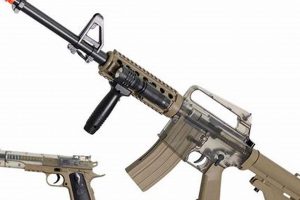
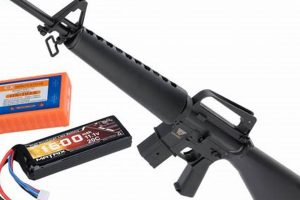
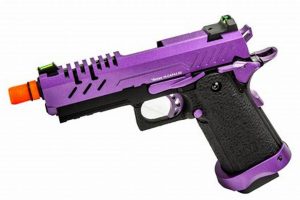
The permissibility of openly transporting replica firearms such as airsoft guns varies significantly depending on jurisdiction. These devices, designed to expel plastic projectiles, often resemble actual firearms, leading to potential confusion and legal complexities regarding their public display.
The regulation of these items addresses public safety concerns and seeks to prevent alarm or misidentification that could result in dangerous confrontations. Historically, the regulation of toy or replica weapons has evolved in response to incidents involving their misuse or misinterpretation by law enforcement and the public. Understanding these regulations is crucial for responsible ownership and transportation.
This analysis will explore relevant factors determining the legality of openly carrying airsoft guns, including state and local laws, permissible transportation methods, and potential consequences of non-compliance.
Adherence to local and state regulations is paramount when handling airsoft guns. Ignorance of the law does not excuse non-compliance. The following points offer guidance on remaining within legal boundaries.
Tip 1: Research Local Ordinances: Before transporting an airsoft gun, thoroughly investigate municipal and county ordinances. Some jurisdictions may impose stricter regulations than state laws.
Tip 2: Comply with State Laws: Familiarize oneself with the relevant state statutes regarding imitation firearms. These laws often specify permissible transportation methods and circumstances.
Tip 3: Utilize Proper Transportation Methods: Airsoft guns should be transported in a closed case or container, preferably out of plain sight, to avoid misinterpretation and potential alarm.
Tip 4: Remove Magazines and Batteries: Ensure that magazines are removed and batteries are disconnected from the airsoft gun during transportation. This demonstrates an intent to prevent immediate use.
Tip 5: Avoid Brandishing or Display: Never display or brandish an airsoft gun in public. Doing so can lead to misunderstandings, law enforcement intervention, and potential criminal charges.
Tip 6: Communicate with Law Enforcement: If transporting an airsoft gun requires traversing areas with heightened security or involves potential scrutiny, consider informing local law enforcement in advance.
Tip 7: Treat it Like a Real Firearm: While not lethal, treating an airsoft gun with the same respect and caution as a real firearm is a prudent approach to avoid accidents and legal issues.
Following these tips significantly reduces the risk of legal complications associated with transporting airsoft guns. Knowledge and responsible handling are key to lawful ownership.
The subsequent sections will delve into potential legal ramifications and offer additional resources for further understanding.
1. State Law

State law serves as a primary determinant in assessing the legality of openly carrying an airsoft gun. These regulations, enacted at the state level, establish the broad legal framework governing the possession, transportation, and use of these devices. A comprehensive understanding of applicable state statutes is critical to avoid potential legal repercussions.
- Definition and Classification
State laws often define airsoft guns and categorize them, distinguishing them from actual firearms. This classification directly impacts the level of regulation. Some states treat airsoft guns as toy guns with minimal restrictions, while others classify them as imitation firearms subject to stricter controls similar to those imposed on real weapons.
- Permissible Transportation Methods
Many state laws dictate specific methods for transporting airsoft guns. These laws typically require the device to be unloaded, stored in a closed case or container, and kept out of plain sight. Failure to adhere to these transportation requirements can result in fines, confiscation of the airsoft gun, or even criminal charges.
- Restrictions on Open Carry
State laws may explicitly prohibit the open carry of airsoft guns in public places. Even if an airsoft gun is not legally classified as a firearm, the open display of a realistic-looking replica can be interpreted as menacing or threatening, leading to police intervention and potential charges for disturbing the peace or brandishing.
- Preemption of Local Ordinances
The principle of preemption dictates the relationship between state and local laws. In some states, state law preempts local ordinances, meaning that the state law takes precedence. Conversely, other states allow local municipalities to enact stricter regulations regarding airsoft guns. Understanding the concept of preemption within a given state is essential in determining the applicable legal standards.
The intricacies of state law significantly influence the legal consequences of publicly carrying an airsoft gun. While some states impose minimal restrictions, others have enacted comprehensive regulations mirroring those governing actual firearms. Therefore, conducting thorough research into the relevant state statutes is paramount for responsible airsoft gun ownership and compliance with the law.
2. Local Ordinances

The legality of carrying an airsoft gun in public is profoundly influenced by local ordinances. Municipalities and counties often enact regulations that supersede or supplement state laws, introducing variations in permissible conduct. These ordinances address specific concerns within their jurisdictions, impacting how airsoft guns are treated in public spaces. The absence of a state law prohibiting open carry does not inherently grant permission, as a stricter local ordinance can impose restrictions. For example, a city ordinance may classify airsoft guns as prohibited weapons within city parks, irrespective of state regulations concerning transportation in general. This creates a localized standard that citizens must adhere to.
The creation of local ordinances stems from the authority granted to municipalities to regulate activities impacting public safety and order. Such ordinances can range from outright bans on carrying airsoft guns in public to specific requirements regarding storage, transportation, and usage within city limits. A real-life example is a municipality enacting a “no tolerance” policy concerning realistic-looking replica firearms following an incident involving a misidentification and subsequent police response. The practical significance of understanding local ordinances lies in avoiding potential legal repercussions, which can include fines, confiscation of the airsoft gun, and even misdemeanor charges for violating municipal codes. Furthermore, engaging with local government to clarify or influence these ordinances is a responsible approach to responsible ownership.
In summary, local ordinances form a critical layer of regulation determining if carrying an airsoft gun in public is permissible. These ordinances often reflect community-specific concerns and can impose stricter standards than state law. By researching and understanding these local rules, individuals can navigate legal ambiguities and ensure they are operating within the bounds of the law, mitigating risks associated with misinterpretations and potential violations.
3. Transportation Method

The manner in which an airsoft gun is transported directly influences its legality in a public setting. Even where possession is legal, improper transportation can transform a lawful activity into a criminal offense. This connection arises because the chosen method dictates the gun’s accessibility, visibility, and potential for misuse, all of which are critical factors in legal assessments. The overriding concern is preventing public alarm and deterring any perception of threat or intent to commit a crime.
For instance, an airsoft gun carried openly, even if unloaded, may be deemed illegal due to potential violations of disturbing the peace, brandishing laws, or local ordinances prohibiting the display of realistic-looking weapons. Conversely, the same device, properly secured in a locked case within the trunk of a vehicle, may be considered legally transported. Many jurisdictions mandate that airsoft guns be transported unloaded, with the magazine detached and the battery removed (if applicable), further minimizing any immediate threat. Real-world examples include individuals facing charges for possessing an airsoft gun in public while openly carrying it in a backpack, compared to others legally transporting their devices in locked containers to designated airsoft fields. This differentiation hinges almost entirely on the transportation method.
In conclusion, the transportation method is a pivotal determinant of the legality of carrying an airsoft gun in public. Adhering to prescribed transportation guidelines, such as utilizing locked cases, concealing the device, and ensuring it is unloaded, significantly mitigates the risk of legal complications. A thorough understanding of applicable state and local laws regarding permissible transportation methods is therefore crucial for responsible airsoft gun ownership and avoiding potential legal repercussions.
4. Visibility

The degree to which an airsoft gun is visible in public significantly impacts the legality of its possession. This connection arises from the potential for public alarm or the perception of a threat, even if the device is incapable of causing lethal harm. The presence of a visible, realistic-looking replica firearm can trigger responses ranging from citizen complaints to direct intervention by law enforcement, leading to potential legal consequences regardless of the owner’s intent.
Consider scenarios involving law enforcement response. An airsoft gun openly displayed in a populated area prompts immediate concern due to its resemblance to a real firearm. This, in turn, initiates protective measures, including potential apprehension and investigation. The legality of carrying the airsoft gun, therefore, becomes secondary to the immediate need to assess and mitigate the perceived threat. Conversely, if the same device is concealed within a closed case and transported responsibly, the likelihood of encountering legal issues is substantially diminished. The critical distinction lies in minimizing public exposure and avoiding actions that could reasonably be interpreted as menacing or unlawful.
Ultimately, visibility serves as a key determinant in assessing the legality of possessing an airsoft gun in public. Reducing visual exposure through proper storage and transportation methods is essential for minimizing the risk of legal complications. Responsible airsoft gun ownership entails a thorough understanding of visibility-related regulations and the exercise of discretion to prevent public alarm and ensure compliance with applicable laws.
5. Intended Use

The intended use of an airsoft gun directly influences the determination of its legality when carried in public. The purpose for which the device is transported or possessed shapes its potential classification and, consequently, the applicability of relevant laws. Transporting an airsoft gun to a designated and authorized airsoft field for participation in a sanctioned event carries a different legal implication than openly brandishing the same device in a crowded public space. The former demonstrates a legitimate and typically lawful purpose, while the latter suggests a potentially malicious intent, triggering scrutiny and potential legal action. The causal link lies in the reasonable interpretation of an individual’s actions; an intended use that poses a perceived threat invariably attracts heightened legal attention.
Consider further the practical applications. A person carrying an airsoft gun in a locked container, accompanied by appropriate gear and documentation indicating participation in an organized airsoft game, likely faces minimal legal obstacles. This stands in stark contrast to someone carrying the same device, unconcealed, near a school or government building, even if the airsoft gun is technically not a firearm under state law. In the latter scenario, the perceived intent overrides the technical classification of the device, potentially leading to charges related to public endangerment, disturbing the peace, or violating local ordinances prohibiting imitation firearms in sensitive areas. The existence of established airsoft fields and organized events also contributes to a legal framework that recognizes and accommodates responsible airsoft activities, further reinforcing the significance of declared intended use.
In summary, intended use forms a critical component in assessing the legality of carrying an airsoft gun in public. While the device itself may not always be classified as a firearm, its perceived purpose dramatically affects its legal standing. Challenges arise when intended use is ambiguous or readily misinterpretable. Therefore, clear communication and responsible handling, demonstrating a lawful and non-threatening intention, are paramount in mitigating potential legal risks associated with transporting or possessing airsoft guns in public areas.
6. Public Perception
The manner in which the public perceives the presence of an airsoft gun significantly influences its legality in a practical sense, irrespective of explicit legal statutes. This stems from the potential for fear, misinterpretation, and the activation of law enforcement responses based on perceived threats.
- Misidentification and Fear
Airsoft guns often closely resemble actual firearms, leading to misidentification by observers. This misidentification can trigger fear and anxiety, prompting individuals to report the perceived threat to law enforcement. Even if the airsoft gun is being carried legally, the resulting police intervention can lead to investigation and potential charges, such as disturbing the peace or brandishing, based on public reaction rather than the technical legality of the device itself.
- Social Media Amplification
In the current media landscape, incidents involving airsoft guns in public can be rapidly amplified through social media. A video or photo of someone carrying an airsoft gun, even if legally permissible, can quickly circulate, generating widespread concern and potentially inciting public outrage. This heightened public scrutiny can pressure law enforcement and local authorities to take action, even if no explicit law has been violated, to appease public concerns and maintain order.
- Impact on Community Standards
Community standards and norms play a crucial role in shaping the acceptable presence of airsoft guns. In communities with heightened sensitivity to gun violence, the sight of an airsoft gun, even if legally possessed, can be met with significant disapproval and resistance. This can lead to community pressure on local governments to enact stricter regulations, effectively rendering the public carry of airsoft guns less permissible or entirely prohibited, regardless of broader state laws.
- Influence on Legal Interpretation
Public perception can influence how legal statutes are interpreted and applied by law enforcement and the courts. A prosecutor, considering the context of an incident involving an airsoft gun, may be more inclined to pursue charges if there is evidence of significant public distress or fear resulting from the device’s presence. Similarly, a judge or jury may be more sympathetic to claims of public endangerment or disturbing the peace if they perceive the airsoft gun as posing a genuine threat to community safety, irrespective of its technical classification.
In essence, public perception functions as a powerful, albeit informal, regulatory force concerning airsoft guns. While legal statutes provide the formal framework, the public’s reaction and interpretation of the device’s presence often dictate the practical consequences and the likelihood of encountering legal challenges. Therefore, responsible airsoft gun ownership necessitates a keen awareness of public sentiment and a commitment to minimizing potential misinterpretations or alarm.
7. Age Restrictions
Age restrictions are a critical component in determining the legality of carrying an airsoft gun in public. These regulations, enacted at both state and local levels, delineate specific age thresholds for possessing, transporting, or using airsoft guns, directly impacting the permissibility of such activities for individuals within certain age brackets. The relationship between age restrictions and the legality of carrying an airsoft gun centers on mitigating risks associated with immature judgment, accidental misuse, and potential endangerment to oneself and others.
- Possession and Purchase Age Limits
Many jurisdictions establish minimum age requirements for purchasing and possessing airsoft guns. These age limits are intended to prevent minors from acquiring and using these devices without proper adult supervision. A minor found in possession of an airsoft gun in public may face legal consequences, even if the act would otherwise be legal for an adult. For instance, a state law might stipulate that individuals under 18 cannot purchase or possess an airsoft gun without parental consent or adult supervision. A violation of this law renders the act of carrying the airsoft gun illegal for that individual.
- Supervised Use Requirements
Even when minors are permitted to possess airsoft guns, many jurisdictions mandate adult supervision during their use. This requirement aims to ensure that minors operate the devices safely and responsibly, minimizing the risk of accidents or misuse. For example, a local ordinance might allow minors to use airsoft guns at designated fields, provided they are under the direct supervision of a responsible adult. Absent such supervision, carrying the airsoft gun in public becomes a violation of the ordinance, rendering it illegal.
- Specific Activity Restrictions Based on Age
Age restrictions often extend to specific activities involving airsoft guns, such as participation in organized games or competitions. These restrictions are implemented to safeguard the well-being of younger participants and ensure fair competition. For example, an airsoft field might have age-based divisions, with stricter rules for younger players. If a minor attempts to participate in an activity for which they are not age-eligible, transporting or using an airsoft gun in that context becomes a violation of the field’s regulations and potentially local laws, thereby making the activity illegal.
- Legal Consequences for Violations by Minors
Minors who violate age-related restrictions concerning airsoft guns face legal consequences that can range from warnings and confiscation of the device to fines and juvenile court involvement. The severity of the penalties depends on the specific violation and the applicable laws. In some cases, parents or guardians may also be held liable for a minor’s illegal possession or use of an airsoft gun. This parental responsibility reinforces the importance of adult supervision and education in preventing violations of age-related restrictions.
In conclusion, age restrictions are a significant factor in determining the legality of carrying an airsoft gun in public. These regulations, implemented to promote safety and responsible use, impose limitations on minors’ ability to possess, transport, or use airsoft guns without proper adult supervision or within specified contexts. Violations of these age-related restrictions can result in legal consequences for both the minor and their guardians, underscoring the importance of understanding and adhering to applicable age limits.
Frequently Asked Questions
The following questions address common concerns regarding the legality of carrying airsoft guns in public.
Question 1: Is an airsoft gun considered a firearm under federal law?
Federal law generally does not classify airsoft guns as firearms, primarily because they do not use explosive projectiles. However, individual states and local jurisdictions may have differing classifications.
Question 2: What is the typical penalty for illegally carrying an airsoft gun?
Penalties vary depending on the specific offense and jurisdiction. Consequences can range from fines and confiscation of the airsoft gun to misdemeanor charges, especially if the act is perceived as threatening or disruptive.
Question 3: Can an airsoft gun be carried in a vehicle?
In many jurisdictions, transporting an airsoft gun in a vehicle is permissible if the device is unloaded, stored in a closed case or container, and kept out of plain sight. However, specific regulations vary, and local laws should be consulted.
Question 4: Are there specific locations where carrying an airsoft gun is always prohibited?
Certain locations, such as school zones, government buildings, and airports, typically prohibit the carrying of airsoft guns, regardless of state or local laws. These restrictions often aim to ensure public safety and prevent disruption.
Question 5: If an airsoft gun is openly carried, what are the likely consequences?
Openly carrying an airsoft gun can lead to police intervention, even if technically legal, due to the potential for public alarm and misidentification. Charges such as disturbing the peace or brandishing may be applicable.
Question 6: Does the orange tip on an airsoft gun guarantee its legality in public?
The presence of an orange tip, while indicating that the device is not a real firearm, does not guarantee its legality in public. Many jurisdictions still regulate or prohibit the open carry of airsoft guns, regardless of the orange tip.
Understanding the specific laws in a given jurisdiction is crucial for responsible airsoft gun ownership. The information provided here should not be considered legal advice.
Additional resources and legal insights will be explored in the subsequent section.
The Legality of Carrying Airsoft Guns in Public
The preceding analysis has demonstrated the multifaceted legal landscape surrounding the question of carrying airsoft guns in public spaces. The permissibility of such actions hinges on a complex interplay of factors, including state law, local ordinances, transportation methods, visibility, intended use, public perception, and age restrictions. The absence of a clear prohibition does not automatically equate to legal authorization, as numerous regulations and potential interpretations can influence the outcome. Prudent action requires diligent research into the specific laws governing the relevant jurisdiction.
Given the potential for misinterpretation, public alarm, and legal repercussions, responsible ownership necessitates a thorough understanding of applicable regulations and a commitment to exercising caution and discretion. The potential consequences of non-compliance underscore the importance of informed decision-making. Individuals should continuously monitor evolving legal standards and seek clarification from legal professionals when ambiguities arise. The responsible handling of airsoft guns contributes to both public safety and the preservation of individual rights within the framework of established law.