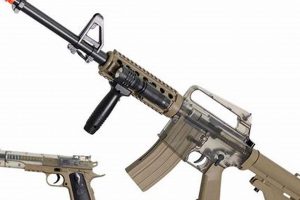
The query “is airsoft gun safe” inherently explores the level of risk associated with the use of airsoft guns. It questions the potential for injury or harm resulting from their operation and the measures necessary to mitigate those risks. Understanding the elements contributing to safety is paramount for anyone considering participation in airsoft activities.
Addressing the fundamental question of safety is crucial for the airsoft community’s sustained growth and responsible participation. Understanding the mechanics of impact, protective equipment standards, and responsible handling practices directly contributes to minimizing incidents and fostering a positive environment. Historically, awareness campaigns and regulation have played a significant role in enhancing the safety profile of the sport.
The following information will delve into the factors that determine the safety profile of airsoft activities, including gun types, protective gear requirements, field regulations, and the impact of responsible user conduct. This exploration aims to provide a thorough understanding of how risks can be managed effectively, allowing for a safer and more enjoyable experience.
Airsoft Gun Safety Guidelines
Adhering to established guidelines is critical for minimizing the potential hazards associated with airsoft activities. Strict compliance with these recommendations promotes a secure environment for all participants.
Tip 1: Eye Protection is Non-Negotiable: Full-seal goggles or a mask meeting ANSI Z87.1 standards are mandatory. This protects against projectile impact, a primary cause of airsoft-related injuries. Ensure the eye protection fits securely and provides a clear field of vision.
Tip 2: Understanding Velocity Limits: Airsoft fields impose velocity limits, typically measured in feet per second (FPS) with 0.20g BBs. Chronographing airsoft guns before gameplay ensures adherence to these limits. Modifying guns to exceed these limits presents a significant safety risk.
Tip 3: Employing Barrel Socks/Plugs: When not actively engaged in gameplay, use a barrel sock or plug to prevent accidental discharge. This simple measure adds a layer of protection in staging areas or during transportation.
Tip 4: Maintaining a Safe Distance: Respect minimum engagement distances, particularly with high-powered airsoft guns. Firing at close range increases the risk of bruising or other minor injuries. Many fields enforce minimum engagement distances based on FPS.
Tip 5: Adhering to Field Rules: Familiarize oneself with and strictly adhere to the specific rules of the airsoft field. These rules are designed to manage risk and maintain fair play. Common rules include restrictions on blind firing and prohibited zones.
Tip 6: Respecting the Surrounding Environment: Airsoft guns can resemble real firearms. Refrain from displaying or using them in public areas where they could be mistaken for real weapons. This avoids causing alarm or attracting unwanted attention.
Tip 7: Responsible Storage Practices: Store airsoft guns unloaded and in a secure location, away from children or individuals unfamiliar with their safe operation. Proper storage reduces the likelihood of accidental or unauthorized use.
Compliance with these guidelines contributes to a safer airsoft environment. Prioritizing safety promotes responsible gameplay and minimizes the potential for accidents or injuries.
These established practices are vital for fostering a positive and risk-averse atmosphere within the airsoft community. The information presented serves as a foundation for responsible participation.
1. Protective Gear Imperative

The connection between the “Protective Gear Imperative” and the question of “is airsoft gun safe” is causal and fundamental. Airsoft projectiles, while non-lethal, can cause injury, particularly to sensitive areas such as the eyes and face. Protective gear, specifically ANSI Z87.1 rated full-seal goggles or masks, acts as a direct barrier against these projectiles, significantly reducing the risk of injury. This direct mitigation of potential harm is a critical component in determining the relative safety of airsoft activities. Without adequate protection, the inherent risks associated with projectile impact elevate the potential for harm, thereby negatively impacting any assessment of safety.
Real-world examples consistently highlight the importance of proper protective equipment. Instances where players sustain eye injuries during airsoft games invariably involve situations where inadequate or nonexistent eye protection was utilized. Conversely, fields enforcing strict protective gear requirements experience a lower incidence of injury. Moreover, different types of protective equipment address specific areas of vulnerability. Facial protection, gloves, and even body armor offer varying degrees of defense against projectile impacts at different ranges. Understanding these factors is paramount for ensuring an adequate level of protection appropriate for the expected intensity of gameplay.
Therefore, the “Protective Gear Imperative” is not merely a suggestion but a necessary condition for any assertion of airsoft activity safety. The use of proper protective equipment, rigorously tested and certified, directly reduces the risk of injury. Its practical significance lies in preventing potential harm and establishing a safer environment for all participants. Disregarding this imperative directly increases the risk to participants and consequently renders airsoft activity inherently less safe. Challenges remain in ensuring consistent adherence to these standards across all levels of participation and across diverse operating environments.
2. Velocity Limits Enforcement

The enforcement of velocity limits is a crucial determinant in assessing the overall safety of airsoft activities. Projectile velocity directly correlates with impact energy; exceeding established velocity thresholds significantly increases the potential for injury. Adherence to regulated limits is, therefore, not merely a guideline, but a necessary condition for safe participation. Establishing and rigorously enforcing velocity limits is a primary mechanism for minimizing the risk of blunt force trauma resulting from projectile impact. The cause-and-effect relationship is direct: Higher velocity translates to increased impact force and, consequently, a greater likelihood of causing harm.
Airsoft fields routinely utilize chronographs to measure the velocity of airsoft guns before gameplay commences. Weapons exceeding the designated velocitytypically measured in feet per second (FPS) using 0.20g BBsare deemed non-compliant and are prohibited from use. Real-world incidents illustrate the consequences of circumventing these limitations. Instances of welts, bruises, and even minor lacerations are more common when velocity limits are ignored. Conversely, organized events with strict chronographing procedures demonstrate a marked reduction in reported injuries. Enforcement also addresses the issue of unregulated modifications. Unauthorized alterations to airsoft guns, intended to increase power, can inadvertently exceed safe velocity levels, undermining the safety protocols in place. Responsible ownership and adherence to velocity restrictions are therefore paramount.
Enforcement of velocity limits directly contributes to maintaining an acceptable level of risk within airsoft activities. Challenges persist in ensuring consistent compliance, particularly in informal settings or among individuals unfamiliar with safety regulations. However, the practical significance of understanding and upholding these limits cannot be overstated. Enforcement serves as a cornerstone of responsible airsoft practices and is inextricably linked to any valid assessment of safety within the sport. Consistent implementation and diligent monitoring are vital for fostering a safe and enjoyable environment for all participants.
3. Safe Handling Practices

The correlation between proper handling procedures and the assertion “is airsoft gun safe” is direct and essential. Irresponsible weapon handling introduces significant risks, irrespective of other safety measures. Airsoft guns, though not lethal firearms, require the same degree of respect and caution. Safe handling encompasses a spectrum of behaviors, from muzzle awareness to secure storage, each influencing the overall safety profile. Improper handling directly elevates the potential for accidental discharge, unintended injury, and misrepresentation of the device as a real firearm. The assertion of safety is significantly undermined in the absence of consistent, responsible handling practices.
Examples of safe handling include consistently treating every airsoft gun as if it were loaded, keeping the finger off the trigger until ready to fire, and always pointing the muzzle in a safe direction. Instances where individuals violate these principles often result in preventable accidents, such as unintended shots striking bystanders or self-inflicted injuries. Furthermore, safe handling extends to the transport and storage of airsoft guns. Unsecured transport or storage within reach of unauthorized individuals, particularly children, increases the risk of misuse and potential harm. Field regulations often mandate specific handling protocols, reinforcing the importance of responsible behavior. The consistent application of these procedures is a critical factor in creating a secure environment.
In summary, safe handling practices are a cornerstone of airsoft safety, inextricably linked to the question of whether airsoft activity can be considered safe. Challenges persist in ensuring universal adherence to these protocols, particularly among new participants or in unregulated environments. However, the practical significance of instilling and maintaining responsible handling habits is undeniable. Prioritizing safe handling behaviors is not merely a precautionary measure but a fundamental requirement for responsible participation, ultimately contributing to a safer and more enjoyable experience for all individuals involved. These considerations inform any comprehensive evaluation of airsoft safety.
4. Age Restrictions Compliance

Compliance with established age restrictions directly affects the safety profile of airsoft activities. The premise of age-based limitations rests on the understanding that cognitive maturity, responsible decision-making capabilities, and the physical capacity to handle airsoft guns appropriately develop over time. Introducing individuals lacking these attributes into an environment involving potentially hazardous equipment increases the likelihood of accidents, misuse, and a diminished understanding of safety protocols. Disregarding age restrictions consequently elevates the overall risk level, directly impacting any assertion of safety.
Many airsoft fields and retailers enforce age minimums, typically ranging from 13 to 18 years old, often requiring parental consent or supervision for younger participants. These restrictions are not arbitrary; they reflect a considered assessment of the developmental stages necessary for safe participation. Instances of accidents involving younger, unsupervised players often highlight a lack of understanding regarding proper handling, protective gear, and adherence to field rules. Conversely, structured youth programs with appropriate adult supervision and age-specific instruction demonstrate a marked improvement in safety outcomes. Furthermore, age restrictions are often tied to legal considerations, reflecting broader societal concerns regarding access to potentially dangerous items by minors.
In conclusion, adherence to age restrictions is a crucial component in ensuring the safety of airsoft activities. Challenges may arise in consistently verifying ages and enforcing compliance, particularly in informal settings. However, the practical significance of these limitations is undeniable. Upholding age restrictions serves as a fundamental safeguard, mitigating the risk of accidents and promoting a more responsible and secure environment for all participants. This element is crucial in an overall assessment of airsoft safety.
5. Field Regulations Adherence

The connection between field regulation adherence and the determination of airsoft gun safety is direct and consequential. Field regulations are established to mitigate inherent risks associated with simulated combat scenarios. Compliance with these rules minimizes the potential for accidents, injuries, and disputes, thereby directly impacting the overall safety of the activity. Ignoring field regulations introduces unnecessary hazards and undermines the intended safety protocols. The proposition of airsoft gun safety becomes significantly less tenable when field regulations are disregarded.
Specific examples illustrate the importance of this adherence. Mandatory use of barrel socks in designated safe zones prevents accidental discharges. Enforcement of minimum engagement distances reduces the risk of close-range injuries from high-velocity impacts. Restrictions on blind firing prevent unintended strikes on concealed individuals. Prohibiting unauthorized modifications to airsoft guns ensures compliance with established velocity limits. Real-world incidents consistently demonstrate that failure to observe these regulations results in preventable injuries or conflicts. Conversely, well-managed fields with strictly enforced rules exhibit a demonstrably lower incidence of safety-related issues. The implementation and consistent application of field regulations are paramount for fostering a secure and responsible environment.
In summary, adherence to field regulations is a vital component of airsoft safety. While challenges may exist in achieving universal compliance, particularly in unstructured environments, the practical benefits are undeniable. Upholding field regulations serves as a critical safeguard, reducing the potential for accidents and promoting a more secure and enjoyable experience. This factor remains essential in evaluating the overall safety of airsoft gun activities.
6. Responsible Modification Crucial

The concept of responsible modification directly bears on the safety of airsoft guns. Alterations to internal mechanisms or external components can drastically alter performance characteristics, often with unintended consequences for safety. This necessitates a thorough understanding of mechanics and potential risks involved in any modification.
- Velocity Enhancement Risks
Increasing an airsoft gun’s velocity, typically measured in feet per second (FPS), without proper understanding or mitigation strategies, presents significant risks. Exceeding established field limits or safe impact thresholds can result in serious injury. Unauthorized modifications can compromise the integrity of safety mechanisms, rendering the gun dangerous to both the user and others. This is a key factor when assessing the “is airsoft gun safe” question.
- Durability Compromise
Modifying components without considering material properties or stress tolerances can compromise the overall durability of the airsoft gun. Parts may fail under stress, potentially causing malfunctions or projectile fragmentation, increasing the risk of injury. The structural integrity of the gun should not be jeopardized by amateur modifications.
- Accuracy Degradation Concerns
Modifications undertaken without precise calibration or proper alignment can negatively affect the accuracy of the airsoft gun. This lack of precision increases the likelihood of unintended impacts, particularly in sensitive areas such as the eyes or face. Responsible modification requires a focus on maintaining, or improving, accuracy in a safe manner.
- Legal and Ethical Considerations
Modifying airsoft guns to closely resemble real firearms can lead to legal repercussions and ethical concerns. Such modifications can blur the line between recreational equipment and dangerous weaponry, potentially causing alarm or misuse. Responsible modification avoids mimicking or enhancing realism in a way that could lead to misidentification or illegal activity.
Responsible modification practices are integral to maintaining airsoft gun safety. Understanding the mechanical implications, potential risks, and ethical considerations associated with alterations is paramount. Any modifications should prioritize safety, durability, and adherence to regulations, ultimately contributing to the responsible use of airsoft guns.
Frequently Asked Questions
This section addresses common inquiries regarding the potential risks associated with airsoft activities and the measures implemented to mitigate such risks. The following questions offer concise, informative answers based on established safety protocols and industry best practices.
Question 1: What constitutes adequate eye protection during airsoft gameplay?
Adequate eye protection necessitates the use of full-seal goggles or a full-face mask certified to meet ANSI Z87.1 standards. These standards ensure the protective eyewear can withstand projectile impact without shattering or dislodging, thus preventing potential eye injuries.
Question 2: How are velocity limits enforced on airsoft fields?
Velocity limits are typically enforced through the use of a chronograph, a device that measures the speed of airsoft projectiles in feet per second (FPS). Airsoft guns are tested prior to gameplay, and those exceeding established FPS limits are prohibited from use to minimize the risk of excessive impact force.
Question 3: What are the potential consequences of modifying an airsoft gun without proper knowledge?
Modifying an airsoft gun without proper knowledge can compromise its safety and durability. Such modifications may lead to increased projectile velocity beyond safe limits, structural failures, decreased accuracy, and potential legal repercussions. It is strongly advised to seek professional assistance or thoroughly research the implications of any modification before proceeding.
Question 4: What is the recommended minimum age for participating in airsoft activities?
The recommended minimum age varies depending on the specific airsoft field or event organizer. Generally, most fields require participants to be at least 13 to 18 years old, often with parental consent or supervision required for younger players. This age restriction is based on considerations of maturity, responsibility, and the ability to understand and adhere to safety regulations.
Question 5: Why is responsible storage of airsoft guns important?
Responsible storage of airsoft guns prevents accidental or unauthorized use, especially by children or individuals unfamiliar with their safe operation. Airsoft guns should be stored unloaded, in a secure location, away from access by unauthorized individuals to minimize the risk of accidents or misuse.
Question 6: What role do field marshals play in maintaining safety on airsoft fields?
Field marshals are responsible for enforcing field regulations, monitoring gameplay, and ensuring participant compliance with safety protocols. Their presence helps to prevent unsafe behaviors, resolve disputes, and respond to emergencies, thereby contributing to a safer overall environment.
In conclusion, the safety of airsoft activities is contingent upon strict adherence to established protocols, responsible handling practices, and a commitment to maintaining a safe environment for all participants. Understanding and implementing these measures is crucial for minimizing risks and promoting a positive experience.
The following section will delve into real-world incidents related to airsoft gun safety, examining the circumstances surrounding these events and the lessons learned from them.
Conclusion
The preceding analysis has explored multiple facets influencing the safety profile of airsoft activities. Mandatory protective gear, enforced velocity limits, responsible handling practices, age restriction compliance, and field regulation adherence each contribute significantly to mitigating potential risks. Neglecting any of these critical elements increases the likelihood of accidents and injuries, consequently diminishing the overall safety of airsoft.
Ultimately, the question of “is airsoft gun safe” lacks a simple binary answer. Instead, safety hinges upon diligent implementation of established protocols and a sustained commitment to responsible conduct by all participants. Continual evaluation and refinement of safety measures remain paramount to ensuring a secure environment, fostering responsible gameplay, and upholding the integrity of the sport.