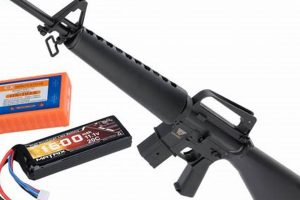
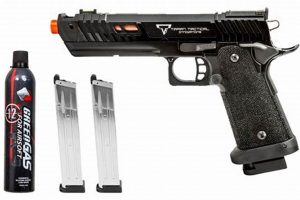
The process of replenishing the power source within an airsoft replica is essential for its operational capability. This typically involves connecting the power supply of the replica’s battery to a compatible charger until the battery reaches its full capacity. For gas-powered models, it pertains to refilling the internal reservoir with the appropriate propellant, such as green gas or CO2.
Properly maintaining the power source of an airsoft replica extends its lifespan, ensures consistent performance during gameplay, and prevents damage to the internal mechanisms. Adherence to correct charging and refilling procedures is crucial. Ignoring these principles can lead to decreased battery life, inconsistent gas pressure, and potential safety hazards.
The following sections will detail specific procedures for various types of airsoft power systems, ensuring the replica is ready for use. Instructions will cover electrical, gas, and spring-powered variants, emphasizing best practices for optimal operation.
Charging Airsoft Replicas
Optimizing the power source of an airsoft replica requires diligence and adherence to best practices. The following tips provide guidance for ensuring safe and efficient operation.
Tip 1: Use the Correct Charger: Ensure compatibility between the charger and the battery type. Using an incorrect charger can lead to overcharging, battery damage, or even fire hazards. Refer to the manufacturer’s specifications for recommended chargers.
Tip 2: Monitor Charging Times: Adhere to recommended charging times as specified by the battery and charger manufacturers. Overcharging lithium-polymer (LiPo) batteries, for example, can be extremely dangerous. Use a timer or smart charger with auto-shutoff features.
Tip 3: Storage Conditions Matter: Store batteries in a cool, dry place away from direct sunlight and extreme temperatures. Improper storage can degrade battery performance and lifespan. Ideally, LiPo batteries should be stored at a storage charge (around 3.8V per cell).
Tip 4: Balance Charge LiPo Batteries: If using LiPo batteries, employ a balance charger regularly. This ensures that each cell within the battery pack is charged to the same voltage, preventing imbalances that can lead to reduced performance and potential hazards.
Tip 5: Inspect Batteries Regularly: Before each use, visually inspect batteries for signs of damage, such as swelling, cracks, or leaks. Damaged batteries should be disposed of properly and replaced immediately.
Tip 6: Understand Gas Types: When using gas-powered replicas, select the appropriate gas type (e.g., green gas, CO2) based on the replica’s specifications and ambient temperature. Using incorrect gas pressure can damage the internal mechanisms.
Tip 7: Lubricate Gas Magazines: Regularly lubricate the seals of gas magazines with silicone oil to prevent leaks and maintain consistent performance. Follow the manufacturer’s instructions for lubrication procedures.
Proper management of the airsoft replica’s power source enhances safety, extends the equipment’s operational life, and ensures consistent performance during gameplay. These fundamental procedures should be integrated into standard maintenance routines.
The subsequent section will delve into specific troubleshooting steps related to power source malfunctions, providing further assistance for maintaining peak operational status.
1. Correct Charger

The selection of an appropriate charger is paramount to the process of correctly charging an airsoft replica. A mismatch between charger specifications and battery requirements can lead to adverse effects, ranging from diminished battery performance to potential safety hazards. The battery type employed within the airsoft replica dictates the necessary characteristics of the charger. Lithium Polymer (LiPo) batteries, Nickel-Metal Hydride (NiMH) batteries, and Lithium-Ion (Li-Ion) batteries each require chargers engineered with specific charging algorithms and voltage parameters.
Employing an incorrect charger can result in overcharging, wherein the battery receives a voltage exceeding its safe capacity. This overcharging can cause the battery to overheat, swell, and potentially ignite, presenting a fire risk. Conversely, using a charger with insufficient voltage may fail to fully charge the battery, leading to reduced operational time and diminished performance during airsoft gameplay. A real-world example is attempting to charge a LiPo battery with a NiMH charger; this commonly leads to irreversible battery damage and renders the battery unusable. Smart chargers mitigate these risks by automatically detecting the battery type and adjusting charging parameters accordingly.
In summary, understanding the necessity of matching the charger to the battery type is a cornerstone of safe and effective airsoft replica maintenance. The implications of disregarding this principle extend beyond mere performance degradation, encompassing potential safety hazards. Employing correct charging equipment and protocols ensures optimal battery lifespan and contributes to a safer airsoft experience.
2. Voltage Compatibility
Voltage compatibility is a critical factor in ensuring the safe and effective charging of airsoft replica power systems. The voltage of the charger must align with the voltage requirements of the battery to prevent damage and ensure proper functionality. Mismatched voltages can lead to undercharging, overcharging, or even catastrophic failure of the battery.
- Charger Output Voltage
The charger’s output voltage must precisely match the battery’s nominal voltage. For example, a 7.4V LiPo battery requires a charger that delivers 7.4V. A deviation from this specification can prevent the battery from reaching its full capacity or, conversely, overcharge it, leading to overheating and potential damage. The label on both the charger and the battery must be carefully examined before commencing charging. A common error is using a 9.6V charger on an 8.4V battery pack, which will likely damage the 8.4V battery.
- Cell Count Considerations
For multi-cell batteries, such as LiPo packs, the voltage is determined by the number of cells connected in series. Each LiPo cell has a nominal voltage of 3.7V. Therefore, a 2-cell LiPo pack is rated at 7.4V, and a 3-cell pack is rated at 11.1V. The charger must be designed to handle the specific cell count of the battery being charged. A balance charger, specifically designed for LiPo batteries, ensures each cell is charged equally, preventing imbalances and extending battery life. Ignoring cell count and using a charger designed for a different configuration can lead to uneven charging and premature battery failure.
- Tolerances and Margins
While precise voltage matching is ideal, minor tolerances are generally acceptable. However, exceeding these tolerances can be detrimental. A slight under-voltage might result in the battery not reaching its full charge, while a slight over-voltage can accelerate battery degradation. It is always preferable to err on the side of caution and select a charger with the voltage rating closest to the battery’s specification. Furthermore, the charger’s voltage output should be stable and consistent, as fluctuations can also negatively impact battery health.
- Impact on Battery Lifespan
Consistently using a charger with an incorrect voltage significantly reduces the lifespan of the battery. Undercharging results in incomplete chemical reactions within the battery, reducing its capacity over time. Overcharging causes excessive heat and pressure, leading to swelling, internal damage, and ultimately, premature failure. Voltage compatibility, therefore, directly correlates with the economic factor of replacing batteries frequently. Proper voltage matching is an investment in the long-term performance and cost-effectiveness of the airsoft replica’s power system.
The interconnectedness of charger voltage and battery requirements cannot be overstated in the context of “how to charge an airsoft gun.” The principles of voltage compatibility are foundational to safe, efficient, and long-lasting battery performance, directly influencing the operational reliability and overall cost of maintaining airsoft replicas. Adhering to these principles ensures a reliable power source for consistent gameplay.
3. Charging Duration
The duration of the charging cycle represents a critical parameter in the context of powering airsoft replicas. Its influence extends to battery longevity, operational readiness, and safety considerations, necessitating a thorough understanding of its impact on the overall system.
- Battery Chemistry Influence
Different battery chemistries exhibit varying charge time requirements. Nickel-Metal Hydride (NiMH) batteries typically require longer charging durations compared to Lithium Polymer (LiPo) batteries. Overcharging NiMH batteries can lead to heat buildup and reduced lifespan, whereas overcharging LiPo batteries presents a significant fire hazard. Therefore, knowledge of the battery composition is essential for determining the appropriate charging duration, dictating the selection of charging parameters and safety protocols.
- Charger Capabilities and Limitations
The charging device’s specifications directly influence the total charging time. Chargers with lower amperage outputs require extended durations to fully charge a battery compared to high-amperage counterparts. Smart chargers, equipped with automatic cut-off mechanisms, mitigate the risk of overcharging by terminating the charging cycle upon reaching full capacity. The utilization of a charger that lacks such features necessitates vigilant monitoring to prevent battery damage.
- Battery Capacity and Voltage
The capacity of a battery, measured in milliampere-hours (mAh), and its voltage are directly proportional to the required charging time. A higher capacity battery demands a longer charging duration to reach full charge compared to a lower capacity battery of the same chemistry. Similarly, variations in voltage affect the charging time. Adherence to manufacturer specifications regarding charging duration is crucial for maintaining battery integrity and ensuring optimal performance.
- Ambient Temperature Effects
Ambient temperature significantly impacts the charging process. Extreme temperatures, both high and low, can negatively influence the efficiency and safety of charging. Charging batteries in excessively hot environments increases the risk of thermal runaway, while charging in cold environments can reduce the battery’s ability to accept a charge. Maintaining a moderate ambient temperature within the recommended range optimizes the charging duration and mitigates potential risks.
In conclusion, the relationship between charging duration and “how to charge an airsoft gun” is multifaceted, involving considerations of battery chemistry, charger specifications, battery capacity, and environmental conditions. A comprehensive understanding of these factors ensures safe and efficient power management, ultimately contributing to the reliability and longevity of the airsoft replica’s power system.
4. Gas Pressure
Gas pressure constitutes a fundamental component in the operation of gas-powered airsoft replicas, directly influencing projectile velocity, range, and overall consistency. The process of charging these replicas involves replenishing the gas reservoir to a specified pressure level. Insufficient pressure results in reduced performance, manifested as lower velocity and diminished range, while excessive pressure can damage internal components, leading to leaks or complete system failure. The selection of the appropriate gas type (e.g., green gas, CO2, propane) is crucial, as each propellant exhibits distinct pressure characteristics and compatibility with specific replica models. For example, using CO2 in a replica designed for green gas can exert undue stress on seals and valves, causing irreparable damage. The act of “charging” thus extends beyond merely filling the reservoir; it necessitates meticulous attention to the pressure level achieved and its suitability for the replica.
Regulating gas pressure involves employing specialized tools and techniques. Gas magazines and reservoirs are filled using adaptors and valves designed to maintain controlled pressure levels during the charging process. Integrated pressure gauges provide real-time feedback, allowing users to monitor the internal pressure and prevent overfilling. An example of a practical application involves adjusting the pressure output of a regulator when using an external air tank system. This adjustment ensures that the replica operates within its designed pressure range, optimizing performance and preventing potential damage. Furthermore, ambient temperature influences gas pressure; higher temperatures increase pressure, while lower temperatures decrease it. Operators must account for these fluctuations to maintain consistent performance across varying environmental conditions.
In summary, understanding and managing gas pressure are integral to the proper functioning of gas-powered airsoft replicas. The process of “charging” inherently involves achieving and maintaining the correct pressure level, contingent upon the gas type, replica model, and environmental factors. Failing to adhere to these principles compromises performance and increases the risk of equipment damage. Thus, mastering gas pressure management is essential for responsible and effective operation of gas-powered airsoft replicas.
5. Proper Lubrication
In the context of “how to charge an airsoft gun,” proper lubrication plays a less direct but still crucial role in maintaining optimal performance and extending the operational lifespan of gas-powered models. While not directly involved in the charging process of electric-powered replicas, lubrication ensures the efficient functioning of gas-powered mechanisms, influencing the consistency and reliability of gas delivery after charging.
- Gas Magazine Seal Integrity
Gas magazines in airsoft replicas contain seals that prevent gas leakage. These seals are susceptible to drying out and cracking, particularly when exposed to prolonged periods of inactivity or variations in temperature. Proper lubrication with silicone oil maintains seal pliability, ensuring an airtight seal and preventing gas from escaping. This ensures that when the magazine is charged, the gas remains contained until needed, directly impacting the replica’s performance. Neglecting seal maintenance results in gas leakage and necessitates more frequent recharging, reducing efficiency and increasing operational costs.
- Valve and Piston Smoothness
Gas-powered airsoft replicas rely on valves and pistons to regulate gas flow. These components must move freely to deliver consistent pressure and velocity. Proper lubrication reduces friction between moving parts, enabling smooth and reliable operation. This is crucial for maintaining consistent performance following each charging cycle. An example is lubricating the nozzle of a gas blowback pistol, ensuring it moves freely and efficiently meters gas into the barrel. Insufficient lubrication leads to sluggish performance, inconsistent shot velocity, and increased wear on internal components.
- O-Ring Maintenance
O-rings are utilized in various parts of gas-powered airsoft replicas to create airtight seals. These rings are prone to wear and degradation due to friction and exposure to propellants. Regular lubrication with silicone grease or oil protects o-rings from drying out, cracking, and losing their sealing properties. This ensures minimal gas leakage and consistent performance after each recharge. An example is lubricating the o-rings in the regulator of an external air tank system, maintaining a leak-free connection and consistent pressure output. Neglecting o-ring maintenance can lead to gas leaks, reduced power, and eventual system failure.
- Threaded Connection Integrity
Many gas-powered airsoft replicas utilize threaded connections for securing components such as gas tanks and regulators. Proper lubrication of these threads with a suitable grease prevents corrosion and facilitates easy disassembly and reassembly. This ensures that connections remain airtight and that components can be readily accessed for maintenance or replacement. Applying a thin layer of Teflon tape or silicone grease to the threads of a CO2 cartridge adapter ensures a secure and leak-free connection to the replica. Without proper lubrication, threads can seize, corrode, or become damaged, making disassembly difficult and potentially compromising the integrity of the gas system.
While not directly related to the electrical aspect of “how to charge an airsoft gun,” proper lubrication directly enhances the efficiency and reliability of gas-powered airsoft replicas. By ensuring airtight seals, smooth component movement, and protected connections, lubrication contributes to consistent performance and extends the lifespan of the equipment, optimizing the return on investment in both the replica and its charging process.
6. Safe Storage

The concept of safe storage, while seemingly separate from the immediate action of “how to charge an airsoft gun,” is intrinsically linked to the longevity, performance, and safety of the replica, particularly concerning its power source. Improper storage conditions can negate the benefits of correct charging practices, leading to premature battery degradation, increased risk of accidents, and compromised operational readiness. For instance, storing a fully charged Lithium Polymer (LiPo) battery at high temperatures accelerates its discharge rate and can induce thermal runaway, a hazardous condition resulting in fire or explosion. Therefore, safe storage represents a critical step in the overall process of maintaining an airsoft gun’s power system, complementing the charging procedure itself.
Specifically, concerning electric-powered airsoft replicas, safe storage involves maintaining batteries at a storage charge (typically around 3.8V per cell for LiPo batteries) and storing them in a cool, dry environment away from direct sunlight and flammable materials. This practice minimizes self-discharge, reduces the risk of short circuits, and prolongs battery life. In the case of gas-powered replicas, magazines should be stored with a small amount of gas to maintain seal integrity. This prevents seals from drying out and cracking, which can lead to leaks when the magazine is subsequently charged. Disconnecting batteries from the replica during prolonged storage prevents parasitic drain, which can deplete the battery and potentially damage sensitive electronic components. These procedures collectively ensure that the replica’s power source remains in optimal condition, ready for use when needed, and minimizing the need for frequent charging cycles.
In summary, safe storage represents an integral component of the “how to charge an airsoft gun” methodology. It ensures that the effort invested in properly charging the power source is not undermined by detrimental storage practices. The interplay between correct charging and safe storage maximizes battery lifespan, enhances operational reliability, and mitigates potential safety hazards. Addressing both aspects comprehensively represents a responsible approach to airsoft replica ownership and maintenance.
7. Regular Inspection
Regular inspection forms a critical, albeit often overlooked, element within the holistic process of maintaining and utilizing airsoft replicas, directly influencing the effectiveness and safety of power source management. These inspections reveal potential issues before they escalate into malfunctions, ensuring that the charging process remains efficient and hazard-free.
- Battery Condition Assessment
Visual inspection of batteries for physical damage, such as swelling, cracks, or leaking electrolytes, is paramount. Damaged batteries pose significant safety risks, including the potential for fire or explosion during charging. Identifying such issues prior to connecting the battery to a charger prevents catastrophic failures. An example includes observing a puffed LiPo battery, indicating internal degradation and the need for immediate disposal and replacement. Regular assessment safeguards against the risks associated with charging compromised power sources.
- Charger Functionality Verification
The integrity of the charger itself warrants periodic examination. Inspecting the charging cable for fraying or exposed wires, verifying the functionality of indicator lights, and confirming the correct voltage output ensures that the charger operates within safe parameters. Malfunctioning chargers can deliver incorrect voltages or amperage, leading to overcharging, undercharging, or battery damage. A real-world scenario involves noticing a broken charging cable, which can lead to inconsistent power delivery and potential electrical hazards. Verified charger functionality is essential for a safe and effective charging cycle.
- Gas Magazine Integrity Checks
For gas-powered replicas, regular inspection of gas magazines is crucial. Seals must be checked for cracks or wear, and the magazine body inspected for dents or deformities. Leaking magazines not only waste gas but also indicate underlying structural or seal issues that require immediate attention. An operator might detect a hissing sound emanating from the gas magazine, signaling a leak that diminishes performance and increases charging frequency. Proper magazine integrity guarantees consistent pressure and performance after charging, maximizing the usability of each gas refill.
- Wiring and Connector Scrutiny
In electric-powered replicas, the wiring and connectors between the battery and the replica’s internal mechanism require regular inspection. Loose connections, frayed wires, or corroded contacts can impede current flow, reducing performance and potentially causing short circuits. Examining the Tamiya or Deans connectors for secure connections prevents power interruptions during gameplay. Consistent wiring and connector integrity ensures efficient power transmission and prevents damage to electronic components during the charging and operational phases.
By integrating these facets of regular inspection into the maintenance routine for airsoft replicas, operators can mitigate potential hazards, prolong equipment lifespan, and optimize performance. These proactive checks directly enhance the safety and effectiveness of “how to charge an airsoft gun,” fostering a responsible approach to equipment maintenance and usage.
Frequently Asked Questions
This section addresses common inquiries concerning the proper methods and best practices associated with maintaining the power source of airsoft replicas.
Question 1: What are the primary safety precautions to observe when charging airsoft replica batteries?
The charging process should be conducted in a well-ventilated area away from flammable materials. Direct supervision during charging is advised. Utilizing chargers equipped with overcharge protection mechanisms and employing fire-resistant charging bags, particularly for Lithium Polymer (LiPo) batteries, mitigates potential hazards. Regular inspection of battery condition is essential prior to initiating the charging process.
Question 2: How frequently should airsoft replica batteries be charged?
Charging frequency depends on usage patterns. Batteries should be charged after each skirmish or extended period of use to maintain optimal performance. Allowing batteries to fully discharge can diminish their lifespan and reduce their capacity over time. Periodic maintenance charges are recommended for batteries in storage to prevent excessive discharge.
Question 3: Can a charger designed for Nickel-Metal Hydride (NiMH) batteries be used to charge Lithium Polymer (LiPo) batteries, or vice versa?
Interchanging chargers between NiMH and LiPo batteries is strictly discouraged. NiMH chargers lack the necessary voltage regulation and safety features required for LiPo batteries, potentially leading to overcharging, overheating, and fire hazards. LiPo chargers employ specific charging algorithms and voltage cutoffs that are incompatible with NiMH batteries, rendering their use ineffective and potentially damaging.
Question 4: What is the significance of the “C-rating” on Lithium Polymer (LiPo) batteries, and how does it relate to airsoft replica performance?
The “C-rating” indicates the discharge rate capability of a LiPo battery. A higher C-rating signifies that the battery can deliver more current, resulting in improved trigger response and rate of fire in compatible airsoft replicas. Selecting a battery with an appropriate C-rating ensures sufficient power delivery without overstressing the battery, optimizing performance and extending battery lifespan.
Question 5: What measures should be taken to mitigate the risks associated with charging gas magazines for gas-powered airsoft replicas?
Utilizing the correct type of gas propellant recommended by the replica manufacturer is essential. Overfilling gas magazines can damage seals and internal components, leading to leaks and malfunctions. Performing the charging process in a well-ventilated area away from open flames or heat sources is advised. Periodic lubrication of magazine seals with silicone oil maintains pliability and prevents gas leakage.
Question 6: How should airsoft replica batteries be stored to maximize their lifespan and minimize potential hazards?
Batteries should be stored in a cool, dry environment away from direct sunlight and extreme temperatures. For LiPo batteries, storing them at a storage charge (approximately 3.8V per cell) minimizes degradation during prolonged periods of inactivity. Disconnecting batteries from the airsoft replica prevents parasitic drain. Utilizing fireproof storage containers or bags provides an additional layer of protection against potential thermal events.
Adherence to these guidelines fosters safe and effective power source management, contributing to consistent performance and extending the lifespan of airsoft replicas. Proper charging techniques mitigate potential hazards, ensuring a secure and enjoyable airsoft experience.
The subsequent section will provide a comprehensive conclusion, summarizing key takeaways and offering final recommendations for optimal airsoft replica maintenance.
Conclusion
This exploration has delineated the critical aspects of maintaining operational readiness in airsoft replicas, emphasizing the significance of understanding power sources. The process of “how to charge an airsoft gun” extends beyond simple battery connection or gas refilling. It encompasses proper charger selection, voltage compatibility, controlled charging duration, gas pressure regulation, lubrication practices, safe storage protocols, and regular inspection routines. Each facet contributes to the longevity, reliability, and safety of the replica, influencing its performance and the overall user experience. Disregarding these principles compromises equipment integrity and elevates potential hazards.
Responsible airsoft replica ownership demands a commitment to informed maintenance practices. The procedures outlined herein represent foundational knowledge for ensuring consistent performance and minimizing operational risks. Continued adherence to these guidelines will preserve equipment investment, promote user safety, and facilitate sustained engagement in the sport. The consistent application of these principles remains paramount.