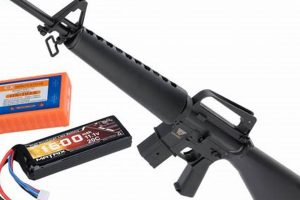
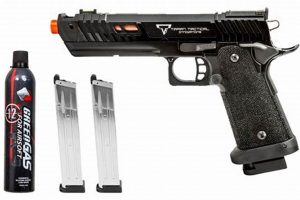
The process of energizing an airsoft gun varies significantly depending on the type of power source utilized. Electric airsoft guns (AEGs) rely on rechargeable batteries, while gas-powered models (GBBs and springers) utilize compressed gas or mechanical force, respectively, for propulsion. Each power method dictates a unique approach to replenishment or preparation for operation. For example, AEG batteries require connection to a compatible charger, whereas gas-powered guns necessitate refilling with compressed gas.
Proper energy management ensures optimal performance and longevity of the airsoft gun. In the case of AEGs, correctly charging batteries prevents damage and maximizes operational time. For gas-powered guns, maintaining adequate gas pressure guarantees consistent shot velocity and prevents malfunctions. An understanding of the specific requirements for each type of airsoft gun allows for responsible ownership and consistent operation on the field.
The following sections will detail the specific procedures for replenishing the power source of different types of airsoft guns, focusing on electric models and their battery charging protocols.
Essential Practices for Airsoft Gun Powering
The subsequent guidelines serve to enhance the lifespan and operational reliability of airsoft guns powered by rechargeable batteries.
Tip 1: Utilize a compatible charger. Employing the correct charger specifically designed for the battery type is crucial. Mismatched chargers can lead to overcharging, undercharging, or, in severe cases, battery damage.
Tip 2: Monitor the charging process. Regular monitoring of the battery’s charging state is recommended. Overcharging can degrade battery performance and pose a safety risk. Many advanced chargers feature automatic shut-off functions to prevent overcharging.
Tip 3: Allow batteries to cool. Following discharge, permit the battery to cool down before initiating the charging process. Charging a warm battery can shorten its lifespan and diminish its capacity.
Tip 4: Store batteries appropriately. Long-term storage requires specific conditions. Batteries should be stored in a cool, dry environment, ideally at approximately 40% charge. Avoid storing batteries fully charged or completely discharged for extended periods.
Tip 5: Cycle batteries periodically. If batteries are not in regular use, perform a full charge and discharge cycle every few months to maintain their health and capacity.
Tip 6: Inspect batteries for damage. Prior to charging, thoroughly inspect the battery for any signs of physical damage, such as swelling, cracks, or damaged wiring. Discontinue use immediately if any damage is detected.
Effective application of these practices contributes to the prolonged functionality and safety of airsoft gun battery systems.
The ensuing section will delve into potential troubleshooting scenarios encountered during the process of powering airsoft guns.
1. Battery compatibility

Battery compatibility represents a fundamental prerequisite for the successful execution of the “how to charge a airsoft gun” process, specifically for electric airsoft guns (AEGs). The direct effect of improper battery compatibility is potential damage to the battery, the charger, or even the airsoft gun’s internal electronics. Employing a battery with an incorrect voltage rating, for instance, can lead to over-current, overheating, and ultimately, component failure. A practical example is the attempted use of an 11.1V LiPo battery in an AEG designed for 7.4V, which will likely damage the gun’s motor and wiring due to excessive strain. Battery compatibility is therefore a critical component influencing the effectiveness and safety of charging procedures.
Furthermore, connector types must be physically compatible. Mismatched connectors necessitate the use of adapters, which can introduce resistance and potential points of failure. The use of an incorrect charger, even with a compatible voltage, can also be detrimental. For example, using a NiMH charger for a LiPo battery poses a significant fire hazard, as LiPo batteries require specific charging algorithms and safety features not present in NiMH chargers. The absence of proper charging protocols can lead to overcharging, thermal runaway, and potentially catastrophic outcomes.
In summary, battery compatibility ensures the safety and efficacy of the “how to charge a airsoft gun” procedure. Addressing compatibility challenges through meticulous research and adherence to manufacturer specifications prevents equipment damage and enhances operational longevity. The understanding of battery compatibility extends to the broader theme of responsible airsoft gun ownership and safe handling practices.
2. Charger specification
Charger specification is inextricably linked to the safe and effective replenishment of airsoft gun battery power. It dictates the parameters within which electrical energy is transferred, influencing battery health, charging speed, and overall system safety. Failure to adhere to specified charging parameters can result in diminished battery lifespan, operational hazards, or irreparable damage to both the battery and the airsoft gun.
- Voltage Compatibility
Voltage compatibility is paramount. The charger’s output voltage must precisely match the battery’s nominal voltage. Using a charger with a higher voltage can lead to overcharging and potential battery rupture or fire. Conversely, a lower voltage may result in incomplete charging, reducing the airsoft gun’s operational time. For example, a 9.6V NiMH battery requires a charger specifically designed to deliver 9.6V. Deviation from this specification can have serious consequences.
- Current (Amperage) Rating
The charger’s current rating, measured in amperes (A), determines the charging speed. A higher amperage charger will generally charge the battery faster, but exceeding the battery’s maximum charging rate can cause overheating and damage. It is advisable to use a charger with a current rating that aligns with the manufacturer’s recommendations for the specific battery. For instance, a LiPo battery rated for a maximum charge rate of 1C (one times its capacity) should not be charged at a higher amperage than its capacity allows (e.g., a 1600mAh battery should not be charged at more than 1.6A).
- Battery Chemistry Compatibility
Chargers are designed for specific battery chemistries (e.g., NiMH, LiPo, LiFePO4). Using a charger designed for one chemistry on a battery of a different chemistry can be catastrophic. LiPo batteries, for instance, require specialized charging algorithms to prevent overcharging and thermal runaway. A NiMH charger lacks these features and can pose a significant fire hazard if used with a LiPo battery. Therefore, verifying chemistry compatibility is an indispensable step in ensuring safe charging practices.
- Connector Type
The charger’s connector must physically interface with the battery’s connector. While adapters can be used, they introduce potential points of failure and can increase resistance, potentially affecting charging efficiency and safety. Direct compatibility of connectors is preferable. Examples include Tamiya, Deans, and Mini-Tamiya connectors, each necessitating a corresponding charger or adapter for proper connection.
In conclusion, careful consideration of charger specifications is integral to implementing safe and effective charging protocols for airsoft guns. Attention to voltage, amperage, battery chemistry, and connector type mitigates the risk of damage and ensures optimal battery performance, reinforcing the link between proper charger selection and successful power management. The practice of proper charger specification goes hand-in-hand with a responsible approach to airsoft gun operation and maintenance.
3. Charging duration
Charging duration, in the context of energizing an airsoft gun, directly impacts battery health and performance. It represents the interval during which electrical energy is transferred from a charger to the battery. Insufficient charging duration results in undercharging, leading to diminished power output and reduced operational runtime of the airsoft gun. Conversely, excessive charging duration leads to overcharging, causing battery degradation, potential thermal runaway, and shortened lifespan. The optimal charging duration is therefore a critical parameter that must be carefully controlled to maximize battery performance and minimize risk. A practical example is a LiPo battery left on charge for an extended period after reaching full capacity; this overcharging condition can lead to swelling, internal damage, and even fire.
The relationship between charging duration and battery capacity is crucial for determining the appropriate charging time. Battery capacity, measured in milliampere-hours (mAh), dictates the amount of energy the battery can store. The charger’s output current, in amperes (A), determines the rate at which the battery is charged. To estimate the ideal charging duration, the battery capacity is divided by the charging current, taking into account charging efficiency. For instance, charging a 1600mAh battery with a 800mA charger would ideally take approximately two hours, although charging efficiency factors may extend this time. Intelligent chargers with automatic cut-off features mitigate the risk of overcharging by terminating the charging process once the battery reaches full capacity.
Accurate management of charging duration is essential for responsible airsoft gun maintenance. Understanding the battery’s specifications, charger characteristics, and utilizing smart charging technology contributes to prolonged battery life and enhanced operational reliability. Challenges such as variations in battery chemistry and the availability of precise charging information underscore the need for caution and diligence. This careful attention to charging duration enhances the lifespan and usefulness of airsoft guns, fitting into the broader framework of responsible ownership and proper care.
4. Safe handling

Safe handling is an inextricable component of the “how to charge a airsoft gun” procedure, influencing operational safety and preventing potential hazards. Improper handling can lead to battery damage, personal injury, or property damage. Understanding and adhering to established safety protocols is thus paramount when engaging in the charging process.
- Physical Inspection
Prior to initiating the charging process, a thorough physical inspection of the battery and charger is mandatory. Examination should include observation for signs of damage such as swelling, cracks, or frayed wiring. Discontinuing use of damaged components is imperative to prevent short circuits, overheating, or potential battery rupture. For example, a battery exhibiting signs of bloating should be immediately isolated and disposed of according to local regulations.
- Environmental Conditions
Charging should occur in a well-ventilated area away from flammable materials. Avoiding charging in confined spaces or near sources of heat reduces the risk of fire. Ideal charging environments maintain a moderate temperature range. Direct exposure to sunlight or extreme cold can adversely affect battery performance and increase the likelihood of malfunctions. An example would be charging batteries in a garage with adequate ventilation as opposed to a sealed container.
- Charging Supervision
Batteries undergoing charging should be actively supervised. Unattended charging increases the risk of undetected malfunctions, such as overcharging or thermal runaway. Regular monitoring allows for prompt intervention in the event of irregularities. Utilizing chargers with automatic cut-off features provides an additional layer of safety, preventing overcharging when the battery reaches full capacity. This active supervision reduces risk.
- Disposal Protocols
Adhering to proper disposal protocols for damaged or end-of-life batteries is essential for environmental protection and safety. Batteries should be disposed of at designated recycling centers or hazardous waste facilities. Disassembling batteries or puncturing their casings poses a risk of exposure to hazardous materials and should be avoided. Following local regulations on battery disposal mitigates environmental contamination and reduces potential risks to human health. Disposal protocols are essential for safety.
In summary, safe handling encompasses a comprehensive approach to the charging procedure, integrating physical inspection, environmental awareness, active supervision, and responsible disposal. These multifaceted precautions minimize the potential for accidents and contribute to the sustained performance and longevity of airsoft gun batteries. Proper implementation of these guidelines reinforces the connection between “how to charge a airsoft gun” and the responsible use of airsoft equipment.
5. Storage practices

Effective storage practices are intrinsically linked to the long-term performance and safety of rechargeable batteries used in airsoft guns. How batteries are stored between uses directly impacts their lifespan, capacity, and overall reliability when subsequently charged. Therefore, understanding appropriate storage protocols is a critical aspect of responsible airsoft gun maintenance.
- State of Charge
Storing batteries at an appropriate state of charge is paramount. Leaving batteries fully charged or completely discharged for extended periods can accelerate degradation. A partial charge, typically around 40-60%, is generally recommended for long-term storage. This reduces internal stress within the battery cells and minimizes the potential for irreversible capacity loss. An example would be preparing batteries for winter storage by partially discharging them prior to placement in a cool, dry location.
- Temperature Control
Temperature significantly affects battery storage. Extreme temperatures, both hot and cold, can negatively impact battery chemistry. High temperatures accelerate self-discharge and can lead to permanent damage, while freezing temperatures can increase internal resistance and reduce capacity. Storage in a cool, dry environment is recommended, ideally between 15-25C (59-77F). Avoid storing batteries in direct sunlight or in vehicles during hot weather. Climate-controlled storage greatly extends battery life.
- Humidity Considerations
Humidity levels also influence battery health during storage. High humidity can promote corrosion and oxidation of battery terminals and internal components. Conversely, excessively dry environments can lead to desiccation of battery cells. Maintaining moderate humidity levels, typically between 30-50%, is advisable. Utilizing airtight containers with desiccant packs can further protect batteries from moisture damage.
- Regular Inspection
Periodic inspection of stored batteries is crucial for detecting potential problems. Check for signs of physical damage, such as swelling, leaks, or corrosion. If any damage is observed, the battery should be safely disposed of according to local regulations. Regular inspection allows for early detection of issues and prevents potentially hazardous situations when attempting to “how to charge a airsoft gun” after prolonged storage.
The effective implementation of these storage practices directly impacts the efficiency and safety of subsequent charging cycles. Maintaining appropriate state of charge, temperature, and humidity, coupled with regular inspection, minimizes the risk of battery degradation and ensures optimal performance when the airsoft gun is next used. By prioritizing these storage protocols, users can maximize the lifespan and reliability of their batteries, promoting responsible ownership and safe operation of their airsoft guns.
6. Voltage Verification
Voltage verification constitutes a critical pre-charging step within the process of energizing airsoft guns, particularly those utilizing rechargeable batteries. The fundamental reason for this verification stems from the necessity to ensure compatibility between the battery and the intended charger. Mismatched voltages can precipitate a cascade of adverse effects, ranging from inefficient charging to irreversible battery damage or, in extreme cases, thermal runaway and fire. For example, attempting to charge a 7.4V LiPo battery with a charger designed for 11.1V batteries introduces the risk of overcharging, leading to cell damage and potential catastrophic failure. Therefore, confirming voltage compatibility is not merely a precautionary measure but an essential prerequisite for safe and effective charging.
The practical application of voltage verification involves several steps. First, the user must identify the battery’s nominal voltage, typically printed on the battery itself or found in its specifications. Second, the user must ensure that the charger’s output voltage matches this nominal voltage. Multi-chemistry chargers, which can handle various battery types, often feature selectable voltage settings that must be correctly configured. Digital multimeters can be employed to measure the battery’s voltage and confirm its accuracy prior to charging, serving as an additional safeguard against incorrect settings. Failing to verify voltage increases the likelihood of improper charging protocols, thereby increasing potential hazards. A real-world example involves using a universal charger with incorrect voltage configured; this demonstrates the tangible impact voltage verification has on battery health and safety.
In summary, voltage verification serves as a cornerstone of the “how to charge a airsoft gun” procedure. Its absence creates a significant risk of battery damage, operational inefficiency, and potential safety hazards. Although it represents a seemingly simple step, its execution underscores the importance of informed practices and responsible handling within the context of airsoft gun maintenance. The diligent application of voltage verification ensures the longevity and reliable performance of airsoft gun batteries, directly impacting user experience and safety.
Frequently Asked Questions
The following questions address common concerns and misconceptions regarding the proper charging procedures for airsoft guns.
Question 1: What occurs if an incompatible charger is used?
Employing an incompatible charger can result in undercharging, overcharging, or potential damage to the battery and charging unit. Precise voltage and amperage matching is essential to prevent malfunction or hazard.
Question 2: How often should airsoft gun batteries be charged?
Charging frequency depends on usage patterns. Batteries should be charged after each use and prior to long-term storage. Avoid allowing batteries to remain completely discharged for extended periods.
Question 3: What is the optimal storage condition for airsoft gun batteries?
Batteries should be stored in a cool, dry environment away from direct sunlight and extreme temperatures. A partial charge state (approximately 40-60%) is recommended to maintain battery health.
Question 4: What are the indicators of a faulty airsoft gun battery?
Indicators include reduced operational time, visible swelling or deformation, overheating during charging, and failure to hold a charge. Discontinue use if any of these symptoms are observed.
Question 5: Is it possible to overcharge an airsoft gun battery?
Overcharging is possible, especially with older or less sophisticated chargers. Modern smart chargers typically feature automatic shut-off mechanisms to prevent this. Monitoring charging progress is crucial.
Question 6: How can battery lifespan be maximized?
To extend battery lifespan, adhere to proper charging protocols, avoid extreme temperatures, store batteries correctly, and periodically inspect them for damage.
Understanding and implementing these recommendations ensures safer and more efficient energizing practices.
The next section will outline key troubleshooting tips to diagnose and resolve common airsoft gun charging issues.
Conclusion
The preceding discussion has methodically explored the essential elements involved in “how to charge a airsoft gun.” It detailed the critical parameters influencing battery compatibility, charger specifications, charging duration, safe handling, storage practices, and voltage verification. Emphasis was placed on the relationship between these elements and the potential impact on battery life, safety, and operational reliability.
Adherence to the outlined protocols is paramount for maintaining the performance and longevity of airsoft gun batteries. Diligent application of these principles promotes responsible equipment management and ensures safe operation. Continued vigilance and commitment to best practices will enhance the user experience and minimize the risks associated with battery maintenance.