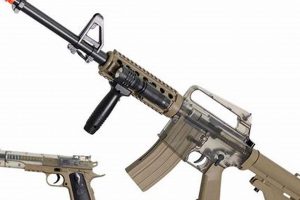
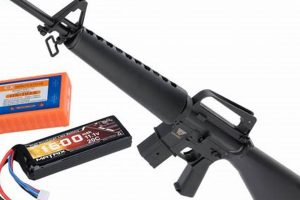
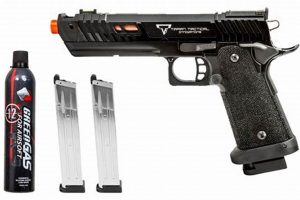
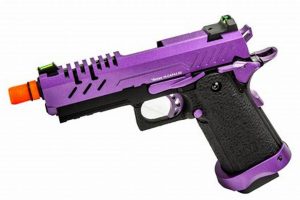
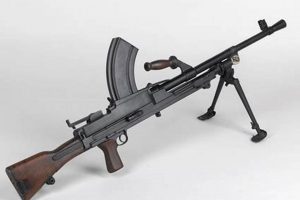
Transporting realistic imitation firearms on commercial airlines requires strict adherence to federal and airline-specific regulations. These regulations govern the manner in which these items must be packaged, declared, and handled to ensure passenger safety and regulatory compliance. Failure to comply can result in confiscation, fines, or even legal penalties.
Adhering to established protocols protects both the individual and the airline from potential security risks. Proper packaging and declaration demonstrate responsible ownership and reduce the likelihood of misunderstandings or security concerns. This also contributes to a safer and more secure environment for all air travelers.
The following sections will detail specific requirements for preparing such items for air travel, including accepted containers, declaration procedures, and potential restrictions that may apply depending on the destination and airline policies.
Guidance for Air Travel with Airsoft Replicas
The following guidelines are designed to assist in the safe and compliant transport of airsoft replicas as checked baggage. Strict adherence to these points is crucial for avoiding potential issues during air travel.
Tip 1: Utilize Hard-Sided Cases: Airsoft replicas should be transported in rigid, lockable containers. Soft cases are generally not sufficient protection and may not meet airline requirements for firearms or replica firearms.
Tip 2: Ensure Replicas are Unloaded: Magazines should be removed from the airsoft replica. It is recommended to remove any gas canisters or batteries from the replica as well.
Tip 3: Declare at Check-In: Inform the airline representative at the check-in counter that the checked baggage contains an airsoft replica. Failure to declare may result in penalties.
Tip 4: Comply with TSA Regulations: Airsoft replicas are subject to Transportation Security Administration (TSA) regulations regarding the transport of firearms and replica firearms. Familiarize yourself with these regulations prior to travel.
Tip 5: Check Destination Regulations: Research local laws and regulations regarding airsoft replicas at the destination. Some jurisdictions may have restrictions or outright bans.
Tip 6: Keep Documentation: Carry copies of relevant documentation, such as proof of purchase or permits, if applicable, to facilitate identification and compliance verification.
Tip 7: Securely Package Ammunition: If transporting airsoft BBs, ensure they are securely packaged in their original containers or sealed bags to prevent spillage and potential damage to other baggage.
Following these guidelines ensures a smoother travel experience and reduces the risk of delays, confiscations, or legal complications. Proper preparation and adherence to regulations are paramount.
The subsequent section will address potential challenges and solutions related to international travel with airsoft replicas, offering insights into navigating customs regulations and ensuring compliant transport across borders.
1. Regulations

The act of transporting airsoft guns via commercial airlines is heavily governed by a complex web of regulations. These stipulations originate from multiple sources, including federal transportation agencies, individual airlines, and the laws of both the origin and destination jurisdictions. Disregarding these regulations directly leads to potential consequences, such as confiscation of the items, imposition of fines, denial of boarding, or even criminal prosecution in severe cases. The cause-and-effect relationship is clear: non-compliance begets negative repercussions.
Adherence to regulations is not merely a suggestion, but a fundamental component of responsibly transporting airsoft guns by air. Consider the example of TSA guidelines, which mandate that all firearms (including realistic replicas) be transported in a locked, hard-sided container as checked baggage, with prior notification to the airline. Failure to meet these requirements can result in immediate denial of transport. Furthermore, airlines such as Delta or United may have their own specific policies that exceed the minimum federal requirements, necessitating careful review of their individual guidelines prior to travel. These combined regulations are designed to safeguard all parties.
Understanding these regulations is of paramount practical significance. Pre-flight research into TSA guidelines, airline-specific policies, and local laws is essential for responsible airsoft gun owners. Ignoring or neglecting this research jeopardizes not only the individual’s travel plans, but also potentially compromises the safety and security of other passengers. By diligently adhering to the established regulatory framework, travelers can ensure a smooth, compliant, and uneventful journey.
2. Declaration

The act of declaration stands as a critical procedural requirement when transporting airsoft guns on commercial airlines. Declaration, in this context, entails informing the airline representative at the check-in counter that the baggage contains an airsoft gun. This notification serves as a pivotal first step in ensuring compliance with both federal regulations and airline-specific policies. The cause-and-effect relationship is apparent: declaration initiates a chain of custody and documentation that mitigates potential security concerns and legal liabilities. Without declaration, the item may be discovered without proper context, leading to delays, questioning, and possible confiscation. Consider the example of a traveler attempting to transport an airsoft gun without declaration; upon discovery during security screening, the traveler may face questioning, potential fines, and the item’s seizure, even if all other packing regulations were followed. This demonstrates the practical significance of transparency.
Declaration is not merely a formality but a proactive measure that fosters a climate of trust and reduces the risk of misunderstandings. It allows airline personnel to properly tag the baggage, ensuring it receives the necessary scrutiny and handling throughout the transport process. Furthermore, declaration provides an opportunity for the airline representative to verify that the airsoft gun is packaged correctly, unloaded, and otherwise in compliance with applicable regulations. The absence of declaration creates an environment of uncertainty, increasing the likelihood of misinterpretation and potential security breaches. For instance, if a bag containing an undeclared airsoft gun is mistakenly routed to the wrong destination, local authorities may be alerted, resulting in further investigation and potential legal ramifications for the traveler.
In summary, the declaration requirement is a cornerstone of responsible airsoft gun transportation by air. It bridges the gap between regulatory compliance and passenger safety, ensuring that all parties involved are aware of the item’s presence and have taken the necessary precautions. Failure to declare represents a critical oversight that can have significant legal and logistical consequences. Therefore, prior to travel, individuals must meticulously familiarize themselves with declaration protocols and diligently adhere to them throughout the baggage check-in process.
3. Packaging

Proper packaging constitutes a critical element in the safe and compliant transport of airsoft guns on commercial airlines. Inadequate or inappropriate packaging can result in damage to the items, misinterpretation by security personnel, and potential violation of airline regulations. The causal relationship is straightforward: insufficient packaging heightens the risk of damage and misidentification, leading to potential travel disruptions and legal complications. For instance, an airsoft gun transported in a flimsy cardboard box is susceptible to damage during handling, potentially rendering it unusable. Furthermore, the absence of proper packaging may raise suspicions among security personnel, leading to more extensive scrutiny and delays.
Hard-sided, lockable cases are generally mandated by airlines for the transport of firearms, including realistic replicas like airsoft guns. These containers offer a superior level of protection against physical damage and prevent unauthorized access to the contents. Moreover, secure packaging facilitates easier identification by security personnel, minimizing the risk of misinterpretation. Consider the case of an airsoft gun transported in its original packaging, clearly labeled as such, within a locked, hard-sided case; this presentation reduces ambiguity and streamlines the security screening process. Conversely, an airsoft gun transported in an unmarked bag increases the likelihood of misidentification and delays.
In summary, diligent attention to packaging requirements is essential for the successful and compliant transport of airsoft guns on commercial airlines. The use of appropriate, secure containers not only safeguards the items from damage but also minimizes the risk of misunderstandings and regulatory violations. Prior to travel, individuals must carefully review and adhere to all applicable packaging guidelines, ensuring a smooth and uneventful journey. This proactive approach to packaging represents a fundamental aspect of responsible airsoft gun ownership and air travel.
4. Containers
The selection and utilization of appropriate containers represent a crucial determinant in the safe and legally compliant air transport of airsoft guns. The container serves as the primary barrier against damage, unauthorized access, and potential misinterpretation of the contents.
- Hard-Sided Cases
Hard-sided cases are generally mandated by airlines for the transport of firearms and realistic replicas, including airsoft guns. These cases offer significant protection against physical impacts and crushing forces that may occur during baggage handling. This is a primary method that reduces the odds of damage to the contents.
- Locking Mechanisms
Containers must incorporate functional locking mechanisms, such as combination locks or padlock receptacles. These mechanisms deter unauthorized access and ensure that the contents remain secure throughout the transportation process. Locking a container secures the items and complies with regulations.
- Internal Padding and Securing
The internal space of the container should feature padding and securing mechanisms to prevent movement of the airsoft gun during transit. Foam inserts, straps, or dividers serve to stabilize the item and minimize the risk of internal damage. Movement during transport can be harmful to the contents.
- TSA Compliance
Containers must adhere to Transportation Security Administration (TSA) guidelines for the transport of firearms and realistic replicas. This includes specifications regarding construction materials, locking mechanisms, and labeling requirements. Compliance is critical for legal transport.
The careful selection and preparation of containers not only safeguards the airsoft gun itself but also contributes to a smoother and more secure air travel experience, minimizing the risk of delays, confiscations, or legal complications.
5. Ammunition
The transport of ammunition alongside airsoft guns presents specific challenges and considerations within the framework of air travel regulations. The term “ammunition” typically refers to the projectiles used in airsoft guns, most commonly 6mm or 8mm plastic BBs. Although these projectiles are non-lethal, airlines and security agencies categorize them as potentially hazardous materials, subjecting them to specific restrictions and packaging requirements. Failure to properly manage airsoft ammunition during air travel may result in confiscation, fines, or denial of boarding. Airlines often require ammunition to be transported in its original packaging or within securely sealed containers designed to prevent spillage or accidental discharge.
Ammunition and airsoft guns must be declared separately at the check-in counter. Passengers must inform airline personnel of the presence of both the airsoft gun and the associated ammunition, even if the ammunition is stored within the same checked baggage. Airlines may impose limits on the quantity of ammunition that can be transported, typically measured by weight. For instance, an airline might permit a maximum of 11 pounds (5 kilograms) of ammunition per passenger. It is incumbent upon the traveler to verify these limits prior to travel to avoid potential complications. Ammunition should never be transported within the airsoft gun itself; magazines must be removed, and loose rounds secured separately.
Therefore, travelers must take care to comply with packaging and declaration requirements to ensure smooth transport of airsoft equipment. Ignoring these established protocols is the key reason for travel complications. The importance of both proper ammunition management and the transport of airsoft devices requires consistent planning and due diligence. Understanding and adhering to these rules contributes to overall safety and regulatory compliance.
6. Destination
The destination is a critical determinant in the feasibility and legality of transporting airsoft guns via air travel. Regulations governing these items vary significantly across jurisdictions, encompassing countries, states, and even municipalities. These variances dictate permissible possession, transportation, and usage of airsoft guns, directly impacting a traveler’s ability to bring such items to their intended destination.
- Varying Legal Frameworks
Legal frameworks pertaining to airsoft guns range from outright prohibition to relatively permissive regulations. For example, certain countries classify airsoft guns as firearms, requiring permits and adherence to stringent firearm laws. Other jurisdictions may permit ownership and use but impose restrictions on public display or transportation. These disparate legal standards necessitate thorough pre-travel research to ensure compliance and avoid potential legal penalties.
- Import/Export Regulations
International travel with airsoft guns is subject to import and export regulations imposed by both the origin and destination countries. These regulations may require specific permits, licenses, or documentation to legally transport the items across borders. Failure to comply with these regulations can result in confiscation of the airsoft guns, fines, or even criminal charges. An example of import regulation is obtaining an import permit, depending on the destination, which is crucial for compliance.
- Local Restrictions
Even within a single country, local municipalities may enact ordinances that further restrict the possession, transportation, or use of airsoft guns. For example, certain cities may prohibit the discharge of airsoft guns within city limits, regardless of state laws. Similarly, some tourist destinations may restrict the carrying of realistic-looking replica firearms in public areas. Understanding and adhering to these local restrictions is essential for responsible travel.
- Customs Procedures
Customs officials at the destination airport have the authority to inspect and verify compliance with local laws and regulations. Travelers must be prepared to present documentation, permits, or licenses as required, and to answer questions regarding the purpose and intended use of the airsoft guns. Failure to cooperate with customs officials or provide satisfactory documentation can lead to seizure of the items and potential legal repercussions.
In conclusion, comprehensive research into the destination’s legal landscape is paramount when planning to transport airsoft guns via air travel. Understanding and complying with all applicable laws and regulations, including import/export restrictions, local ordinances, and customs procedures, is crucial for avoiding legal complications and ensuring a smooth travel experience. Neglecting this due diligence can result in significant legal and logistical challenges.
7. Airline Policies

Airline policies exert considerable influence over the process of transporting airsoft guns. These policies, established by individual airlines, often exceed federal regulations and TSA guidelines, adding another layer of complexity for passengers. A thorough understanding of these specific requirements is essential for averting potential issues during travel.
- Declaration Procedures
Airlines stipulate specific procedures for declaring the presence of airsoft guns in checked baggage. Some airlines require verbal declaration at the check-in counter, while others may mandate completion of a declaration form. Failure to adhere to the airline’s declaration protocol can lead to baggage rejection or further investigation. For example, an airline might require the passenger to open the locked container in a private screening area to verify that the airsoft gun is unloaded.
- Packaging Specifications
While federal regulations mandate hard-sided, lockable cases, airline policies may further define acceptable case materials, locking mechanisms, and internal padding requirements. An airline might stipulate that the case be constructed of a specific impact-resistant polymer or that the lock be TSA-approved, with a specific type of key or combination system. Such specifications are intended to maximize safety and security during transit.
- Ammunition Handling
Airline policies frequently address the transport of ammunition in conjunction with airsoft guns. Airlines may impose quantity limits on ammunition, specify acceptable packaging materials, or prohibit the transport of certain types of projectiles altogether. Some airlines may require ammunition to be transported in a separate, locked container within the checked baggage. For example, some carriers do not allow ammo to be transported within the same container as an airsoft replica.
- Liability and Damage Waivers
Some airlines may require passengers transporting airsoft guns to sign a liability waiver, acknowledging the airline’s limited responsibility for damage or loss of the items. This waiver may stipulate that the airline is not liable for damage resulting from normal baggage handling procedures or for confiscation of the airsoft gun by regulatory authorities. Signing such a waiver is often a prerequisite for transporting the items.
Ultimately, airline policies serve as a critical component in the responsible and compliant transport of airsoft guns. Travelers must proactively consult the specific policies of their chosen airline prior to departure to ensure adherence and to mitigate the risk of travel disruptions or legal complications. Consulting the airline directly allows for clarification on any ambiguities and ensures a smooth journey.
Frequently Asked Questions
This section addresses common inquiries concerning the transportation of airsoft guns on commercial airlines. The following questions and answers are intended to provide clarity and guidance on applicable regulations and procedures.
Question 1: Is it permissible to transport airsoft guns in carry-on baggage?
Airsoft guns are strictly prohibited in carry-on baggage. They must be transported as checked baggage, adhering to all relevant regulations and airline-specific policies.
Question 2: What type of container is required for transporting airsoft guns?
Airsoft guns must be transported in a hard-sided, lockable container. Soft cases are generally not acceptable due to insufficient protection and security.
Question 3: Is it necessary to declare airsoft guns at the check-in counter?
Declaration is mandatory. Passengers must inform the airline representative that the checked baggage contains an airsoft gun to ensure proper handling and compliance.
Question 4: Are there restrictions on the type or quantity of ammunition that can be transported?
Airlines may impose restrictions on the type and quantity of ammunition (airsoft BBs) that can be transported. These restrictions vary, so it is essential to verify the specific airline’s policies prior to travel.
Question 5: What steps should be taken to ensure the airsoft gun is safe for transport?
The airsoft gun must be unloaded, with magazines removed. It is recommended to remove any gas canisters or batteries as well. Securing the airsoft gun within the container to prevent movement is also crucial.
Question 6: What are the potential consequences of failing to comply with regulations?
Failure to comply with regulations can result in confiscation of the airsoft gun, fines, denial of boarding, or even legal penalties, depending on the severity of the violation.
In summary, careful planning, adherence to regulations, and open communication with airline personnel are paramount for the safe and compliant transport of airsoft guns via air travel. Understanding and following established procedures can eliminate or reduce potential problems.
The subsequent section will provide a detailed checklist to ensure that all necessary steps are taken before embarking on a journey. This step-by-step process will facilitate compliance, and aid preparation for potential issues.
Conclusion
The preceding discussion has outlined the complexities inherent in flying with airsoft guns. Stringent regulations, airline-specific policies, and varying destination laws collectively demand meticulous preparation and unwavering adherence to established protocols. Deviation from these requirements carries significant consequences, ranging from confiscation of property to potential legal action. Careful planning and diligent execution are therefore indispensable for those intending to transport airsoft guns via commercial airlines.
Responsible ownership necessitates proactive engagement with applicable rules and guidelines. Individuals must prioritize thorough research and meticulous compliance to ensure both a smooth travel experience and the continued preservation of the privilege to transport these items. The onus rests upon each traveler to act responsibly, thereby upholding the safety and security of air travel for all. The act of flying with airsoft guns demands careful preparation.