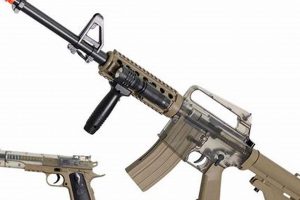
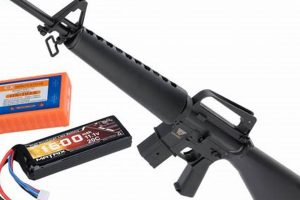
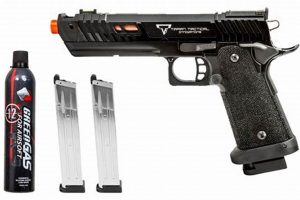
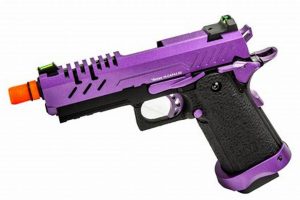
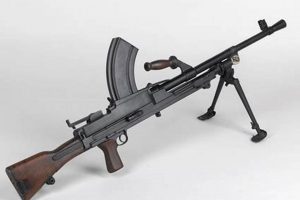
The projectiles used in airsoft replicas are typically spherical, non-metallic pellets. These small projectiles, often 6mm in diameter, are propelled by compressed gas or spring mechanisms. Their selection is paramount to the performance and functionality of the respective replica.
The quality and weight of these projectiles directly influence the accuracy, range, and overall experience of the activity. Historically, variations in manufacturing quality led to inconsistencies in trajectory and potential damage to the internal components of the airsoft device. Modern manufacturing processes strive for uniformity, enhancing reliability and user satisfaction. The use of appropriate projectiles is essential for safe participation.
Further discussion will elaborate on various aspects, including the composition of the projectiles, optimal weight selection for different airsoft replicas, and safe handling procedures.
Essential Guidelines for Projectile Selection
The selection and handling of airsoft projectiles directly influence performance, safety, and the longevity of airsoft devices. Adherence to the following guidelines is crucial.
Tip 1: Choose the Correct Weight: Projectile weight should correspond to the power output of the airsoft device. Lighter projectiles are suitable for low-power replicas, while heavier projectiles perform better in high-power setups. Incorrect weight selection can lead to reduced accuracy or damage to internal components.
Tip 2: Prioritize Quality: Opt for high-quality, seamless projectiles. Inferior products may exhibit inconsistencies in shape and size, negatively impacting accuracy and potentially causing jams or damage within the airsoft device.
Tip 3: Storage Matters: Store projectiles in a cool, dry environment, away from direct sunlight. Exposure to heat or moisture can deform the projectiles, compromising their performance and potentially damaging the airsoft device.
Tip 4: Avoid Reusing Projectiles: Once fired, projectiles may accumulate dirt, debris, or surface imperfections. Reusing these projectiles can damage the internal mechanisms of the airsoft device or negatively impact accuracy. Discard used projectiles responsibly.
Tip 5: Caliber Compatibility: Ensure the projectile caliber matches the specifications of the airsoft device. Using the wrong caliber can lead to malfunctions or damage.
Tip 6: Safety First: Always wear appropriate eye protection when handling or using airsoft devices. Even low-power devices can cause injury if projectiles strike unprotected areas.
Tip 7: Consider Biodegradable Options: When engaging in outdoor activities, consider using biodegradable projectiles. This minimizes environmental impact and promotes responsible airsoft practices.
By following these guidelines, users can optimize the performance of their airsoft devices, enhance safety, and contribute to responsible participation in the sport.
The subsequent sections of this article will address maintenance procedures and troubleshooting common issues related to airsoft devices.
1. Caliber Consistency

Caliber consistency is paramount to the reliable and accurate functioning of airsoft replicas. Variation in projectile size introduces inconsistencies in performance and elevates the risk of device malfunction.
- Dimensional Uniformity
Consistent diameter across all projectiles ensures proper engagement with the barrel’s internal dimensions. Deviations lead to air leakage, reducing velocity and range. Examples include inconsistent groupings at target and unpredictable trajectory paths.
- Manufacturing Tolerances
Stringent manufacturing processes are crucial for minimizing size discrepancies. Low-quality projectiles often exhibit significant variations, resulting in diminished accuracy and potential jamming. Precision molding is imperative for reliable feeding and consistent performance.
- Hop-Up System Interaction
The hop-up unit, designed to impart backspin for increased range, relies on consistent projectile diameter for optimal performance. Inconsistencies disrupt the backspin effect, negating range benefits and affecting trajectory predictability.
- Magazine Compatibility
Airsoft magazines are designed to accommodate projectiles of a specific caliber. Variations in projectile size can lead to feeding issues, double feeds, or magazine jams, disrupting gameplay and potentially damaging the airsoft replica.
The preceding elements collectively underscore the significance of caliber consistency. The selection of projectiles with minimal dimensional variation is essential for maintaining accuracy, reliability, and the overall operational integrity of airsoft devices. Failure to adhere to these standards compromises performance and increases the likelihood of malfunctions. This is why using high-quality rounds designed for airsoft is crucial to maintaining the integrity of your equipment.
2. Weight Variance

Weight variance in airsoft projectiles directly influences performance and consistency. Inconsistencies in projectile mass affect trajectory, range, and accuracy. Lighter projectiles generally exhibit higher velocities but are more susceptible to wind drift, while heavier projectiles maintain momentum better over distance but possess lower initial velocities. The selection of projectile weight must align with the airsoft device’s power output and intended usage scenario. Using too light of a round in a high-power gun can result in unpredictable flight paths, while too heavy of a round can reduce range.
The impact of weight variance is evident in competitive scenarios. A team employing projectiles with inconsistent weight distribution may experience reduced hit probability, particularly at longer ranges. Conversely, a team using precisely weighted projectiles gains a tactical advantage due to predictable and consistent shot placement. Furthermore, the internal mechanisms of airsoft devices are designed to operate within a specific weight range. Projectiles that deviate significantly can cause undue stress on components, leading to premature wear or failure. An example is a high pressure system being used with lower weight plastic rounds, where the plastic round disintegrates within the barrel.
Precise projectile weight contributes directly to the user’s experience and device longevity. Weight variance can lead to unpredictable results, which can effect the outcome of a game. It’s critical to select projectiles that fall within the manufacturer’s recommended range and exhibit minimal weight variation for optimal performance and to mitigate risk to equipment. Therefore, understanding and addressing weight variance is crucial for effective use and reliable operation.
3. Material Composition
The material composition of airsoft projectiles is a critical factor determining their performance, environmental impact, and safety. The most common materials include various grades of plastic, with biodegradable options gaining prominence due to environmental concerns. The specific type of plastic dictates the projectile’s density, hardness, and shattering characteristics upon impact. Inferior materials may lead to inconsistent flight paths and potential damage to the internal components of airsoft devices. The manufacturing processes involved play a crucial role in maintaining consistency and minimizing imperfections.
For example, poorly manufactured projectiles with inconsistent densities can exhibit unpredictable trajectories, reducing accuracy and increasing the risk of unintended injuries. The rising popularity of biodegradable projectiles composed of plant-based polymers addresses concerns regarding long-term environmental pollution. The material’s degradation rate, however, varies based on environmental conditions, requiring consideration of local regulations and field usage.
In summation, material composition is central to the functionality, safety, and environmental footprint of airsoft projectiles. Informed selection of materials based on intended usage, ethical considerations, and environmental awareness contributes to responsible participation in the activity. Further research and development into sustainable and high-performance projectile materials remain crucial for the long-term viability of airsoft.
4. Biodegradability
The shift towards biodegradable projectiles in airsoft reflects growing environmental consciousness. Traditional plastic projectiles, due to their persistence in the environment, pose ecological concerns. Biodegradable alternatives offer a potential solution by breaking down naturally over time.
- Material Composition and Degradation
Biodegradable projectiles are typically composed of plant-based polymers or other organic materials designed to decompose through the action of microorganisms, water, and oxygen. The degradation rate varies depending on the specific material, environmental conditions (temperature, humidity, soil composition), and the presence of microbial activity. Improper disposal, even with biodegradable options, can still contribute to short-term litter problems.
- Performance Considerations
Early biodegradable options often exhibited lower consistency in weight and size compared to traditional plastic projectiles, potentially impacting accuracy and range. Advances in manufacturing have addressed these issues, but users must still verify the quality of biodegradable projectiles to ensure optimal performance in their airsoft devices.
- Environmental Impact Mitigation
The primary benefit of biodegradability is the reduction of long-term plastic accumulation in natural environments. When used responsibly and disposed of properly, these projectiles minimize the ecological footprint of airsoft activities. However, the decomposition process can still release byproducts into the soil, requiring further research into the environmental effects of these materials.
- Regulatory Compliance and Field Usage
Increasingly, airsoft fields and organized events mandate the use of biodegradable projectiles to minimize environmental impact. Compliance with these regulations is essential for responsible participation in the sport. Furthermore, users must be aware of local environmental regulations regarding the disposal of any remaining projectile fragments after use.
The adoption of biodegradable projectiles represents a step toward sustainable airsoft practices. While performance considerations and proper disposal remain important factors, the environmental benefits of these alternatives are driving their increasing acceptance and adoption within the airsoft community. Further research is needed to optimize material composition, assess long-term environmental effects, and promote responsible usage practices.
5. Storage Conditions

Storage conditions exert a direct influence on the integrity and performance of airsoft projectiles. Environmental factors, notably temperature and humidity, can compromise the physical properties of the ammunition, leading to diminished accuracy and potential malfunctions in airsoft devices. Exposure to elevated temperatures may cause deformation or softening of plastic projectiles, altering their shape and weight distribution. Conversely, excessive humidity can induce swelling or clumping, rendering the ammunition unusable. Improper storage therefore invalidates the design parameters of airsoft projectiles and negatively impacts their intended functionality.
The practical significance of appropriate storage is demonstrable through real-world examples. Storing projectiles in direct sunlight, such as on a dashboard or in a poorly insulated container, results in warping and inconsistent flight patterns. Similarly, storing ammunition in damp basements or garages causes moisture absorption, leading to erratic feeding and potential damage to the airsoft device’s internal mechanisms. Competitive airsoft participants prioritize climate-controlled storage to preserve projectile integrity and maintain a competitive edge. Bulk storage in airtight containers with desiccant packets mitigates the adverse effects of environmental fluctuations.
In conclusion, proper storage conditions are not merely a peripheral consideration but rather an integral component of maintaining airsoft projectile quality. Failure to adhere to appropriate storage protocols compromises performance and increases the likelihood of malfunctions. Investing in suitable storage solutions and implementing stringent environmental controls is crucial for maximizing the lifespan and effectiveness of airsoft ammunition. Prioritizing proper storage translates directly into enhanced performance, increased device longevity, and a safer airsoft experience.
6. Velocity Impact
Velocity impact, referring to the kinetic energy transferred upon projectile contact, is a critical safety and performance consideration in the context of airsoft projectiles. The velocity at which a projectile strikes a target directly correlates with the potential for injury and influences the effective range and accuracy of the airsoft device.
- Kinetic Energy and Injury Potential
The kinetic energy of a projectile is determined by its mass and velocity squared (KE = 1/2 * mv^2). Higher velocities result in greater kinetic energy, increasing the potential for bruising, welts, or, in extreme cases, eye injury. Regulations and field rules often stipulate maximum permissible velocities (measured in feet per second, or FPS) to mitigate the risk of injury. Using projectiles with excessive velocity, regardless of the airsoft device’s power source, poses a significant safety hazard.
- Projectile Weight and Velocity Correlation
A direct relationship exists between projectile weight and velocity. For a given airsoft device, heavier projectiles typically exhibit lower velocities than lighter projectiles. This relationship allows users to fine-tune the kinetic energy output of their devices. Selecting an appropriate projectile weight, in conjunction with adjusting the airsoft device’s power settings (if applicable), is crucial for maintaining safe velocity levels.
- Environmental Factors and Velocity Degradation
Environmental conditions, such as air resistance and wind, can influence the velocity of a projectile over its flight path. Air resistance gradually decelerates the projectile, reducing its velocity upon impact at longer ranges. Wind can deflect the projectile, altering its trajectory and affecting the accuracy of the shot. Understanding these environmental factors is crucial for accurately estimating the effective range and impact velocity of projectiles in varying conditions.
- Impact on Equipment Longevity
The velocity of the airsoft ammo can have an impact on the equipment itself. Higher velocity systems can have additional wear and tear on the internal components, reducing the longevity of the equipment itself. Lower velocity systems can have longer lifespans as a result of less stress on the system.
These interconnected facets illustrate the importance of velocity impact management in airsoft activities. By carefully considering projectile weight, adhering to velocity limits, and accounting for environmental factors, participants can minimize the risk of injury and optimize the performance of their airsoft devices. The emphasis on responsible velocity control underscores the ethical dimensions of the sport and promotes a safe and enjoyable environment for all participants.
7. Device Compatibility
The symbiotic relationship between an airsoft device and its ammunition dictates operational effectiveness and longevity. Device compatibility, in this context, refers to the alignment of projectile specifications with the design parameters of the airsoft replica. The caliber, weight, and material composition of the projectiles must conform to the device’s intended operational range to ensure reliable feeding, optimal performance, and the prevention of damage. A mismatch between projectile characteristics and device specifications manifests as reduced accuracy, malfunctions, or, in severe cases, irreparable harm to the internal mechanisms. For instance, utilizing projectiles of an incorrect caliber can lead to jamming, while projectiles of excessive weight may strain the spring or gas system, accelerating wear and tear. Therefore, consideration of device compatibility is not a mere suggestion, but a fundamental requirement for responsible airsoft participation.
Real-world examples underscore the practical significance of this concept. A high-speed airsoft device engineered for lightweight, high-velocity projectiles will experience diminished performance and increased stress if loaded with heavier rounds intended for long-range accuracy. Conversely, a low-powered device optimized for heavier projectiles will fail to achieve its intended range and accuracy if used with ultra-lightweight projectiles. In addition, the interaction with the hop-up unit, a mechanism designed to impart backspin for increased range, is directly affected by projectile weight and shape. Incompatible projectiles may not engage properly with the hop-up, negating its intended effect and resulting in erratic trajectories. These examples demonstrate the multifaceted impact of device compatibility on both performance and equipment integrity.
In summation, the selection of projectiles must be informed by a thorough understanding of the airsoft device’s specifications and operational parameters. A proactive approach to ensuring device compatibility minimizes the risk of malfunctions, optimizes performance, and extends the lifespan of the equipment. The challenges inherent in achieving perfect compatibility necessitate continuous evaluation and refinement of projectile selection based on empirical observation and device-specific recommendations. Ultimately, the pursuit of device compatibility reflects a commitment to responsible airsoft practices and a deeper appreciation for the intricate interplay between equipment and ammunition.
Frequently Asked Questions
The following addresses common inquiries and misconceptions regarding projectiles used in airsoft devices. Understanding these points is crucial for safe and responsible participation.
Question 1: What constitutes a safe projectile velocity for airsoft?
Safe projectile velocity varies depending on field regulations and engagement distances. Generally, velocities below 400 feet per second (FPS) with a 0.20g projectile are considered safe for most field play. Adherence to specific field rules is paramount.
Question 2: Are all airsoft projectiles created equal?
No. Significant variations exist in projectile quality, weight, and composition. Opting for reputable brands and inspecting projectiles for imperfections is essential for optimal performance and device longevity.
Question 3: What are the advantages of using biodegradable projectiles?
Biodegradable projectiles decompose naturally over time, reducing environmental impact compared to traditional plastic projectiles. Their use is encouraged, and often mandated, at outdoor airsoft facilities.
Question 4: How does projectile weight influence accuracy and range?
Projectile weight directly affects trajectory and range. Heavier projectiles generally exhibit greater stability in flight, while lighter projectiles offer higher initial velocities. Selection depends on the airsoft device’s power output and intended engagement distance.
Question 5: Can improper storage damage airsoft projectiles?
Yes. Exposure to extreme temperatures or humidity can deform projectiles, compromising their accuracy and potentially causing malfunctions within the airsoft device. Storage in a cool, dry environment is recommended.
Question 6: Is it permissible to reuse airsoft projectiles?
Reusing projectiles is strongly discouraged. Projectiles collected from the ground often accumulate dirt and debris, increasing the risk of damage to the airsoft device’s internal components. Moreover, used projectiles may exhibit surface imperfections, negatively impacting accuracy.
These FAQs underscore the significance of informed decision-making regarding airsoft projectiles. Proper selection, handling, and storage practices contribute to enhanced safety, optimized performance, and responsible participation in the sport.
The subsequent section of this article will delve into advanced topics, including projectile customization and specialized applications.
Airsoft Guns Ammo
This exploration has underscored that projectile selection is not a trivial matter, but a critical determinant of performance, safety, and environmental impact within the airsoft activity. Caliber consistency, weight variance, material composition, biodegradability, storage conditions, velocity impact, and device compatibility each play a significant role in the overall experience. Ignoring these elements invites compromised accuracy, potential equipment damage, and elevated safety risks. The transition to biodegradable options reflects a growing awareness of environmental stewardship within the community.
Therefore, continued diligence in projectile selection and usage is essential. The future of responsible airsoft participation hinges on a commitment to informed decision-making, adherence to safety regulations, and a proactive approach to minimizing environmental impact. This necessitates ongoing research, development, and dissemination of best practices related to airsoft projectiles, ensuring the sport remains both engaging and ethically sound.