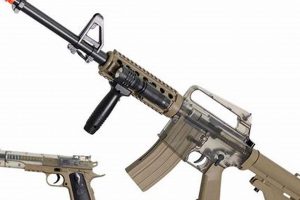
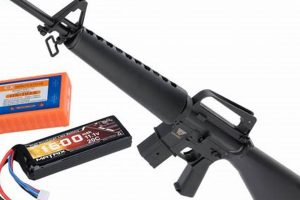
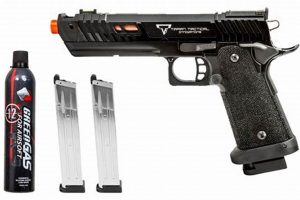
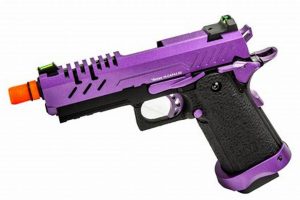
The inquiry of transporting airsoft guns via United Parcel Service (UPS) centers on understanding the regulatory landscape surrounding imitation firearms. Shipping such items necessitates adherence to federal, state, and local laws, as well as the specific policies of the carrier. Failure to comply with these regulations can result in shipment refusal, legal penalties, or confiscation of the goods.
The ability to transport these items is important for retailers distributing to consumers, players participating in events, and individuals relocating their personal belongings. Historically, the transportation of look-alike firearms has been subject to scrutiny due to concerns about public safety and the potential for misuse. Consequently, strict guidelines have been put in place to regulate the shipment process.
The following sections will delve into the specific regulations and requirements pertaining to the shipment of airsoft guns, focusing on UPS’s policies, packaging guidelines, legal considerations, and best practices for ensuring a compliant and secure delivery.
Shipping Airsoft Guns
Successfully navigating the shipment of airsoft guns requires meticulous attention to detail and adherence to established protocols. The following tips offer guidance for ensuring compliant and secure transport.
Tip 1: Verify Federal, State, and Local Laws: Prior to shipment, confirm that the destination permits the possession and transport of airsoft guns. Differing jurisdictions maintain varying regulations, and compliance is paramount.
Tip 2: Comply with Carrier Policies: UPS has specific guidelines concerning the shipment of imitation firearms. Consult the UPS website or contact customer service to obtain the most current policy information. Failure to adhere to these policies will result in refusal of service.
Tip 3: Employ Discreet Packaging: Utilize packaging that does not explicitly indicate the contents. A plain, unmarked box minimizes the risk of theft or attracting undue attention. Avoid using manufacturer’s packaging that clearly identifies the item as an airsoft gun.
Tip 4: Secure and Protect the Contents: Ensure the airsoft gun is adequately secured within the packaging to prevent movement during transit. Use padding materials such as bubble wrap, packing peanuts, or foam inserts to cushion the item and minimize the risk of damage.
Tip 5: Declare the Contents Accurately: When completing shipping documentation, provide an accurate description of the item. While avoiding explicit terms like “airsoft gun” may be advisable for discretion, a truthful representation of the contents, such as “replica sporting equipment,” is crucial for legal compliance.
Tip 6: Retain Documentation: Maintain copies of all shipping documents, including tracking numbers, receipts, and any declarations made to the carrier. This documentation serves as proof of shipment and can be invaluable in case of loss, damage, or dispute.
Tip 7: Consider Insurance: Evaluate the value of the airsoft gun and consider purchasing shipping insurance to cover potential loss or damage during transit. The cost of insurance is typically a small fraction of the item’s value and can provide significant peace of mind.
Adhering to these guidelines minimizes the risk of complications during the shipment process and ensures a smooth and compliant delivery. Diligence in researching and following regulations is critical.
The subsequent section will address the potential legal ramifications associated with the improper shipment of airsoft guns, emphasizing the importance of thorough preparation and adherence to all applicable laws and regulations.
1. Regulations

The feasibility of shipping airsoft guns via United Parcel Service (UPS) is fundamentally governed by a complex framework of regulations. These regulations, originating from federal, state, and local levels, dictate the permissibility, restrictions, and requirements associated with the transportation of imitation firearms. Understanding these regulations is paramount to ensure compliance and avoid potential legal ramifications.
- Federal Laws: Imitation Firearms Marking Requirements
Federal law mandates specific marking requirements for imitation firearms, including airsoft guns, to distinguish them from real firearms. These markings typically involve orange tips or brightly colored exteriors. Compliance with these federal mandates is a prerequisite for legal shipment. Failure to adhere to marking requirements can result in seizure of the item and potential legal penalties for the shipper.
- State Laws: Restrictions on Airsoft Gun Ownership and Possession
Individual states may impose additional restrictions on the ownership, possession, and transportation of airsoft guns. Certain states may prohibit the sale or shipment of airsoft guns to minors, while others may require specific licensing or registration. Shippers must diligently research and comply with the laws of both the origin and destination states to ensure legal compliance. Ignorance of state laws does not absolve the shipper of liability.
- Local Ordinances: City and County Regulations
Beyond federal and state laws, local ordinances at the city and county levels can further regulate the shipment of airsoft guns. These ordinances may address issues such as permissible transportation routes, storage requirements, and restrictions on public display. Shippers must be aware of and adhere to any applicable local ordinances in the areas through which the shipment will transit. Local regulations can significantly impact the legality of shipping airsoft guns through specific jurisdictions.
- UPS Policies: Carrier-Specific Restrictions
In addition to governmental regulations, UPS itself maintains specific policies regarding the shipment of airsoft guns. These policies may impose further restrictions beyond those mandated by law. For example, UPS may require specific packaging or labeling, or it may prohibit the shipment of airsoft guns to certain locations. Compliance with UPS’s policies is essential for acceptance of the shipment, regardless of compliance with other regulations. Shippers should consult the UPS website or contact customer service to obtain the most current policy information.
The interaction between federal, state, local, and carrier-specific regulations creates a complex web of requirements that shippers must navigate when transporting airsoft guns. Diligence in researching and complying with all applicable regulations is essential to ensure legal and successful shipment through UPS or any other carrier. The onus is on the shipper to verify compliance prior to tendering the shipment.
2. UPS Policies

The ability to utilize United Parcel Service (UPS) for transporting airsoft guns is directly contingent upon strict adherence to the carrier’s established policies. These policies function as a gatekeeper, determining whether such shipments are accepted and processed. Non-compliance with UPS’s specific regulations will result in shipment refusal, regardless of federal, state, and local legal compliance. The policies detail packaging requirements, labeling standards, and potentially prohibited destinations or shipper classifications. For instance, UPS may mandate specific inner packaging to prevent movement during transit, dictate that shipments originate from authorized dealers, or restrict shipments to states with stringent regulations on airsoft guns. These provisions underscore the significance of UPS’s policies in influencing the feasibility of shipping these items.
A practical example lies in the requirement for a clearly visible packing slip and specific labeling indicating the nature of the contents, although discretion is often advised in the actual description to avoid theft. Moreover, UPS policy may necessitate a signed agreement acknowledging the shipper’s responsibility for legal compliance, effectively transferring the liability for any violations. This illustrates that even if an airsoft gun complies with federal and state laws, a failure to meet UPS’s internal requirements will prevent its shipment. The company’s policies serve as an additional layer of regulation, ensuring a higher standard of safety and legal accountability.
In summary, UPS policies are not merely supplementary; they constitute a critical component in determining the possibility of shipping airsoft guns through their service. Comprehending and adhering to these policies is essential for shippers seeking to transport these items legally and effectively. Challenges arise from the potential for policy changes, requiring shippers to remain updated on the latest regulations. A thorough understanding of UPS policies is paramount to navigate the complexities associated with shipping airsoft guns.
3. Legal Compliance

The inquiry regarding the feasibility of shipping airsoft guns through UPS is inextricably linked to legal compliance. The affirmative answer to whether UPS will accept such shipments is directly contingent upon adherence to a multifaceted array of laws and regulations. These encompass federal statutes governing imitation firearms, state laws addressing ownership and transport, and local ordinances impacting specific jurisdictions. Consequently, the ability to ship airsoft guns via UPS is not merely a matter of carrier policy; it is fundamentally determined by demonstrating complete legal compliance. Failure to meet any applicable legal requirement results in shipment refusal and potential legal penalties.
For example, if a shipment originates from a state that permits airsoft gun ownership but is destined for a city where such items are prohibited by local ordinance, UPS will not facilitate the delivery. Similarly, failure to properly mark the airsoft gun in accordance with federal imitation firearm regulations will lead to rejection. A practical consequence of this is that shippers must conduct thorough due diligence to verify the legality of both the origin and destination points, ensuring adherence to all pertinent legal frameworks. The shipper’s legal responsibility extends beyond merely possessing the item legally; it includes ensuring its transport is compliant with all applicable laws. Furthermore, ignorance of the law is not an acceptable defense; the onus is on the shipper to ascertain and fulfill all legal obligations.
In conclusion, legal compliance is not merely an ancillary consideration when shipping airsoft guns through UPS; it is a foundational prerequisite. The carrier’s willingness to transport such items is entirely dependent on the shipper’s ability to demonstrate strict adherence to all federal, state, and local laws. Challenges arise from the diverse and evolving nature of these regulations, requiring constant vigilance and a commitment to comprehensive legal understanding. Without this commitment, the attempted shipment is highly likely to be unsuccessful, potentially leading to legal repercussions. Therefore, prior to initiating the shipment process, a rigorous assessment of legal compliance is essential.
4. Packaging Standards
Adherence to specific packaging standards is a critical determinant in whether airsoft guns can be successfully shipped through UPS. These standards serve not only to protect the items during transit but also to ensure compliance with legal and carrier-specific regulations.
- Secure Containment
The airsoft gun must be securely contained within the packaging to prevent movement and potential damage during handling. This involves utilizing appropriate padding materials such as bubble wrap, packing peanuts, or custom-fitted foam inserts. Inadequate securing of the item can lead to damage during transit, potentially resulting in rejected claims or refusal of service by UPS. If the item shifts within the package during transit, causing visible damage to the exterior packaging, UPS may refuse to deliver the shipment, thus affecting the possibility of successful shipment.
- Discreet Presentation
While full transparency with shipping documentation is necessary, the external packaging should be discreet and avoid explicitly advertising the contents. Using plain, unmarked boxes minimizes the risk of theft or attracting unwanted attention. Packaging that prominently displays the words “airsoft gun” or images of firearms can increase the likelihood of theft or misdirection during transit, potentially leading to shipment complications or refusal of service by UPS.
- Compliance with Regulations
Packaging must comply with all applicable federal, state, and local regulations regarding the shipment of imitation firearms. This may include specific labeling requirements or restrictions on the type of packaging materials used. Failure to comply with these regulations can result in legal penalties and shipment refusal by UPS. For example, some jurisdictions may require that the packaging is marked with a warning label indicating that it contains an imitation firearm.
- Protection Against Damage
The packaging must provide adequate protection against potential damage from impact, compression, or environmental factors such as moisture or temperature extremes. This may involve using sturdy cardboard boxes, reinforced tape, and moisture-resistant packaging materials. Insufficient protection against damage can lead to the item being damaged during transit, potentially resulting in rejected claims or refusal of service by UPS. UPS may require specific packaging standards based on the weight and dimensions of the airsoft gun being shipped, affecting shipment viability.
The integration of secure containment, discreet presentation, regulatory compliance, and damage protection collectively dictates whether an airsoft gun shipment aligns with UPS’s packaging standards. Failing to meet these criteria directly impacts the acceptability of the shipment by UPS, thereby determining the feasibility of shipping airsoft guns through this carrier. Adherence to these standards is not merely a procedural formality but a fundamental requirement for successful and compliant transport.
5. State Restrictions
State restrictions constitute a critical factor in determining whether airsoft guns can be shipped through UPS. Varying state laws regarding the ownership, possession, and sale of airsoft guns directly impact the legality and feasibility of shipping these items across state lines. A state’s legal framework dictates whether a shipment originating from a jurisdiction where airsoft guns are permissible can be legally delivered to that specific state. The existence of restrictive laws in the destination state can prevent UPS from completing the delivery, regardless of the item’s legality in the originating state. For example, certain states classify airsoft guns as firearms, imposing stricter regulations on their sale, possession, and transportation. Consequently, UPS must comply with these state-specific laws, potentially refusing shipments to those locations, even if the sender has met all federal requirements and UPSs general policies. This creates a direct causal relationship: state restrictions determine UPS’s ability to ship airsoft guns to specific locations.
The practical significance of understanding state restrictions lies in avoiding potential legal repercussions and shipment disruptions. Shippers must conduct thorough research to ascertain the specific laws governing airsoft guns in both the origin and destination states. Resources such as state legislative websites and legal databases can provide valuable information. Failure to comply with these regulations can result in the confiscation of the shipment, legal penalties for the shipper, and potential liability for UPS. The onus is on the shipper to ensure compliance with all applicable state laws, as UPS’s acceptance of the shipment does not guarantee its legality in the destination state. This underscores the importance of due diligence and comprehensive understanding of the legal landscape surrounding airsoft guns.
In summary, state restrictions play a pivotal role in determining the viability of shipping airsoft guns through UPS. The carrier’s ability to facilitate such shipments is directly contingent upon compliance with the laws of both the originating and destination states. Challenges arise from the diverse and often complex nature of these regulations, necessitating diligent research and a commitment to legal compliance. A failure to account for state restrictions can result in shipment refusal and potential legal consequences, highlighting the practical significance of this understanding in the broader context of shipping airsoft guns through UPS.
6. Insurance Coverage
The relationship between insurance coverage and the shipment of airsoft guns through UPS is one of risk mitigation and financial protection. While UPS may permit the shipment of airsoft guns contingent upon compliance with all applicable regulations and policies, it does not eliminate the inherent risks associated with transit. Loss, damage, or theft can occur despite adherence to packaging standards and legal requirements. Insurance coverage provides a financial safety net, compensating the shipper for the declared value of the item in the event of such unforeseen circumstances. Without insurance, the shipper bears the full financial burden of any loss or damage, potentially incurring significant costs. For instance, if a rare or high-value airsoft gun is damaged during transit due to mishandling, the shipper, lacking insurance, would be responsible for the entire repair or replacement cost.
The availability and extent of insurance coverage often depend on factors such as the declared value of the airsoft gun, the specific type of insurance policy purchased, and any limitations or exclusions outlined in the policy terms. UPS offers its own insurance options, but shippers may also choose to obtain coverage from third-party insurance providers. It is essential to carefully review the policy terms and conditions to understand the scope of coverage and any potential limitations. For example, some policies may exclude coverage for damage resulting from inadequate packaging, placing the onus on the shipper to ensure compliance with UPS’s packaging standards. Furthermore, the claims process can be complex and require providing documentation such as proof of value, shipping receipts, and photographs of the damaged item.
In summary, while insurance coverage is not a mandatory requirement for shipping airsoft guns through UPS, it represents a prudent risk management strategy. It provides financial protection against potential losses or damages incurred during transit, mitigating the financial impact of unforeseen events. The decision to purchase insurance coverage should be based on a careful assessment of the value of the airsoft gun, the potential risks associated with shipment, and the terms and conditions of the available insurance policies. Understanding the interplay between insurance coverage and the shipment of airsoft guns through UPS is paramount for responsible shipping practices and minimizing potential financial liabilities.
7. Liability
The query regarding the shipment of airsoft guns through UPS carries significant implications concerning liability. This concept defines the extent to which parties involved the shipper, UPS, and potentially the recipient are held responsible for damages, losses, or legal ramifications arising from the shipment process. Understanding the allocation of liability is crucial for navigating the complexities of shipping these items and mitigating potential risks.
- Shipper’s Responsibility for Legal Compliance
The shipper bears primary responsibility for ensuring complete compliance with all applicable federal, state, and local laws governing the shipment of airsoft guns. This encompasses proper marking, packaging, and documentation. Should a shipment violate any legal provision, the shipper faces potential legal penalties, including fines, confiscation of goods, and even criminal charges. The shipper cannot absolve liability by claiming ignorance of the law; the onus rests on them to conduct thorough due diligence and ensure strict adherence to all regulatory requirements. Even if UPS accepts the shipment, the shipper remains liable for any subsequent legal violations discovered.
- UPS’s Liability for Loss or Damage
UPS assumes liability for loss or damage to shipments while in its possession, subject to certain limitations and exclusions. The extent of this liability is typically determined by the declared value of the item and the terms of the shipping contract. However, UPS may deny claims if the loss or damage resulted from inadequate packaging, improper labeling, or the shipper’s failure to comply with its policies. Furthermore, UPS’s liability is often capped at a specific amount, meaning that the shipper may not be fully compensated for the value of the airsoft gun in the event of a significant loss. Insurance coverage can supplement UPS’s liability, providing additional financial protection.
- Third-Party Liability
In certain circumstances, third parties may also bear liability related to the shipment of airsoft guns. For example, a manufacturer could be held liable if the airsoft gun is defective and causes injury during transit. Similarly, a retailer selling the airsoft gun may be liable if they fail to provide adequate warnings or instructions regarding its safe handling and transportation. The allocation of liability in these situations depends on the specific facts and circumstances and may require legal interpretation.
- Consequences of Misrepresentation
Intentionally misrepresenting the contents of a shipment to circumvent regulations or UPS policies carries significant liability implications. If the shipper falsely declares the item as something other than an airsoft gun, they face potential legal penalties for fraud and misrepresentation. Furthermore, UPS may deny any claims for loss or damage if the contents were misrepresented. The shipper assumes full responsibility for any consequences arising from the misrepresentation, including legal action by government agencies or third parties. Honesty and transparency are paramount in avoiding liability related to the shipment of airsoft guns.
These facets illustrate the complex web of liability surrounding the shipment of airsoft guns through UPS. The shipper, UPS, and potentially third parties bear distinct responsibilities for ensuring legal compliance, preventing loss or damage, and avoiding misrepresentation. Understanding these liabilities is essential for mitigating risks and making informed decisions when shipping these items. A proactive approach to legal compliance and risk management can minimize the potential for disputes and ensure a smoother, more secure shipping process. The potential financial and legal ramifications associated with liability underscore the importance of thorough preparation and adherence to all applicable regulations and policies before entrusting an airsoft gun to UPS for shipment.
Frequently Asked Questions
The following questions address common concerns and misconceptions regarding the shipment of airsoft guns via United Parcel Service (UPS). The answers provided aim to offer clear and informative guidance based on established regulations and policies.
Question 1: Is it categorically permissible to ship airsoft guns through UPS?
The ability to ship airsoft guns through UPS is contingent upon strict adherence to all applicable federal, state, and local laws, as well as UPS’s own internal policies. The legality of such shipments is not universally guaranteed and depends on factors such as the origin and destination locations, the type of airsoft gun, and compliance with packaging and labeling requirements.
Question 2: What federal regulations govern the shipment of airsoft guns?
Federal regulations primarily pertain to the marking of imitation firearms, mandating the inclusion of orange tips or other visible identifiers to distinguish them from actual firearms. Failure to comply with these marking requirements can result in the seizure of the shipment and potential legal penalties.
Question 3: How do state laws affect the shipment of airsoft guns?
State laws vary significantly regarding the ownership, possession, and sale of airsoft guns. Certain states may prohibit the shipment of airsoft guns to minors, while others may require specific licensing or registration. Shippers must diligently research and comply with the laws of both the origin and destination states.
Question 4: What packaging requirements must be met when shipping airsoft guns through UPS?
UPS mandates specific packaging standards to ensure the safe and secure transport of airsoft guns. These standards typically require the use of sturdy containers, adequate padding materials, and discreet labeling that does not explicitly advertise the contents. The airsoft gun must be securely contained to prevent movement during transit.
Question 5: Does UPS offer insurance coverage for the shipment of airsoft guns?
UPS offers insurance coverage for shipments, including airsoft guns, to protect against loss or damage during transit. However, the extent of coverage may be subject to certain limitations and exclusions. Shippers are advised to carefully review the policy terms and conditions to understand the scope of coverage and any potential limitations.
Question 6: Who is liable if an airsoft gun is lost, damaged, or confiscated during shipment?
Liability for loss, damage, or confiscation depends on the specific circumstances. The shipper bears primary responsibility for ensuring legal compliance and proper packaging. UPS is liable for loss or damage while the item is in its possession, subject to certain limitations. If confiscation occurs due to a violation of law, the shipper typically bears responsibility.
In summary, successfully shipping airsoft guns through UPS necessitates a thorough understanding of and adherence to all applicable regulations and policies. Proactive diligence and a commitment to legal compliance are paramount.
The subsequent section will explore best practices for ensuring a smooth and compliant shipment process.
Conclusion
The preceding analysis clarifies that can you ship airsoft guns through UPS is not a question with a simple affirmative or negative answer. The feasibility hinges on rigorous adherence to a complex web of federal, state, and local regulations, in conjunction with UPS’s specific policies. These encompass marking requirements, state-level restrictions on ownership and transport, meticulous packaging protocols, and the potential need for insurance coverage. Legal compliance, coupled with meticulous adherence to carrier-specific guidelines, dictates the outcome.
The transport of airsoft guns requires diligence and a proactive approach to legal and logistical requirements. The consequences of non-compliance range from shipment refusal to legal penalties. Therefore, thorough due diligence before initiating any shipment is essential. The onus resides firmly on the shipper to navigate this intricate landscape, ensuring that every aspect of the shipment aligns with established legal and carrier-defined prerequisites, thereby transforming a potentially problematic endeavor into a legally sound and logistically viable operation.