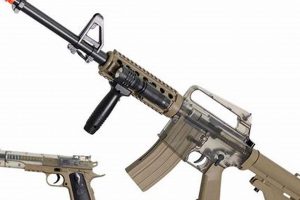
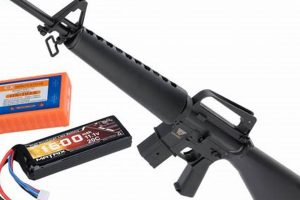
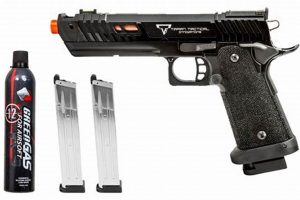
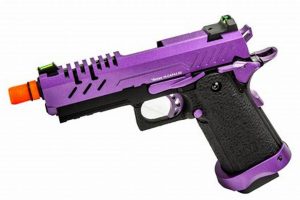
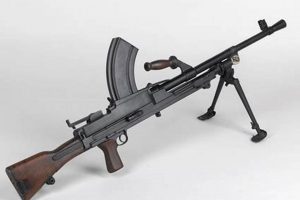
The possibility of converting a replica firearm designed for airsoft into a functional firearm is a topic of significant concern for law enforcement and the general public. Airsoft guns are manufactured to resemble real firearms, often with a high degree of realism, but are intended to fire plastic projectiles using compressed gas or springs. These devices are subject to varying regulations depending on jurisdiction, but are generally not classified as firearms.
The motivation behind such conversions stems from several factors, including the perceived difficulty in legally acquiring a firearm, criminal intent, or a misguided belief that modifying an airsoft gun provides a cost-effective alternative. The potential ramifications of successful conversion attempts are severe, ranging from accidental injury or death due to the inherent instability of a modified device, to the commission of violent crimes using what was initially a toy.
This discussion will examine the technical challenges involved in such conversions, the legal ramifications associated with attempting to create a functional firearm from an airsoft replica, and the broader implications for public safety. It will delve into the materials science, engineering principles, and criminal statutes relevant to the subject, while evaluating the likelihood of success and the potential consequences.
Considerations Regarding Airsoft Gun Conversion
The following points outline critical information concerning the attempt to convert an airsoft gun into a functional firearm. The information is presented for informational purposes only and should not be interpreted as encouragement or instruction. Any attempt to modify an airsoft gun in such a manner is highly dangerous and potentially illegal.
Tip 1: Material Limitations. Airsoft guns are typically constructed from polymers and low-grade metals, materials insufficient to withstand the pressures generated by live ammunition. Replacing these components with suitable materials requires specialized knowledge, access to machining equipment, and a significant understanding of firearms engineering.
Tip 2: Structural Integrity. The inherent design of airsoft guns is not intended to contain explosions. Attempting to discharge a live round can result in catastrophic failure, causing severe injury or death to the user and bystanders.
Tip 3: Legal Ramifications. Modifying an airsoft gun to fire live ammunition constitutes the illegal manufacture of a firearm in many jurisdictions. Such activities can result in severe criminal penalties, including lengthy prison sentences and substantial fines.
Tip 4: Ballistic Inconsistencies. Even with modifications, achieving accuracy and consistent performance with a converted airsoft gun is highly improbable. The barrel and firing mechanism are unlikely to meet the standards required for safe and reliable operation.
Tip 5: Firing Mechanism Inadequacy. The trigger and firing pin mechanisms in airsoft guns are not designed to reliably and safely ignite a firearm cartridge. Modification to accomplish this task introduces additional complexities and risks.
Tip 6: Lack of Safety Features. Airsoft guns generally lack the safety features present in real firearms, such as drop safeties and firing pin blocks. Converting an airsoft gun may render it highly susceptible to accidental discharge.
Tip 7: Unpredictable Results. The outcome of an attempted conversion is inherently unpredictable. The modified device may function improperly, explode upon firing, or fail to fire at all, posing a significant hazard to the user.
These points emphasize the inherent dangers and legal repercussions associated with any attempt to convert an airsoft gun into a real firearm. The structural inadequacies, material limitations, and lack of safety features make such conversions exceedingly dangerous and highly illegal.
Therefore, it is critical to reiterate the potential dangers and legal implications. The pursuit of such modifications poses severe risks and should be avoided entirely.
1. Material strength inadequacy
Material strength inadequacy represents a fundamental obstacle in any attempt to convert an airsoft gun into a functional firearm. Airsoft guns are manufactured for recreational purposes and do not possess the structural integrity required to withstand the pressures and forces associated with live ammunition.
- Polymer Construction
Many airsoft guns utilize polymer frames, slides, and other components. Polymers, while lightweight and inexpensive, exhibit significantly lower tensile strength and yield strength compared to steel or other alloys used in real firearms. The use of live ammunition would likely cause catastrophic failure of polymer components upon firing.
- Low-Grade Metals
Even when metal components are present, they are often constructed from low-grade alloys that lack the necessary heat treatment and material properties required for firearm applications. These metals are prone to deformation, cracking, and eventual failure under the extreme pressures generated by a firearm cartridge.
- Chamber Pressure Containment
The chamber of a firearm is designed to safely contain the high-pressure gases produced upon ignition of the propellant. Airsoft gun chambers are not designed to withstand these pressures and would likely rupture or explode, posing a severe risk to the user.
- Barrel Material Limitations
Airsoft gun barrels are typically manufactured from thin-walled aluminum or brass, which are unsuitable for containing the pressures and heat generated by a firearm cartridge. Using such a barrel would result in projectile instability, reduced accuracy, and a high likelihood of barrel failure.
The inherent material limitations of airsoft guns render them fundamentally unsuitable for conversion into functional firearms. The lack of sufficient strength and durability poses an immediate and significant safety hazard, highlighting the impracticality and extreme danger associated with such modifications.
2. Design limitations inherently

The inherent design limitations of airsoft guns directly impede any attempt to convert them into functional firearms. These limitations are not merely a matter of inferior materials; they are fundamental to the very architecture and engineering principles employed in the creation of these devices. Airsoft guns are designed to operate under drastically different parameters than real firearms. The internal mechanisms, dimensions, and tolerances are calibrated for low-pressure air or gas propulsion of lightweight plastic projectiles. These design choices make any attempt to retrofit the system for the high-pressure combustion of gunpowder and the launching of bullets fundamentally unsound.
For instance, the fire control group (trigger, sear, hammer, etc.) in an airsoft gun is not designed to withstand the forces involved in striking a firing pin with sufficient force to ignite a primer. The dimensions of the barrel are not properly sized or rifled to stabilize a bullet, leading to unpredictable and dangerous projectile behavior. The frame or receiver, designed to contain minimal pressure, will likely fail catastrophically under the strain of a real cartridge detonation. The recoil management system, if present at all, is insufficient for the significant recoil generated by live ammunition. Attempting to overcome these limitations necessitates a complete re-engineering of the airsoft gun’s core components, effectively negating any time or cost savings that might have been envisioned in the first place.
In summary, the inherent design limitations of airsoft guns represent an insurmountable barrier to their safe and reliable conversion into real firearms. These limitations, spanning materials, mechanisms, and overall architecture, render such attempts inherently dangerous and ultimately impractical. A comprehensive understanding of these limitations underscores the critical importance of recognizing the fundamental differences between airsoft replicas and functional firearms and the significant hazards associated with attempting to bridge that gap.
3. Legal manufacturing violations
The act of attempting to convert an airsoft gun into a real firearm directly precipitates legal manufacturing violations in most jurisdictions. Federal and state laws strictly regulate the manufacture, possession, and transfer of firearms. These regulations are implemented to ensure public safety and to prevent the proliferation of weapons in unauthorized hands. When an individual attempts to modify an airsoft gun to fire live ammunition, this action is generally considered the illegal manufacture of a firearm, as the modified device meets the legal definition of a firearm but lacks the required licensing and serial numbers. The National Firearms Act (NFA) in the United States, for example, imposes stringent requirements on the manufacture of certain types of firearms, including those with short barrels or those that are easily concealable. Converting an airsoft gun could easily result in the creation of a weapon that falls under the purview of the NFA, triggering severe penalties.
The penalties for illegal firearm manufacturing can include substantial fines, lengthy prison sentences, and a permanent criminal record. Moreover, possession of an unregistered firearm, even if it was created through the conversion of an airsoft gun, also carries significant legal consequences. The Bureau of Alcohol, Tobacco, Firearms and Explosives (ATF) actively investigates and prosecutes individuals involved in the illegal manufacture and trafficking of firearms, including those who attempt to convert airsoft guns. Real-life examples demonstrate the severity of these consequences. Cases have been prosecuted where individuals, attempting to create functional firearms from readily available parts, including airsoft guns, have received multi-year prison sentences. The lack of intent to use the modified firearm in a crime is often irrelevant; the act of illegal manufacture itself is the violation.
In conclusion, attempting to convert an airsoft gun into a real firearm is not merely a technical challenge but a direct violation of numerous firearm manufacturing laws. The potential legal ramifications are severe, ranging from substantial fines to lengthy imprisonment. The inherent illegality of such endeavors underscores the importance of adhering to established firearm regulations and recognizing the potential consequences of engaging in unauthorized manufacturing activities.
4. Functional unreliability likely
The likelihood of functional unreliability serves as a critical deterrent when considering the prospect of converting an airsoft gun into a real firearm. The inherent design and construction of airsoft guns are fundamentally incompatible with the demands placed upon a functional firearm, leading to a high probability of failure and unsafe operation.
- Inconsistent Firing Mechanisms
Airsoft gun firing mechanisms rely on compressed gas or springs to propel lightweight plastic projectiles. Modifying these mechanisms to ignite a firearm cartridge is complex and unreliable. The force required to detonate a primer necessitates precise engineering and robust materials. The makeshift nature of such conversions often results in misfires, squib loads (where the bullet becomes lodged in the barrel), or even catastrophic failure of the firing mechanism. These malfunctions render the modified device unpredictable and dangerous to operate.
- Substandard Barrel Integrity
Airsoft gun barrels are typically manufactured from low-grade metals and lack the rifling necessary for stabilizing a bullet. Attempting to fire a live round through an airsoft barrel can lead to barrel distortion, cracking, or even rupture. The lack of rifling results in inaccurate and unstable projectile trajectory, increasing the risk of unintended targets being struck. The structural weakness of the barrel significantly compromises the overall reliability and safety of the converted device.
- Weakened Receiver Stability
The receiver, or frame, of an airsoft gun is not designed to withstand the pressures generated by a firearm cartridge. The materials used in airsoft gun receivers are often polymers or low-grade metals that are prone to cracking or shattering under stress. Attempting to fire a live round can cause the receiver to fail, potentially resulting in injury to the user and bystanders. The lack of structural integrity in the receiver is a major factor contributing to the functional unreliability of converted airsoft guns.
- Unpredictable Projectile Trajectory
The combination of a substandard barrel, an inconsistent firing mechanism, and a weakened receiver results in unpredictable projectile trajectory. Even if a converted airsoft gun manages to fire a bullet, the accuracy and range are likely to be significantly compromised. The lack of rifling and the potential for barrel distortion can cause the bullet to veer off course, increasing the risk of unintended targets being struck. The unpredictable nature of the projectile trajectory further underscores the functional unreliability and inherent danger associated with converting airsoft guns into real firearms.
In conclusion, the high likelihood of functional unreliability serves as a critical factor when evaluating the viability of converting airsoft guns. The substandard materials, compromised mechanisms, and unstable construction lead to a high probability of malfunctions, inaccurate projectiles, and potential injury. These factors, combined with the inherent legal ramifications, underscore the imprudence of attempting such conversions.
5. Catastrophic failures possible
The conversion of an airsoft gun into a functional firearm introduces a high probability of catastrophic failure, a direct consequence of attempting to operate components beyond their designed capabilities. Airsoft guns are engineered to withstand low-pressure systems, propelling lightweight projectiles. Introduction of live ammunition subjects these components to pressures orders of magnitude greater than their intended design parameters. This discrepancy in design capacity and operational demands creates a substantial risk of component rupture, fragmentation, and projectile instability. A real-world instance would be a polymer frame cracking violently upon firing, sending shrapnel towards the user. Such a failure can result in severe injury or death to the operator and those nearby. The likelihood of catastrophic failure is not merely a theoretical concern; it is a predictable outcome given the inherent material and design limitations of airsoft guns when stressed beyond their specifications.
The practical significance of understanding the potential for catastrophic failure cannot be overstated. Recognizing this risk is paramount for preventing attempts at conversion. Law enforcement agencies and educators can use this information to demonstrate the dangers associated with modifying airsoft guns, dissuading individuals from engaging in potentially lethal activities. Furthermore, understanding the types of failures that can occur informs safety protocols for handling modified airsoft guns, should they be encountered. This understanding also guides the development of legislation and regulations aimed at preventing the conversion of these replicas.
In conclusion, the strong correlation between attempting to modify an airsoft gun into a functional firearm and the potential for catastrophic failures highlights the extreme danger of such endeavors. The inherent mismatch between the design parameters of airsoft guns and the demands of live ammunition inevitably leads to component failure and significant risk of injury. Emphasizing this risk is crucial for preventing conversion attempts and promoting responsible handling practices.
6. Increased safety hazards

The attempted conversion of an airsoft gun into a functional firearm invariably leads to increased safety hazards, stemming from both the inherent design limitations of the replica and the unpredictable nature of makeshift modifications. Airsoft guns lack the robust safety mechanisms found in real firearms, such as drop safeties, firing pin blocks, and properly designed trigger mechanisms. The absence of these features significantly increases the risk of accidental discharge. Moreover, the structural integrity of the modified device is compromised, increasing the likelihood of catastrophic failure during operation. A real-world scenario involves a user attempting to fire a modified airsoft gun, only to have the receiver crack upon firing, sending fragments towards their face. This incident could result in serious injury, including vision impairment or lacerations. Therefore, increased safety hazards represents a critical component of the discussion regarding the possibility of converting airsoft guns into real firearms.
The ramifications of these increased safety hazards extend beyond the individual attempting the conversion. Bystanders, family members, or even law enforcement personnel could be placed at risk if the modified airsoft gun malfunctions or is mishandled. For example, if a modified airsoft gun discharges accidentally in a public space, it could cause serious injury or death to unintended victims. The unpredictable nature of the modified firearm makes it difficult to control and manage, further exacerbating the risks involved. Public awareness campaigns and educational programs are vital for conveying these dangers, emphasizing that the perceived cost savings or convenience of converting an airsoft gun are far outweighed by the potential for severe injury or fatality. Additionally, law enforcement personnel need to be trained to recognize the signs of a converted airsoft gun and to respond appropriately, given the inherent instability and unpredictability of such devices.
In summary, the connection between the possibility of modifying an airsoft gun and heightened safety risks is undeniable. The absence of proper safety features, combined with the potential for structural failure and accidental discharge, creates a highly dangerous scenario. Addressing these challenges requires a multi-faceted approach, encompassing public education, law enforcement training, and stricter regulations on the sale and modification of airsoft guns. Emphasizing these increased safety hazards remains paramount to preventing injury and protecting public safety.
7. Ballistic performance unrealistic

The conversion of an airsoft gun to fire live ammunition fundamentally results in unrealistic ballistic performance. The projectile’s velocity, trajectory, and terminal ballistics deviate substantially from those of a commercially manufactured firearm. Airsoft gun barrels lack the rifling necessary to impart spin stabilization on a bullet, causing erratic flight and significant reduction in accuracy. The low-grade materials used in the barrel cannot withstand the pressures generated by a firearm cartridge, leading to barrel distortion and further destabilization of the projectile. The resulting ballistic performance is not only inaccurate but also unpredictable, posing a significant risk to both the user and any potential targets. Attempts to compensate for these deficiencies are unlikely to yield substantial improvements due to the underlying limitations of the airsoft platform.
The unrealistically poor ballistic performance has direct implications for the use of a converted airsoft gun in any scenario requiring accuracy or controlled force. For example, in a self-defense situation, the user would be highly unlikely to accurately hit their intended target, increasing the risk of injury to innocent bystanders. Furthermore, the diminished velocity and unstable trajectory of the bullet would reduce its effectiveness in stopping the intended target. In a criminal context, the unreliability of the weapon makes it less effective and more likely to malfunction, potentially leading to unintended consequences for the perpetrator. The inferior ballistic performance underscores the impracticality and increased risk associated with attempting to use a converted airsoft gun for any purpose that requires predictable and controlled projectile behavior.
In summary, the unrealistic ballistic performance inherent in converting airsoft guns into firearms serves as a crucial deterrent and indicator of the attempt’s futility. The inherent design and material limitations prevent the achievement of ballistic characteristics comparable to those of manufactured firearms, rendering the modified weapon unreliable, inaccurate, and dangerous. This fundamental lack of performance underscores the risks involved and highlights the critical importance of adhering to established firearm regulations and safety standards.
Frequently Asked Questions
The following questions and answers address common misconceptions and concerns regarding the possibility of converting airsoft guns into functional firearms. The information is presented for educational purposes and to highlight the inherent dangers and legal ramifications associated with such activities.
Question 1: Is it technically possible to modify an airsoft gun to fire real bullets?
While theoretically possible with extensive modifications, the structural integrity of an airsoft gun is not designed for the pressures generated by live ammunition. Substantial modifications, requiring specialized skills and equipment, would be necessary, but the resulting device would remain inherently unsafe and unreliable.
Question 2: What are the legal consequences of attempting to convert an airsoft gun into a firearm?
Modifying an airsoft gun to fire live ammunition constitutes the illegal manufacture of a firearm in most jurisdictions. This offense carries severe penalties, including significant fines and lengthy prison sentences. Possession of an unregistered firearm resulting from such modifications also carries substantial legal repercussions.
Question 3: Are there any documented cases of successful airsoft gun conversions?
While isolated attempts may exist, there are no credible documented cases of consistently successful and safe conversions. The inherent limitations of airsoft gun materials and design make reliable conversion highly improbable.
Question 4: What are the primary safety concerns associated with attempting to convert an airsoft gun?
The primary safety concerns include catastrophic failure of the modified device, accidental discharge due to the absence of proper safety mechanisms, and unpredictable projectile trajectory. These factors contribute to a high risk of serious injury or death to the user and bystanders.
Question 5: Can replacing the internal components of an airsoft gun make it safe to fire real bullets?
Replacing internal components with stronger materials may improve structural integrity, but it does not address the fundamental design limitations of the airsoft platform. The receiver, barrel, and firing mechanism would still require significant modification, and the resulting device would likely remain unsafe and unreliable.
Question 6: Is it possible to convert an airsoft gun into a less-lethal weapon?
Even attempts to convert an airsoft gun into a less-lethal weapon are fraught with danger and legal complications. Modifying a device to discharge projectiles with greater force than intended can still cause serious injury and may violate regulations regarding the manufacture and possession of such weapons.
In summary, the conversion of airsoft guns into real firearms is highly dangerous, illegal, and technically challenging. The resulting devices are inherently unsafe, unreliable, and subject to severe legal penalties. Understanding these factors is crucial for promoting responsible behavior and preventing potentially tragic outcomes.
The discussion will now transition to related topics, such as the regulation of airsoft guns and the prevention of firearm violence.
Conclusion
The preceding analysis underscores the inherent dangers, technical challenges, and legal ramifications associated with the attempt to convert an airsoft gun into a real gun. Material limitations, design constraints, likely functional unreliability, and the potential for catastrophic failure combine to make such endeavors exceedingly dangerous and ill-advised. Furthermore, the act of attempting such a conversion constitutes a violation of federal and state firearms laws, subjecting perpetrators to severe criminal penalties.
The information provided serves as a stark reminder of the critical importance of adhering to established firearm regulations and respecting the inherent limitations of replica firearms. Responsible handling, secure storage, and a comprehensive understanding of the law are paramount in preventing accidental injury, illegal activity, and the potential for tragic outcomes. Public awareness campaigns and educational initiatives play a vital role in dispelling misconceptions and promoting informed decision-making regarding airsoft guns and firearms alike.