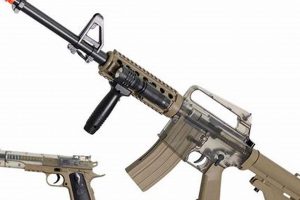
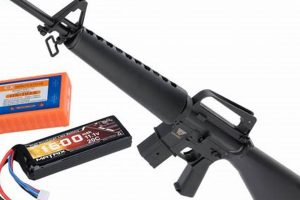
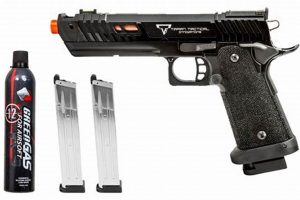
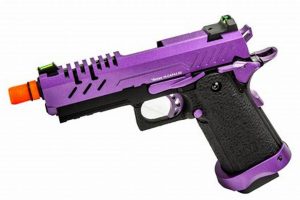
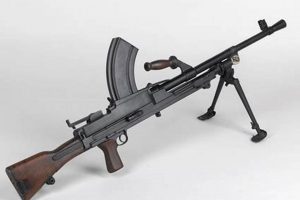
Transporting replica firearms on commercial airlines necessitates strict adherence to federal regulations and individual airline policies. These items, designed to resemble actual weapons, fall under scrutiny due to security concerns and potential misuse. Mishandling or improper transportation can lead to significant delays, confiscation, and even legal penalties.
The safe and legal carriage of such items benefits travelers who participate in regulated sporting events or recreational activities. Understanding the proper procedures mitigates risks associated with security breaches and ensures compliance with applicable laws. Historical incidents involving real and replica firearms onboard aircraft have shaped the stringent regulations currently in place.
The following sections will detail specific guidelines for packing, declaring, and transporting these items, including requirements for both domestic and international travel. Key considerations will be given to the role of the Transportation Security Administration (TSA) and the responsibilities of the passenger.
Tips for Traveling with Replica Firearms
The following recommendations provide essential guidance for ensuring the safe and lawful transport of replica firearms via commercial airlines. Diligent adherence to these procedures minimizes potential complications during air travel.
Tip 1: Always declare the item at the airline ticket counter. Explicitly inform airline personnel about the presence of a replica firearm in checked baggage. This preemptive disclosure is a fundamental requirement.
Tip 2: Pack the replica firearm in a hard-sided, locked case. The container must securely encase the item and prevent unauthorized access during transit. A padlock or combination lock is generally acceptable.
Tip 3: Ensure the replica firearm is unloaded. Remove any magazines, batteries, or gas canisters that may be associated with the item. Separate storage for these components is advised.
Tip 4: Check with both the departure and arrival airport regarding specific regulations. Airport authorities may impose additional restrictions beyond those stipulated by the TSA or the airline.
Tip 5: Understand the laws of the destination. Possessing or transporting replica firearms may be illegal in certain jurisdictions. Research relevant legislation prior to travel.
Tip 6: Retain all documentation related to the item. Purchase receipts, manuals, and any other relevant paperwork can assist in verifying ownership and purpose.
Tip 7: Arrive at the airport with ample time. The security screening process may require additional time due to the presence of the replica firearm. Plan accordingly to avoid potential delays.
Following these guidelines diligently promotes responsible handling and compliance with applicable regulations. Attention to detail minimizes the risk of encountering difficulties during air travel with replica firearms.
The subsequent section will address common questions and concerns related to traveling with these items, providing further clarification and practical advice.
1. Declaration Required

The mandatory declaration of an airsoft gun to airline personnel at the ticket counter serves as a cornerstone of regulatory compliance and aviation safety. Its importance stems from the potential for misidentification and the inherent need to ensure that such items are transported responsibly and securely.
- Transparency and Risk Mitigation
The act of declaring the item establishes transparency with the airline and airport authorities. This transparency enables security personnel to assess the item and its transportation method, thereby mitigating potential risks associated with concealed or undeclared replica firearms. This is not merely a suggestion; it is a procedural requirement designed to protect all passengers.
- Verification and Compliance
Declaration provides an opportunity for airline staff to verify that the airsoft gun meets all packing and transportation requirements. Personnel can confirm the item is unloaded, properly cased, and complies with size and weight restrictions. This verification process minimizes the likelihood of non-compliance and potential delays or confiscation.
- Legal and Liability Considerations
Failing to declare a regulated item, such as an airsoft gun, can result in legal penalties, including fines and potential criminal charges, depending on the jurisdiction. Declaration establishes a clear record of intent to comply with regulations, reducing liability in the event of unforeseen incidents during transport. Airlines can also refuse transport of the item if it not declared.
- Chain of Custody and Security
The declaration process initiates a documented chain of custody for the airsoft gun. This documentation aids in tracking the item throughout the baggage handling process and reinforces security protocols. It provides accountability and traceability, essential for maintaining the integrity of the airline’s security measures.
In summation, the “Declaration Required” aspect of airsoft gun transportation transcends a simple formality; it is a critical safety and regulatory checkpoint. This procedure minimizes risk, ensures compliance, and establishes accountability, thus underpinning the safe and lawful transport of such items via commercial airlines.
2. Hard-sided Case

The requirement for a hard-sided case when transporting an airsoft gun on commercial airlines serves as a critical component in ensuring safety and regulatory compliance. Its purpose extends beyond simple protection of the item; it directly addresses security concerns related to potential misuse or misidentification.
- Physical Security and Damage Prevention
A hard-sided case provides a robust physical barrier, protecting the airsoft gun from damage during transit. The rigors of baggage handling, including potential impacts and compression, necessitate a durable enclosure to maintain the item’s integrity and prevent accidental discharge or component failure. This requirement minimizes the risk of malfunctions that could occur during transport and compromise safety.
- Prevention of Unauthorized Access
The hard-sided case must be lockable, preventing unauthorized access to the airsoft gun. This deters theft and, more importantly, prevents the item from being removed and potentially misused during transit. The lock ensures that only the owner or authorized personnel can access the contents of the case, thus maintaining a secure chain of custody.
- Visual Deterrent and Misidentification Reduction
A hard-sided case serves as a visual signal to baggage handlers and security personnel, indicating that the contents are subject to specific regulations. The presence of a locked case, combined with proper labeling, helps to differentiate the airsoft gun from ordinary luggage and reduces the likelihood of misidentification as a real firearm. This visual cue prompts appropriate handling procedures and reinforces security protocols.
- Compliance with Transportation Security Administration (TSA) Guidelines
The TSA mandates the use of hard-sided cases for transporting firearms and replica firearms on commercial airlines. Compliance with this requirement is essential for legal transport. Failure to adhere to this guideline can result in confiscation of the item, delays in travel, and potential legal penalties. The hard-sided case acts as tangible evidence of the passenger’s intent to comply with federal regulations.
In essence, the hard-sided case is more than just a container; it is an integral element in the safe and lawful transportation of airsoft guns. Its function encompasses physical protection, security enhancement, visual signaling, and regulatory compliance. Each of these aspects contributes to minimizing risk and ensuring a secure environment for air travel involving replica firearms.
3. Unloaded Condition
The “Unloaded Condition” of an airsoft gun is a fundamental safety prerequisite for legal air transport. It directly mitigates risks associated with accidental discharge or intentional misuse, aligning with stringent airline and regulatory protocols. This condition is non-negotiable and forms a cornerstone of responsible transport.
- Elimination of Propulsion Source
The primary objective is to eliminate any source of propulsion. This entails removing batteries from electric-powered airsoft guns, emptying gas reservoirs in gas-powered models, and ensuring spring-powered versions are not cocked or loaded. Failure to do so creates a potential hazard during handling and transit.
- Separation of Ammunition
Airsoft BBs must be completely separated from the airsoft gun and stored in a separate container, preferably within the same locked, hard-sided case. Leaving ammunition in magazines or attached loaders invalidates the “Unloaded Condition” and presents a significant safety risk.
- Demonstrable Verification
Airline personnel and TSA officers may require demonstrable proof that the airsoft gun is indeed unloaded. This might involve visual inspection of the chamber, magazine well, and propellant system. The owner should be prepared to facilitate this inspection without resistance.
- Legal Ramifications
Falsely representing an airsoft gun as unloaded or failing to properly unload it carries significant legal consequences. Penalties can range from fines and confiscation of the item to more severe charges, depending on the jurisdiction and the perceived intent of the individual.
The rigorous adherence to the “Unloaded Condition” standard represents a key element in lawfully flying with an airsoft gun. These standards exist to prevent harm and ensure compliance, and they must be respected by anyone wishing to travel with the item. These components working together show the significance of traveling with an airsoft gun.
4. Destination Laws

Navigating the complexities of air travel with replica firearms necessitates a thorough understanding of “Destination Laws.” These regulations, varying significantly across jurisdictions, dictate the legality of possessing and transporting such items. Neglecting to research and comply with these laws can result in confiscation, fines, or legal prosecution, regardless of adherence to federal or airline policies.
- Legality of Possession
Many jurisdictions regulate or outright prohibit the possession of replica firearms. Some regions classify them as actual firearms, subjecting them to the same restrictions. Prior to travel, it is imperative to research the specific laws concerning replica firearm ownership at the intended destination. Failure to comply can result in seizure of the item and potential legal action.
- Transportation Restrictions within the Destination
Even if possession is legal, transporting a replica firearm within the destination may be subject to specific restrictions. Some locations require the item to be transported in a locked case, separate from ammunition, and concealed from public view. Violating these transport regulations can lead to penalties, even if the individual has legally transported the item by air to reach the destination.
- Age Restrictions and Permits
Certain destinations impose age restrictions on the possession of replica firearms, requiring individuals to be a specific age to legally own or transport them. Additionally, some jurisdictions mandate permits or licenses for replica firearm ownership. Travelers must ascertain whether such requirements exist at their destination and obtain the necessary documentation prior to arrival.
- Import and Export Regulations
For international travel, import and export regulations pertaining to replica firearms must be considered. Some countries prohibit the import of such items altogether, while others require specific permits or documentation. Similarly, exporting a replica firearm from one country to another may be subject to restrictions in both the departure and arrival locations. Compliance with these regulations is essential to avoid legal complications and potential seizure of the item.
Therefore, thorough research into the “Destination Laws” is a non-negotiable aspect of planning air travel with an airsoft gun. Compliance with federal and airline regulations alone is insufficient; knowledge of and adherence to local laws at the intended destination are crucial for avoiding legal repercussions and ensuring a smooth and lawful travel experience. Failure to consider “Destination Laws” renders all other precautions and preparations largely inconsequential, creating significant risk for the traveler.
5. Airline Approval

The procurement of explicit airline approval stands as a critical determinant in the lawful transportation of airsoft guns via commercial aviation. This approval transcends mere compliance with general TSA guidelines and necessitates direct communication with the intended carrier to ascertain specific stipulations and restrictions.
- Clarification of Airline-Specific Policies
Airlines, while adhering to overarching federal regulations, retain the autonomy to implement stricter policies regarding the transport of replica firearms. These policies may encompass limitations on the type of cases permitted, specific procedures for declaration, or outright prohibition of such items on certain routes or aircraft. Seeking explicit approval ensures adherence to these nuanced, airline-specific guidelines, mitigating the risk of denial of transport at the point of departure.
- Documentation and Record Keeping
Obtaining airline approval typically involves documenting the communication, retaining confirmation emails, or acquiring written authorization from the carrier. This documentation serves as evidence of due diligence and facilitates smoother interactions with airline personnel and security officials. Should discrepancies arise, the documentation can provide crucial support for the traveler’s claim of compliance.
- Preemptive Resolution of Potential Conflicts
Direct communication with the airline prior to travel provides an opportunity to preemptively address any potential conflicts or ambiguities regarding the interpretation of regulations. This proactive approach allows the traveler to clarify specific concerns, such as acceptable ammunition types or the permissibility of certain accessories, thereby minimizing the likelihood of misunderstandings or disputes at the airport.
- Adaptation to Evolving Regulations
Aviation security regulations are subject to periodic updates and revisions. Airlines, in turn, adapt their internal policies to reflect these changes. Seeking airline approval shortly before the travel date ensures that the traveler is informed of the most current regulations and can adjust their packing and transportation procedures accordingly. This adaptability is crucial for maintaining compliance in a dynamic regulatory environment.
In summation, airline approval forms an indispensable component of the legal framework governing airsoft gun transportation. It complements federal regulations by addressing airline-specific nuances, providing documented evidence of compliance, resolving potential conflicts, and ensuring adaptation to evolving security protocols. Neglecting this step introduces significant risk and potentially jeopardizes the traveler’s ability to transport the item.
Frequently Asked Questions
The following section addresses common inquiries regarding the transportation of airsoft guns on commercial airlines. The information provided aims to clarify regulations and best practices for ensuring compliance.
Question 1: What documentation is required when declaring an airsoft gun at the airline ticket counter?
While specific requirements may vary by airline, it is advisable to carry the original purchase receipt for the airsoft gun. This can help verify ownership and value. Additionally, retaining a copy of relevant federal and airline regulations pertaining to the transportation of replica firearms is recommended.
Question 2: Can an airsoft gun be transported in carry-on baggage?
No. Airsoft guns are strictly prohibited in carry-on baggage. They must be transported as checked baggage in a hard-sided, locked container. This restriction is in place due to security concerns regarding potential misuse of the item in the passenger cabin.
Question 3: Is it permissible to transport CO2 cartridges or green gas canisters for gas-powered airsoft guns?
Regulations regarding the transportation of CO2 cartridges and green gas canisters vary by airline and may be subject to quantity limitations. Contacting the airline directly to confirm their specific policy is essential. These items are generally prohibited in carry-on baggage and may require specific packaging and labeling when transported as checked baggage.
Question 4: What are the potential consequences of failing to declare an airsoft gun?
Failure to declare an airsoft gun can result in significant penalties, including fines, confiscation of the item, and potential criminal charges. The severity of the consequences will depend on the specific jurisdiction and the perceived intent of the individual. Moreover, the airline may refuse to transport the passenger and their baggage.
Question 5: Are there any restrictions on the types of locks that can be used on the hard-sided case?
While specific lock types are not typically mandated, the lock must be secure and prevent unauthorized access to the contents of the case. TSA-recognized locks are generally recommended, as they allow security personnel to inspect the contents of the case without damaging the lock. However, it is important to note that TSA inspection is not guaranteed.
Question 6: Does the color or appearance of the airsoft gun affect its transport regulations?
While the color or appearance of the airsoft gun does not directly alter the core transport regulations, it is advisable to ensure that the item is clearly identifiable as a replica firearm. Applying orange markings or using brightly colored tape can help differentiate the airsoft gun from a real firearm and minimize potential misunderstandings.
In summary, proactive communication with the airline, strict adherence to packing guidelines, and transparent declaration of the airsoft gun are paramount for successful air travel. Failure to comply with these measures can lead to complications and potential legal ramifications.
The following segment will offer a concluding perspective on the significance of responsible airsoft gun transportation.
The transportation of airsoft guns on commercial airlines necessitates a comprehensive understanding of, and strict adherence to, a complex interplay of federal regulations, airline policies, and destination-specific laws. The preceding exploration has illuminated the critical requirements for declaration, secure packing, and compliance with legal frameworks to ensure the safe and lawful carriage of these items. Neglecting any aspect of these procedures can result in significant consequences, including confiscation, fines, and potential legal repercussions.
Responsible airsoft gun transportation demands diligent preparation, proactive communication, and unwavering commitment to safety protocols. Travelers must prioritize adherence to all applicable regulations, recognizing the potential risks associated with non-compliance. The future of air travel with replica firearms hinges on the continued commitment of individuals to prioritize safety and respect the legal framework governing their transport, ensuring the integrity of aviation security for all passengers.