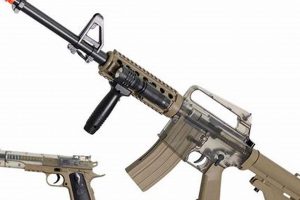
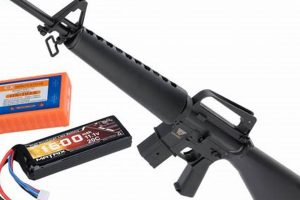
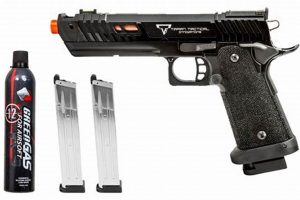
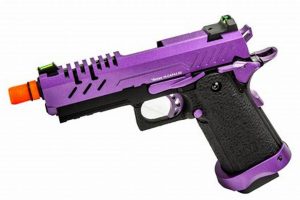
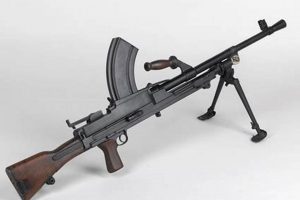
The viability of employing an airsoft replica as a tool for personal safety is a complex issue. While designed primarily for recreational simulation, the potential for these devices to deter an aggressor warrants examination. Airsoft guns, typically firing plastic projectiles, lack the kinetic energy to inflict serious physical harm. However, their realistic appearance can create an initial perception of threat.
The perceived benefit of possessing an airsoft device for protection hinges on the element of surprise and the potential for psychological impact on an attacker. Historically, the use of non-lethal deterrents has been considered as a means of de-escalating potentially violent confrontations. However, the effectiveness of this strategy is contingent on several factors, including the aggressor’s mental state, the surrounding environment, and the legal ramifications of brandishing what could be mistaken for a real firearm.
A comprehensive understanding of the legal restrictions associated with airsoft guns is paramount. Furthermore, individuals should consider alternative self-defense methods that may offer a more reliable and legally sound means of ensuring personal safety. The practical and ethical implications of relying on a replica weapon in a dangerous situation merit careful consideration.
Considerations Regarding Airsoft Gun Use in Self-Defense
The following points outline critical aspects to consider when evaluating the feasibility of utilizing an airsoft device for personal protection. These points are intended to provide information for responsible decision-making.
Tip 1: Assess Legal Ramifications: State and local laws vary significantly regarding the possession, transportation, and display of airsoft guns. Understand all applicable regulations within your jurisdiction to avoid legal penalties. Ignorance of the law is not a valid defense.
Tip 2: Prioritize De-escalation: An airsoft gun should only be considered as a last resort. Prioritize de-escalation tactics, such as verbal communication and creating distance, to avoid physical confrontation. Peaceful resolution is always preferable.
Tip 3: Understand Limitations: Airsoft guns lack the stopping power of firearms. Relying on psychological deterrence carries inherent risks. An aggressor may not be deterred and could escalate the situation, potentially leading to greater harm.
Tip 4: Maintain Proficiency: If choosing to carry an airsoft gun, ensure consistent training in safe handling, aiming, and deployment. Familiarity reduces the risk of accidental discharge or ineffective use under pressure.
Tip 5: Secure Responsible Storage: Store airsoft guns in a secure location inaccessible to unauthorized individuals, particularly children. This prevents accidental misuse or potential theft.
Tip 6: Differentiate Appearance: Modifying an airsoft gun to appear identical to a real firearm increases the risk of misidentification by law enforcement, potentially leading to dangerous consequences. Consider maintaining a distinct visual difference.
Tip 7: Evaluate Alternative Options: Explore alternative self-defense tools, such as pepper spray or personal alarms, which may offer a more practical and legally defensible means of protection. Consider professional self-defense training.
The responsible and informed consideration of these factors is crucial when assessing the viability of utilizing an airsoft gun for self-defense. Individuals must carefully weigh the potential benefits against the inherent risks and legal implications.
The subsequent sections will further examine the ethical and practical considerations related to replica weapons in self-defense scenarios.
1. Legal Restrictions

The legal environment surrounding airsoft devices significantly impacts the question of whether they can be considered appropriate tools for personal safety. Varying jurisdictions impose diverse restrictions on their possession, use, and transportation, thereby influencing the feasibility of employing them for defensive purposes.
- State and Local Laws
Regulations governing airsoft guns differ considerably by state, county, and even municipality. Some jurisdictions may require specific permits for ownership, restrict their use to designated areas, or impose limitations on their appearance. Failure to comply with these regulations can result in criminal charges, rendering the device unusable for protection due to legal constraints. For example, some cities classify airsoft guns as firearms, subjecting them to the same stringent laws.
- Transportation Regulations
The act of transporting an airsoft gun can be subject to specific legal requirements. Many jurisdictions mandate that airsoft guns be transported unloaded and in a closed container, separate from ammunition. Furthermore, openly displaying an airsoft gun in public may be illegal, as it can be misconstrued as brandishing a real firearm, leading to potential police intervention. The practical implication is that immediate access to the device for self-defense may be legally restricted.
- Brandishing and Display
The act of displaying or brandishing an airsoft gun in a threatening manner can carry legal repercussions, even if no physical harm is intended. Depending on the jurisdiction, it may be classified as aggravated assault or a similar offense, particularly if it causes reasonable fear in the victim. Therefore, using an airsoft gun defensively could inadvertently result in criminal charges against the individual employing it, undermining its intended purpose.
- Federal Regulations (Interstate Commerce)
While federal laws primarily regulate the importation and interstate commerce of airsoft guns, compliance with these regulations is crucial. Airsoft guns must typically have a blaze orange tip to distinguish them from real firearms. Tampering with or removing this marking can violate federal law, potentially subjecting the owner to penalties. Additionally, using an airsoft gun in the commission of a federal crime can result in more severe legal consequences.
The complex interplay of legal restrictions creates significant limitations on the viability of relying on an airsoft device for self-defense. These restrictions not only affect the practicality of using such a device but also carry the risk of legal repercussions that can negate any perceived benefit. Thus, understanding and adhering to all applicable regulations is essential before considering its use for personal protection.
2. Deterrent Effect

The perceived deterrent effect constitutes a primary justification for considering an airsoft gun as a tool for self-defense. The rationale centers on the realistic appearance of many airsoft replicas, which may cause a potential assailant to perceive a credible threat, thereby de-escalating a confrontation before it escalates to physical violence. This effect relies heavily on the assailant’s initial assessment of the situation and their inability to immediately distinguish the replica from a genuine firearm. The effectiveness of this deterrent hinges on the element of surprise and the creation of doubt in the mind of the aggressor.
However, the reliance on this deterrent effect presents significant limitations. Should an assailant recognize the device as an airsoft gun, the perceived threat diminishes drastically, potentially inciting them to proceed with the attack or even escalate the level of violence. Furthermore, the visual similarity to actual firearms can lead to unintended consequences, such as misidentification by law enforcement or armed civilians, who may respond with lethal force if they perceive an imminent threat. Documented cases exist where individuals brandishing replica weapons have been mistaken for armed criminals, resulting in tragic outcomes. Therefore, the deterrent effect is a conditional and unreliable factor, with potentially dangerous repercussions.
In conclusion, while the potential for a deterrent effect exists, the associated risks and limitations significantly undermine its practical value in self-defense scenarios. The reliance on an assailant’s misperception and the potential for misidentification by law enforcement or armed citizens render it an unpredictable and potentially dangerous strategy. Prioritizing alternative self-defense methods that offer a more reliable and legally sound means of ensuring personal safety is advisable. The ethical and practical implications of relying on the illusion of a threat merit careful consideration and should not be the sole basis for self-defense planning.
3. Lethality Limitations
The inherent lack of lethality associated with airsoft devices forms a critical component in assessing whether they constitute a viable option for self-defense. This fundamental limitation influences the device’s effectiveness in deterring aggressors and mitigating potential harm in confrontational situations. The following points delve into specific facets of this limitation, elucidating their implications.
- Projectile Energy and Penetration
Airsoft guns are designed to discharge lightweight plastic projectiles at relatively low velocities. Consequently, the kinetic energy imparted by these projectiles is insufficient to cause serious physical injury. While welts, bruises, or minor skin abrasions may occur upon impact, the projectiles lack the penetrative force required to inflict life-threatening wounds or incapacitate an assailant. This limited capacity for physical harm significantly diminishes the device’s effectiveness in a scenario requiring immediate self-preservation. For instance, targeting vital areas such as the head or torso would likely not result in the immediate incapacitation necessary to escape a violent encounter.
- Psychological Deterrent vs. Physical Incapacitation
The potential for an airsoft gun to serve as a deterrent relies primarily on the psychological effect of its realistic appearance. However, this effect is contingent on the assailant’s perception and reaction. Unlike a firearm capable of inflicting lethal damage, an airsoft gun lacks the capacity for immediate physical incapacitation. An aggressor who recognizes the device as non-lethal may be emboldened, potentially escalating the conflict and negating any initial deterrent effect. The absence of a credible threat of serious harm may also prompt the assailant to disregard the device entirely, rendering it ineffective in preventing further aggression.
- Dependence on Compliance and De-escalation
The efficacy of an airsoft gun as a self-defense tool is largely dependent on the assailant’s compliance with demands or willingness to de-escalate the situation. Unlike a weapon capable of inflicting significant injury, an airsoft gun cannot physically force compliance. Its success hinges on the assailant’s fear of potential harm, which is inherently less compelling given the device’s limited lethality. In situations involving individuals under the influence of substances, experiencing mental health crises, or driven by strong emotional impulses, the psychological deterrent may prove ineffective, leaving the defender vulnerable.
- Legal and Ethical Considerations
The use of any weapon, lethal or non-lethal, raises complex legal and ethical considerations. While the intention may be self-defense, employing an airsoft gun in a manner that causes undue alarm or fear could result in legal repercussions, particularly if the assailant is unaware of the device’s non-lethal nature. Moreover, the use of a replica weapon to simulate deadly force can blur the lines between self-defense and aggressive behavior, potentially leading to unintended consequences or escalating the conflict. The ethical implications of employing a device that mimics a lethal weapon without possessing its incapacitative capabilities warrant careful consideration.
In summary, the inherent limitations in the lethality of airsoft devices significantly curtail their viability for self-defense. While the potential for a psychological deterrent exists, it is highly conditional and unreliable. The inability to inflict significant physical harm, the dependence on assailant compliance, and the associated legal and ethical considerations diminish their practical value in confrontational situations. Therefore, individuals should carefully evaluate alternative self-defense methods that offer a more reliable and legally sound means of ensuring personal safety.
4. Training Necessity
The potential effectiveness of employing an airsoft device for personal safety is inextricably linked to the level of training possessed by the individual wielding it. Proficiency in handling, aiming, and decision-making under stress is paramount to maximizing any potential benefit and mitigating inherent risks. Without adequate preparation, the likelihood of successful deployment diminishes, while the potential for unintended consequences increases substantially.
- Safe Handling and Operation
Comprehensive training in safe handling procedures is crucial. This includes understanding the device’s mechanics, proper loading and unloading techniques, and adherence to fundamental safety rules. Accidental discharge or mishandling under duress can result in unintended injuries or legal repercussions. Furthermore, unfamiliarity with the device can impede effective deployment in a high-pressure situation, negating any potential deterrent effect. A real-world example involves an individual fumbling with the device, giving the aggressor time to react and potentially escalate the situation.
- Target Acquisition and Accuracy
Effective use necessitates proficiency in target acquisition and accurate aiming. Training should incorporate practice in identifying potential threats, quickly acquiring a sight picture, and consistently hitting intended targets under varying conditions. Inaccurate aiming not only reduces the deterrent effect but can also lead to unintended harm to bystanders or misidentification by law enforcement. Scenario-based drills can simulate real-world encounters, improving reaction time and decision-making accuracy. Lack of precision aiming can also result in a loss of a chance to prevent an attacker to approach you.
- Decision-Making Under Stress
Self-defense situations involve high levels of stress, which can impair judgment and fine motor skills. Training should encompass stress inoculation techniques, such as simulated scenarios, to improve decision-making capabilities under pressure. This includes assessing the threat level, determining appropriate levels of force, and executing a safe and effective response. Panic or poor judgment can lead to inappropriate use of the device or failure to react effectively, jeopardizing personal safety. Controlled breathing and visualization exercises are examples of stress management techniques that enhances decision making.
- Legal and Ethical Considerations
Training should also cover the legal and ethical implications of employing an airsoft device for self-defense. This includes understanding applicable laws regarding possession, transportation, and use, as well as the ethical considerations surrounding the use of a replica weapon. Ignorance of the law is not a defense, and misuse of the device can result in criminal charges or civil liability. Responsible training emphasizes the importance of de-escalation and avoidance of physical confrontation whenever possible, promoting the use of the airsoft device only as a last resort. It is important to avoid crossing ethical lines, which will further cause more damage and implications towards self.
These facets underscore that any potential benefit derived from possessing an airsoft device for personal safety is contingent upon comprehensive training. Safe handling, accurate aiming, sound decision-making under stress, and awareness of legal and ethical considerations are all critical components. Without such preparation, the risks associated with employing the device significantly outweigh any perceived advantages, potentially jeopardizing personal safety and leading to unintended legal consequences. Professional training from certified instructors is advised for the acquisition of these skills and knowledge.
5. Alternative Options

When considering the viability of an airsoft device for self-defense, the availability and suitability of alternative options become paramount. These alternatives directly impact the perceived necessity and practical value of relying on a replica weapon. The exploration of alternative strategies underscores the limitations and potential drawbacks of an airsoft gun for personal protection. For example, while an airsoft gun may appear to offer a means of deterring an aggressor, alternative methods such as verbal de-escalation, situational awareness techniques, and the use of non-lethal tools like pepper spray may offer more reliable and legally sound means of resolving a threatening situation. The perceived benefit of an airsoft gun diminishes when weighed against the potential effectiveness and reduced legal risks associated with these alternative strategies.
Practical applications of alternative self-defense methods include investing in self-defense training, carrying personal safety alarms, or utilizing readily available items for defensive purposes. Self-defense training equips individuals with the skills and knowledge to assess threats, manage conflict, and employ effective physical techniques if necessary. Personal safety alarms can deter attackers and alert others to a potential danger. Everyday objects, when used strategically, can provide a temporary means of defense. Furthermore, focusing on situational awareness, such as avoiding dangerous areas and being mindful of surroundings, can reduce the likelihood of encountering threatening situations. These alternative options not only minimize the reliance on potentially problematic tools like airsoft guns but also promote a proactive approach to personal safety.
In summary, the consideration of alternative options is integral to a comprehensive assessment of employing airsoft devices for self-defense. The existence of more reliable, legally defensible, and ethically sound strategies significantly undermines the rationale for relying on a replica weapon. These alternatives offer a wider range of responses, from de-escalation tactics to non-lethal defensive measures, ultimately contributing to a more comprehensive and effective approach to personal safety. The challenge lies in educating individuals about these alternatives and promoting their adoption as a primary means of ensuring personal protection, thereby minimizing the risks and uncertainties associated with replica weapons.
Frequently Asked Questions
The following questions address common inquiries regarding the suitability of airsoft devices for personal protection. The information provided is intended for informational purposes and should not be considered legal advice.
Question 1: Is it legal to carry an airsoft gun for self-defense?
The legality of carrying an airsoft gun for self-defense varies significantly by jurisdiction. Some areas may classify airsoft guns as firearms, subjecting them to the same regulations. Other locations may have specific restrictions on their possession, transportation, or open display. It is essential to consult local laws and ordinances to determine the permissibility of carrying an airsoft device for self-defense purposes.
Question 2: Can an airsoft gun effectively deter an attacker?
The deterrent effect of an airsoft gun relies on the assailant’s perception of a credible threat. The realistic appearance of some airsoft replicas may cause an attacker to hesitate. However, if the assailant recognizes the device as non-lethal, the deterrent effect diminishes, and the situation could escalate. This reliance on psychological manipulation introduces an element of uncertainty.
Question 3: What are the risks of using an airsoft gun for self-defense?
Several risks are associated with utilizing an airsoft gun for self-defense. Misidentification by law enforcement or armed civilians can lead to dangerous consequences. Additionally, the lack of incapacitative power may embolden an attacker, escalating the conflict. The legal repercussions of misusing the device, even in self-defense, must also be considered.
Question 4: What training is necessary to use an airsoft gun for self-defense?
If considering an airsoft device for self-defense, proper training is essential. This includes safe handling procedures, accurate aiming techniques, and decision-making skills under stress. Familiarity with applicable laws and ethical considerations is also crucial. Professional training can improve the effectiveness and mitigate the risks associated with using an airsoft gun.
Question 5: Are there better alternatives to an airsoft gun for self-defense?
Alternative self-defense methods, such as verbal de-escalation, situational awareness, and non-lethal tools like pepper spray or personal alarms, may offer more reliable and legally defensible means of protection. Self-defense training programs can provide valuable skills for managing threatening situations without resorting to a replica weapon.
Question 6: What are the potential legal consequences of using an airsoft gun irresponsibly?
The irresponsible use of an airsoft gun can result in various legal consequences, including criminal charges for brandishing, assault, or reckless endangerment. Civil lawsuits may also arise if the device causes injury or property damage. Compliance with all applicable laws and regulations is paramount to avoid legal penalties.
The viability of employing an airsoft gun for self-defense involves complex legal, ethical, and practical considerations. A thorough understanding of these factors is essential for responsible decision-making.
The subsequent sections will further analyze the ethical aspects and practical applications related to self-defense alternatives.
Conclusion
The preceding analysis explored the complexities surrounding the question of whether “can an airsoft gun be used for self defense”. The investigation revealed significant limitations pertaining to legal ramifications, deterrent effect, lethality, and training requirements. Alternative self-defense strategies were examined, highlighting the potential benefits of non-lethal options and de-escalation techniques.
Ultimately, the decision regarding personal safety necessitates careful consideration of individual circumstances and legal obligations. Informed decision-making, supplemented by professional training and awareness of alternative self-defense methods, remains paramount in navigating potentially dangerous situations. Further research into local regulations and self-defense techniques is strongly encouraged to ensure responsible and effective personal safety planning.