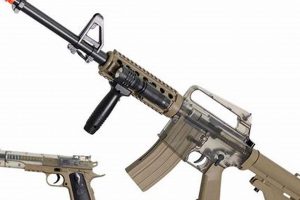
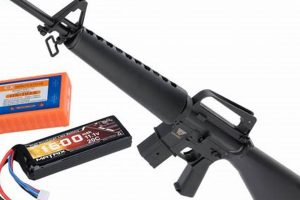
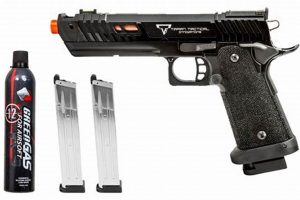
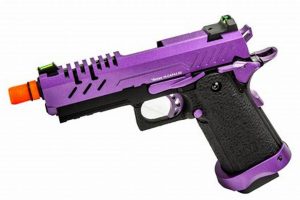
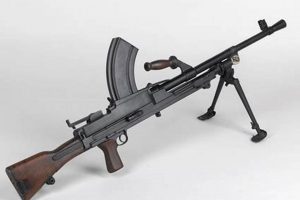
The central question revolves around the suitability of these replica firearms for personal protection. Airsoft devices are designed primarily for recreational simulated combat, firing plastic projectiles at relatively low velocities. Their primary function is sport, involving team-based tactical scenarios. They are not intended or designed to cause serious physical harm.
The relevance of this inquiry stems from a desire to explore non-lethal self-defense options. Individuals often seek alternatives to conventional firearms for safety purposes or due to legal restrictions. However, it’s vital to consider factors such as stopping power, legal ramifications, and potential risks associated with relying on such a device for defense. Historically, self-defense strategies have evolved to encompass a range of tools, but the efficacy of each tool must be rigorously assessed.
Consequently, this analysis will explore the limitations of airsoft devices in self-defense situations. It will examine legal considerations, potential for escalation, psychological impact, and the availability of alternative, more effective non-lethal options. This assessment aims to provide a balanced perspective on the use of these devices in personal safety strategies.
Considerations Regarding Airsoft Devices for Self-Defense
Utilizing airsoft devices for personal protection requires careful deliberation. These recommendations emphasize responsible decision-making and thorough awareness of the limitations involved.
Tip 1: Assess Legality: Understand local and state laws concerning the possession, transportation, and potential use of airsoft devices. Regulations vary significantly, and legal repercussions may arise from improper or unlawful use.
Tip 2: Recognize Limited Stopping Power: Acknowledge that the low projectile velocity and non-lethal nature of airsoft devices provide minimal incapacitation capability. Reliance on such a device may prove ineffective against a determined assailant.
Tip 3: Evaluate Potential for Escalation: Consider the possibility that brandishing or using an airsoft device could provoke a more aggressive response from an attacker, escalating the situation and increasing the risk of serious harm.
Tip 4: Prioritize Training: If considering this option, obtain comprehensive training in safe handling, aiming, and tactical deployment. Proficiency in using the device is crucial for any potential defensive application, even if limited.
Tip 5: Explore Alternative Options: Research and evaluate other non-lethal self-defense tools, such as pepper spray or personal alarms, which may offer greater effectiveness and fewer legal complications.
Tip 6: Emphasize De-escalation: Prioritize de-escalation techniques and situational awareness as primary defense strategies. Avoiding confrontation is the most effective way to ensure personal safety.
Tip 7: Document and Report: If an airsoft device is used in a self-defense scenario, meticulously document the incident and immediately report it to law enforcement officials. This ensures transparency and facilitates a proper investigation.
These considerations underscore the inherent risks and limitations associated with using airsoft devices for self-defense. A balanced assessment of these factors is essential for informed decision-making.
The next section will explore the specific disadvantages of employing airsoft devices for personal protection.
1. Legality

The legal status of airsoft devices significantly impacts the consideration of whether these devices are suitable for self-defense. Varying regulations across jurisdictions directly influence possession, usage, and potential legal ramifications associated with employing airsoft in protective scenarios.
- Possession Restrictions
Many jurisdictions regulate the ownership of airsoft devices, imposing age restrictions, licensing requirements, or outright bans. These restrictions can render the possession of an airsoft device for self-defense purposes illegal. For example, certain cities classify airsoft devices as imitation firearms, subjecting them to firearm regulations. This directly contradicts the purpose of seeking a non-lethal self-defense option if it’s treated legally the same as a real firearm.
- Display and Brandishing Laws
Laws governing the public display and brandishing of airsoft devices are often stringent. Presenting an airsoft device in a threatening manner, even in self-defense, can be interpreted as brandishing a firearm, leading to criminal charges. For instance, pointing an airsoft device at an assailant may be construed as aggravated assault, regardless of the intent to use it for non-lethal defense. This poses a significant risk, as the perceived threat can outweigh the actual danger posed by the device.
- Use of Force Regulations
Self-defense laws typically dictate the permissible level of force that can be used in response to a threat. Employing an airsoft device may not be considered a reasonable or justifiable use of force, especially if the perceived threat does not warrant the use of a potentially lethal weapon. The law often requires a proportional response to the threat, and the use of any weapon, including an airsoft gun, is subject to scrutiny. An overzealous reaction can have severe legal consequences.
- Transportation and Storage Requirements
Specific regulations may govern the transportation and storage of airsoft devices. Failing to comply with these requirements, such as transporting the device openly or storing it improperly, can result in legal penalties. Many jurisdictions require airsoft devices to be transported in a closed container, separate from ammunition or power sources. Non-compliance could lead to charges related to illegal possession or transportation of a weapon.
These legal considerations underscore the complexities of employing airsoft devices for self-defense. The potential for legal ramifications significantly outweighs the perceived benefits in many scenarios. Adherence to all applicable laws and regulations is paramount to avoid unintended legal consequences associated with the use of these devices.
2. Stopping Power
Stopping power, the capacity of a weapon to immediately incapacitate an assailant, is a critical factor when evaluating the suitability of airsoft devices for self-defense. The ability to quickly neutralize a threat is paramount in a dangerous situation, and the limitations of airsoft in this regard necessitate careful consideration.
- Projectile Velocity and Impact Force
Airsoft devices propel plastic projectiles at relatively low velocities, typically ranging from 300 to 400 feet per second. This results in minimal impact force, insufficient to cause immediate incapacitation or significant pain compliance. Real-world scenarios require immediate threat neutralization, a function that airsoft’s low projectile velocity fundamentally compromises. For comparison, even non-lethal options like pepper spray offer a higher degree of immediate incapacitation through sensory overload.
- Inability to Penetrate Clothing or Cause Significant Injury
Airsoft projectiles lack the kinetic energy required to reliably penetrate clothing layers or inflict deep tissue damage. An attacker wearing even light clothing may experience minimal discomfort, rendering the device ineffective. In contrast, weapons designed for self-defense, even non-lethal ones, are designed to overcome common barriers and inflict sufficient pain to deter or incapacitate an assailant. The inability to penetrate clothing or cause significant injury highlights a critical deficiency in using airsoft for personal protection.
- Psychological Deterrent Limitations
While the appearance of an airsoft device may provide a momentary psychological deterrent, this effect is unreliable. A determined assailant, especially one under the influence of drugs or alcohol, is unlikely to be deterred by the mere sight of an airsoft device. Furthermore, if the assailant recognizes the device as an airsoft gun, the deterrent effect is nullified. Relying solely on the psychological impact is inherently risky and provides a false sense of security.
- Effectiveness Against Multiple Attackers or Armed Opponents
The limited stopping power of airsoft devices makes them wholly inadequate against multiple attackers or armed opponents. Engaging in a self-defense scenario with an airsoft device against an individual wielding a knife or firearm creates a significant disadvantage. It’s essential to recognize that in many real-world self-defense situations, the threat may involve multiple individuals or armed assailants, rendering airsoft devices a liability rather than an asset.
The insufficient stopping power of airsoft devices fundamentally undermines their viability as a self-defense tool. The low projectile velocity, inability to penetrate clothing, limited psychological deterrent, and ineffectiveness against multiple or armed opponents all contribute to the conclusion that these devices are inadequate for providing reliable personal protection. Exploring alternative self-defense options with proven incapacitation capabilities is a more prudent approach to ensuring personal safety.
3. Escalation Risk
The potential for escalation constitutes a significant concern when evaluating the suitability of airsoft devices for self-defense. The act of brandishing or employing such a device can inadvertently transform a non-violent encounter into a dangerous and potentially lethal confrontation.
- Misidentification by Law Enforcement
Airsoft devices closely resemble real firearms, especially at a distance or in low-light conditions. Law enforcement officers responding to a perceived threat may misinterpret an airsoft device as a genuine weapon, potentially leading to the use of lethal force. The rapid decision-making required in such situations leaves little room for nuanced identification, increasing the risk of a tragic outcome for all parties involved. The consequences of this misidentification can be severe, highlighting the inherent danger of relying on look-alike weapons for self-defense.
- Provocation of the Assailant
The use of an airsoft device may provoke an assailant to escalate their aggression. Faced with what appears to be a threat of deadly force, an attacker may respond with a genuine firearm or other lethal weapon. This escalation undermines any potential advantage gained from using the airsoft device and places the defender in a significantly more perilous situation. The inherent risk of inciting a more violent response from an attacker renders the use of airsoft devices a precarious and potentially counterproductive self-defense strategy.
- Increased Legal Liability
Even if the use of an airsoft device does not result in physical harm, it can increase legal liability for the defender. Depending on local laws and the specific circumstances of the incident, the defender may face charges related to brandishing a weapon, assault, or reckless endangerment. The legal ramifications can be substantial, regardless of the intent to use the device for self-defense. This legal exposure presents a significant deterrent to the use of airsoft devices in any self-defense context.
- Civil Lawsuits
Beyond criminal charges, the use of an airsoft device can also lead to civil lawsuits. An individual who is injured or traumatized by the use of an airsoft device may sue the defender for damages. Even if the use of the device was deemed justifiable self-defense, the defender may still incur significant legal expenses in defending against the lawsuit. This potential financial burden adds another layer of risk to the use of airsoft devices for self-protection.
These facets of escalation risk underscore the inherent dangers associated with using airsoft devices for self-defense. The potential for misidentification, provocation, and increased legal liability outweighs any perceived benefits, making it a questionable and potentially hazardous choice for personal protection. The adoption of alternative self-defense strategies that minimize the risk of escalation is a more prudent approach.
4. Realistic Training
Realistic training plays a crucial role in assessing the viability of airsoft devices for self-defense. While airsoft devices offer a semblance of realism in handling and operation, the extent to which this translates into effective self-defense capabilities warrants thorough examination. The value of realistic training is contingent upon its ability to simulate the stressors and dynamics of actual self-defense scenarios.
- Weapon Manipulation and Familiarization
Airsoft devices provide an opportunity to familiarize oneself with weapon handling techniques, including drawing, aiming, and reloading. This familiarity can translate to improved dexterity and muscle memory. However, it is essential to recognize that the weight, recoil, and overall feel of an airsoft device differ significantly from that of a real firearm. Consequently, while airsoft training can improve basic weapon manipulation skills, it does not fully prepare an individual for the complexities of handling a real firearm in a high-stress situation. For instance, the lighter weight of an airsoft pistol may lead to overconfidence in aiming and stability, which could be detrimental when transitioning to a heavier firearm.
- Tactical Scenario Simulation
Airsoft provides a platform for simulating tactical scenarios, allowing individuals to practice decision-making, communication, and teamwork in a dynamic environment. These simulations can enhance situational awareness and improve the ability to assess and respond to potential threats. However, airsoft scenarios often lack the psychological and emotional intensity of real-life self-defense situations. The absence of genuine fear and adrenaline can limit the transferability of skills learned in airsoft to actual self-defense encounters. For example, while airsoft training can help individuals learn to scan their surroundings, the simulated environment may not replicate the tunnel vision and heightened anxiety that can occur during a real attack.
- Force-on-Force Training Limitations
Force-on-force training with airsoft devices allows participants to engage in realistic engagements against simulated adversaries. This type of training can improve reaction time, target acquisition, and decision-making under pressure. However, the non-lethal nature of airsoft projectiles introduces a degree of artificiality to the training scenario. Participants may be less cautious or take more risks than they would in a real-life encounter where the consequences are potentially fatal. Furthermore, the limitations of airsoft projectiles in causing pain compliance can affect the realism of the engagement, as individuals may be less likely to disengage or surrender than they would in a real-world scenario. This impacts the value of force-on-force training for self-defense preparedness.
- Skill Degradation Under Stress
Even with realistic training, the performance of learned skills can degrade significantly under the stress of a real self-defense situation. Physiological responses to stress, such as increased heart rate, tunnel vision, and loss of fine motor skills, can impair an individual’s ability to effectively utilize even well-practiced techniques. Therefore, while airsoft training can improve skills, it is essential to acknowledge the limitations of such training in preparing individuals for the unpredictable and highly stressful nature of real-life self-defense scenarios. For instance, an individual who can consistently hit targets during airsoft training may find their accuracy significantly diminished when confronted with a real-life attacker.
While realistic training with airsoft devices offers certain benefits in terms of weapon manipulation, tactical awareness, and decision-making, it is crucial to recognize its limitations. The lack of genuine stopping power, the artificiality of simulated scenarios, and the potential for skill degradation under stress all contribute to the conclusion that airsoft training alone is insufficient to prepare individuals for the complexities of real-life self-defense. Realistic training can be a supplementary tool, but it should not be considered a substitute for more comprehensive self-defense strategies and techniques. Ultimately, a comprehensive approach to self-defense encompasses situational awareness, de-escalation tactics, and, when necessary, the use of more effective self-defense tools and techniques.
5. Alternative Options

The evaluation of whether airsoft devices are suitable for self-defense necessitates a thorough examination of alternative non-lethal options. The limited stopping power and potential for escalation associated with airsoft raise concerns that underscore the importance of considering more effective and legally sound alternatives. The availability and selection of such options directly influence the overall risk-benefit assessment of personal safety strategies.
Pepper spray, for instance, offers a higher degree of incapacitation through sensory overload, temporarily disabling an assailant and providing an opportunity to escape. Personal alarms, while not physically incapacitating, can deter attackers by attracting attention to the situation. Stun guns or tasers, subject to legal restrictions in some areas, deliver an electrical shock that can temporarily incapacitate an individual. Self-defense training, encompassing de-escalation techniques and physical maneuvers, provides a foundation for avoiding or mitigating violent encounters. Each of these alternatives presents a different set of advantages and disadvantages that must be carefully weighed against the limitations of airsoft devices.
Ultimately, the choice of a self-defense tool should be guided by a comprehensive understanding of its capabilities, limitations, and potential legal ramifications. The existence of viable alternatives, coupled with the inherent shortcomings of airsoft, suggests that these devices are generally not a prudent choice for personal protection. A comprehensive strategy that prioritizes avoidance, de-escalation, and the use of more effective non-lethal options offers a more robust approach to personal safety.
Frequently Asked Questions
The following questions address common concerns and misconceptions regarding the use of airsoft devices for personal protection, providing objective and informative answers.
Question 1: Are airsoft devices legally considered firearms?
The legal classification of airsoft devices varies significantly by jurisdiction. Some regions may classify them as imitation firearms, subjecting them to similar regulations as conventional firearms. Others may have specific laws governing their possession, transportation, and use. A thorough understanding of local and state regulations is crucial before considering airsoft for self-defense.
Question 2: Can an airsoft device effectively stop an attacker?
Airsoft devices lack the stopping power necessary to reliably incapacitate an assailant. The low projectile velocity and minimal impact force are unlikely to cause significant pain or injury, especially if the attacker is under the influence of drugs or alcohol. A determined assailant may be unaffected, rendering the device ineffective.
Question 3: Does brandishing an airsoft device carry legal risks?
Yes, brandishing an airsoft device can have serious legal consequences. Presenting what appears to be a firearm in a threatening manner, even in self-defense, can lead to criminal charges, such as aggravated assault or brandishing a weapon. Law enforcement officers may misinterpret the device as a genuine firearm, potentially leading to the use of lethal force.
Question 4: How does airsoft training compare to real self-defense training?
While airsoft training can improve weapon handling skills and tactical awareness, it does not fully replicate the psychological and emotional intensity of real-life self-defense scenarios. The absence of genuine fear and adrenaline can limit the transferability of skills learned in airsoft to actual encounters.
Question 5: Are there more effective non-lethal self-defense options available?
Yes, several non-lethal alternatives may offer greater effectiveness and fewer legal complications than airsoft devices. Pepper spray, personal alarms, and self-defense training encompassing de-escalation techniques represent potential alternatives for personal protection.
Question 6: Can airsoft devices escalate a conflict?
Yes, the use of an airsoft device can escalate a conflict, potentially leading to more severe consequences. An attacker may respond with a genuine firearm or other lethal weapon, placing the defender in a more dangerous situation. The device may also incite a more violent response than what would have occurred otherwise.
These FAQs underscore the critical limitations and potential risks associated with using airsoft devices for self-defense. A balanced assessment of these factors is essential for informed decision-making.
The subsequent section will provide a concluding summary of the key points discussed.
Conclusion
The foregoing analysis indicates that the viability of airsoft devices for self-defense is significantly limited. Considerations such as legal restrictions, insufficient stopping power, potential for escalation, and the availability of more effective alternatives weigh heavily against their use for personal protection. While airsoft training may offer some benefits in weapon familiarization and tactical awareness, it cannot adequately replicate the psychological and physiological demands of a real-world self-defense scenario.
Therefore, individuals seeking reliable means of self-defense are advised to prioritize alternative non-lethal options and comprehensive self-defense training. A well-informed approach that emphasizes situational awareness, de-escalation techniques, and the responsible use of proven defensive tools will provide a more robust and legally sound strategy for ensuring personal safety. The effectiveness of any self-defense method hinges on its ability to provide a reasonable expectation of safety without undue risk of escalation or legal repercussions. A cautious and informed approach remains paramount.