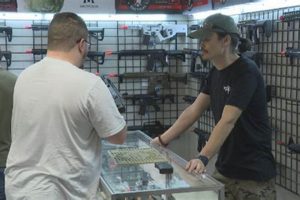
An individual specializing in the repair, maintenance, and modification of airsoft guns and related equipment is essential to the airsoft sporting community. These specialists possess in-depth knowledge of the mechanical and electrical components of various airsoft platforms. For example, if an airsoft rifle’s internal gears become stripped, this type of expert can disassemble the gearbox, identify the damaged parts, and replace them with compatible components.
The expertise of these specialists ensures the longevity and optimal performance of airsoft equipment. Their work contributes significantly to the safety and enjoyment of the sport. Historically, the need for such specialized repair services grew alongside the increasing popularity and complexity of airsoft weaponry. Access to skilled technicians prevents equipment from becoming unusable due to malfunctions, thus sustaining player engagement and reducing unnecessary costs associated with replacements.
The following sections will delve into specific aspects of their roles, including common repair procedures, essential tools, and the significance of proper maintenance for airsoft equipment.
Airsoft Equipment Maintenance Tips
Maintaining airsoft equipment is crucial for optimal performance and longevity. Adhering to these guidelines minimizes malfunctions and ensures a consistent experience on the field.
Tip 1: Disassemble and Clean Regularly: Internal components accumulate dirt and debris from regular use. Periodic disassembly and cleaning of the gearbox, hop-up unit, and barrel prevents performance degradation. For example, gearbox grease can dry out and cause friction, leading to reduced firing rates and potential damage.
Tip 2: Use Quality Lubricants: The appropriate lubricants are essential for smooth operation. Silicone oil is generally recommended for o-rings and rubber components, while specific gearbox grease is required for gears. Avoid using petroleum-based products, as they can degrade rubber parts.
Tip 3: Inspect O-Rings for Wear: O-rings are critical for maintaining air seal within the airsoft gun. Regularly inspect them for cracks or damage and replace them when necessary. A compromised o-ring results in reduced power and inconsistent shot velocity.
Tip 4: Properly Store Airsoft Guns: When not in use, airsoft guns should be stored in a cool, dry place away from direct sunlight. This prevents the warping of plastic components and the deterioration of internal seals. Depressurize gas magazines before long-term storage to prolong seal life.
Tip 5: Use High-Quality BBs: Low-quality BBs can have inconsistencies in size and shape, leading to jams and potential damage to the internal components, particularly the hop-up unit. Using high-quality BBs minimizes these risks and ensures consistent accuracy.
Tip 6: Monitor Battery Voltage: For electric airsoft guns (AEGs), proper battery care is essential. Avoid overcharging or completely discharging batteries, as this shortens their lifespan. Use a smart charger with automatic cutoff features to prevent overcharging.
Tip 7: Check and Tighten Screws: Over time, vibrations from firing can loosen screws and fasteners. Regularly check and tighten these components to prevent parts from shifting or becoming detached. Loose components can lead to misfeeds and other malfunctions.
Following these maintenance guidelines will enhance the performance and extend the lifespan of airsoft equipment, minimizing downtime and maximizing enjoyment of the sport.
The next section will explore common troubleshooting techniques that can be employed to address minor equipment issues.
1. Diagnostics expertise

Diagnostics expertise forms a foundational element of competency for an airsoft technician. Without the ability to accurately identify the root cause of equipment malfunctions, any attempts at repair or modification become speculative and potentially detrimental. This expertise involves systematic assessment, utilizing both observational skills and specialized tools to pinpoint the source of operational failures within airsoft guns. For example, a technician presented with a gun exhibiting drastically reduced firing power must be able to differentiate between issues originating from a worn piston head O-ring, a cracked cylinder, or an improperly sealed hop-up bucking. Each potential cause requires a distinct repair strategy; misdiagnosis can lead to unnecessary part replacements and persistent performance issues.
The importance of accurate diagnosis extends beyond individual repairs. Effective diagnostics contributes to the technician’s overall efficiency and reputation. By rapidly identifying the core problem, the technician minimizes troubleshooting time, reduces the likelihood of repeat failures, and optimizes resource allocation. Consider a scenario where multiple airsoft guns from a team are experiencing feeding problems. A technician with strong diagnostics skills can recognize a batch of substandard magazines as the common denominator, resolving the issue across the entire team’s equipment with a single intervention. This ability to identify systemic problems, rather than treating individual symptoms, significantly elevates the technician’s value to the airsoft community.
In conclusion, diagnostics expertise is not merely a supplementary skill for the airsoft technician; it is an indispensable competency that directly influences the quality, efficiency, and effectiveness of their work. The ability to accurately and rapidly diagnose malfunctions is paramount to ensuring the reliable performance and longevity of airsoft equipment. A commitment to honing these diagnostic skills represents a significant investment in the technician’s professional development and contributes substantially to the satisfaction and safety of airsoft players.
2. Mechanical aptitude

Mechanical aptitude, defined as the innate or acquired proficiency in understanding and working with mechanical systems and components, is a cornerstone competency for an airsoft technician. Its presence directly impacts the quality and efficiency of maintenance, repair, and modification services performed on airsoft equipment.
- Component Recognition and Function
Mechanical aptitude enables the technician to readily identify and understand the function of each component within an airsoft gun. This extends from basic parts like springs and gears to more complex mechanisms such as pneumatic systems and electronic triggers. For example, understanding how the tappet plate interacts with the nozzle to control BB feeding is crucial for diagnosing feeding issues. Without this fundamental comprehension, effective troubleshooting becomes significantly hampered.
- Disassembly and Reassembly Proficiency
Successful disassembly and reassembly of airsoft guns, a frequent task for technicians, relies heavily on mechanical aptitude. This involves understanding the order of operations, recognizing potential points of stress or fragility, and applying appropriate force and technique. Incorrect disassembly can lead to damage to sensitive components, such as the hop-up unit or gearbox, increasing the complexity and cost of repairs. A technician with strong mechanical aptitude approaches these tasks with a systematic and careful method, minimizing the risk of accidental damage.
- Tool Utilization and Manipulation
Mechanical aptitude facilitates the correct and efficient use of tools required for airsoft gun maintenance. This includes screwdrivers, pliers, hex keys, and specialized tools like gearbox presses and spring compressors. Recognizing the appropriate tool for a given task, understanding its limitations, and applying it correctly is essential for avoiding damage to components and ensuring secure connections. For instance, using an improperly sized screwdriver can strip screw heads, rendering them unusable and complicating the repair process.
- Problem-Solving and Innovation
Mechanical aptitude allows the technician to apply logical reasoning and creative problem-solving to overcome unexpected challenges during repairs or modifications. This may involve devising custom solutions to address unusual malfunctions or adapting existing components to achieve specific performance enhancements. For example, a technician might need to fabricate a custom shim to correct excessive play in a gearbox or modify a nozzle to improve air seal. This capacity for innovation differentiates a competent technician from a merely adequate one.
In summary, mechanical aptitude transcends rote memorization of repair procedures; it empowers the airsoft technician with a deeper understanding of the inner workings of airsoft equipment. This understanding translates to improved diagnostic accuracy, efficient repairs, and innovative solutions, ultimately contributing to the reliable performance and customization of airsoft guns.
3. Electrical knowledge
Electrical knowledge is an increasingly crucial attribute for an airsoft technician due to the proliferation of electric airsoft guns (AEGs) and the integration of electronic components in advanced airsoft systems. The operational effectiveness of these systems relies heavily on understanding basic electrical principles, circuit design, and component functionality. For instance, a technician must comprehend the role of MOSFETs in protecting trigger contacts from excessive current, or the function of a programmable electronic control unit (ECU) in regulating firing modes and battery management. A lack of electrical knowledge severely limits a technician’s ability to diagnose and repair common AEG malfunctions, such as motor burnout, wiring shorts, or ECU failures.
The application of electrical knowledge extends beyond simple repairs. Technicians equipped with a strong understanding of electronics can perform upgrades and modifications that enhance the performance and functionality of airsoft guns. This includes installing higher-torque motors for increased rate of fire, rewiring systems with heavier-gauge wiring to improve current flow, and programming ECUs to customize firing modes and adjust motor parameters. Moreover, diagnosing and rectifying issues related to battery compatibility and charging requires a thorough understanding of voltage, current, and battery chemistry. For example, a technician may need to troubleshoot a LiPo battery that is not charging properly, requiring them to measure voltage, identify potential cell imbalances, and assess the battery’s overall health.
In conclusion, electrical knowledge is no longer a supplementary skill but a core competency for the modern airsoft technician. As airsoft technology continues to advance, the demand for technicians proficient in electronics will only increase. A technician’s ability to diagnose, repair, and modify electrical systems directly impacts the reliability, performance, and longevity of airsoft equipment. Ongoing education and training in electrical principles and circuit analysis are essential for technicians to remain competitive and effectively serve the evolving needs of the airsoft community.
4. Parts Sourcing

Effective parts sourcing is integral to the role of an airsoft technician. The ability to acquire the correct components, whether for routine maintenance, repairs, or performance enhancements, directly affects the technician’s capacity to provide comprehensive and timely service. Without reliable parts sourcing, a technician’s expertise and skills are significantly limited.
- Identification and Specification
The initial phase of parts sourcing necessitates accurate identification of the required component. This involves understanding the specific model and version of the airsoft gun, the function of the damaged part, and its precise specifications (dimensions, materials, electrical ratings, etc.). Misidentification can lead to the acquisition of incompatible parts, rendering the repair ineffective and potentially causing further damage. For example, sourcing the incorrect piston head for a specific gearbox can compromise air seal and reduce firing power.
- Vendor Relationships and Logistics
Established relationships with reputable vendors are crucial for consistent parts sourcing. These relationships facilitate access to a wider range of components, competitive pricing, and reliable shipping. Technicians must navigate a complex supply chain, often involving multiple vendors specializing in different types of airsoft parts. Efficient logistics, including order tracking and inventory management, minimizes downtime and ensures timely completion of repairs. Delays in parts delivery can significantly impact customer satisfaction and the technician’s reputation.
- Quality Assessment and Authentication
The influx of counterfeit and low-quality airsoft parts necessitates a rigorous assessment process. Technicians must be able to differentiate between genuine components and substandard imitations, as the latter can compromise performance, durability, and safety. This involves visual inspection, dimensional measurements, and, in some cases, functional testing. Installing counterfeit gears in a high-stress AEG, for example, can lead to premature failure and potential damage to other internal components.
- Obsolescence and Adaptability
Airsoft gun models are frequently discontinued, leading to parts obsolescence. Technicians must be adept at identifying alternative components or fabricating custom parts to address this challenge. This requires resourcefulness, ingenuity, and a deep understanding of the underlying mechanical and electrical principles. For instance, a technician might adapt a similar component from another airsoft gun model or machine a custom bushing to replace a discontinued bearing.
In summary, parts sourcing is not merely a transactional process but a critical skill that underpins the effectiveness and reliability of an airsoft technician. The ability to accurately identify, procure, assess, and adapt components directly influences the quality of repairs, the longevity of airsoft equipment, and the technician’s standing within the airsoft community.
5. Modification capabilities
Modification capabilities are a core dimension of expertise for airsoft technicians, extending beyond basic repair and maintenance. This skillset encompasses the ability to enhance the performance, customize the aesthetics, or adapt the functionality of airsoft guns to meet specific player requirements. This aptitude is critical for technicians seeking to provide comprehensive services and cater to the diverse needs of the airsoft community.
- Performance Enhancement
Performance enhancement modifications aim to improve the range, accuracy, rate of fire, or overall power of airsoft guns. This can involve upgrading internal components such as motors, gears, pistons, and hop-up units. An example includes installing a high-torque motor in an AEG to increase trigger response and rate of fire, or replacing the hop-up bucking with a higher-quality version to improve BB flight trajectory and accuracy. These modifications require a thorough understanding of airsoft gun mechanics and electronics to ensure compatibility and optimal performance.
- Aesthetic Customization
Aesthetic customization modifications focus on altering the appearance of airsoft guns to reflect individual player preferences. This can include installing aftermarket furniture (stocks, handguards, grips), applying custom paint jobs or camouflage patterns, and adding tactical accessories such as sights, lasers, and flashlights. A technician adept at aesthetic customization can transform a standard airsoft gun into a unique and personalized piece of equipment. This requires skills in disassembly, painting, and accessory mounting, as well as an understanding of different aesthetic styles and trends within the airsoft community.
- Functional Adaptation
Functional adaptation modifications involve altering the functionality of airsoft guns to suit specific gameplay styles or scenarios. This can include converting an AEG to a different firing mode (e.g., adding burst fire), installing a drop-in trigger unit for improved trigger response, or converting a gas blowback pistol to use HPA (high-pressure air) for increased consistency and power. These modifications often require advanced technical skills and a deep understanding of airsoft gun mechanics and electronics.
- Internal System Optimization
Internal system modifications involve optimizing the internal mechanisms of the airsoft gun to improve its overall efficiency and reliability. Examples of airsoft technician could be shimming gearbox gears for smoother function and less wear and tear, improve air seal to compress better and increasing rate of fire. These kinds of improvements are less about changing the way the gun looks but makes it perform better overall.
In conclusion, modification capabilities represent a significant value-add for airsoft technicians. The capacity to enhance performance, customize aesthetics, and adapt functionality allows technicians to cater to a wider range of client needs and establish themselves as experts within the airsoft community. These advanced skills, coupled with a commitment to quality and safety, are essential for success in the competitive airsoft technician field.
6. Safety compliance
Safety compliance is paramount to the practice of an airsoft technician. Airsoft guns, while designed for recreational use, possess the potential for causing injury if mishandled or improperly modified. Technicians, by virtue of their access to and modification capabilities with these devices, bear a significant responsibility for ensuring safe operation. Failure to adhere to safety protocols can result in accidental injuries to users or bystanders, legal repercussions, and damage to the technician’s reputation. A technician modifying an airsoft gun to exceed velocity limits mandated by local regulations, for instance, creates a hazardous device and assumes liability for any resulting harm.
The role of the airsoft technician necessitates a thorough understanding and adherence to relevant safety standards and regulations. This includes complying with velocity limits, ensuring the proper functioning of safety mechanisms, and providing clear instructions to clients regarding safe handling and maintenance practices. For example, a technician repairing a malfunctioning safety selector must ensure the repaired mechanism functions reliably to prevent accidental discharges. Moreover, any modifications performed must not compromise the structural integrity or safe operation of the airsoft gun. Documenting all modifications and repairs, and providing clients with a clear explanation of any alterations made, further promotes transparency and accountability.
In summary, safety compliance is not merely a procedural requirement but an ethical obligation for airsoft technicians. Their expertise places them in a position of trust, requiring them to prioritize safety in all aspects of their work. Upholding safety standards protects individuals, mitigates legal risks, and fosters a culture of responsible airsoft practices. Continual education and awareness regarding evolving safety regulations and best practices are essential for maintaining the highest standards of professionalism in this field.
7. Customer communication

Effective customer communication is a critical, often underestimated, component of the airsoft technician’s skillset. The ability to clearly articulate technical issues, proposed solutions, and maintenance recommendations directly impacts customer satisfaction, builds trust, and contributes to the technician’s overall professional standing. Miscommunication can lead to misunderstandings regarding repair costs, timelines, and the scope of work, ultimately resulting in dissatisfied clients. For example, failing to clearly explain the difference between a basic repair and a performance-enhancing modification can create unrealistic expectations and subsequent disputes.
The importance of customer communication extends beyond simply conveying information. It involves active listening, empathy, and the ability to tailor explanations to the customer’s level of technical understanding. An airsoft player unfamiliar with the internal workings of an AEG may require a simplified explanation of a gearbox malfunction, avoiding technical jargon and focusing on the practical implications. Conversely, a more experienced player may appreciate a detailed technical analysis of the problem and the proposed solution. Furthermore, proactive communication throughout the repair process, providing updates on progress and any unforeseen complications, demonstrates professionalism and builds confidence. Documenting all communication, including emails and phone conversations, provides a clear record of agreements and protects both the technician and the customer.
In conclusion, customer communication is not merely a supplementary skill for the airsoft technician; it is an integral element of delivering quality service. Clear, concise, and empathetic communication fosters trust, minimizes misunderstandings, and contributes significantly to customer satisfaction and long-term relationships. Airsoft technicians who prioritize effective communication enhance their professional reputation and contribute to the overall health and growth of the airsoft community. Neglecting this aspect can lead to dissatisfaction, disputes, and damage to the technician’s credibility.
Frequently Asked Questions for an Airsoft Technician
This section addresses common inquiries regarding the role, responsibilities, and expertise of an airsoft technician. The information provided aims to clarify misconceptions and provide valuable insights for both aspiring technicians and airsoft players seeking their services.
Question 1: What distinguishes an airsoft technician from a casual hobbyist?
An airsoft technician possesses a comprehensive understanding of airsoft gun mechanics, electronics, and maintenance procedures, typically acquired through formal training, extensive experience, or a combination of both. Their expertise extends beyond basic repairs to include advanced diagnostics, performance enhancements, and custom modifications. A casual hobbyist, while potentially knowledgeable, generally lacks the depth of expertise and professional approach that defines a qualified technician.
Question 2: What certifications or qualifications are relevant for an airsoft technician?
While formal certifications specific to airsoft technicians are uncommon, relevant qualifications may include certifications in small arms repair, electronics repair, or related technical fields. Experience, demonstrated skill, and a strong portfolio of work are generally considered more valuable than formal certifications. However, adherence to industry safety standards and ethical practices is essential for all technicians.
Question 3: What are the typical costs associated with airsoft technician services?
Airsoft technician service costs vary depending on the complexity of the task, the type of airsoft gun, and the technician’s experience. Basic repairs, such as replacing a broken spring, typically cost less than more complex tasks, such as diagnosing and repairing an electronic control unit (ECU) malfunction. Many technicians offer hourly rates, while others provide fixed price quotes for specific services. Transparency in pricing and clear communication regarding potential costs are essential for establishing trust with clients.
Question 4: What recourse is available if an airsoft technician’s work is unsatisfactory?
The available recourse depends on the agreement between the technician and the client. A reputable technician will typically offer a warranty on their work, providing free or discounted repairs if the original problem recurs within a specified timeframe. If the technician refuses to address the issue, the client may consider seeking mediation or pursuing legal action, depending on the magnitude of the damages and the applicable local laws.
Question 5: How can one locate a qualified and trustworthy airsoft technician?
Locating a qualified technician often involves seeking recommendations from other airsoft players, consulting online forums and communities, and reviewing online reviews and testimonials. Asking the technician about their experience, qualifications, and the specific types of airsoft guns they specialize in can provide valuable insights. Requesting references from previous clients is also a recommended practice.
Question 6: What ongoing maintenance is recommended to minimize the need for frequent technician services?
Regular cleaning, lubrication, and inspection of airsoft guns are crucial for preventing malfunctions and extending their lifespan. Using high-quality BBs, avoiding overcharging batteries, and storing airsoft guns properly when not in use also contribute significantly to reducing the need for frequent repairs. Following the manufacturer’s recommended maintenance schedule is highly advisable.
In summary, understanding the qualifications, responsibilities, and ethical considerations associated with airsoft technicians is essential for both aspiring professionals and airsoft players seeking reliable service. Transparency, clear communication, and adherence to safety standards are paramount for establishing a positive and trustworthy relationship between the technician and the client.
The following section will delve into resources and tools that are beneficial for airsoft technicians, and the role of specialized equipment in achieving optimal results.
Conclusion
The preceding exploration has illuminated the multifaceted role of the airsoft technician, underscoring the blend of technical proficiency, diagnostic acumen, and ethical responsibility required for success. From mastering intricate mechanical and electrical systems to cultivating effective communication with clients, the demands on these specialists are considerable. Furthermore, a commitment to safety and ongoing professional development are indispensable in this evolving field.
As the airsoft community continues to grow and technology advances, the need for skilled technicians will only intensify. Aspiring professionals are encouraged to prioritize comprehensive training, ethical conduct, and a dedication to continuous learning. The future of responsible and enjoyable airsofting hinges, in part, on the expertise and integrity of these individuals.