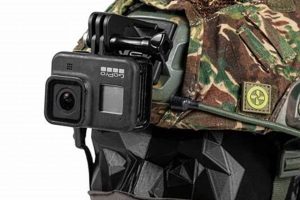
A rapid and concentrated offensive maneuver in airsoft, it involves a coordinated push by a team to overwhelm a specific point or objective. This tactic typically emphasizes speed and aggression to break through enemy defenses. A scenario might involve a team focusing all available players on capturing a strategically important building, utilizing suppressive fire and quick movement to secure the area. This approach necessitates clear communication and pre-planned roles to ensure efficient execution.
The value of a well-executed strategy lies in its ability to quickly shift the momentum of a game. By concentrating force, a team can secure objectives, disrupt enemy formations, and gain a decisive advantage. Historically, similar strategies have been employed in military tactics, albeit with different tools. The effectiveness depends on factors such as terrain, team composition, and the opposing team’s preparedness. Properly executed, it can be a game-winning maneuver.
The following sections will delve into specific aspects of this aggressive tactic, including effective team communication, optimal equipment choices, and strategic considerations for different game environments. Furthermore, the importance of training and teamwork for successfully implementing this type of strategy will be explored, outlining methods for improving team coordination and tactical execution.
Strategic Maneuver Considerations
Effective implementation requires careful planning and coordination. The following tips outline key aspects to consider for successful execution.
Tip 1: Prioritize Communication: Clear and concise communication is paramount. Utilize established communication protocols and designated roles for relaying information regarding enemy positions, movement, and objective status. For example, designate a spotter to identify enemy locations and communicate them immediately to the advancing team.
Tip 2: Establish a Clear Objective: Define a specific and achievable objective for the maneuver. This prevents confusion and ensures all team members are working towards a common goal. The objective could be securing a designated building, eliminating a specific enemy position, or capturing a flag.
Tip 3: Coordinate Movement: Synchronized movement is crucial for maintaining momentum and minimizing casualties. Utilize formations that provide adequate cover and support for advancing team members. Consider employing staggered formations to increase situational awareness and reduce vulnerability to concentrated fire.
Tip 4: Utilize Suppressive Fire: Employ sustained suppressive fire to limit enemy movement and provide cover for advancing team members. Prioritize targets that pose the greatest threat or are positioned to disrupt the assault. Effective suppressive fire allows the team to advance with reduced resistance.
Tip 5: Exploit Flanking Opportunities: Identify and exploit flanking opportunities to gain a tactical advantage. Flanking maneuvers can disrupt enemy defenses and create opportunities for decisive breakthroughs. This requires reconnaissance and the ability to adapt to changing battlefield conditions.
Tip 6: Maintain Momentum: Once the initial assault begins, maintain momentum to prevent the enemy from regrouping and reinforcing their positions. Continue to apply pressure and push forward until the objective is secured. Hesitation can allow the enemy to regain control of the situation.
Adhering to these recommendations enhances the efficacy of the approach, leading to increased success rates and improved team performance.
The final section will provide concluding thoughts on successful implementation and future considerations for refining team strategies.
1. Coordination

Coordination, in the context of rapid offensive maneuvers, is not merely a beneficial attribute, but a foundational requirement. Its presence or absence directly determines the effectiveness and survivability of the team attempting such a strategy. Without cohesive action, the attempt devolves into a disorganized advance, vulnerable to well-prepared defenses.
- Role Assignment and Adherence
Successful maneuvers depend on clearly defined roles within the team, each contributing to the overall objective. Snipers provide overwatch, grenadiers suppress enemy positions, and assault units breach fortifications. Adherence to these roles is critical; a deviation from assigned tasks disrupts the flow and creates vulnerabilities. A breach unit attempting to provide suppressive fire, for example, leaves the breach point undefended, potentially exposing the entire team.
- Synchronized Movement
Moving as a unified force maximizes firepower and minimizes exposure. This requires practiced formations and clear communication of movement plans. A staggered formation allows for overlapping fields of fire, while maintaining a tight formation prevents individuals from being isolated and overwhelmed. Consider the difference between a squad advancing in a line versus a well-drilled team using bounding overwatch; the latter provides constant cover and support, reducing the risk of casualties.
- Communication Protocols and Execution
Pre-established communication protocols are essential for rapid information dissemination. These protocols dictate how information is relayed, who is responsible for relaying it, and the level of detail required. A team member spotting an enemy flanking maneuver must communicate this information quickly and clearly, allowing the team to adjust its strategy. Vague or delayed communication can result in the failure of the maneuver and potential loss of personnel.
- Adaptability to Changing Circumstances
Even with meticulous planning, the battlefield is dynamic. Teams must be able to adapt to unforeseen circumstances, such as unexpected enemy reinforcements or changes in terrain. This requires a flexible approach, with team members capable of adjusting their roles and tactics as needed. A team encountering a heavily fortified position, for instance, may need to shift its focus from a direct assault to a flanking maneuver, requiring individuals to adapt their strategies on the fly.
These components of coordination directly impact the success of offensive maneuvers. Teams that prioritize role adherence, synchronized movement, clear communication, and adaptability are far more likely to achieve their objectives while minimizing casualties. Coordination is the force multiplier, turning a group of individuals into a cohesive and effective fighting unit.
2. Suppression

Suppression, in the context of a rapid offensive maneuver, is the application of sustained and focused fire to limit the enemy’s ability to effectively defend. It serves as a critical precursor and concurrent element, directly enabling the advancing team to gain ground with reduced risk. The cause-and-effect relationship is direct: effective suppression inhibits enemy movement, reduces their accuracy, and limits their tactical options, thereby creating opportunities for the attacking force. A real-world example would be a team utilizing sustained automatic fire on a fortified bunker, pinning down the occupants and allowing a breaching unit to approach and deploy explosives without immediate resistance. Without adequate suppression, the attacking force is exposed to concentrated enemy fire, significantly increasing the likelihood of casualties and the failure of the assault.
The importance of suppression as a component lies in its ability to shift the balance of power, even temporarily. It does not necessarily eliminate the enemy, but rather restricts their capacity to effectively engage. This provides the attacking team with a window of opportunity to close the distance, flank, or breach defenses. This is demonstrated when a team utilizes smoke grenades in conjunction with suppressive fire. The smoke obscures the enemy’s vision, while the fire prevents them from advancing or effectively targeting the attackers. The practical significance of understanding this connection is that it allows teams to prioritize suppressive firepower in their loadouts, tactics, and training, recognizing it as a force multiplier that enhances their overall effectiveness.
In summary, suppression is an indispensable element of this type of assault. It is not merely about firing rounds in the general direction of the enemy; it is about intelligently applying sustained and targeted fire to neutralize their ability to effectively respond. Recognizing this connection allows teams to optimize their strategies, prioritize appropriate equipment, and emphasize training focused on effective suppressive techniques. The challenge lies in coordinating suppressive fire with the advancing elements, ensuring that the suppression is sustained, targeted, and synchronized to maximize its effect. The ultimate goal is to create a temporary advantage that allows the assaulting team to achieve its objective with minimal casualties.
3. Speed
Speed, within the context of a coordinated assault, is a critical determinant of success, influencing both the execution and the outcome of the maneuver. It is not merely about moving quickly, but about applying decisive force rapidly and efficiently to overwhelm the opposition. This element dictates the tempo of the engagement, potentially disrupting enemy formations and minimizing their reaction time.
- Time to Target Acquisition
The speed at which a team can identify and engage enemy targets directly impacts their ability to maintain momentum. Rapid target acquisition minimizes the enemy’s opportunity to establish defensive positions or return effective fire. For example, a team equipped with advanced optics and utilizing clear communication protocols can identify and eliminate threats significantly faster than a team relying on visual scanning alone. This reduction in target acquisition time translates directly into a faster advance and reduced casualties.
- Rate of Advance Under Fire
The ability to advance rapidly under enemy fire is essential for closing the distance and overwhelming defensive positions. This requires a combination of physical conditioning, tactical proficiency, and effective suppressive fire. A team that can maintain a high rate of advance, even while taking fire, is more likely to breach enemy lines and secure objectives before the enemy can effectively regroup or reinforce their defenses. This contrasts sharply with a slow, hesitant advance, which allows the enemy to concentrate their fire and inflict significant casualties.
- Transition Speed Between Objectives
In scenarios involving multiple objectives, the speed at which a team can transition between these objectives is crucial for maintaining overall momentum and preventing the enemy from consolidating their defenses. This requires pre-planned routes, clear communication, and a coordinated approach. A team that can quickly and efficiently transition between objectives can exploit weaknesses in the enemy’s defensive line and secure a decisive advantage. A delay in transitioning, on the other hand, allows the enemy to reinforce their positions and potentially turn the tide of the battle.
- Reaction Time to Enemy Maneuvers
The speed at which a team can react to enemy maneuvers, such as flanking attempts or counter-attacks, is essential for maintaining control of the battlefield. This requires constant vigilance, effective communication, and a flexible approach to tactical planning. A team that can quickly identify and respond to enemy maneuvers can effectively disrupt their plans and maintain their own momentum. Slow reaction times, on the other hand, can leave the team vulnerable to exploitation and potential defeat.
These interconnected facets of speed highlight its pervasive influence on this type of offensive tactic. Mastering each of these componentsfrom rapid target acquisition to swift reaction to enemy movementsis essential for maximizing the effectiveness of the assault and achieving a decisive victory. A team that prioritizes speed, while maintaining control and coordination, can effectively dictate the tempo of the engagement and overwhelm the opposition.
4. Communication

Effective communication is the linchpin of any successful coordinated offensive maneuver in airsoft, translating strategic planning into battlefield execution. Its quality dictates the team’s ability to adapt, react, and maintain momentum under pressure. Without clear and consistent information flow, even the most well-equipped and trained teams face disintegration and failure.
- Real-Time Information Relay
The instantaneous transmission of battlefield intelligence is critical for maintaining situational awareness. This includes reporting enemy positions, movement patterns, and any identified threats. An example is a designated scout radioing the location and number of opposing players occupying a fortified structure, allowing the assault team to adjust their approach accordingly. Delayed or inaccurate information undermines the entire operation, potentially leading the team into an ambush or wasting valuable resources on a less critical target.
- Command and Control Structure
A well-defined command hierarchy facilitates efficient decision-making and ensures that orders are clearly understood and executed. This structure provides a streamlined channel for disseminating directives, coordinating movements, and responding to emergent situations. For example, a team leader might issue a “breach and clear” command, specifying entry points and target priorities for each fire team. Ambiguous command structures lead to confusion and conflicting actions, negating the element of surprise and allowing the opposing force to regain control.
- Standardized Terminology and Signals
The use of agreed-upon terminology and signals minimizes ambiguity and ensures that all team members are operating under the same understanding. This includes pre-determined codes for identifying targets, communicating directions, and signaling changes in formation. For example, a hand signal indicating “enemy contact front” allows team members to immediately orient themselves and prepare for engagement. A lack of standardized communication creates opportunities for misinterpretation, potentially resulting in friendly fire incidents or missed opportunities.
- Feedback and AAR (After Action Review)
Continuous feedback during the operation and a thorough after-action review are essential for identifying areas for improvement and refining team tactics. This involves soliciting input from all team members, analyzing the effectiveness of communication strategies, and implementing changes to enhance future performance. An example includes debriefing after a failed assault to identify communication breakdowns that contributed to the outcome. Ignoring feedback loops prevents the team from learning from its mistakes, perpetuating ineffective communication patterns and hindering overall performance.
In conclusion, communication acts as the central nervous system, coordinating the individual actions of team members into a cohesive and potent force. The effective use of real-time information relay, a structured command hierarchy, standardized terminology, and feedback mechanisms directly influences the success or failure of these offensive maneuvers. The value of communication lies not just in transmitting information, but in ensuring that information is understood, acted upon, and used to continuously improve team performance. Success comes from the ability to use communication to act as one.
5. Objective

In the context of a rapid airsoft offensive, the “Objective” serves as the focal point, dictating the direction and intensity of the assault. Its selection directly influences the team’s strategic approach, resource allocation, and tactical execution. The relationship between the two is symbiotic; the effectiveness of the offensive maneuver hinges on a clearly defined and attainable objective, while conversely, the objective’s successful capture often relies on the speed and coordination of the assault.
The “Objective” isn’t merely a location; it represents a strategic advantage or a critical point of control. This could involve securing a fortified building, eliminating a high-value target, or capturing a designated flag. Consider a scenario where the objective is to capture a command post. The airsoft team would concentrate its forces, employing suppressive fire and coordinated movement, to quickly breach the defenses and neutralize the opposition. Without a clearly defined objective, the assault lacks direction and becomes a fragmented, less effective effort. The practical significance lies in the understanding that a well-chosen and clearly communicated objective simplifies decision-making, improves coordination, and enhances the overall likelihood of success.
Challenges in this context often arise from ambiguous or poorly defined objectives. A vague instruction, such as “control the area,” can lead to confusion and conflicting priorities among team members. Conversely, a clearly articulated objective, such as “secure the communications room on the second floor,” provides a concrete goal for which the team can plan and execute accordingly. Understanding the link between a well-defined objective and the success of a rapid airsoft offensive enables teams to prioritize strategic planning, improve communication, and ultimately achieve their desired outcome. The focus on a singular objective amplifies the strengths of a coordinated team, transforming it into a more efficient and decisive force.
6. Flanking

In the context of a rapid airsoft offensive, flanking maneuvers represent a critical tactical element. They involve deploying a portion of the team to attack the enemy from a direction they are not expecting, typically the side or rear. The objective is to disrupt the enemy’s formation, weaken their defenses, and create opportunities for the main assault force to achieve a breakthrough. The relationship between flanking and an airsoft “storm” is synergistic; a well-executed flank can significantly enhance the effectiveness of the main assault, while a poorly executed one can expose the flanking team and jeopardize the entire operation. Imagine a scenario where the main assault team engages the enemy head-on, drawing their attention and fire. Simultaneously, a flanking team moves undetected through the terrain, positioning themselves to attack the enemy’s flank. The sudden appearance of the flanking team throws the enemy into disarray, allowing the main assault force to advance with reduced resistance.
The importance of flanking as a component of this type of offensive lies in its ability to exploit vulnerabilities in the enemy’s defenses. By attacking from an unexpected angle, the flanking team can bypass fortified positions, disrupt communication lines, and create chaos within the enemy ranks. This forces the enemy to divide their attention and resources, weakening their overall defensive posture. A real-world example could involve a team encountering a fortified bunker. Instead of directly assaulting the bunker, which would likely result in heavy casualties, a flanking team could maneuver around the bunker to attack from the rear, where the defenses are typically weaker. The practical significance of understanding this connection is that it allows teams to develop more dynamic and adaptable offensive strategies. Flanking is not merely an optional tactic; it is an integral component of a well-planned and executed assault, providing a means to overcome seemingly insurmountable obstacles.
However, successful flanking maneuvers require careful planning, effective communication, and skilled execution. The flanking team must be able to move undetected through the terrain, maintain communication with the main assault force, and coordinate their attack to maximize its impact. The main assault force must also be prepared to capitalize on the opportunities created by the flanking team, pushing forward aggressively to exploit the enemy’s disarray. The challenge lies in synchronizing the actions of the flanking and main assault teams, ensuring that both are working together towards a common objective. By understanding the strategic value of flanking and mastering the techniques required to execute it effectively, airsoft teams can significantly enhance their offensive capabilities and increase their chances of success.
7. Momentum
In the context of a rapid airsoft offensive, momentum serves as the driving force behind the attack. It represents the sustained push that prevents the opposing force from regrouping, reinforcing, or effectively countering the assault. Maintaining this forward pressure is crucial for overwhelming defenses and securing objectives. The erosion of this force allows the defense to solidify.
- Maintaining Continuous Pressure
This involves consistently applying suppressive fire and advancing to deny the enemy opportunities to recover. If the team pauses, the opposing side will be quick to act. For example, a team that immediately follows up a breach with a coordinated push is more likely to secure the objective than a team that hesitates, allowing the defenders to reorganize and re-establish their positions. This dictates the pace of the engagement.
- Exploiting Breaches and Weak Points
Successful offensives capitalize on vulnerabilities as they appear, immediately exploiting any breaches in the enemy’s defenses. An immediate push through a newly opened gap is far more effective than a delayed response. The delay will allow them to close up the hole in the defensive formation. This proactive approach prevents the enemy from consolidating their lines and maintains the forward push.
- Adapting to Changing Battlefield Dynamics
Maintaining this crucial element requires the flexibility to adapt to unforeseen circumstances and changing battlefield conditions. If the main breach point is heavily defended, the team must shift their focus to a flanking maneuver or alternative entry point. This adaptability prevents the offensive from stalling and ensures that the forward movement continues.
- Sustaining Team Cohesion Under Fire
High cohesion ensures the continuation of the offensive, even when faced with intense opposition. Effective communication, clear roles, and mutual support are critical for maintaining team cohesion and preventing fragmentation under pressure. A team that remains coordinated and focused, even under heavy fire, is more likely to maintain forward pressure and achieve its objective. Communication is key for everyone to be on the same page in high intensity.
These elements are interconnected and contribute to the overall maintenance of forward pressure. By prioritizing continuous pressure, exploiting opportunities, adapting to changing circumstances, and sustaining team cohesion, the airsoft team maximizes its chances of successfully executing the offensive and achieving its objective. A lack of momentum can lead to a stagnant battlefield, turning the advantage to the enemy and potentially resulting in a failed operation.
Airsoft Storm
The following addresses common inquiries regarding this tactical approach in airsoft, offering clarity and practical understanding.
Question 1: What distinguishes a focused offensive from a general advance?
A focused offensive concentrates the team’s resources on a specific objective, while a general advance involves a broader, less targeted push across the field. The former emphasizes speed and coordination to achieve a specific goal, while the latter aims to gain ground and engage the enemy across a wider front.
Question 2: What role does communication play in a successful maneuver of this nature?
Communication is paramount, providing real-time updates on enemy positions, movement patterns, and changes in the battlefield environment. Clear and concise communication ensures that all team members are operating with the same information, enabling them to adapt their tactics and maintain coordination.
Question 3: How does terrain impact the execution of this tactic?
Terrain significantly influences the maneuver’s feasibility and effectiveness. Open terrain exposes the team to enemy fire, while cover and concealment allow them to advance undetected. Teams must carefully assess the terrain and adjust their tactics accordingly, utilizing natural features to their advantage.
Question 4: What equipment considerations are relevant for participants?
Equipment selection should prioritize mobility, firepower, and communication. Lightweight gear allows for faster movement, while high-capacity magazines and reliable weaponry provide sustained firepower. Communication devices, such as radios, are essential for coordinating team movements and sharing information.
Question 5: How does training contribute to proficiency in executing this tactical approach?
Training is essential for developing the skills and coordination required for a successful maneuver. Drills focusing on communication, movement, and target acquisition help team members to react instinctively and execute their roles effectively. Regular practice builds muscle memory and enhances team cohesion.
Question 6: What are the risks associated with a poorly executed tactic?
A poorly executed strategy can expose the team to significant risks, including heavy casualties, loss of momentum, and strategic disadvantage. Lack of coordination, poor communication, and inadequate planning can all contribute to the failure of the maneuver, potentially turning the tide of the battle in favor of the enemy.
Effective execution requires meticulous planning, clear communication, and disciplined teamwork. Understanding the nuances of this tactical approach is critical for maximizing its effectiveness and minimizing the risks involved.
The next article section will address advanced tactics and strategic considerations for further refining team performance.
Conclusion
This exploration has detailed the multifaceted nature of the tactic, emphasizing the critical roles of coordination, suppression, speed, communication, objective clarity, flanking maneuvers, and sustained momentum. Each element is indispensable for effective execution and achieving tactical advantage. The synergy between these components determines the overall success of any attempt at a coordinated offensive.
Mastery of these principles represents a commitment to strategic depth and tactical precision. Continued refinement of skills and team dynamics remains essential for those seeking to optimize performance and maintain a competitive edge. The understanding and implementation of these strategic tenets are crucial for navigating the complexities of simulated combat scenarios.