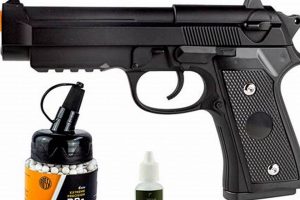
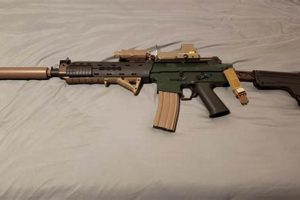
A replica firearm, closely resembling a specific single-action army revolver, is utilized in simulated combat scenarios. These replicas fire spherical plastic projectiles and are powered by compressed gas or springs. These devices are primarily employed in recreational activities that simulate military or law enforcement tactics.
The increasing popularity of these simulated firearms stems from their ability to offer a relatively safe and accessible means of participating in tactical simulations. The historical significance of the replicated firearm adds another layer of interest, drawing enthusiasts who appreciate both the recreational aspect and the historical connection. This type of replica allows participants to engage in realistic scenarios while mitigating the risks associated with actual firearms.
The remainder of this discussion will delve into the specifics of various models, the safety precautions necessary for their operation, and the legal considerations surrounding their use and ownership. Furthermore, we will explore the common modifications and accessories available to enhance the user experience and performance of these devices.
Operating Single-Action Army Style Airsoft Replicas
The following guidelines are designed to enhance the performance and longevity of single-action army (SAA) style airsoft replicas, while prioritizing user safety and adherence to regulations.
Tip 1: Proper Loading and Unloading Procedures: Employing correct loading and unloading techniques is crucial to prevent damage to the internal mechanisms. Ensure the replica is pointed in a safe direction. Cycle the hammer fully to the half-cock position for loading, and fully extract each spent casing or unfired round. Avoid forcing rounds or casings, which could lead to jamming or damage.
Tip 2: Consistent Maintenance and Cleaning: Regular cleaning, particularly after each use, is essential. Utilize appropriate cleaning solutions and tools specifically designed for airsoft replicas. Pay close attention to the barrel and cylinder, removing any accumulated debris or residue. A light application of silicone oil can help maintain smooth operation.
Tip 3: Appropriate Gas or Power Source: Using the correct gas or power source is vital for optimal performance and to prevent damage. Consult the manufacturer’s specifications to determine the appropriate pressure and type of gas or battery. Over-pressurizing or using incompatible power sources can lead to malfunctions or component failure.
Tip 4: Safe Storage Practices: When not in use, the replica should be stored in a secure location, out of reach of children and unauthorized individuals. Consider using a locked case or container. Ensure the replica is unloaded and the power source is removed before storage.
Tip 5: Adherence to Field Rules and Regulations: Familiarize oneself with and strictly adhere to all field rules and regulations governing the use of airsoft replicas. This includes mandatory safety gear, velocity limits, and acceptable engagement distances. Violation of these rules can result in serious injury or expulsion from the field.
Tip 6: Pre-game Inspection: Before each game, meticulously inspect the replica for any signs of wear, damage, or malfunction. Check the cylinder alignment, hammer function, and overall structural integrity. Addressing potential issues proactively can prevent accidents or performance degradation during gameplay.
Tip 7: Proper Handling and Transport: Treat the airsoft SAA with the same respect and caution as a real firearm. When transporting, keep it unloaded and preferably in a case. Avoid brandishing or displaying it in public, as this could cause alarm or legal issues.
Following these tips enhances the performance, longevity, and most importantly, the safe operation of single-action army style airsoft replicas. Emphasizing responsible ownership and adherence to safety protocols ensures a positive experience for all participants.
The subsequent section will examine common modifications and upgrades, emphasizing the importance of maintaining legality and safety standards when customizing these replicas.
1. Realistic Aesthetics

The emphasis on realistic aesthetics in single-action army airsoft replicas is a driving force behind their popularity. These replicas aim to closely mirror the appearance and feel of their historical counterparts, offering an immersive experience for enthusiasts and collectors.
- External Design and Finish
The replication of external design elements, including frame contours, grip materials, and overall dimensions, contributes significantly to the realistic aesthetic. Finishes, such as bluing or simulated case hardening, further enhance the visual fidelity to the original firearm. Subtle details like engraved markings or replicated serial numbers can also add to the authenticity.
- Weight and Balance
The weight and balance of these airsoft replicas are often carefully considered to emulate the feel of the real firearm. The use of metal components, such as the frame, barrel, and cylinder, helps to achieve a realistic weight distribution. This contributes to a more convincing handling experience during simulated scenarios.
- Functional Realism
Beyond purely visual aspects, functional realism plays a role. Replicating the single-action mechanism, including the need to manually cock the hammer before each shot, adds to the immersive experience. The loading and unloading process, often involving the insertion of dummy cartridges, mirrors the operation of the original firearm.
- Material Selection
The choice of materials significantly impacts the overall realism. Metal alloys are commonly used for the frame, barrel, and cylinder to provide durability and a realistic weight. Polymer materials may be used for grips or other components, often textured to mimic the appearance and feel of wood or other traditional materials.
The combination of these aesthetic and functional elements contributes to the appeal of these airsoft replicas. By prioritizing realism, manufacturers cater to enthusiasts who value historical accuracy and immersive simulation experiences.
2. Single-Action Mechanism

The single-action mechanism is a defining characteristic of many airsoft SAA replicas, directly impacting their operation and appeal. The single-action designation indicates that the hammer must be manually cocked before each shot. This contrasts with double-action revolvers, where a single trigger pull both cocks the hammer and fires the weapon. In airsoft replicas, this manual cocking mechanism often accurately replicates the function of historical single-action revolvers, contributing significantly to the realism and historical accuracy valued by enthusiasts.
The presence of the single-action mechanism dictates specific handling procedures. Prior to each shot, the user must manually cock the hammer, engaging the cylinder and preparing the replica to fire. This deliberate action is not merely a cosmetic feature; it is integral to the firing process. Failure to properly cock the hammer results in the replica being unable to discharge a projectile. This functional requirement necessitates a mindful and deliberate approach to operation, emphasizing the simulated historical shooting experience. Real-world examples include various models of airsoft revolvers specifically designed to mimic the feel and operation of classic western firearms, where the single-action mechanism is meticulously replicated for authenticity.
Understanding the single-action mechanism is vital for both safe and effective use of these airsoft replicas. It affects the rate of fire, necessitating a slower, more deliberate pace compared to automatic or semi-automatic airsoft guns. This deliberate pace enhances the role-playing aspects of airsoft games, fostering a more immersive experience. A correct understanding mitigates the risk of accidental discharge and promotes responsible firearm handling, even with a replica. As a result, The understanding of the single-action mechanism contributes to the preservation of safety standards while optimizing the historical simulation experience.
3. Projectile Velocity Limits

Projectile velocity limits are a critical safety and regulatory aspect directly impacting the design, use, and legal acceptance of single-action army airsoft replicas. These limits, typically measured in feet per second (FPS) or meters per second (MPS), dictate the maximum speed at which a projectile can be launched from the device. Adherence to these limits is paramount to minimizing the potential for injury and ensuring responsible recreational use.
- Legal and Regulatory Compliance
Many jurisdictions have established maximum projectile velocity limits for airsoft devices. Exceeding these limits can result in legal penalties, including fines, confiscation of equipment, and even criminal charges. Manufacturers and users must be aware of and comply with the specific regulations in their region. Compliance ensures legality and promotes a positive image for the sport.
- Safety Considerations
Higher projectile velocities increase the risk of injury, particularly to unprotected areas like the eyes, face, and skin. Velocity limits are set to mitigate these risks and reduce the severity of potential impacts. Mandatory use of appropriate eye protection, such as ANSI-rated goggles or masks, complements velocity limits in minimizing injury potential. Real-world scenarios at airsoft fields often enforce strict velocity checks to ensure player safety.
- Impact on Replica Design and Performance
Projectile velocity limits influence the design of airsoft single-action army replicas. Manufacturers must engineer these devices to operate within the specified limits, often achieved through internal mechanisms that regulate gas flow or spring tension. Modifications aimed at increasing velocity must be carefully considered to ensure they do not exceed legal and safety thresholds. Performance enhancements must be balanced with adherence to established limits.
- Field Enforcement and Verification
Airsoft fields and organized events commonly employ chronograph devices to measure the projectile velocity of airsoft replicas. These devices allow field operators to verify that replicas comply with the established limits before they are allowed to be used in gameplay. Regular velocity checks are essential for maintaining a safe playing environment. Discrepancies or violations typically result in immediate disqualification from participation.
The imposition and enforcement of projectile velocity limits are fundamental to the safe and responsible use of single-action army airsoft replicas. By adhering to these limits, users and manufacturers contribute to a safer recreational environment, minimize legal risks, and promote the continued acceptance and enjoyment of the sport.
4. Safety Gear Requirements

The use of single-action army airsoft replicas necessitates stringent adherence to specific safety gear requirements. Projectile velocity, though regulated, still poses a potential hazard, mandating the use of protective equipment. The direct cause-and-effect relationship between impact from a spherical projectile and potential injury underscores the critical importance of appropriate gear. As a fundamental component of responsible airsoft participation, the consistent use of safety equipment mitigates the risk of serious harm, ensuring the well-being of participants. Instances of eye injuries and other trauma from airsoft projectiles serve as tangible reminders of the potential consequences of neglecting safety protocols.
The mandatory safety gear typically encompasses full-seal eye protection, such as ANSI-rated goggles or masks, designed to withstand the impact of airsoft projectiles. Facial protection, including lower-face masks or balaclavas, is often recommended to prevent dental and soft-tissue injuries. While not always mandated, the use of gloves and sturdy footwear further enhances protection against potential scrapes, abrasions, or impacts. Implementing these requirements promotes a safer operational environment, preventing or reducing the severity of injuries sustained during gameplay or training. Regular safety inspections, conducted by site operators or designated personnel, should enforce gear compliance and reinforce a safety-conscious atmosphere.
In summary, safety gear requirements are non-negotiable when engaging with single-action army airsoft replicas. The potential for injury, even with regulated projectile velocities, necessitates consistent and diligent adherence to safety protocols. The implementation and enforcement of these requirements are crucial for fostering a responsible airsoft community and minimizing the risks associated with simulated firearms. The commitment to safety ensures a more enjoyable and sustainable recreational experience for all participants.
5. Revolver Replica Variants

The term “revolver replica variants” within the context of airsoft single-action army (SAA) replicas refers to the diverse range of models that attempt to simulate various historical and contemporary revolvers. This diversity is a direct consequence of the demand for realism and historical accuracy within the airsoft community. The existence of these variants underscores the appeal of airsoft as a hobby, attracting individuals interested in historical reenactments, simulated tactical scenarios, or simply collecting detailed replicas. The fidelity of these variants to their real-world counterparts is a key factor influencing their market value and popularity among enthusiasts. For instance, a variant accurately replicating a specific Colt Peacemaker model with detailed engravings and a worn finish will typically command a higher price than a generic, less detailed replica.
The availability of various revolver replica variants significantly expands the potential applications of airsoft SAA replicas. They are not merely limited to recreational skirmishes; they can be employed in historical simulations, theatrical productions, or as training aids for safe firearm handling. Furthermore, the existence of different variants allows for customization and personalization, as users can select models that align with their specific interests or preferences. A practical example is the use of a short-barreled “Sheriff’s Model” variant in a close-quarters combat scenario, contrasting with the use of a longer-barreled “Cavalry Model” variant in a more open-field engagement.
In summary, the concept of revolver replica variants is integral to understanding the breadth and depth of the airsoft SAA market. This variety caters to a wide range of interests and applications, extending beyond simple recreational use. However, challenges remain in ensuring consistent quality and accuracy across all variants, and it is crucial that manufacturers prioritize safety and compliance with relevant regulations. The future development of airsoft SAA replicas will likely see an increasing emphasis on realism and historical accuracy, further driving the demand for diverse and well-crafted revolver replica variants.
Frequently Asked Questions
The following addresses common inquiries regarding single-action army airsoft replicas. This information aims to provide clarity and promote responsible ownership and usage.
Question 1: What distinguishes an airsoft SAA from other airsoft guns?
The primary distinction lies in the simulated action of the replica. It replicates the single-action mechanism of historical revolvers, requiring manual cocking of the hammer before each shot. Other airsoft guns may utilize semi-automatic or automatic firing modes.
Question 2: Are airsoft SAA replicas dangerous?
While designed for recreational use, these replicas can cause injury if handled improperly. Strict adherence to safety guidelines, including eye protection and responsible handling, is essential.
Question 3: What are the legal considerations surrounding airsoft SAA ownership?
Legal regulations vary by jurisdiction. Familiarization with local laws pertaining to airsoft gun ownership, transportation, and usage is crucial. Some areas may require specific markings or restrict ownership based on age.
Question 4: How should an airsoft SAA be properly maintained?
Regular cleaning with appropriate solvents and lubrication are necessary to maintain functionality. Disassembly and reassembly should only be performed by individuals familiar with the internal mechanisms of these replicas.
Question 5: What type of ammunition is appropriate for an airsoft SAA?
These replicas typically utilize 6mm plastic BBs. The use of metal BBs or other projectiles is strongly discouraged due to safety concerns and potential damage to the replica.
Question 6: Where can airsoft SAA replicas be safely used?
Designated airsoft fields, private property with permission, or other areas specifically authorized for airsoft activities are appropriate venues. Public display or use in unauthorized areas is strongly discouraged and may result in legal repercussions.
Understanding these frequently asked questions is crucial for ensuring a safe and responsible experience with single-action army airsoft replicas. Prioritizing safety and adhering to legal regulations are paramount.
The following will delve into the various brands and manufacturers producing these replicas, exploring the features and characteristics of their products.
Concluding Remarks on Airsoft SAA Replicas
This discussion has illuminated various facets of single-action army airsoft replicas, ranging from their operating mechanisms and realistic aesthetics to the critical importance of safety protocols and legal compliance. The popularity of these devices stems from their ability to simulate historical firearms and provide a relatively safe avenue for tactical simulations. The diversity of available models and the potential for customization further contribute to their appeal.
Ultimately, responsible ownership and usage are paramount. Adherence to established velocity limits, consistent employment of safety gear, and thorough knowledge of local regulations are essential for preserving the safety of all participants and maintaining the legitimacy of the sport. Further research and ongoing education are encouraged to ensure that the airsoft community remains informed and committed to ethical practices.