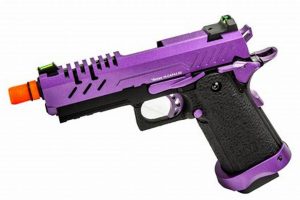
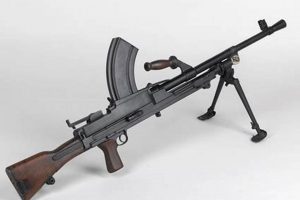
The legality and safety implications associated with altering the appearance of airsoft replicas, specifically the removal of a brightly colored indicator, are subjects of ongoing discussion. Such indicators, often orange, are mandated in many jurisdictions to distinguish these replicas from genuine firearms. Defacement or removal of these indicators can have serious consequences.
These indicators serve a crucial purpose in public safety by enabling law enforcement and the general public to quickly identify an airsoft replica, preventing potential misunderstandings and dangerous situations. Their presence allows for the safe transportation and handling of these devices in public spaces. Historically, instances involving realistic-looking replicas have led to heightened security concerns and regulatory actions.
Therefore, understanding the legal ramifications, safety protocols, and ethical considerations surrounding the modification of airsoft replicas is essential. This necessitates a deeper examination of applicable laws, the potential risks involved, and responsible practices within the airsoft community.
Considerations Regarding Altering Airsoft Replica Markings
This section outlines crucial points to consider before undertaking any modification that might obscure or eliminate the mandated indicator on an airsoft replica.
Tip 1: Review Local and Federal Laws: Prior to any modification, thoroughly investigate all applicable laws. Regulations vary significantly by jurisdiction and may prohibit removal or alteration of the orange tip or other identifying markings. Non-compliance can result in legal penalties.
Tip 2: Prioritize Public Safety: The presence of a brightly colored indicator helps prevent misidentification of the replica as a real firearm. Removing this indicator increases the risk of alarming the public and potentially provoking a dangerous response from law enforcement.
Tip 3: Understand Liability Implications: Altering the appearance of an airsoft replica can significantly increase personal liability in the event of an incident. Any use of the modified replica that results in public alarm or legal action will likely be scrutinized more harshly.
Tip 4: Research Reputable Modification Services: If modification is permissible under applicable laws, engage only with reputable and experienced technicians. Improper modification can damage the replica and compromise its safety.
Tip 5: Document All Modifications: Maintain a detailed record of all modifications performed on the replica, including dates, descriptions, and the identity of the technician who performed the work. This documentation can be crucial in demonstrating compliance with applicable regulations.
Tip 6: Consider Alternative Indicators: If an orange tip is aesthetically undesirable, explore alternative compliant indicators, such as brightly colored tape or barrel socks, that can be easily applied and removed as needed.
Tip 7: Confine Use to Private Property: If an airsoft replica has undergone modifications impacting its outward appearance, restrict its use exclusively to private property or designated airsoft fields where clear guidelines and safety protocols are in place.
Adherence to these points promotes responsible handling and mitigates potential risks associated with modifying the appearance of airsoft replicas. Prioritizing safety and legal compliance protects both individuals and the airsoft community.
The following section will address common misconceptions and provide a comprehensive overview of the regulatory landscape.
1. Legality

The legal aspects surrounding airsoft replicas, specifically regarding the removal of a brightly colored indicator, are complex and vary significantly based on location. Understanding these regulations is crucial for responsible ownership and use.
- Federal Regulations (United States)
Federal law mandates that airsoft guns imported into the United States must have a blaze orange tip, or be marked with similar bright colors, to distinguish them from real firearms. This requirement, outlined in 15 CFR 1150, applies to manufacturers and importers, but states and municipalities often enact more stringent laws regulating ownership, sale, and display.
- State and Local Ordinances
Many states and municipalities have implemented their own regulations concerning airsoft guns. These ordinances may restrict the sale of airsoft guns to minors, prohibit their open carry in public places, or require that they be stored in a secure manner. Some jurisdictions may have specific rules addressing the removal or alteration of the orange tip, imposing fines or other penalties for non-compliance.
- Consequences of Non-Compliance
Removing or altering the orange tip can lead to various legal repercussions. Law enforcement officers may mistake an altered airsoft replica for a real firearm, potentially resulting in a dangerous or even deadly encounter. Individuals found in violation of applicable laws may face fines, confiscation of the replica, or even criminal charges, depending on the severity of the offense and the jurisdiction.
- International Laws
Regulations concerning airsoft replicas differ substantially across international borders. Some countries have strict prohibitions on airsoft guns, while others have less stringent requirements. Travelers carrying airsoft guns internationally must familiarize themselves with the laws of the countries they will be entering to avoid potential legal problems, including seizure of the replica or even arrest.
The legal landscape surrounding airsoft replicas is constantly evolving. Staying informed about current federal, state, local, and international regulations is essential for responsible airsoft ownership and ensures compliance with applicable laws. Altering a replica’s appearance, particularly by removing the orange tip, introduces significant legal risks that should be carefully considered.
2. Safety

The discussion surrounding the removal of a brightly colored indicator from an airsoft replica is inextricably linked to public and personal safety. This brightly colored component serves a crucial role in differentiating the replica from a real firearm, mitigating potential risks in various scenarios.
- Misidentification and Law Enforcement Response
The presence of an orange tip or other readily visible marking allows law enforcement officers to quickly identify an airsoft replica, preventing potential misunderstandings that could escalate into dangerous confrontations. Without this visual cue, an officer might reasonably perceive the replica as a real firearm, triggering a use-of-force response to neutralize the perceived threat. Such scenarios pose significant risks to both the individual possessing the replica and law enforcement personnel.
- Public Perception and Prevention of Panic
The public’s perception of an object resembling a firearm can trigger alarm and panic, especially in sensitive locations such as schools or crowded public spaces. The orange tip provides an immediate visual reassurance that the object is not a real firearm, helping to prevent unnecessary anxiety and potential mass hysteria. Removing this safety feature increases the likelihood of misinterpretations and potentially dangerous overreactions by the public.
- Safe Handling and Storage Practices
Even among experienced airsoft players, the visual indicator serves as a constant reminder that the device, while not a real firearm, is still a replica that demands respect and responsible handling. The presence of the orange tip encourages consistent adherence to safe handling and storage practices, preventing accidental discharge or other mishaps. Its removal can foster complacency, potentially leading to unsafe behaviors.
- Liability and Legal Ramifications
Should an incident occur involving an airsoft replica from which the distinguishing marking has been removed, the individual possessing the device may face increased liability. The absence of the orange tip could be construed as evidence of intent to deceive or create confusion, potentially leading to more severe legal penalties in the event of accidental injury, public disturbance, or other related offenses. Adherence to safety protocols, including maintaining the visible indicator, contributes to mitigating legal risks.
These considerations illustrate that the safety implications surrounding the modification of airsoft replicas extend beyond individual preferences. They encompass public safety, law enforcement interactions, and legal responsibility. Prioritizing safety necessitates a comprehensive understanding of these factors and adherence to responsible practices within the airsoft community.
3. Liability
The act of altering an airsoft replica, specifically regarding the removal of the mandated brightly colored indicator, introduces significant legal and financial liabilities. These liabilities extend beyond mere legal compliance and encompass the potential for civil lawsuits and financial damages resulting from misidentification or misuse of the altered replica.
- Increased Risk of Negligence Claims
Removing the orange tip or other identifying markings can strengthen a claim of negligence against the individual possessing the altered airsoft replica. If the replica is mistaken for a real firearm and causes harm or injury, the absence of the visual indicator may be presented as evidence that the individual acted negligently in failing to prevent the misidentification. This can lead to substantial financial damages being awarded to the injured party. For example, if someone brandishes a modified airsoft replica in public and causes another person to suffer a heart attack due to the perceived threat, the individual possessing the altered replica could be held liable for the resulting medical expenses and other damages.
- Enhanced Exposure to Assault and Battery Charges
If an altered airsoft replica is used in a manner that causes someone to fear imminent harm, the individual using the replica could face charges of assault and battery, even if no physical contact occurs. The absence of the orange tip makes it more difficult to argue that the replica was obviously not a real firearm, thereby increasing the likelihood that the victim’s fear was reasonable. Consider a scenario where an individual points a modified airsoft replica at another person during a heated argument. Even if the replica is never fired, the victim could sue for assault and battery, claiming emotional distress and psychological trauma.
- Loss of Insurance Coverage
Homeowner’s insurance policies and other liability insurance policies typically contain exclusions for intentional acts or criminal conduct. If an incident occurs involving an altered airsoft replica and the individual is found to have violated applicable laws or acted intentionally, the insurance company may deny coverage for any resulting claims. This means that the individual would be personally responsible for paying any legal fees, settlements, or judgments arising from the incident. For instance, if an individual modifies an airsoft replica and uses it to commit a prank that causes property damage, the insurance company could deny coverage based on the intentional act exclusion, leaving the individual to bear the full financial burden.
- Punitive Damages
In cases of egregious misconduct, a court may award punitive damages in addition to compensatory damages. Punitive damages are intended to punish the wrongdoer and deter similar conduct in the future. If an individual intentionally removes the orange tip from an airsoft replica and uses it in a reckless or malicious manner, a court may impose punitive damages to send a message that such behavior will not be tolerated. For example, if an individual modifies an airsoft replica to resemble a real firearm and then uses it to rob a store, a court could award punitive damages to the store owner to punish the individual for their criminal actions and to deter others from engaging in similar behavior.
These considerations demonstrate that altering an airsoft replica, particularly by removing the orange tip, creates a substantial increase in potential liability. The legal and financial consequences of such modifications can be severe, potentially leading to significant financial losses and long-term legal repercussions. Responsible ownership and adherence to all applicable laws and regulations are crucial for mitigating these risks.
4. Identification
The presence of a brightly colored indicator, often an orange tip, on an airsoft replica serves as a primary means of identification, distinguishing it from a real firearm. The removal of this indicator directly impacts the ability to quickly and accurately identify the device, with significant implications for safety and legal compliance.
- Immediate Visual Differentiation
The orange tip provides an immediate visual cue that the object is not a lethal weapon. This allows law enforcement, the public, and even trained airsoft participants to instantly differentiate between a replica and a real firearm. Removing this visual identifier eliminates this immediate recognition, potentially leading to misinterpretations and escalated responses. For example, if an individual were to openly carry an airsoft replica without an orange tip, it would be nearly impossible for observers to ascertain its true nature without closer examination, increasing the risk of a perceived threat.
- Mitigation of Public Alarm
The visual identifier significantly reduces the potential for public alarm and panic. In public settings, the sight of an object resembling a firearm can trigger fear and anxiety. The presence of an orange tip provides reassurance that the device is not a genuine threat, mitigating the likelihood of a negative reaction. Conversely, the removal of this identifier can exacerbate public anxiety and increase the chances of a perceived emergency, potentially leading to unnecessary calls to law enforcement or even physical altercations. A modified airsoft replica can trigger a “see something, say something” response, resulting in significant disruption and potential danger.
- Facilitation of Safe Transportation and Storage
The presence of an orange tip allows for the safer transportation and storage of airsoft replicas. It provides a clear indication that the device is not a real firearm, simplifying interactions with law enforcement and reducing the risk of misidentification during transport or storage. Removing the orange tip can complicate these processes, potentially leading to increased scrutiny and potential legal issues. For example, transporting a modified airsoft replica across state lines might attract unwanted attention and require additional documentation to prove its non-lethal nature.
- Legal Compliance Verification
The presence of the required visual identifier serves as a readily verifiable indication of compliance with applicable laws and regulations. Law enforcement officers can quickly assess whether an airsoft replica meets the legal requirements for importation, sale, and ownership simply by observing the orange tip. Removing this visual marker eliminates this easy verification method, potentially leading to further investigation and scrutiny. In the absence of the orange tip, it becomes more challenging to demonstrate that the replica complies with legal standards, potentially resulting in fines, confiscation, or other legal penalties.
The ability to quickly and accurately identify an airsoft replica is fundamentally linked to the presence of a brightly colored indicator. The removal of this indicator undermines this identification process, increasing risks related to public safety, legal compliance, and potential misinterpretations. Therefore, maintaining the visual identifier is crucial for responsible airsoft ownership and the prevention of potentially dangerous situations.
5. Consequences
The act of removing a brightly colored indicator from an airsoft replica carries significant consequences, stemming from the initial alteration and rippling outwards to affect legal standing, public perception, and personal safety. This action, the defacement or removal of the visual indicator, constitutes a direct violation of federal regulations in the United States and potentially state and local ordinances, depending on the jurisdiction. This disregard for legal mandates sets a chain of events in motion, potentially culminating in severe penalties.
A primary consequence is the increased risk of misidentification. Without the visual cue of the orange tip, law enforcement or the general public may perceive the airsoft replica as a real firearm. This misinterpretation can lead to heightened alarm, potentially provoking an aggressive response from law enforcement, culminating in a dangerous encounter for the individual possessing the replica. Furthermore, civil liability significantly increases. Should an incident occur where the altered airsoft replica causes harm or distress, the absence of the orange tip can be construed as negligence, opening the door to lawsuits and financial penalties. An instance of brandishing such a modified replica, even without malicious intent, could result in charges of aggravated assault due to the reasonable fear it instills in observers.
Ultimately, the decision to remove the orange tip from an airsoft replica is not merely an aesthetic choice. It is a decision laden with potential repercussions that can extend far beyond the individual making the alteration. A comprehensive understanding of these potential consequences, legal, social, and personal, is essential for responsible ownership and use of airsoft replicas. The ramifications of non-compliance far outweigh any perceived benefit derived from altering the replica’s appearance, underscoring the importance of adhering to regulations and prioritizing safety.
Frequently Asked Questions Regarding Modification of Airsoft Replicas
This section addresses common inquiries concerning the legality, safety, and ethical considerations associated with altering the appearance of airsoft replicas, particularly focusing on removing the mandated brightly colored indicator.
Question 1: Is removing the orange tip from an airsoft gun legal?
The legality of removing the orange tip varies by jurisdiction. United States federal law requires importers and manufacturers to equip airsoft guns with a blaze orange tip or similar marking. However, state and local laws may further regulate or prohibit its removal. Compliance with all applicable laws is mandatory.
Question 2: What are the potential risks of removing the orange tip?
Removing the orange tip increases the risk of misidentification, potentially leading to dangerous encounters with law enforcement or alarming the public. It can also increase personal liability in the event of an incident and may violate state or local laws, resulting in fines or other penalties.
Question 3: Does removing the orange tip improve the airsoft gun’s performance?
Removing the orange tip typically does not enhance the performance of an airsoft gun. The orange tip is primarily a safety feature and legal requirement, not a performance-enhancing component.
Question 4: If removing the orange tip is illegal in a particular state, can it be removed if used only on private property?
Even if use is confined to private property, removing the orange tip may still be illegal under state or local laws. The law often applies to the possession or modification of the replica, regardless of where it is used. Confirm specific regulations in the relevant jurisdiction.
Question 5: What are some alternatives to removing the orange tip?
Alternatives to removing the orange tip include using brightly colored tape or barrel socks that can be easily applied and removed as needed. These options maintain legal compliance while allowing for cosmetic customization during gameplay.
Question 6: Where can information on local airsoft gun regulations be found?
Information on local airsoft gun regulations can be found by consulting state statutes, municipal codes, and contacting local law enforcement agencies or legal professionals specializing in firearms or replica regulations. Online resources may also provide relevant information, but verifying its accuracy with official sources is essential.
Responsible airsoft ownership necessitates adherence to all applicable regulations and a commitment to safety. Modifying an airsoft replica carries significant legal and practical implications that must be carefully considered.
The subsequent section will summarize the key considerations surrounding modifications to airsoft replicas.
Can You Remove Orange Tip Airsoft Gun
The preceding analysis underscores the multifaceted considerations surrounding the question: can you remove orange tip airsoft gun? It reveals that altering the visual identification of an airsoft replica, particularly by removing the orange tip, introduces significant legal risks, safety concerns, and potential liability. Compliance with applicable laws and prioritizing public safety remain paramount.
The complexities of airsoft replica modification necessitate responsible decision-making. Adherence to legal mandates and a commitment to safety are not merely recommendations but crucial obligations for all participants in the airsoft community. Responsible practice safeguards individuals, communities, and the future of the sport.