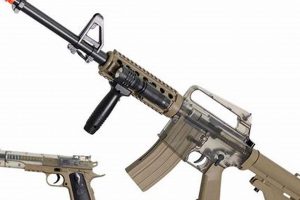
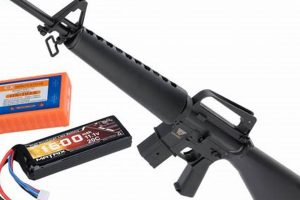
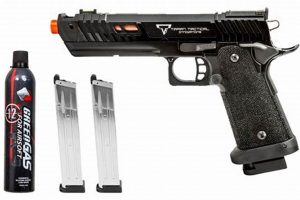
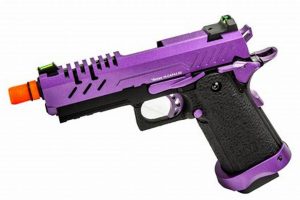
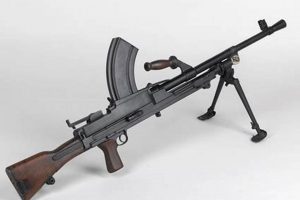
The question of whether an airsoft gun is compatible with projectiles other than standard plastic BBs, specifically those constructed of metal, is a common point of inquiry. Airsoft guns are designed and engineered to operate safely and effectively with lightweight, typically 6mm or 8mm plastic or biodegradable pellets. These materials are chosen to minimize the potential for injury during recreational use.
Employing metallic projectiles in an airsoft gun can compromise the integrity of the device and significantly elevate the risk of serious injury. The internal components of airsoft guns, such as the barrel, hop-up unit, and firing mechanism, are not built to withstand the weight and hardness of metal BBs. Furthermore, using non-standard ammunition can void any existing warranties and may violate local regulations regarding airsoft gun usage.
Therefore, understanding the intended functionality and limitations of airsoft guns is paramount. The following discussion will delve into the specific dangers associated with using metal projectiles, the potential damage to the airsoft gun itself, and the legal ramifications that may arise from deviating from recommended ammunition types.
Guidance Regarding Projectile Usage in Airsoft Devices
The following recommendations emphasize safe and responsible practices related to ammunition compatibility in airsoft devices, focusing on the dangers associated with deviating from manufacturer-specified projectile types.
Tip 1: Adhere to Manufacturer Specifications: Airsoft guns are designed to function optimally and safely with specific types of ammunition, typically plastic or biodegradable BBs. Consult the manufacturer’s guidelines regarding appropriate projectile materials and weights to ensure proper function and user safety.
Tip 2: Avoid Metal Projectiles: The use of metal BBs is strongly discouraged. Such projectiles can cause significant damage to the internal components of the airsoft gun, including the barrel, hop-up unit, and firing mechanism. Metal BBs also present a considerably higher risk of injury to users and bystanders.
Tip 3: Understand Potential Damage: The force exerted by an airsoft gun on a metal projectile can lead to catastrophic failure of internal parts. This can result in costly repairs or rendering the airsoft gun unusable.
Tip 4: Prioritize Safety Gear: Regardless of the ammunition used (though, as previously stated, metal BBs should never be used), proper protective gear is essential. This includes eye protection that meets ANSI Z87.1 standards and, depending on the context of use, facial protection, and appropriate clothing.
Tip 5: Be Aware of Legal Ramifications: Using unauthorized or dangerous ammunition types in an airsoft gun may violate local laws and regulations. Research and comply with all applicable legal requirements in your jurisdiction.
Tip 6: Regular Maintenance is Key: Regularly inspect and maintain your airsoft gun following the manufacturer’s instructions. This proactive approach helps ensure proper function, identifies potential issues early, and extends the lifespan of the device. Note that use of incorrect ammunition voids most warranties.
Adherence to these guidelines is crucial for maintaining the safe and responsible use of airsoft devices. Utilizing specified ammunition types helps minimize risks and ensures the longevity of the equipment.
The subsequent sections of this article will further explore the legal aspects and consequences of employing non-approved projectiles in airsoft guns.
1. Incompatible
The term “incompatible” is central to understanding why an airsoft gun should not be used with metal BBs. Airsoft guns are engineered with internal components, such as the barrel, hop-up unit, and gas system (in gas-powered models), specifically calibrated to handle the properties of lightweight plastic or biodegradable projectiles. Metal BBs possess significantly different characteristics, namely greater density and hardness. This disparity renders the airsoft gun mechanically incompatible with metal ammunition.
The consequences of forcing an incompatible projectile type into an airsoft gun are multifaceted. The increased weight of a metal BB places undue stress on the firing mechanism, potentially leading to immediate breakage or accelerated wear and tear. The hardness of the metal can score the inner surface of the barrel, reducing accuracy and performance. Furthermore, the hop-up unit, designed to impart backspin on a lightweight plastic BB, may not function correctly with a heavier metal BB, resulting in unpredictable trajectory. For instance, attempting to use metal BBs in a high-end airsoft replica can severely damage the precision inner barrel, requiring costly replacement.
In conclusion, the inherent incompatibility between airsoft guns and metal BBs stems from fundamental differences in projectile properties and firearm design. Recognizing this incompatibility is paramount for safe operation, preventing damage to the equipment, and ensuring adherence to regulations. Using the correct ammunition is thus crucial for maintaining the performance and longevity of airsoft guns.
2. Damage

The potential for damage is a primary consideration when evaluating the compatibility of airsoft guns with metal BBs. The introduction of metallic projectiles into a system designed for lightweight plastic ammunition can initiate a cascade of detrimental effects on the firearm’s internal components and overall operational capacity.
- Barrel Degradation
The barrel of an airsoft gun is typically constructed from aluminum or brass, materials selected for their ability to provide a smooth, consistent surface for plastic BBs to travel along. When a metal BB is fired, its hardness can cause scratches, dents, or even warping within the barrel. This degradation compromises the barrel’s internal surface, disrupting the smooth passage of subsequent projectiles, reducing accuracy, and potentially increasing the risk of jams. For example, repeated use of metal BBs in a precision airsoft rifle can lead to a noticeable decrease in shot grouping accuracy at medium to long ranges.
- Hop-Up Unit Malfunction
The hop-up unit is a critical component responsible for imparting backspin to the BB, thereby increasing its range and flight stability. This unit consists of a rubber bucking or nub that applies pressure to the BB as it passes through the barrel. Metal BBs, due to their increased weight and hardness, can cause excessive wear or even tearing of the hop-up bucking. This damage reduces the unit’s ability to effectively impart backspin, leading to a significant decrease in range and accuracy. In severe cases, the hop-up unit may become completely non-functional, requiring replacement.
- Firing Mechanism Stress
The firing mechanism of an airsoft gun, whether it is spring-powered, gas-powered, or electrically powered (AEG), is designed to generate a specific amount of force to propel a lightweight plastic BB. Introducing a metal BB significantly increases the strain on these components. Spring-powered guns may experience accelerated spring fatigue or breakage. Gas-powered guns may suffer from increased gas consumption or valve damage. AEGs may experience motor strain or gearbox failure. This increased stress can lead to premature failure of critical internal parts, reducing the lifespan of the airsoft gun and necessitating costly repairs.
- Increased Risk of Catastrophic Failure
In extreme cases, the use of metal BBs can result in catastrophic failure of the airsoft gun. The increased stress and impact forces can cause critical components, such as the piston, gearbox, or barrel, to shatter or break apart entirely. This type of damage can render the airsoft gun completely unusable and may even pose a safety hazard to the user. For instance, a cracked gearbox in an AEG could potentially cause fragments to eject during operation.
The potential for damage associated with using metal BBs in airsoft guns designed for plastic ammunition is substantial and far-reaching. These risks underscore the critical importance of adhering to manufacturer specifications regarding appropriate projectile types. The consequences of deviating from these guidelines can range from reduced performance and accelerated wear to catastrophic equipment failure and potential safety hazards.
3. Injury

The risk of injury escalates significantly when considering the question of airsoft guns and their potential use with metal BBs. The design parameters of airsoft guns prioritize the safe discharge of lightweight plastic projectiles, minimizing the potential for severe harm. Deviating from this design by introducing metal BBs creates a hazardous scenario with increased potential for bodily harm.
- Increased Penetration
Metal BBs possess a greater density and hardness compared to their plastic counterparts. This translates to a higher capacity for penetration upon impact. While a plastic BB might cause a sting or welt, a metal BB is more likely to break the skin, penetrate deeper tissues, and potentially cause damage to underlying structures such as muscle or bone. The eyes, in particular, are highly vulnerable to serious injury, including vision loss, if struck by a metal BB. Instances of airsoft-related eye injuries are already documented with plastic BBs; the use of metal projectiles would exponentially increase the severity and likelihood of such incidents.
- Ricochet Hazards
The harder surface of metal BBs increases the probability of ricochet upon impact with hard surfaces. This unpredictable change in trajectory poses a significant risk to individuals in the vicinity who may not be wearing protective gear. Plastic BBs tend to shatter or lose momentum upon impact, reducing the risk of ricochet injuries. A metal BB, however, retains much of its kinetic energy, making it a more dangerous projectile in an environment with multiple reflective surfaces. This is relevant not only on official field but also recreational use.
- Compromised Protective Gear
Standard airsoft protective gear, such as goggles and masks, is designed and tested to withstand impacts from plastic BBs traveling at specific velocities. The increased energy and penetration potential of metal BBs may exceed the protective capacity of this gear. A goggle lens rated to withstand a plastic BB impact may shatter or be penetrated by a metal BB, leading to severe eye injury. Similarly, masks may not provide adequate protection against facial injuries from metal projectiles.
- Unpredictable Trajectory
The internal mechanisms of airsoft guns, particularly the hop-up unit, are calibrated for the specific weight and aerodynamic properties of plastic BBs. The use of metal BBs disrupts this calibration, leading to unpredictable projectile trajectories. This unpredictability increases the risk of accidental strikes to unintended targets, including bystanders who may not be aware of the airsoft gun’s operation. This is especially of concern with using higher FPS airsoft guns.
The facets outlined above underscore the considerable increase in injury risk associated with using metal BBs in airsoft guns. The inherent design limitations of the equipment, coupled with the enhanced penetrative capabilities and ricochet potential of metal projectiles, create a hazardous environment where even standard protective gear may prove inadequate. Understanding these risks is essential for responsible airsoft gun handling and preventing serious harm.
4. Illegal

The intersection of airsoft guns, metal BBs, and legal frameworks constitutes a serious concern. Modifying an airsoft gun to fire metal projectiles, or even the act of using metal BBs in a standard airsoft gun, can trigger legal ramifications that vary significantly depending on jurisdiction. The root cause of such illegality stems from the alteration of the device’s intended function, potentially transforming it from a recreational item into something classified as a weapon or a firearm, subject to stricter regulations. In many locales, regulations classify airsoft guns as toys or sporting goods only when they adhere to certain specifications, including projectile type and velocity. When an airsoft gun is modified to fire metal BBs, it may exceed permitted velocity limits or violate restrictions on projectile material, thus falling outside of legal exemptions afforded to standard airsoft devices.
The importance of “illegal” as a component in the context of “can a airsoft gun shoot metal bbs” is underscored by the potential consequences. These consequences can range from fines and confiscation of the modified airsoft gun to more severe criminal charges, particularly if the altered device is used to cause harm or is perceived as a threat. For instance, in some regions, modifying an airsoft gun to increase its power or make it resemble a real firearm more closely is explicitly prohibited. The use of metal BBs exacerbates this issue because it demonstrably alters the power and potential lethality of the device. Real-life examples include instances where individuals have faced charges for possessing modified airsoft guns that could fire projectiles at velocities exceeding legal limits, or for possessing airsoft guns that were deemed to be “imitation firearms” due to their appearance and capabilities.
Understanding the practical significance of these legal restrictions is paramount for responsible airsoft enthusiasts. Prioritizing compliance with local, state, and federal laws relating to airsoft guns is essential, ensuring responsible recreational activities that do not contravene legal limits. This includes avoiding modifications that increase the power or alter the intended projectile type of the device. Moreover, responsible airsoft gun owners should familiarize themselves with the specific regulations in their area and seek clarification from legal professionals or relevant authorities if uncertainty exists. The potential ramifications of non-compliance are severe, emphasizing the need for careful adherence to legal frameworks.
5. Warranty Void

The deliberate or inadvertent use of metal BBs in an airsoft gun precipitates a warranty void, a consequence stemming directly from the deviation from the manufacturer’s specified operating parameters. Airsoft gun warranties explicitly cover defects in materials or workmanship under normal use conditions. “Normal use conditions” invariably include the utilization of the intended projectile type: typically, plastic or biodegradable BBs of a defined weight and diameter. The introduction of metal BBs, a non-approved ammunition, immediately transgresses these conditions, automatically invalidating the warranty agreement.
The mechanical stress induced by metal BBs on the internal components of an airsoft gun is a primary cause for this void. As discussed previously, metal BBs can damage the barrel, hop-up unit, firing mechanism, and other critical parts. Manufacturers design and test their products based on the properties of plastic BBs; the forces exerted by metal BBs fall outside these design parameters. Consequently, any damage resulting from the use of metal BBs is deemed user-induced and not a manufacturing defect. An example of this is a user experiencing a gearbox failure in an AEG after using metal BBs. The manufacturer’s inspection will likely reveal signs of undue stress on the gearbox components, directly attributable to the heavier, harder projectiles, thereby denying warranty coverage.
The “Warranty Void” aspect of “can a airsoft gun shoot metal bbs” has practical significance for airsoft gun owners. It underscores the importance of adhering to manufacturer recommendations regarding ammunition. Repair costs for damage caused by metal BBs can be substantial, potentially exceeding the cost of the airsoft gun itself. Owners must weigh the perceived benefits of using metal BBs against the risk of forfeiting warranty coverage and incurring potentially significant repair expenses. Responsible airsoft gun ownership necessitates respecting the design limitations of the equipment and utilizing only approved ammunition to maintain warranty validity and ensure safe and reliable operation.
6. Design

The design of an airsoft gun fundamentally dictates its operational parameters, particularly in relation to projectile compatibility. Airsoft guns are engineered with specific internal tolerances, material selections, and power output levels tailored to the characteristics of plastic or biodegradable BBs. The design considerations for these projectiles emphasize lightweight, low-impact properties to ensure a balance between safe recreational use and functional performance. The intentional design choices preclude the effective and safe use of metal BBs.
The inner barrel diameter, hop-up mechanism, and firing assembly are all precisely calibrated for plastic projectiles. A metal BB’s increased density and hardness exert forces and stresses that the gun’s design was not intended to accommodate. This can lead to immediate component failure, accelerated wear, or compromised performance. For example, the hop-up system, which imparts backspin to regulate trajectory, is designed around the friction coefficient and weight of plastic BBs; metal projectiles, with their dissimilar surface properties and mass, disrupt this calibrated balance, rendering the hop-up ineffective and potentially damaging the unit. Furthermore, the design of the gas system in gas-powered airsoft guns is optimized for specific gas pressures and flow rates that effectively propel plastic BBs. Using metal projectiles places undue stress on the gas system’s seals and valves, which can lead to leaks, reduced power output, or complete system failure.
The inherent design of an airsoft gun serves as a safeguard against misuse. The incompatibility with metal BBs is not merely a matter of performance degradation but also a critical safety feature. Attempting to override this design limitation not only voids warranties and potentially violates legal restrictions but also compromises the safety of the user and bystanders. Understanding the design constraints of an airsoft gun is therefore paramount for responsible ownership and operation, reinforcing the understanding that the design effectively prohibits the use of metallic projectiles.
Frequently Asked Questions
The following section addresses common inquiries regarding the suitability of various projectiles for use in airsoft guns. The information provided is intended to promote safe and responsible airsoft practices.
Question 1: What types of projectiles are explicitly approved for use in standard airsoft guns?
Airsoft guns are designed and warrantied for use with spherical plastic or biodegradable BBs, typically with a diameter of 6mm or 8mm. The specific weight range is detailed in the user manual.
Question 2: What are the potential consequences of using metal BBs in an airsoft gun?
The use of metal BBs can result in internal damage to the airsoft gun, including the barrel, hop-up unit, and firing mechanism. It can also lead to an increased risk of injury and may violate local laws.
Question 3: Does using metal BBs void the manufacturer’s warranty on an airsoft gun?
Yes, the use of non-approved ammunition, such as metal BBs, automatically voids the manufacturer’s warranty, as it constitutes a deviation from normal operating conditions.
Question 4: Are there any airsoft guns specifically designed to fire metal projectiles?
Airsoft guns are not designed to fire metal projectiles. Any device modified to fire metal projectiles is no longer considered a standard airsoft gun and may be subject to different legal classifications.
Question 5: Is it possible to modify an airsoft gun to safely and effectively fire metal BBs?
Modifying an airsoft gun to fire metal BBs is not recommended due to the potential for damage, injury, and legal repercussions. It would require significant alterations to the gun’s internal components, which are not designed to withstand the forces generated by metal projectiles.
Question 6: Where can information on approved ammunition types be found?
Information on approved ammunition types is usually contained in the owner’s manual that came with the device. Further guidance can be obtained from the manufacturer’s website.
In summary, adhering to the manufacturer’s recommendations regarding projectile types is crucial for safe operation, warranty preservation, and legal compliance. The use of metal BBs in airsoft guns is strongly discouraged.
The subsequent portion of this article examines the long-term maintenance of airsoft guns.
Conclusion
The preceding analysis demonstrates the incompatibility of metal BBs with standard airsoft guns. The question of whether an airsoft gun can shoot metal BBs is definitively answered in the negative, considering factors of design limitations, potential for equipment damage, elevated risk of injury, legal ramifications, and warranty invalidation. Airsoft guns are specifically engineered to operate safely and effectively with lightweight plastic or biodegradable projectiles. Introducing metallic ammunition fundamentally compromises the integrity of the device and presents unacceptable safety hazards.
Therefore, adherence to manufacturer guidelines regarding approved ammunition is paramount. Prioritizing safe practices, understanding legal implications, and respecting the inherent limitations of airsoft equipment are essential for responsible participation in the sport. The information presented serves as a cautionary reminder of the potential consequences of deviating from established safety protocols and a call to uphold the standards of responsible airsoft gun ownership.