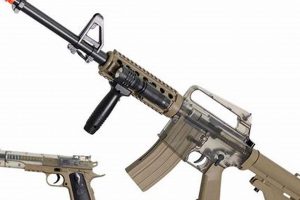
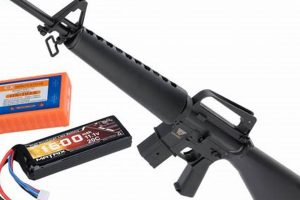
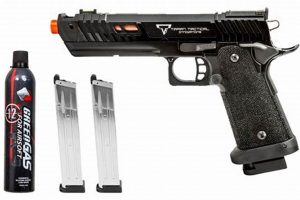
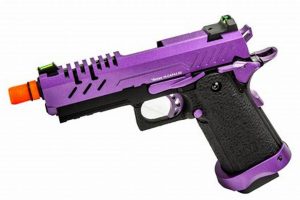
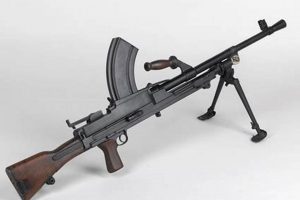
The central question revolves around the classification of airsoft devices and whether they fall under the category of playthings. Airsoft replicas are projectile-launching devices that fire spherical plastic projectiles, typically 6mm in diameter. A clear example would be a replica firearm designed to resemble a specific model of rifle, but which propels plastic BBs instead of live ammunition. The determination of whether these items are categorized as playthings significantly impacts regulations, usage guidelines, and perceptions surrounding their safe handling and storage.
The importance of accurately classifying airsoft devices stems from considerations of safety, legal frameworks, and responsible use. Historically, ambiguity in their classification has led to misunderstandings and inconsistent enforcement of regulations. Understanding the nuances of their design, purpose, and potential risks is paramount. A proper classification fosters informed decision-making by both consumers and regulatory bodies, encouraging responsible engagement and minimizing the potential for misuse. It allows for the establishment of appropriate guidelines concerning storage, handling, and age restrictions, which in turn, contribute to a safer environment for all.
Given the complexities inherent in defining the nature of these devices, subsequent discussions will delve into various aspects, including legal definitions, safety considerations, intended use, and developmental appropriateness. These factors are crucial in understanding the debate concerning whether they should be considered recreational items or necessitate categorization as something requiring greater oversight.
Guidance Regarding Airsoft Device Considerations
The following points offer guidance when engaging with the question of whether airsoft devices should be classified as playthings. Adherence to these considerations promotes safety and responsible handling.
Tip 1: Understand Legal Definitions: Research the legal definition of airsoft replicas within a specific jurisdiction. Regulations vary widely, and compliance is paramount to avoid legal ramifications.
Tip 2: Prioritize Safety Equipment: Emphasize the mandatory use of appropriate protective gear, including eye protection, face masks, and potentially body armor. The kinetic energy of projectiles necessitates robust protection against injury.
Tip 3: Supervise Young Participants: When minors are involved, constant adult supervision is non-negotiable. Ensure they comprehend safety rules and adhere to them consistently.
Tip 4: Emphasize Responsible Storage: Store airsoft devices unloaded, with magazines detached, and in a secure location inaccessible to unauthorized individuals, particularly children.
Tip 5: Educate on Safe Handling: Provide thorough education on the safe handling of these devices, emphasizing the importance of treating them with respect and avoiding pointing them at unintended targets.
Tip 6: Discourage Modification: Discourage unauthorized modifications to airsoft replicas, as alterations can compromise safety mechanisms and increase the risk of injury.
Tip 7: Utilize Designated Areas: Confine usage to designated fields or areas designed for airsoft activities. Avoid using these devices in public spaces where they may be mistaken for real firearms.
These guidelines underscore the importance of safety consciousness when addressing concerns of whether airsoft devices are simply playthings. Responsible actions mitigate risks and promote a secure environment for all participants.
Following these recommendations lays a foundation for responsible usage, ultimately informing the ongoing discussion surrounding the classification of airsoft devices.
1. Safety Regulations
The presence and enforcement of safety regulations are fundamentally linked to the question of whether airsoft devices should be considered playthings. These regulations reflect an acknowledgment of the inherent risks associated with projectile-launching devices, irrespective of their superficial similarity to recreational items. Safety protocols, therefore, are critical in evaluating their appropriate categorization.
- Mandatory Protective Gear
A primary facet is the stipulation of mandatory protective gear, specifically eye protection. This requirement, often legally mandated at airsoft fields, acknowledges the potential for serious injury from impact. The necessity of such gear distinguishes airsoft activities from typical forms of play, where comparable protective measures are rarely enforced.
- Age Restrictions and Supervision
Many jurisdictions impose age restrictions on the purchase and use of airsoft replicas, often requiring adult supervision for younger participants. These limitations directly contradict the open accessibility typically associated with toys. The imposition of such constraints reflects the potential dangers involved and the need for responsible oversight.
- Velocity Limits and Device Modification
Airsoft facilities commonly enforce velocity limits on projectiles, measured in feet per second (FPS). Furthermore, unauthorized modifications to increase projectile velocity are frequently prohibited. These restrictions underscore the potential for causing harm and differentiate airsoft from activities where participants are generally free to alter equipment without safety concerns.
- Designated Play Areas and Safe Zones
The confinement of airsoft activities to designated fields and the establishment of safe zones, where protective gear removal is permitted, further highlight safety considerations. These measures mirror practices found in sports and activities with inherent risks, rather than casual recreation. The controlled environment emphasizes the need for minimizing potential harm.
The stringent safety regulations surrounding airsoft activities serve as a compelling counterargument to their simple classification as toys. These regulations underscore the potential for injury and necessitate responsible handling, thereby distinguishing airsoft devices from items typically intended for unrestricted play.
2. Intended Application

The intended application of airsoft devices plays a critical role in determining whether they align with the conventional understanding of playthings. Examining the various uses for which these replicas are designed provides valuable insight into their proper classification.
- Recreational Skirmishes and Simulated Combat
A primary purpose involves recreational skirmishes and simulated combat scenarios, often conducted in organized fields or arenas. These activities entail strategic gameplay, teamwork, and adherence to established rules, resembling military simulations more closely than typical play activities. Participants often invest in specialized gear, further highlighting the formalized nature of these engagements. The resemblance to military training exercises contrasts with conventional recreational pursuits.
- MilSim (Military Simulation) Events
Airsoft devices are frequently employed in MilSim events, which are immersive simulations of military operations. These events can span multiple days and involve complex scenarios, requiring participants to adopt specific roles, follow tactical directives, and utilize communication protocols. The level of realism and strategic depth in MilSim events distinguishes them significantly from casual recreational activities. These simulations emulate professional training exercises.
- Training Aids for Law Enforcement and Military
Certain airsoft replicas are utilized as training aids for law enforcement and military personnel. The realistic appearance and handling characteristics of these devices allow for safe and cost-effective training in close-quarters combat and tactical decision-making. In this context, they serve as tools for professional development rather than recreational items. The use by professionals in high-stakes environments underscores their functional purpose.
- Historical Reenactments and Theatrical Props
Airsoft replicas find application in historical reenactments and as props in theatrical productions. Their realistic appearance adds authenticity to these performances, enhancing the immersive experience for both participants and audiences. In this capacity, they serve as visual aids and tools for storytelling rather than implements of play. The fidelity they provide to historical contexts adds to their value beyond recreation.
The diverse range of applications, extending beyond simple recreation to include military simulations, law enforcement training, and historical reenactments, suggests that these devices transcend the classification of mere toys. The intended use frequently involves strategic engagement, tactical training, or professional application, underscoring their functionality as tools rather than solely objects of play.
3. Age appropriateness
The question of whether airsoft replicas qualify as playthings is inextricably linked to the concept of age appropriateness. The potential for misuse and the inherent risks associated with projectile-launching devices necessitate careful consideration of the developmental stage and maturity level of individuals engaging with them. The absence of appropriate safeguards for younger individuals directly undermines the classification of these items as suitable for general play. An illustrative example involves a child, lacking the necessary comprehension of safety protocols, unintentionally discharging an airsoft device in a public space, potentially causing alarm or injury. This illustrates the crucial role age appropriateness plays in safe and responsible usage.
Further complicating the classification, the physical and cognitive development of children often lags behind their chronological age. A teenager, while technically meeting minimum age requirements, may still lack the impulse control or sound judgment required for safe handling. This can cause accidents, such as firing without verifying the clear space downrange or inappropriately targeting other individuals. These examples underscore the importance of parental oversight, comprehensive safety education, and the enforcement of responsible handling practices, elements largely absent in the context of typical toys. Therefore, safety guidelines are essential components in the debate.
In summary, the debate surrounding the classification of airsoft devices relies heavily on the issue of age appropriateness. The potential for misuse, the risks involved with projectile-launching mechanisms, and the variability in developmental maturity levels necessitate careful assessment and responsible oversight. These considerations emphasize the need for regulations that protect vulnerable individuals and promote safe engagement. The challenges associated with ensuring age-appropriate use further complicate the notion of these items as merely playthings and support the argument of their specific classification and regulation.
4. Realistic appearance

The realistic appearance of airsoft replicas directly influences the debate surrounding their classification as playthings. This characteristic introduces a level of complexity absent in most conventional toys, demanding careful consideration of its potential implications. The verisimilitude of these devices to actual firearms can lead to misidentification, prompting unintended responses from law enforcement or civilians. The effect of this realism creates an environment where differentiation becomes challenging, potentially leading to dangerous misinterpretations. The significance of this aspect cannot be understated, as it affects both the perception and the responsible handling of such items. A real-world example includes incidents where individuals brandishing airsoft replicas have been mistaken for armed threats, resulting in police intervention and, in some instances, tragic outcomes. This underscores the crucial need for education and awareness regarding the distinction between airsoft replicas and genuine firearms.
Furthermore, the practical application of realistic appearance affects the regulations surrounding these devices. Many jurisdictions mandate the inclusion of orange tips or other visual identifiers to clearly distinguish them from actual weapons. These regulations aim to mitigate the risk of confusion and prevent potential misuse. Retailers are often required to adhere to specific guidelines regarding the display and sale of these items, further emphasizing the importance of preventing misidentification. The realistic features of airsoft devices also play a role in training simulations for law enforcement and military personnel. The use of realistic replicas allows for effective training in tactical scenarios without the risks associated with live firearms. Therefore, its use in real life must be taken seriously.
In summary, the realistic appearance of airsoft devices necessitates a nuanced understanding of their potential impact and the importance of responsible handling. While the realism enhances their appeal for recreational purposes, it also introduces safety concerns that distinguish them from standard toys. Challenges remain in consistently communicating the difference between airsoft replicas and actual firearms, requiring ongoing efforts in education and regulation. The intersection of realistic design and responsible use forms a central tenet in the broader discussion concerning the appropriate classification of airsoft devices.
5. Legal Jurisdictions
The classification of airsoft devices, and consequently the question of whether they are considered playthings, is fundamentally influenced by differing legal jurisdictions. Diverse regulatory frameworks worldwide lead to inconsistent treatment, impacting their sale, ownership, and use. The variations highlight the absence of a universally accepted definition and the importance of understanding local regulations.
- Varying Definitions of “Firearm”
Many legal jurisdictions define firearms based on projectile velocity and energy. Some jurisdictions classify airsoft devices exceeding specific thresholds as firearms, subjecting them to stricter regulations, including licensing requirements and restrictions on ownership. Conversely, other jurisdictions may not consider them firearms, treating them more leniently. This difference in categorization impacts the legality of purchasing, possessing, and using airsoft devices. An example includes regulations in some European countries where high-powered airsoft devices require firearm licenses, whereas in the United States, regulations are generally less stringent at the federal level, although state and local laws vary.
- Age Restrictions and Purchase Regulations
Legal jurisdictions often impose age restrictions on the purchase of airsoft devices, reflecting concerns about responsible use and potential misuse. Minimum age requirements range from 16 to 18 years, or even higher, depending on the region. Additionally, some jurisdictions require purchasers to undergo background checks or obtain permits, mirroring procedures for acquiring actual firearms. These measures underscore the perceived risk associated with airsoft devices and the need for responsible ownership. For example, some states within the U.S. require parental consent for minors to purchase airsoft guns, while others have outright bans on sales to individuals under 18.
- Public Display and Brandishing Laws
Most legal jurisdictions have laws prohibiting the public display or brandishing of items resembling firearms, including airsoft devices. These laws aim to prevent causing alarm or fear among the public and to deter potential criminal activity. Violators may face criminal charges, particularly if their actions lead to police intervention. The realistic appearance of airsoft replicas exacerbates the risk of misidentification and highlights the importance of responsible handling in public spaces. Examples can be found in many urban areas where openly carrying anything resembling a firearm, even an airsoft replica, can result in arrest.
- Import and Export Regulations
The import and export of airsoft devices are subject to varying regulations across different legal jurisdictions. Some countries have strict customs controls on the import of items resembling firearms, requiring permits or licenses. Others may prohibit the import of airsoft replicas altogether. Similarly, export regulations may restrict the shipment of these devices to certain countries or require adherence to specific documentation requirements. These regulations are designed to prevent the proliferation of unauthorized weapons and to control the flow of potentially dangerous items. Many countries in Asia, for instance, have tight control over the import and export of airsoft devices, often requiring special permits.
The diverse legal landscape surrounding airsoft devices underscores the complex nature of their classification. While some jurisdictions may treat them as recreational items subject to minimal regulation, others view them as potential threats requiring stringent control. These differences highlight the need for careful consideration of local laws and regulations before purchasing, owning, or using airsoft devices. The inconsistency further complicates the notion that they are simply playthings, as their legal status can significantly impact their accessibility and use.
Frequently Asked Questions Regarding Airsoft Device Classification
The following section addresses common inquiries and clarifies misconceptions concerning the classification of airsoft devices and their categorization as toys. The aim is to provide clear, concise, and informative answers based on established facts and relevant considerations.
Question 1: Are airsoft guns toys under the legal definition?
The determination depends significantly on the specific jurisdiction. Legal definitions of “firearm” or “weapon” vary, and some jurisdictions may classify airsoft devices that exceed certain projectile velocity thresholds as regulated items, thus excluding them from the category of playthings.
Question 2: What safety precautions are paramount when handling airsoft guns?
Mandatory protective gear, including approved eye protection and face masks, is crucial. Strict adherence to designated safe zones, responsible storage practices, and thorough understanding of operating mechanisms are non-negotiable safety requirements.
Question 3: How does intended use influence the classification of airsoft guns?
When airsoft devices are employed in military simulations, law enforcement training, or professional scenarios, their intended function transcends simple recreation. Such applications argue against a straightforward classification as mere playthings.
Question 4: Is age a determining factor in classifying airsoft guns as toys?
Age appropriateness is a significant consideration. The potential for misuse, coupled with the developmental stage and maturity level of individuals, necessitates careful assessment. Many jurisdictions impose age restrictions and supervision requirements, distinguishing them from typical recreational items.
Question 5: Does the realistic appearance of airsoft guns affect their classification?
The realistic appearance introduces complexities. It can lead to misidentification and unintended responses from law enforcement or civilians. Regulations requiring orange tips or other visual identifiers aim to mitigate this risk, acknowledging that these devices are more than simple toys.
Question 6: How do different legal jurisdictions affect the “airsoft guns toys” categorization?
Legal frameworks vary considerably worldwide. Some jurisdictions treat airsoft devices leniently, while others subject them to stringent regulations akin to actual firearms. These differences highlight the absence of a universally accepted definition and the need to consider local laws.
The critical takeaways emphasize the diverse factors influencing the classification of airsoft devices. These factors include legal definitions, safety precautions, intended use, age appropriateness, realistic appearance, and jurisdictional variations. A comprehensive understanding of these aspects is essential for responsible engagement and informed decision-making.
Having addressed common inquiries, the subsequent discussion will focus on concluding remarks and a synthesis of the arguments presented.
Concluding Assessment
The preceding analysis demonstrates that the classification of “are airsoft guns toys” is not a straightforward matter. A synthesis of legal definitions, safety considerations, intended applications, age appropriateness, and the impact of realistic appearance reveals a complex landscape. While superficially resembling recreational items, airsoft devices often fall outside the conventional understanding of playthings due to regulatory oversight and the potential for misuse.
Ultimately, the classification depends on a convergence of factors, including jurisdictional laws and responsible handling. Ongoing engagement with this multifaceted topic is essential to ensure safety, promote informed decision-making, and foster responsible engagement within the broader community. Further inquiry and the development of clear guidelines will continue to shape the understanding and regulation of these devices moving forward.