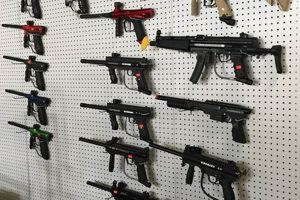
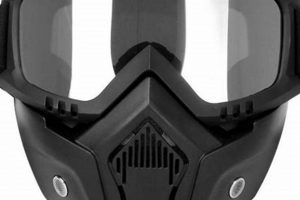
The central question of comparative discomfort experienced between two projectile-based recreational activities, airsoft and paintball, involves assessing the variables contributing to impact sensation. These variables encompass projectile mass, velocity, and surface area, along with protective gear employed during gameplay. The degree of perceived pain is subjective and influenced by individual pain tolerance and point of impact on the body.
Understanding the differences in projectile characteristics is essential for participant safety and informed decision-making. A clearer understanding helps players choose the activity aligning with their comfort level and prioritize appropriate protective measures. Historically, both activities have evolved in terms of safety regulations and equipment improvements, continually aiming to minimize potential injury and maximize enjoyment.
This analysis will delve into the specifications of airsoft BBs versus paintballs, discuss the typical velocities at which they are propelled, and examine the relative impact forces generated. Furthermore, the discussion will evaluate the effectiveness of standard protective equipment in mitigating discomfort associated with each activity.
Mitigating Impact Sensation
The following recommendations are designed to minimize discomfort associated with projectile impact in both airsoft and paintball activities. Implementing these strategies can enhance player safety and overall enjoyment.
Tip 1: Protective Gear Adequacy: Ensure comprehensive coverage with appropriate protective equipment. This includes full-face masks, neck protection, and padded vests. Select gear specifically designed for the activity being pursued.
Tip 2: Adjusting Velocity Limits: Adhere to established velocity limits for both airsoft and paintball markers. Lower velocities translate to reduced impact force. Confirm that velocity limits are consistently enforced at the playing field.
Tip 3: Layered Clothing: Wear multiple layers of clothing to provide cushioning against projectile impact. Thicker materials offer greater protection compared to single-layer garments. Consider materials that wick away moisture for improved comfort.
Tip 4: Safe Engagement Distances: Maintain a safe engagement distance during gameplay. Close-range impacts intensify the sensation. Establish minimum engagement distances and enforce adherence to these guidelines.
Tip 5: Awareness of Impact Zones: Be cognizant of vulnerable body areas such as the face, neck, and groin. Prioritize protection for these zones with supplementary padding or strategically positioned gear.
Tip 6: Hydration and Physical Conditioning: Maintain adequate hydration and physical conditioning. These factors can influence pain tolerance and the ability to withstand physical exertion during gameplay.
Effective implementation of these strategies promotes a safer and more comfortable experience. Prioritizing protective measures and responsible gameplay contributes to a positive environment for all participants.
The subsequent section will offer a comparative analysis of the long-term effects potentially associated with each activity.
1. Projectile Mass
Projectile mass is a critical determinant in assessing the relative impact force and potential discomfort associated with airsoft and paintball. Kinetic energy, directly proportional to mass and the square of velocity, quantifies the energy transferred upon impact. A heavier projectile, such as a paintball, inherently possesses the capacity to deliver more kinetic energy than a lighter airsoft BB, assuming comparable velocities. This fundamental principle explains why, under similar conditions, a paintball impact typically registers as more forceful.
The practical significance of projectile mass becomes evident when considering real-world scenarios. While airsoft BBs typically range from 0.12g to 0.40g, paintballs generally weigh around 3g. This substantial difference in mass translates to a noticeable disparity in impact sensation. Furthermore, regulations often restrict the muzzle velocity of airsoft guns, recognizing the potential for increased injury with heavier projectiles. The application of Newton’s second law of motion (F=ma) highlights that for a given acceleration (achieved by the propulsion mechanism), a larger mass will generate a greater force upon striking a target.
In conclusion, projectile mass serves as a primary factor differentiating the potential impact force between airsoft and paintball. Despite the mitigating effects of protective gear and velocity regulations, the increased mass of paintballs typically results in a greater perceived impact. Understanding the relationship between mass, velocity, and kinetic energy is essential for players to make informed decisions about protective equipment and gameplay strategies, ultimately contributing to a safer experience. The role of surface area and velocity can also be considered.
2. Velocity impact

Velocity impact serves as a key determinant in gauging the potential for discomfort and injury in both airsoft and paintball activities. The kinetic energy transferred upon impact is directly proportional to the square of the projectile’s velocity, making this factor highly influential in determining the severity of the impact sensation.
- Kinetic Energy and Velocity:
Kinetic energy (KE) is calculated as 1/2 mass velocity squared (KE = 1/2mv). This relationship illustrates that even a small increase in velocity can lead to a disproportionately larger increase in kinetic energy and, consequently, the force experienced upon impact. In both airsoft and paintball, velocity is a regulated factor to ensure safety, but variations within these regulations significantly affect impact.
- Regulation and Limits:
Fields typically impose velocity limits on airsoft and paintball markers. For example, airsoft guns often have limits around 400 FPS (feet per second) with heavier BBs, while paintball markers may be capped at 300 FPS. These limits are designed to prevent excessive force. However, even within these limits, the velocity at which a projectile strikes a player is a primary driver of felt impact.
- Velocity vs. Distance:
Projectile velocity decreases with distance due to air resistance. A shot fired at maximum velocity may lose significant speed before reaching a distant target. Conversely, close-range shots deliver the most intense impact due to the projectile maintaining its initial velocity. Minimum engagement distances are sometimes enforced to mitigate the risk of high-velocity, close-range impacts.
- Marker Technology and Consistency:
The consistency of a marker’s velocity output is crucial. Inconsistent velocity leads to unpredictable impacts, potentially causing unexpected discomfort or injury. Higher-quality airsoft guns and paintball markers maintain more consistent velocities, contributing to a more predictable and safer playing environment.
In summary, velocity impact profoundly influences the comparative experience of airsoft and paintball. While paintballs possess greater mass, the velocity at which either projectile strikes a player significantly dictates the immediate sensation of impact. Adherence to field regulations, understanding the physics of projectile motion, and employing consistent equipment are critical for mitigating potential discomfort and ensuring player safety in both activities.
3. Surface area
Surface area, in the context of projectile impact, exerts influence on the distribution of force and, consequently, the subjective experience of pain in airsoft and paintball. The area over which the impact force is dispersed affects the pressure exerted on the body, modulating the intensity of the sensation.
- Force Distribution and Pressure:
Pressure is defined as force per unit area. A larger surface area distributes the impact force over a wider region, resulting in lower pressure at any given point. Conversely, a smaller surface area concentrates the force, leading to higher pressure. The differing surface areas of airsoft BBs and paintballs contribute to the variances in impact sensation.
- Projectile Shape and Contact:
The spherical shape of both airsoft BBs and paintballs dictates that the initial contact area is relatively small. However, the deformable nature of a paintball allows it to flatten upon impact, increasing the contact area and distributing the force. Airsoft BBs, being rigid, maintain a smaller contact area, potentially leading to a more focused impact.
- Dwell Time and Energy Transfer:
Dwell time, the duration of contact between the projectile and the target, is influenced by surface area. A larger contact area may increase dwell time, allowing for more gradual energy transfer. This can result in a sensation of a broader, less intense impact. Conversely, a shorter dwell time concentrates the energy transfer, creating a sharper, more localized sensation.
- Protective Gear and Surface Area:
Protective gear functions by increasing the effective surface area over which the impact force is distributed. Padded vests and helmets provide a larger contact area, reducing the pressure exerted on the body. The effectiveness of protective gear is directly related to its ability to enlarge the impact surface area and dissipate the force.
In summary, the surface area of a projectile and the characteristics of the impact surface play a crucial role in determining the distribution of force and the resulting sensation. The deformable nature of paintballs, combined with the use of protective gear, tends to enlarge the contact area, reducing the pressure and mitigating the intensity of the impact. Conversely, the smaller contact area of airsoft BBs can result in a more focused sensation. These considerations underscore the importance of understanding the interplay between surface area, force distribution, and protective measures in both airsoft and paintball activities.
4. Protective Gear
Protective gear plays a pivotal role in mitigating potential injury and discomfort in both airsoft and paintball, directly influencing the perceived impact and safety of each activity. The effectiveness and design of protective equipment are crucial factors when assessing the comparative risks associated with airsoft versus paintball.
- Coverage Area and Impact Distribution:
Protective gear functions by increasing the surface area over which impact force is distributed. Full-face masks, padded vests, and gloves minimize concentrated pressure on specific body parts. The extent of coverage determines the degree to which impacts are dispersed, influencing the subjective pain experienced. Greater coverage typically correlates with reduced localized pain.
- Material Properties and Energy Absorption:
The material composition of protective gear dictates its ability to absorb and dissipate impact energy. High-density plastics, foams, and specialized fabrics attenuate the force transmitted to the body. Materials with superior energy absorption capabilities provide enhanced protection, reducing the likelihood of bruising or injury. The quality and construction of protective gear are therefore critical.
- Activity-Specific Design Considerations:
Protective gear designs are often tailored to the specific characteristics of airsoft and paintball. Paintball masks typically feature thicker lenses and more robust construction to withstand the higher impact forces associated with paintballs. Airsoft gear may prioritize maneuverability and ventilation, given the lower impact forces involved. These design differences reflect the varying protection requirements of each activity.
- Compliance and Enforcement of Safety Standards:
The adherence to and enforcement of safety standards for protective gear directly affect player safety. Certified masks and goggles undergo rigorous testing to ensure they meet minimum impact resistance requirements. Fields that strictly enforce the use of compliant protective gear contribute significantly to reducing the risk of injury. Mandatory equipment checks and regulations enhance overall safety.
The presence and quality of protective gear substantially alter the calculus of relative risk between airsoft and paintball. While paintball projectiles generally impart greater force, the appropriate use of robust protective equipment can effectively mitigate potential injury. Consistent enforcement of safety standards and the selection of high-quality, activity-specific gear are paramount in minimizing the discomfort and injury potential in both recreational activities. Ultimately, prioritizing safety and utilizing proper protective measures are crucial for participants.
5. Range distance
Range distance constitutes a critical variable in the assessment of impact force and subsequent discomfort in both airsoft and paintball activities. The kinetic energy of a projectile diminishes over distance due to air resistance, influencing the perceived impact sensation.
- Velocity Degradation and Impact Force:
Projectile velocity decreases with distance, thereby reducing the kinetic energy upon impact. A paintball or airsoft BB fired at maximum velocity near the muzzle will experience a gradual reduction in speed as it travels. This velocity loss directly affects the impact force, with close-range shots delivering a significantly greater impulse than those at longer distances.
- Minimum Engagement Distances and Safety Protocols:
Many airsoft and paintball fields implement minimum engagement distances to mitigate the risk of high-velocity, close-range impacts. These distances are established to allow for sufficient velocity degradation, reducing the likelihood of injury or excessive discomfort. Strict adherence to these protocols is crucial for ensuring player safety.
- Projectile Trajectory and Energy Loss:
The trajectory of a projectile is influenced by gravity and air resistance. As range increases, the projectile’s vertical drop becomes more pronounced, and the loss of kinetic energy becomes more substantial. This effect is more pronounced for lighter projectiles, such as airsoft BBs, compared to heavier paintballs, potentially impacting the relative discomfort experienced at varying ranges.
- Perception of Impact at Varying Ranges:
The perception of impact can vary significantly depending on the distance from which the projectile is fired. Close-range impacts tend to be perceived as sharper and more intense, while impacts at longer ranges may feel more like a sting or a gentle tap. This difference in perception underscores the importance of considering range distance when evaluating the relative discomfort associated with airsoft and paintball.
In summary, range distance exerts a substantial influence on the perceived impact force and subsequent discomfort experienced in both airsoft and paintball. Velocity degradation, trajectory alterations, and minimum engagement distances all contribute to modulating the intensity of impact sensation. A comprehensive understanding of these range-dependent factors is crucial for participants to make informed decisions about protective gear, gameplay strategies, and overall safety precautions, ultimately informing the comparative assessment of discomfort between the two activities.
6. Pain Threshold

Pain threshold, the point at which a stimulus is perceived as painful, represents a crucial factor in subjectively evaluating the comparative discomfort associated with airsoft and paintball. Individual variations in pain threshold significantly influence the perceived intensity of impact from projectiles in both activities, thereby complicating any objective comparison of which is more painful. Individuals with a higher pain threshold may experience a paintball impact as merely a sharp sting, while those with a lower threshold might perceive the same impact as intensely painful. Conversely, the same can be said for impacts from airsoft projectiles. This inherent variability necessitates a nuanced understanding of pain threshold as a component of the overall experience.
The significance of pain threshold extends beyond mere subjective perception. It dictates an individual’s reaction to impact, influencing behavior during gameplay. For example, a player with a lower pain threshold may be more hesitant to advance into exposed positions, potentially altering strategic decision-making. Conversely, a player with a higher pain threshold might exhibit greater aggression and resilience under fire. Moreover, pain threshold can affect an individual’s long-term participation in these activities. Repeated experiences of perceived pain can lead to avoidance behavior, ultimately impacting enjoyment and engagement. Thus, understanding the variability in pain tolerance is essential for game organizers and fellow players to maintain a safe and inclusive environment.
In conclusion, pain threshold functions as a critical modulator in the subjective experience of pain resulting from airsoft and paintball impacts. While projectile mass, velocity, and protective gear undoubtedly contribute to the objective force of impact, individual pain thresholds determine the subjective interpretation of that force. Recognizing the inherent variability in pain tolerance is paramount for fostering a safe, enjoyable, and inclusive environment. Ultimately, it is not merely about assessing which activity generates more force, but about understanding how individual pain thresholds shape the experience of that force, challenging any simplistic comparison between the two.
7. Impact location

The precise location of impact on the body significantly influences the perceived severity of pain from airsoft or paintball projectiles, serving as a crucial determinant in whether a given shot is considered more or less painful. Certain anatomical areas, due to their higher concentration of nerve endings or lack of substantial protective tissue, exhibit heightened sensitivity to impact. An impact to the face, neck, or groin, for example, will typically elicit a more intense sensation compared to an impact on the back, arm, or leg, where muscle mass and subcutaneous fat provide a degree of cushioning. Moreover, impacts directly over bone, such as the ribs or spine, often prove more painful because the force is transmitted directly to the skeletal structure, bypassing the shock-absorbing properties of soft tissue. For instance, a paintball striking the unprotected area of the neck is a real life example.
The practical significance of understanding impact location lies in its implications for safety protocols and protective gear design. Awareness of vulnerable areas allows participants to prioritize protection for those regions. For example, neck guards are commonly recommended in both airsoft and paintball to shield the sensitive throat area, while groin protectors are frequently employed to mitigate the risk of injury to the lower abdomen and pelvic region. Protective masks are mandatory to help with face, eyes and nose protection. These protection gear help with reducing the intensity of impact. Minimizing exposed skin and strategically positioning protective equipment can substantially reduce the risk of experiencing intense pain from impacts, irrespective of whether the projectile originates from an airsoft gun or a paintball marker. The strategic placement of additional padding or reinforced protection in particularly sensitive areas can further mitigate potential discomfort.
In summary, impact location is a pivotal factor in determining the perceived pain from airsoft or paintball projectiles, often overshadowing minor differences in projectile mass or velocity. Vulnerable anatomical regions exhibit heightened sensitivity, necessitating strategic use of protective gear to mitigate risk. While paintball projectiles generally possess greater kinetic energy, a precisely placed airsoft BB on a sensitive area can elicit a more intense painful sensation than a paintball impacting a less sensitive area. The key takeaway is not merely the characteristics of the projectile, but the interplay between projectile attributes and the specific location of impact, emphasizing the need for comprehensive safety protocols.
Frequently Asked Questions
This section addresses common inquiries regarding the comparative impact sensation experienced in airsoft and paintball activities. The responses provided aim to offer clarity and informed perspectives.
Question 1: Is the impact of a paintball always more painful than that of an airsoft BB?
No. While paintballs generally possess greater mass and deliver more kinetic energy upon impact, factors such as range, impact location, and protective gear significantly influence the subjective experience of pain. A close-range airsoft BB impact on a sensitive area may be perceived as more painful than a long-range paintball impact on a padded area.
Question 2: How do velocity limits affect the potential for injury in each activity?
Velocity limits are imposed in both airsoft and paintball to restrict the maximum kinetic energy of projectiles. Lower velocity limits reduce the potential for injury, but do not eliminate it entirely. Adherence to established velocity limits is crucial for minimizing risk in both activities.
Question 3: To what extent does protective gear mitigate potential pain and injury?
Protective gear functions by increasing the surface area over which impact force is distributed and absorbing a portion of the kinetic energy. High-quality, properly fitted protective gear significantly reduces the potential for pain and injury in both airsoft and paintball. Comprehensive coverage is essential.
Question 4: Are there specific anatomical areas that are more susceptible to pain from projectile impacts?
Yes. Areas with a high concentration of nerve endings or limited protective tissue, such as the face, neck, and groin, are generally more susceptible to pain. Prioritizing protection for these areas is recommended.
Question 5: Does individual pain tolerance influence the perceived intensity of impact?
Individual pain tolerance plays a significant role in determining the subjective experience of pain. Individuals with higher pain thresholds may perceive impacts as less painful than those with lower pain thresholds.
Question 6: What role do minimum engagement distances play in safety protocols?
Minimum engagement distances are implemented to allow for projectile velocity to degrade, thereby reducing the impact force at closer ranges. Adhering to these distances minimizes the risk of close-range, high-velocity impacts.
The discomfort experienced depends on a range of variables. Safety protocols and protective gear are crucial.
This information offers insight into the relative impact and is helpful in safety and decisions about protective gear.
Which Hurts More Airsoft or Paintball
The preceding analysis of projectile mass, velocity, surface area, protective gear, range distance, individual pain threshold, and impact location reveals a complex interplay of factors determining the subjective experience of pain in airsoft and paintball. While paintballs generally possess greater kinetic energy and a higher potential for causing blunt-force trauma, the actual sensation experienced varies significantly based on a confluence of mitigating circumstances. The specific anatomical area impacted, the level of protection afforded by safety equipment, and the individual’s tolerance for pain all contribute to the final calculus. Therefore, stating unequivocally whether one activity inherently “hurts more” is an oversimplification.
Ultimately, responsible participation in either airsoft or paintball requires a thorough understanding of these variables and a commitment to prioritizing safety above all else. Vigilant adherence to field regulations, diligent use of appropriate protective gear, and a respectful awareness of individual pain thresholds are paramount. Engaging in these activities necessitates informed decision-making and responsible conduct. Prioritizing safety is crucial.
![Paintball vs Airsoft: What's the Real Difference? [Guide] | Ultimate Airsoft Guide for Beginners, Tactics & Gear Reviews](https://airsoftica.com/wp-content/uploads/2026/02/th-423-300x200.jpg "Paintball vs Airsoft: What's the Real Difference? [Guide] Ultimate Airsoft Guide for Beginners, Tactics & Gear Reviews")