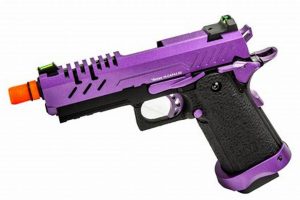
![Airsoft Gun Checklist: What You Need to Buy One [Guide]](data:image/svg+xml;base64,PHN2ZyB4bWxucz0iaHR0cDovL3d3dy53My5vcmcvMjAwMC9zdmciIHdpZHRoPSI0NzQiIGhlaWdodD0iNjYiIHZpZXdCb3g9IjAgMCA0NzQgNjYiPjxyZWN0IHdpZHRoPSIxMDAlIiBoZWlnaHQ9IjEwMCUiIHN0eWxlPSJmaWxsOiNjZmQ0ZGI7ZmlsbC1vcGFjaXR5OiAwLjE7Ii8+PC9zdmc+ "Airsoft Gun Checklist: What You Need to Buy One [Guide] Ultimate Airsoft Guide for Beginners, Tactics & Gear Reviews")
Purchasing an airsoft replica necessitates understanding the prerequisites for a successful and responsible transaction. These involve both tangible items and requisite knowledge pertaining to legal compliance and safety protocols. Factors influencing procurement range from age restrictions to the necessary protective gear required for safe usage.
Adherence to these stipulations is paramount for several reasons. Compliance with local and federal regulations mitigates potential legal repercussions. Moreover, employing appropriate safety equipment significantly reduces the risk of injury during airsoft activities. Understanding the operational mechanisms and safe handling procedures promotes responsible gun ownership within the airsoft community. This knowledge contributes to a positive and safe environment for all participants.
Therefore, prospective buyers should familiarize themselves with the specific requirements and consider the various factors before acquiring an airsoft replica. This includes age verification, understanding legal restrictions, budgeting for necessary equipment, and researching reputable retailers. The following sections will detail the essential components for a well-informed purchase.
Essential Considerations Before Airsoft Replica Acquisition
Prior to finalizing the purchase of an airsoft gun, several crucial aspects warrant careful examination. A thorough assessment of these factors ensures a responsible and informed decision, minimizing potential complications and maximizing the long-term enjoyment of the sport.
Tip 1: Verify Local Legal Requirements: Regulations governing airsoft devices vary significantly by jurisdiction. Confirm the specific laws in your locality regarding minimum age, permissible usage areas, and any licensing or registration requirements. Failure to comply may result in legal penalties.
Tip 2: Establish a Realistic Budget: Account for more than just the initial cost of the gun. A complete budget should incorporate expenses for protective gear (eye protection, face mask), ammunition (BBs), batteries (if applicable), maintenance supplies, and potentially upgraded internal components.
Tip 3: Prioritize Adequate Eye Protection: The selection of ANSI Z87.1 rated eye protection is non-negotiable. Ensure the goggles or mask fit securely and provide a full field of vision. This is the single most important piece of safety equipment.
Tip 4: Research Reputable Retailers: Opt for established airsoft retailers known for their customer service, product knowledge, and warranty support. Avoid purchasing from unverified sources that may offer counterfeit or substandard products.
Tip 5: Understand the Different Airsoft Gun Types: Airsoft guns operate using various mechanisms (AEG, gas, spring). Research the pros and cons of each type to determine which best suits your playing style, budget, and maintenance capabilities.
Tip 6: Consider the Gun’s Intended Usage: Is the airsoft gun intended for outdoor skirmishes, indoor CQB environments, or target practice? The optimal gun type and specifications will differ based on its primary application.
Tip 7: Familiarize Yourself with Airsoft Safety Rules: Adherence to established safety protocols is essential for responsible participation in airsoft. Learn and consistently apply these rules to prevent accidents and injuries.
Prior preparation and meticulous planning are the cornerstones of a satisfactory acquisition. By addressing these considerations upfront, prospective buyers can navigate the process with confidence and ensure a safe and enjoyable experience.
With these considerations in mind, the next step involves exploring the common types of airsoft guns and their suitability for different applications. This will further refine the selection process and assist in making an informed purchase decision.
1. Age verification

Age verification constitutes a crucial step in the process of purchasing an airsoft gun. This requirement stems from legal restrictions placed on the ownership and use of airsoft replicas in many jurisdictions. The underlying rationale is to prevent minors from accessing potentially hazardous items and to promote responsible handling of airsoft guns. Failure to comply with age verification laws can result in legal penalties for both the buyer and the seller. The act of ensuring the buyer meets the minimum age is an integral element of responsible sales practices within the airsoft industry. For instance, retailers commonly request a government-issued photo identification to confirm the age of the purchaser before completing the transaction.
The effectiveness of age verification measures directly impacts the safety and legality of airsoft activities. If minors gain access to airsoft guns without proper training or supervision, the risk of misuse and accidents increases significantly. Conversely, robust age verification protocols reduce the likelihood of underage individuals acquiring these items, contributing to a safer environment for all participants. Many online airsoft retailers employ third-party age verification services to confirm the buyer’s age before shipping the product. This practice helps ensure compliance with relevant regulations and mitigates the risk of selling airsoft guns to underage individuals.
In summary, age verification is not merely a procedural formality but a fundamental aspect of responsible airsoft gun ownership and sales. It serves as a vital safeguard against misuse, ensuring that airsoft replicas are handled by individuals who are legally permitted to do so. The consistent application of age verification protocols across the airsoft industry is essential for maintaining the sport’s integrity and promoting a culture of safety and responsibility. The absence of such measures can lead to legal repercussions and increase the potential for accidents and injuries, highlighting the importance of adhering to age verification requirements.
2. Eye Protection

Eye protection is an indispensable component when considering what is needed to procure an airsoft gun. Its role extends beyond a mere accessory; it constitutes a critical safety measure against potential injuries inherent in airsoft activities. The following points delineate key aspects of eye protection within the context of airsoft gun ownership.
- ANSI Z87.1 Rating
The American National Standards Institute (ANSI) Z87.1 standard signifies that the eye protection has undergone rigorous testing to withstand high-impact projectiles. Airsoft BBs, propelled at significant velocities, can cause severe eye damage. Eye protection lacking this rating offers inadequate safeguarding and should be rejected. A practical example is the use of safety glasses with Z87.1 rating in construction sites to protect workers from flying debris. The implication for airsoft is identical: the protection must reliably withstand the force of an airsoft BB.
- Full Seal Design
A full seal design ensures complete enclosure of the eye socket, preventing BBs from entering through gaps. Partial coverage leaves the eyes vulnerable to ricochets and indirect impacts. Military-grade goggles often employ a full-seal design for comprehensive protection in combat scenarios. Similarly, airsoft eye protection must eliminate any possible entry points for projectiles to ensure complete safety.
- Fog Resistance
Fogging can significantly impair vision during gameplay, increasing the risk of accidents and hindering performance. Eye protection equipped with anti-fog coatings or ventilation systems maintains clear visibility, enabling the user to react effectively. Imagine driving a car in heavy fog; impaired visibility drastically increases the risk of accidents. The same principle applies in airsoft, where clear vision is essential for safe and effective participation.
- Proper Fit and Comfort
Eye protection must fit securely and comfortably to ensure consistent use. Ill-fitting goggles can slide off during play, exposing the eyes to danger. Similarly, uncomfortable eye protection may lead the user to remove it temporarily, creating a window of vulnerability. Like a well-fitted helmet in sports, eye protection must be comfortable enough to be worn consistently throughout the activity without causing distraction or discomfort.
The preceding facets underscore the crucial connection between eye protection and the requirements for acquiring an airsoft gun. It is not simply an optional accessory, but an integral safety component. Neglecting this aspect can result in severe and irreversible eye injuries. Therefore, prioritizing ANSI Z87.1 rated, full-seal, fog-resistant, and properly fitted eye protection is paramount for responsible airsoft gun ownership and safe participation in airsoft activities.
3. Local Laws

The relationship between local laws and the prerequisites for acquiring an airsoft gun is a critical intersection. Compliance with jurisdictional regulations is not optional but a mandatory aspect of responsible ownership. These laws dictate permissible usage, storage, transportation, and even the very legality of possessing such devices.
- Age Restrictions
Many municipalities establish minimum age requirements for purchasing or possessing airsoft guns. These restrictions are designed to prevent misuse by minors and ensure responsible handling. For example, some cities might mandate that individuals be 18 years or older to buy an airsoft replica, while others might permit ownership at a younger age with parental supervision. Failure to adhere to these age-related statutes can result in fines, confiscation of the airsoft gun, or even legal prosecution. Knowing the specific age restrictions in a given location is, therefore, a fundamental aspect of legal acquisition.
- Permissible Usage Areas
Local ordinances often regulate where airsoft guns can be discharged or used. Public parks, residential neighborhoods, and school zones are frequently designated as prohibited areas. The intent is to safeguard public safety and prevent disturbances. Discharging an airsoft gun in a restricted zone can lead to citations, warnings, or more severe legal consequences. For example, firing an airsoft gun within city limits might violate local noise ordinances or be construed as brandishing a weapon, leading to potential arrest. Therefore, understanding the designated areas where airsoft activities are permitted is a non-negotiable element of responsible airsoft gun ownership.
- Transportation and Storage Regulations
Certain locales impose requirements on how airsoft guns must be transported and stored. These regulations typically aim to prevent accidental discharge or theft. For instance, a jurisdiction might require airsoft guns to be transported in locked cases and stored unloaded, separate from ammunition. Violating these regulations can result in fines or confiscation of the airsoft gun. Imagine transporting an airsoft rifle openly in a car; this might be perceived as a threat, triggering a police response and potential legal repercussions. Consequently, awareness of transportation and storage mandates is crucial for avoiding legal entanglements.
- Appearance and Imitation Firearms Laws
Some jurisdictions have laws addressing the appearance of airsoft guns, particularly concerning their resemblance to real firearms. These laws often mandate the use of orange tips or other markings to distinguish airsoft replicas from genuine firearms. The purpose is to minimize confusion and prevent misidentification by law enforcement or the public. Failure to comply with these regulations can lead to confiscation of the airsoft gun and potential charges related to imitation firearms. For example, possessing an airsoft gun without the required orange tip in a jurisdiction with such a law could result in legal penalties. Therefore, understanding and adhering to appearance-related regulations is a vital component of lawful airsoft gun ownership.
In summation, local laws exert a significant influence on the “what do you need to buy an airsoft gun” equation. These regulations encompass a range of factors, including age restrictions, permissible usage areas, transportation and storage guidelines, and appearance standards. By diligently researching and adhering to these local laws, prospective buyers can ensure compliance, avoid legal issues, and contribute to a responsible airsoft community.
4. Budget Allocation

Budget allocation, within the framework of “what do you need to buy an airsoft gun,” represents a crucial element that extends beyond the mere cost of the replica itself. It necessitates a comprehensive financial plan encompassing various associated expenses to ensure safe and responsible participation in the sport. Proper budget allocation enables informed decision-making and prevents unforeseen financial burdens.
- Airsoft Gun Cost
The initial cost of the airsoft gun constitutes a significant portion of the overall budget. Prices vary substantially depending on the type of replica, its manufacturer, materials, and internal mechanisms. For instance, a basic spring-powered pistol may cost significantly less than an advanced electric rifle (AEG) with upgraded components. Prior research and comparison shopping are essential to identify a suitable airsoft gun that aligns with budgetary constraints while meeting performance expectations. This component also includes potential repair and maintenance costs down the line; cheaper models might require more frequent repairs, offsetting their initial affordability.
- Protective Gear Expenses
Protective gear is an indispensable part of airsoft, and the associated costs should be factored into the budget. This includes, but is not limited to, ANSI Z87.1 rated eye protection, a full-face mask, and potentially tactical vests or protective clothing. Compromising on the quality of protective gear to save money is ill-advised, as it directly impacts personal safety. A high-quality full-face mask, for example, offers superior protection against BB impacts compared to a cheaper alternative, potentially preventing serious injuries. The expense allocated to protective gear should reflect its importance as a fundamental safety requirement.
- Ammunition and Consumables
Airsoft guns require ammunition, typically in the form of plastic BBs. The cost of BBs can accumulate rapidly, particularly for individuals who engage in frequent skirmishes or practice sessions. Additionally, gas-powered airsoft guns require gas canisters, adding to the ongoing expenses. Therefore, it is crucial to estimate the quantity of ammunition and consumables needed over a given period and incorporate this cost into the budget. Bulk purchasing of BBs can often result in cost savings, but it’s essential to consider storage space and shelf life.
- Maintenance and Upgrades
Airsoft guns, like any mechanical device, require periodic maintenance to ensure optimal performance and longevity. This may involve cleaning, lubrication, and replacement of worn parts. Additionally, some users opt to upgrade internal components to enhance performance, accuracy, or reliability. Allocating a portion of the budget for maintenance and potential upgrades is prudent. Regular maintenance prevents minor issues from escalating into major repairs, while strategic upgrades can improve the overall airsoft experience. This could include items like new buckings, inner barrels, mosfets, etc.
In summary, the connection between budget allocation and “what do you need to buy an airsoft gun” extends far beyond the initial purchase price. It encompasses protective gear, ammunition, consumables, and ongoing maintenance costs. A well-structured budget ensures that all essential requirements are met without compromising safety or financial stability, ultimately contributing to a more responsible and enjoyable airsoft experience.
5. Safe Field

The concept of a “safe field” is inextricably linked to the prerequisites for acquiring an airsoft gun. A designated safe field is not merely a location for gameplay but a carefully considered environment designed to minimize risks and ensure the well-being of participants. The establishment of a safe field is a fundamental responsibility that complements the purchase and ownership of any airsoft replica.
- Defined Boundaries and Perimeter Control
The establishment of clear boundaries is paramount for a safe field. These boundaries delineate the designated area for airsoft activities, preventing errant projectiles from leaving the field and potentially causing harm to individuals or property outside its perimeter. Perimeter control measures, such as netting, fencing, or natural barriers, further reinforce the boundaries, mitigating the risk of unauthorized entry or exit. For instance, a professionally managed airsoft field will typically utilize high-visibility netting to contain BBs and prevent unintended exposure to the surrounding environment. The absence of well-defined boundaries significantly increases the potential for accidents and legal liabilities.
- Hazard Assessment and Mitigation
A comprehensive hazard assessment is a prerequisite for establishing a safe field. This involves identifying potential risks within the designated area, such as uneven terrain, exposed roots, sharp objects, or bodies of water. Mitigation strategies, such as removing hazards, marking dangerous areas with warning signs, or implementing specific safety protocols, are crucial for minimizing the likelihood of injuries. For example, a field with a dense wooded area might require participants to wear appropriate footwear to prevent ankle injuries, and potentially include high visibility markers to denote tripping hazards. Failure to conduct a thorough hazard assessment and implement appropriate mitigation measures compromises the safety of all participants.
- Designated Safe Zones
The establishment of designated safe zones within the field is essential for providing participants with a secure area to rest, reload, adjust equipment, or address injuries. These safe zones should be clearly marked and free from active gameplay. All airsoft guns must be unloaded and have their safety mechanisms engaged within these zones. A common example is a staging area where participants can safely prepare their equipment before entering the playing field. The absence of designated safe zones elevates the risk of accidental shootings and compromises the overall safety of the airsoft environment.
- Enforcement of Safety Rules and Regulations
A safe field necessitates the strict enforcement of established safety rules and regulations. These rules typically address topics such as eye protection requirements, minimum engagement distances, permissible projectile velocities, and prohibited behaviors. Regular briefings and oversight by trained staff or marshals are crucial for ensuring compliance with these rules. Consider a scenario where a player consistently violates the minimum engagement distance rule; immediate intervention and potential removal from the field are necessary to maintain a safe environment for all participants. Lax enforcement of safety rules undermines the integrity of the safe field and increases the potential for accidents and injuries.
In conclusion, a safe field is not merely a backdrop for airsoft activities but an actively managed environment designed to prioritize the well-being of participants. Defined boundaries, hazard mitigation, designated safe zones, and enforced safety rules are integral components of a safe field, directly impacting the responsible use of any airsoft replica. Therefore, the availability of a safe field is a critical consideration in determining “what do you need to buy an airsoft gun,” emphasizing the ethical and practical responsibilities associated with airsoft ownership.
6. Ammunition/bbs
The relationship between ammunition, specifically BBs, and the prerequisites for airsoft gun ownership is fundamental. BBs are not merely an accessory; they are the necessary projectiles that enable the functionality of an airsoft gun. Without appropriate ammunition, the airsoft gun is rendered inoperable, effectively negating its intended purpose. The selection of suitable BBs directly impacts the performance, accuracy, and safety of the airsoft gun. For instance, using BBs of incorrect weight or diameter can cause malfunctions, reduce accuracy, and potentially damage the internal mechanisms of the gun. Consider a scenario where an individual purchases a high-end airsoft rifle but then uses low-quality BBs; the rifle’s performance will be significantly diminished, undermining the investment.
The specifications of BBs also influence the operational lifespan and maintenance requirements of an airsoft gun. High-quality BBs are typically manufactured with tighter tolerances and polished surfaces, reducing friction and wear within the gun’s barrel and firing mechanism. Conversely, substandard BBs often exhibit inconsistencies in size and surface texture, leading to increased friction, jamming, and accelerated wear. The long-term cost of using inferior BBs can, therefore, exceed the savings gained from their lower initial price due to increased maintenance, repairs, and potential damage to the airsoft gun. A practical example is the frequent replacement of buckings in airsoft guns that use lower quality BBs.
In conclusion, BBs are an indispensable element of the “what do you need to buy an airsoft gun” equation. Selecting the appropriate type and quality of ammunition directly affects performance, safety, and the long-term operational costs associated with airsoft gun ownership. The implications of neglecting this aspect extend beyond mere inconvenience, potentially leading to equipment damage and compromised safety. Consequently, a thorough understanding of BB specifications and their interaction with the airsoft gun’s mechanics is crucial for responsible and informed ownership.
Frequently Asked Questions
This section addresses common inquiries concerning the prerequisites for purchasing and owning an airsoft gun. The information provided aims to clarify essential requirements and promote responsible practices.
Question 1: Is there a minimum age requirement to purchase an airsoft gun?
Age restrictions vary significantly depending on local laws. Prospective buyers must verify the specific regulations in their jurisdiction before attempting to purchase an airsoft gun. Some locales may require individuals to be 18 years or older, while others permit ownership at a younger age with parental consent.
Question 2: What type of eye protection is required for airsoft activities?
ANSI Z87.1 rated eye protection is mandatory for participation in airsoft. This standard indicates that the eye protection has been tested to withstand high-impact projectiles. Full-seal goggles or masks are recommended to provide complete protection of the eye socket.
Question 3: Are there restrictions on where airsoft guns can be used?
Local ordinances often regulate the permissible usage areas for airsoft guns. Discharging airsoft guns in public parks, residential neighborhoods, or school zones is frequently prohibited. Adherence to these regulations is crucial to avoid legal repercussions.
Question 4: What other safety equipment is recommended for airsoft?
In addition to eye protection, a full-face mask is highly recommended to protect the face from BB impacts. Tactical vests and protective clothing can provide additional protection against injuries. The specific safety equipment needed depends on the type of airsoft activities being undertaken.
Question 5: What type of ammunition is appropriate for airsoft guns?
Airsoft guns typically utilize plastic BBs as ammunition. The weight and diameter of the BBs should be compatible with the specific airsoft gun being used. High-quality BBs are recommended to minimize malfunctions and maximize accuracy. Biodegradable BBs are often preferred for outdoor use to reduce environmental impact.
Question 6: Are there regulations regarding the transportation and storage of airsoft guns?
Some jurisdictions impose requirements on how airsoft guns must be transported and stored. These regulations typically aim to prevent accidental discharge or theft. Airsoft guns may be required to be transported in locked cases and stored unloaded, separate from ammunition.
Proper planning is paramount when acquiring an airsoft gun, requiring an understanding of key regulations and a commitment to safety.
The following section will address further areas, providing information and tips for safe and responsible use.
Airsoft Gun Acquisition
The preceding exposition detailed the essential considerations for acquiring an airsoft gun. These factors encompass age verification, appropriate eye protection, adherence to local laws, budget allocation, the availability of a safe field, and the selection of suitable ammunition. Each element constitutes a critical component of responsible airsoft gun ownership, contributing to both legal compliance and personal safety.
Prospective buyers are therefore urged to meticulously address these prerequisites before initiating a purchase. Thorough research, adherence to established safety protocols, and a commitment to responsible practices are paramount. Prioritizing these considerations ensures a positive and safe experience within the airsoft community, promoting responsible participation for all.