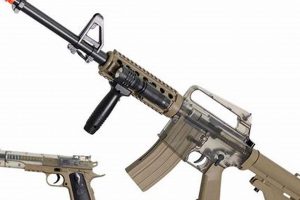
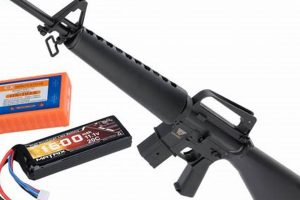
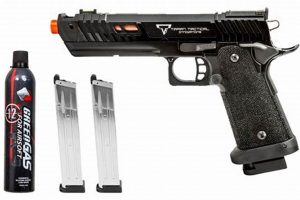
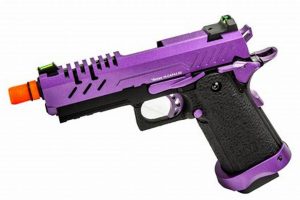
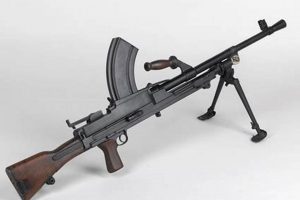
Airsoft weaponry replicates the appearance and functionality of real firearms, using compressed gas or electric power to propel plastic projectiles. These devices are categorized based on their power source, mechanism of operation, and intended role within airsoft gameplay.
The varied selection of airsoft replicas allows participants to realistically simulate military and law enforcement scenarios. The ability to choose a specific type of airsoft device can significantly impact a player’s effectiveness and tactical options on the field. Their development mirrors advancements in real firearm technology, fostering a dynamic and engaging experience.
The following sections will elaborate on the primary categories, including electric-powered (AEG), gas-powered (GBB/NBB), and spring-powered models, outlining their unique characteristics, advantages, and limitations.
Selecting Appropriate Airsoft Replicas
Choosing an airsoft device requires careful evaluation of individual needs and playing style. The following tips provide guidance for selecting a suitable option.
Tip 1: Assess Field Regulations: Prior to acquisition, research the velocity restrictions enforced at local airsoft fields. Chronograph testing is standard procedure, and exceeding the maximum velocity can result in disqualification.
Tip 2: Consider Power Source Reliability: Electric-powered models (AEGs) offer consistent performance and are suitable for sustained gameplay. Gas-powered models (GBBs) provide enhanced realism but may be susceptible to temperature fluctuations.
Tip 3: Evaluate Rate of Fire Requirements: Automatic electric guns (AEGs) deliver a high rate of fire, advantageous in close-quarters engagements. Spring-powered models require manual cocking before each shot, limiting their rate of fire.
Tip 4: Determine Range and Accuracy Needs: The internal components, such as hop-up units, affect the effective range and accuracy. Investing in higher-quality components can improve projectile trajectory and consistency.
Tip 5: Factor in Maintenance Requirements: AEGs require periodic gearbox maintenance. GBBs need lubrication and seal maintenance. Spring-powered models generally require less frequent maintenance.
Tip 6: Prioritize Ergonomics and Weight: A comfortable and manageable device will improve player maneuverability and reduce fatigue. Consider the weight distribution and grip design when selecting an airsoft replica.
Tip 7: Evaluate Upgrade Potential: Certain models offer extensive aftermarket upgrade options. If planned, confirm the availability of compatible components before purchase.
Careful consideration of these factors will aid in selecting an airsoft replica that aligns with individual requirements and enhances the overall gameplay experience.
The following section will explore the legal and safety aspects associated with the ownership and use of these devices.
1. Power Source

The power source is a fundamental determinant in categorizing different airsoft replicas. It dictates not only the mechanism by which a projectile is propelled but also influences the device’s rate of fire, consistency, and suitability for specific gameplay scenarios. The three primary power sourceselectric, gas, and springeach exhibit distinct characteristics that define specific airsoft gun classifications. For example, Automatic Electric Guns (AEGs) utilize rechargeable batteries to power an internal gearbox, allowing for fully automatic fire and consistent performance. Conversely, gas-powered models rely on compressed gases like CO2 or green gas, offering realistic blowback action but potential performance variations depending on ambient temperature.
Understanding the implications of each power source is critical for selecting an appropriate airsoft replica. Electric power provides reliability and sustained fire, making AEGs suitable for assault roles and prolonged engagements. Gas power introduces a level of realism prized by some players, exemplified by the authentic recoil felt with Gas Blowback (GBB) pistols. However, gas efficiency and pressure can be affected by temperature, potentially impacting performance. Spring power, requiring manual cocking before each shot, is often found in sniper rifles and shotguns, prioritizing power and accuracy over rate of fire. The spring mechanism’s simplicity also contributes to lower maintenance demands.
In summary, the power source significantly impacts the functionality, performance characteristics, and intended use of different airsoft replicas. The choice of electric, gas, or spring power establishes a foundational difference among airsoft gun types, influencing aspects from rate of fire and realism to maintenance needs and environmental sensitivity. A player’s preferred style of play and the conditions of the playing environment should, therefore, heavily influence the selection of an airsoft device based on its power source.
2. Mechanism of Operation

The mechanism of operation is a critical factor differentiating various types of airsoft devices. It determines the method by which the projectile is loaded, propelled, and fired, significantly influencing the user experience, rate of fire, and overall performance. Understanding these mechanisms is essential for selecting an airsoft replica suited to a specific playing style and operational environment.
- Gearbox Operation (AEG)
Automatic Electric Guns (AEGs) utilize a complex gearbox containing a series of gears, a piston, and a spring. When activated by the trigger, an electric motor rotates the gears, pulling back the piston to compress the spring. Once released, the spring propels the piston forward, forcing air through a nozzle and launching the BB. This system allows for fully automatic fire. The internal configuration of the gearbox (versions 2, 3, etc.) can influence the durability and upgrade potential of the AEG.
- Gas Blowback System (GBB)
Gas Blowback (GBB) systems employ compressed gas, typically green gas or CO2, to propel the BB and simulate the recoil of a real firearm. When the trigger is pulled, gas is released from a magazine, propelling the BB through the barrel and simultaneously pushing back the slide or bolt. This cycling action loads a new BB into the chamber. The GBB mechanism provides a high degree of realism but is affected by temperature and gas pressure.
- Non-Blowback System (NBB)
Non-Blowback (NBB) gas models also use compressed gas but lack the reciprocating slide or bolt found in GBBs. All the gas is used to propel the BB only which often results in more efficient gas usage and higher muzzle velocity than GBB counterparts. The absence of blowback reduces realism, but increases the shot count per gas charge and the operational consistency.
- Spring-Powered Action
Spring-powered airsoft replicas rely on manually compressing a spring before each shot. The user cocks the device, typically by pulling back a bolt or slide, which compresses the spring. Releasing the spring propels a piston forward, launching the BB. Spring mechanisms are commonly found in sniper rifles and shotguns, prioritizing power and accuracy over rate of fire.
These different operational methods define the key distinctions among various airsoft weapon types. The gearbox operation in AEGs prioritizes sustained automatic fire, while gas blowback emphasizes realistic recoil. The simplicity of spring-powered action ensures reliability and power in single shots. These fundamental differences in mechanism of operation directly influence the player’s experience and the device’s suitability for specific roles on the airsoft field.
3. Rate of Fire
Rate of fire (ROF), measured in rounds per minute (RPM), is a significant differentiating factor among airsoft device types. This attribute dictates the volume of projectiles delivered within a given timeframe, directly affecting a weapon’s suitability for various combat scenarios and tactical roles. The inherent design and power source of different airsoft gun types influence their achievable rate of fire. For instance, automatic electric guns (AEGs) are typically engineered for high ROF, facilitating suppressive fire and area denial tactics. Conversely, spring-powered sniper rifles, by their very nature, exhibit a significantly lower ROF, prioritizing accuracy and power over sustained projectile output.
The importance of ROF manifests in several practical applications within airsoft gameplay. High ROF AEGs are commonly favored in close-quarters combat (CQB) environments where the ability to rapidly saturate an area with BBs provides a tactical advantage. Support weapons, often modified AEGs with upgraded internal components, prioritize maximum ROF to provide covering fire for advancing teammates. In contrast, designated marksmen employing semi-automatic rifles must carefully balance accuracy with ROF, delivering controlled bursts of fire to effectively engage targets at medium ranges. Bolt-action sniper rifles sacrifice ROF entirely for enhanced precision and range, enabling the engagement of distant targets with single, well-aimed shots.
In conclusion, rate of fire is inextricably linked to the categorization and application of different airsoft device types. The choice between a high ROF AEG, a moderate ROF semi-automatic rifle, or a low ROF sniper rifle is directly dictated by the intended tactical role and playing style. Understanding the ROF characteristics of each type is essential for making informed equipment selections and maximizing effectiveness on the airsoft field. Factors such as the type of game being played, the environment (CQB vs. open field), and the player’s role within their team all influence the optimal rate of fire for the given situation.
4. Range and Accuracy

Range and accuracy represent critical performance metrics that differentiate airsoft gun types. The ability to consistently hit a target at a designated distance defines effectiveness within airsoft gameplay, influencing tactical decisions and equipment selection.
- Hop-Up Systems
Hop-up systems impart backspin to the projectile, extending its range by counteracting gravity. Adjustable hop-up units allow users to fine-tune trajectory based on BB weight and environmental conditions. Automatic electric guns (AEGs) commonly feature adjustable hop-up units, enabling players to optimize for both range and accuracy. Fixed hop-up systems, found in some lower-end models, offer less customization but maintain consistent performance within limited parameters.
- Barrel Length and Material
The length and internal diameter of the barrel influence projectile velocity and stability. Longer barrels generally increase velocity, enhancing range. Tighter bore diameters improve accuracy by minimizing BB wobble. High-quality stainless steel or brass barrels contribute to consistent performance and durability. Gas blowback pistols (GBBs) often employ shorter barrels, prioritizing maneuverability over maximum range.
- Power Source Consistency
The consistency of the power source directly affects accuracy. Electric-powered AEGs provide a relatively consistent power output, resulting in predictable shot trajectories. Gas-powered models, particularly those using CO2, can experience velocity fluctuations due to temperature variations, impacting accuracy. Spring-powered rifles offer consistent power output, provided the spring is properly maintained. Non Blowback pistols (NBB) are known for power efficiency compared to GBB’s but are less realistic due to no slide moving.
- BB Weight and Quality
BB weight affects both range and accuracy. Heavier BBs resist wind drift and maintain momentum better than lighter BBs, improving accuracy at longer ranges. High-quality BBs with consistent dimensions and smooth surfaces contribute to predictable trajectories and minimize barrel jams. The use of low-quality or improperly sized BBs can severely degrade accuracy and damage internal components.
Range and accuracy characteristics vary significantly across different airsoft gun types. Sniper rifles prioritize long-range accuracy, while CQB-oriented AEGs balance range with rate of fire. Gas blowback pistols sacrifice some range for realism and maneuverability. Careful consideration of these factors, coupled with appropriate upgrades and maintenance, optimizes performance and enhances the user’s effectiveness within airsoft scenarios.
5. Material Composition
The material composition of airsoft replicas exerts a considerable influence on their durability, weight, performance, and overall realism, consequently shaping the characteristics of distinct device types. The choice of materials affects operational longevity, resistance to environmental stressors, and the authentic feel of the replica, directly influencing its suitability for diverse airsoft applications. For instance, high-end airsoft rifles frequently incorporate metal alloys (aluminum, steel) in their construction to replicate the weight and robustness of real firearms, enhancing the immersive experience and improving resilience to damage. Conversely, entry-level models often utilize acrylonitrile butadiene styrene (ABS) plastic to reduce manufacturing costs and overall weight, making them more accessible to novice players, although sacrificing some durability.
The gearbox, a critical component in automatic electric guns (AEGs), provides a specific example of material influence. Gearboxes constructed from reinforced metal offer increased resistance to stress and wear from the rapid cycling of gears, resulting in prolonged operational life and greater suitability for high-performance upgrades. Similarly, the material used in the construction of gas blowback pistol slides affects both the recoil impulse and the long-term reliability of the mechanism. Slides made from heavier metals produce a more pronounced recoil effect, enhancing realism, while also requiring more robust frame materials to withstand the increased stress. The barrels, made from brass, aluminum or stainless steel, also affect the trajectory and accuracy of the projectile.
In conclusion, the selection of materials in airsoft replica construction is a key determinant in differentiating various device types. Material choices directly impact the balance between realism, durability, performance, and cost. A comprehensive understanding of these relationships is vital for making informed purchasing decisions and selecting equipment that aligns with individual needs and gameplay preferences. Factors such as intended usage (e.g., indoor CQB versus outdoor skirmishes), budget constraints, and desired level of realism should guide the consideration of material composition when evaluating different airsoft gun types.
6. Realistic Simulation
The pursuit of realistic simulation significantly influences the design and categorization of airsoft devices. The degree to which an airsoft replica emulates the appearance, handling, and functionality of a real firearm is a key factor driving product development and consumer choice within the airsoft market. This emphasis on realism impacts the selection of materials, operational mechanisms, and accessory compatibility, shaping the distinct characteristics of different types of airsoft guns.
- External Aesthetics and Dimensions
Manufacturers prioritize replicating the external appearance and dimensions of real firearms, including accurate markings, receiver shapes, and accessory rail systems. High-end airsoft replicas utilize detailed molds and finishing processes to achieve a near-identical visual match. This focus on external realism enhances the immersive experience for players participating in military simulations and historical reenactments. Any visible deviation from real-world counterparts decreases the appeal of the airsoft gun.
- Weight and Balance
The weight and balance of an airsoft replica contribute significantly to the overall sense of realism. Replicating the weight distribution of a real firearm enhances handling characteristics and improves training value. Airsoft manufacturers often incorporate metal components and internal weighting systems to achieve accurate weight profiles. The lack of realistic weight can negatively impact the user’s perception and detract from the simulation experience.
- Functional Operation and Controls
Realistic simulation extends to the functionality of controls and operational mechanisms. Airsoft replicas often feature functional bolt catches, magazine releases, and fire selectors that mimic the operation of real firearms. Gas blowback systems, in particular, provide a realistic cycling action and recoil impulse. The accurate replication of controls enhances the training value of airsoft for law enforcement and military personnel.
- Accessory Compatibility
Compatibility with real firearm accessories is a key aspect of realistic simulation. Airsoft replicas are often designed to accept standard Picatinny rail-mounted accessories, such as optics, lights, and foregrips. This allows players to customize their replicas with the same equipment used on real firearms. The ability to use authentic accessories further enhances the realistic simulation experience.
The demand for realistic simulation drives manufacturers to continually improve the accuracy and authenticity of airsoft replicas. This pursuit of realism shapes the design and functionality of different types of airsoft guns, catering to the diverse needs of players seeking an immersive and authentic experience. The varying degrees of emphasis on realism contribute to the broad spectrum of airsoft devices available, ranging from budget-friendly options with basic features to high-end replicas engineered for maximum authenticity.
7. Intended Game Role

The intended game role is a primary determinant in selecting an appropriate airsoft device. The diverse tactical objectives within airsoft scenarios necessitate specialized equipment, resulting in a variety of gun types tailored for specific functions. Each category of airsoft gun offers distinct advantages and limitations that render it suitable or unsuitable for particular roles. For instance, a player intending to serve as a sniper requires a platform optimized for long-range accuracy, generally a spring-powered or gas-powered rifle with a magnified optic. Conversely, an individual assuming the role of a CQB specialist necessitates a weapon system with a high rate of fire and maneuverability, typically an automatic electric gun (AEG) or a gas blowback pistol.
The correlation between game role and device type extends beyond simple weapon categories. Within each category, further refinements exist to optimize performance for specific tactical applications. A support gunner, for example, might employ an AEG modified with a high-capacity magazine and reinforced internal components to sustain prolonged suppressive fire. An assault trooper might favor a compact AEG or gas blowback rifle with enhanced maneuverability for navigating confined spaces. The selection process involves considering factors such as engagement distances, field layout, team strategy, and personal preferences, all of which contribute to the overall suitability of the selected airsoft platform. Incorrect equipment selection can hinder a player’s effectiveness and disrupt team coordination.
In summary, the intended game role directly dictates the selection criteria for airsoft weaponry. The diverse operational requirements of different roles necessitate specialized equipment, leading to a broad range of available airsoft gun types. Understanding the nuances of each role and the corresponding capabilities of different platforms is crucial for maximizing individual performance and contributing effectively to team objectives. The inherent limitations and advantages of each gun type, when aligned with the intended role, can significantly impact the outcome of an airsoft engagement.
Frequently Asked Questions
This section addresses common inquiries regarding airsoft weaponry, providing clarification on various models and their applications.
Question 1: What distinguishes automatic electric guns (AEGs) from gas blowback (GBB) pistols?
Automatic electric guns (AEGs) utilize battery-powered motors to drive internal gearboxes, enabling fully automatic firing capabilities. Gas blowback (GBB) pistols, conversely, employ compressed gas to propel projectiles and simulate recoil, enhancing realism but potentially sacrificing consistency and rate of fire.
Question 2: Are spring-powered airsoft guns suitable for competitive gameplay?
Spring-powered airsoft devices, while generally less expensive, require manual cocking before each shot, limiting their rate of fire. They are commonly used in sniper rifles where accuracy is prioritized over rapid projectile delivery but are typically not favored in fast-paced, competitive scenarios.
Question 3: How does the material composition of an airsoft gun influence its performance?
The material composition directly affects durability, weight, and realism. Metal components enhance durability and provide a more authentic feel, while plastic components reduce weight and cost. A balance must be struck based on intended use and budget.
Question 4: What role does the hop-up system play in airsoft gun performance?
The hop-up system imparts backspin to the projectile, extending its range and improving accuracy by counteracting gravity. Adjustable hop-up units allow for fine-tuning based on projectile weight and environmental conditions.
Question 5: How do field regulations impact the selection of an airsoft device?
Field regulations often impose velocity limits, typically measured in feet per second (FPS). Exceeding these limits can result in disqualification. Therefore, it is essential to select an airsoft gun that complies with the specific regulations of the intended playing field.
Question 6: What are the maintenance requirements for different airsoft gun types?
Automatic electric guns (AEGs) require periodic gearbox maintenance, including lubrication and inspection of internal components. Gas blowback (GBB) pistols need regular lubrication and seal maintenance. Spring-powered models generally require less frequent maintenance, primarily involving cleaning and occasional spring replacement.
Understanding the nuances of various airsoft models empowers informed equipment selection, enhancing gameplay experiences.
The subsequent section will address legal and safety considerations surrounding the use of airsoft devices.
Conclusion
The preceding discussion delineated the core distinctions among airsoft devices, emphasizing the impact of power source, mechanism of operation, rate of fire, range, material composition, degree of realism, and intended game role. A comprehensive understanding of these attributes is essential for selecting equipment suited to specific tactical needs and field environments. The varying characteristics of AEGs, GBBS, and spring-powered models dictate their optimal applications.
Consideration of individual requirements and adherence to safety protocols are paramount when engaging with airsoft activities. Responsible ownership and informed equipment selection contribute to a safe and engaging experience. Further research into local regulations and best practices is strongly encouraged to promote ethical gameplay.