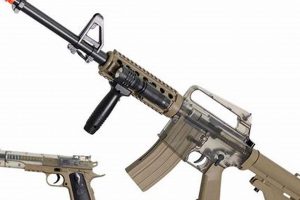
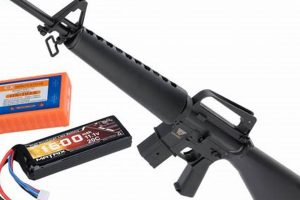
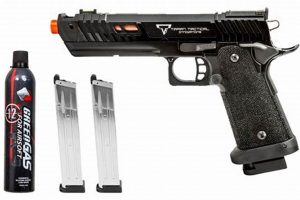
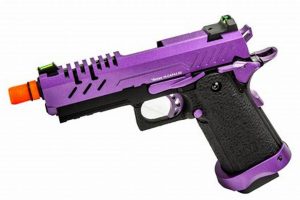
The availability of pre-owned airsoft replicas presents a secondary market where individuals can acquire equipment at a reduced cost. These items, previously owned, often provide an entry point for newcomers to the sport or a cost-effective way for experienced players to expand their arsenal. This market includes a range of models, from basic entry-level guns to more advanced, high-performance options.
This market’s significance lies in its affordability, broadening access to the airsoft hobby. It allows budget-conscious consumers to participate without the significant initial investment required for new equipment. Historically, such markets have facilitated the growth of many recreational activities by making participation more financially accessible to a wider audience. Furthermore, it promotes sustainability through the reuse of existing items, reducing demand for newly manufactured products.
The subsequent sections will delve into the considerations involved in purchasing pre-owned airsoft equipment, including factors such as condition assessment, performance expectations, and legal compliance. The goal is to provide potential buyers with the necessary information to make informed decisions in this specific market.
Guidance for Acquiring Pre-Owned Airsoft Equipment
Navigating the secondary market for airsoft devices requires careful consideration to ensure a satisfactory purchase and adherence to safety standards. The following points outline essential aspects to evaluate before committing to a transaction.
Tip 1: Assess External Condition: Conduct a thorough visual inspection of the replica. Examine the body for cracks, scratches, or any signs of significant wear and tear. These physical imperfections may indicate internal damage or neglect.
Tip 2: Verify Functionality: Request a demonstration of the device’s operational capabilities. This includes firing tests to assess accuracy, range, and consistency. Ensure all mechanisms, such as the magazine release and selector switch, function correctly.
Tip 3: Inquire About Usage History: Gather information regarding the device’s previous usage. Questions should include the frequency of use, the type of ammunition used, and whether the replica has undergone any modifications or repairs.
Tip 4: Evaluate Internal Components: If possible, inquire about the condition of internal components, such as the gearbox, hop-up unit, and motor. Damage or wear to these components can significantly impact performance and require costly repairs.
Tip 5: Confirm Local Regulations: Prior to purchase, verify local laws and regulations pertaining to airsoft devices. This includes storage requirements, transportation restrictions, and permissible usage locations. Non-compliance can result in legal penalties.
Tip 6: Scrutinize Seller Reputation: If purchasing from an individual seller, research their reputation within the airsoft community. Feedback from other buyers can provide valuable insights into the seller’s trustworthiness and the accuracy of their product descriptions.
Tip 7: Negotiate Price Based on Condition: The price should reflect the item’s condition, age, and any known issues. Comparative pricing of similar items on the secondary market can assist in determining a fair offer.
Adhering to these guidelines will mitigate potential risks and improve the likelihood of acquiring a functional and reliable pre-owned airsoft device. This approach promotes informed decision-making and responsible participation in the airsoft hobby.
The subsequent segment will focus on the legal and ethical considerations relevant to both buyers and sellers in this market.
1. Condition Assessment

Condition assessment forms a cornerstone of transactions involving pre-owned airsoft devices. Its primary effect is to determine the fair market value and operational viability of the item in question. A thorough evaluation serves as a critical safeguard against misrepresentation and potential malfunction. Without a proper assessment, buyers risk acquiring non-functional or unsafe equipment, while sellers might inadvertently undervalue a well-maintained item. As a component, this process directly relates to used airsoft guns sales as it sets the foundation for transparent transactions, fostering trust between parties.
Practical examples illustrate its importance. A rifle exhibiting external damage, such as a cracked receiver, may indicate internal stress or misalignment impacting accuracy and reliability. Conversely, a device displaying minimal wear and tear, coupled with evidence of regular maintenance (e.g., lubricated components, clean barrel), suggests a longer lifespan and potentially higher performance. Understanding these nuances empowers buyers to negotiate prices effectively and allows sellers to justify their asking price based on demonstrable condition.
In summary, condition assessment is not merely a cursory inspection; it is a critical evaluation process integral to the responsible purchase and sale of pre-owned airsoft equipment. While subjective interpretations may arise, a systematic approach, considering both external and internal factors, minimizes risks and promotes equitable transactions within the used airsoft market.
2. Functional Reliability
The functional reliability of a pre-owned airsoft replica is directly correlated with its value and desirability in the secondary market. A device exhibiting consistent and predictable performance commands a higher price point and attracts a wider range of potential buyers. Conversely, unreliable operation significantly diminishes its market appeal and necessitates substantial price reductions to compensate for the increased risk. Functional problems arising from wear and tear or improper maintenance can affect the replica’s accuracy, firing rate, and overall lifespan. Therefore, buyers prioritize devices that demonstrate dependable functionality, minimizing the likelihood of costly repairs or unsatisfactory performance.
The connection between functional reliability and marketability is evident in several practical scenarios. For instance, a pre-owned gas blowback pistol with a history of gas leaks or inconsistent cycling will likely be less attractive to buyers than a comparable model with a proven track record of reliable operation. Similarly, an electric airsoft rifle with a worn-out motor or damaged gearbox will command a lower price than a meticulously maintained example that delivers consistent velocity and accuracy. The demand for reliable equipment drives buyers to carefully assess the operational condition of pre-owned replicas, often involving test firing and component inspection.
In conclusion, functional reliability constitutes a key attribute influencing the value and demand within the pre-owned airsoft equipment market. The ability of a replica to consistently perform as intended directly affects its marketability and price. Addressing potential reliability issues through thorough inspection and transparent disclosure is essential for both buyers and sellers seeking successful transactions. Recognizing the pivotal role of functional reliability contributes to responsible participation in the secondary airsoft market, mitigating risks and ensuring a positive outcome for all parties involved.
3. Market Valuation

Market valuation, in the context of used airsoft guns for sale, encompasses the process of determining the reasonable monetary worth of a pre-owned airsoft device. This valuation is essential for establishing fair prices, facilitating equitable transactions, and informing purchasing decisions in the secondary market.
- Condition and Wear
The physical condition of the airsoft gun is a primary determinant of its value. Significant wear and tear, visible damage, or mechanical issues directly depreciate the item’s worth. Conversely, a well-maintained device in excellent working order commands a higher price. The assessment of condition involves evaluating both external aesthetics and internal functionality.
- Original Retail Price and Age
The original retail price of the airsoft gun, when new, serves as a benchmark for its potential value in the used market. Depreciation occurs over time due to technological advancements, the introduction of newer models, and general wear. Older models, while potentially retaining collectible value, generally sell for significantly less than their original cost.
- Brand and Model Reputation
The brand reputation and specific model of the airsoft gun influence its market valuation. Established brands known for quality and durability tend to retain value better than lesser-known or budget-oriented brands. Furthermore, certain models may be more desirable due to their performance characteristics, features, or scarcity, resulting in higher resale prices.
- Aftermarket Upgrades and Modifications
The presence of aftermarket upgrades and modifications can either increase or decrease the value of a used airsoft gun. High-quality upgrades from reputable manufacturers may enhance performance and increase value. However, poorly executed modifications or the use of substandard parts can negatively impact the gun’s reliability and decrease its market worth.
These facets collectively inform the market valuation of used airsoft guns. Buyers and sellers should consider these factors when establishing prices to ensure fair and mutually beneficial transactions. Furthermore, accurate valuation promotes transparency and trust within the used airsoft equipment market.
4. Legality Compliance

Legality compliance forms a critical and non-negotiable aspect of transactions involving previously owned airsoft devices. The unregulated sale or purchase of these items can result in significant legal repercussions for both parties. Airsoft devices, while designed to replicate firearms for recreational purposes, are often subject to specific legal restrictions at the local, state, and federal levels. These regulations frequently address aspects such as minimum age requirements for ownership, restrictions on public display or transportation, and mandates concerning orange tip compliance to differentiate them from actual firearms.
The implications of ignoring legality compliance can be substantial. For example, selling an airsoft gun to a minor where age restrictions are in place can lead to civil penalties or even criminal charges. Similarly, transporting an airsoft gun in a manner that violates local regulations, such as without proper casing or with the orange tip removed, can result in confiscation of the device and potential legal action. Furthermore, modifying an airsoft gun to increase its projectile velocity beyond legal limits may transform it into an illegal weapon, subjecting the owner to severe penalties. Buyers must verify that the seller possesses the legal right to transfer ownership and that the device complies with all applicable laws prior to completing the transaction.
In summation, ensuring legality compliance is paramount in the used airsoft gun market. Failure to adhere to legal requirements exposes individuals to significant risks, including fines, confiscation of property, and criminal prosecution. By understanding and respecting applicable laws, both buyers and sellers can mitigate these risks and contribute to responsible and ethical practices within the airsoft community.
5. Seller Reputation

Seller reputation plays a crucial role in the pre-owned airsoft equipment market. It acts as a critical indicator of trustworthiness and reliability, influencing buyer confidence and ultimately impacting transaction success. A seller’s history and standing within the airsoft community offer insights into the quality of their products, the accuracy of their descriptions, and their overall ethical conduct.
- Accuracy of Product Representation
A reputable seller provides accurate and detailed descriptions of the airsoft guns they offer. This includes transparent disclosure of any existing damage, modifications, or functional issues. Conversely, sellers with poor reputations may misrepresent the condition of their items, leading to buyer dissatisfaction and potential disputes. Examining feedback from previous buyers can reveal patterns of accurate or inaccurate product representation.
- Timeliness and Reliability of Shipping
A reliable seller ensures prompt and secure shipping of purchased items. This involves proper packaging to prevent damage during transit and adherence to agreed-upon shipping timelines. Sellers with negative reputations may exhibit delays in shipping, inadequate packaging, or even failure to deliver the item altogether. Tracking shipping performance and buyer feedback can help assess this facet of seller reputation.
- Responsiveness to Inquiries and Customer Service
A trustworthy seller responds promptly and professionally to buyer inquiries and provides effective customer service. This includes answering questions about the product, addressing concerns regarding the transaction, and resolving any issues that may arise after the sale. Unresponsive or unhelpful sellers can damage their reputation and deter potential buyers. Evaluating communication history and responsiveness can provide insights into a seller’s commitment to customer satisfaction.
- Adherence to Community Standards and Ethical Conduct
A reputable seller adheres to community standards and ethical practices within the airsoft community. This includes respecting intellectual property rights, avoiding deceptive sales tactics, and resolving disputes fairly and amicably. Sellers who engage in unethical behavior, such as selling stolen goods or engaging in price gouging, can quickly damage their reputation and lose the trust of potential buyers. Participating in community forums and reviewing seller feedback can help assess their adherence to ethical standards.
These facets collectively contribute to the assessment of seller reputation within the pre-owned airsoft market. A positive seller reputation fosters trust and encourages transactions, while a negative reputation can deter buyers and hinder sales. Consequently, both buyers and sellers should prioritize the establishment and maintenance of a strong reputation to ensure a fair and thriving marketplace for used airsoft equipment. Careful consideration of seller reputation before committing to a purchase can significantly mitigate risks and increase the likelihood of a satisfactory outcome.
6. Ammunition Compatibility

Ammunition compatibility represents a critical intersection within the used airsoft guns market. The functional utility and safety of an airsoft device hinge directly on utilizing ammunition appropriate for its specific design. This relationship dictates performance parameters, such as range, accuracy, and internal component longevity. Employing incorrect ammunition can induce a cascade of negative effects, ranging from minor performance degradation to catastrophic mechanical failure. Therefore, an understanding of ammunition compatibility is paramount for both buyers and sellers engaging in the trade of pre-owned airsoft equipment. For example, high-pressure gas systems require specific gas types, and using an incompatible gas can lead to explosions or device malfunction.
The impact of ammunition compatibility extends beyond mere operational functionality; it significantly influences the valuation and marketability of used airsoft guns. A device demonstrably compatible with widely available and appropriately weighted ammunition commands a premium over those with restrictive or obscure ammunition requirements. Furthermore, transparency regarding ammunition compatibility is crucial for fostering trust and mitigating potential disputes between buyers and sellers. A seller who accurately identifies the required ammunition type and discloses any known limitations enhances their reputation and reduces the likelihood of post-sale dissatisfaction. Buyers, in turn, must verify this information independently to avoid acquiring a device that is either unusable or prone to malfunction due to incompatible ammunition. This involves verifying the BB weight and gas type that the used airsoft gun can use safely.
In summation, ammunition compatibility is not a peripheral consideration but rather a central determinant of value, functionality, and safety within the used airsoft guns market. Failure to prioritize this aspect can result in operational inefficiencies, safety hazards, and diminished market value. Buyers and sellers who demonstrate a comprehensive understanding of ammunition compatibility contribute to a more transparent, equitable, and responsible marketplace for pre-owned airsoft equipment. This understanding facilitates informed decision-making and fosters a greater appreciation for the technical nuances inherent in airsoft technology. Understanding the type of magazine that fits the gun is important, as well, for ammunition compatibility.
7. Modification History
The modification history of an airsoft gun significantly impacts its valuation and desirability in the secondary market. Modifications can range from cosmetic changes to performance-enhancing upgrades, each altering the device’s original specifications and potentially affecting its reliability and safety. The degree and nature of these alterations directly influence the price point and the target audience for a used airsoft gun. Documented modifications, performed by qualified technicians using reputable components, generally enhance value, signaling improved performance or customization to specific playing styles. Conversely, undocumented or poorly executed modifications can severely depreciate value, raising concerns about the device’s overall integrity and potential for malfunction. An example is the installation of a high-torque motor, which, if not properly installed or paired with appropriate gear ratios, can lead to gearbox failure.
Transparency regarding modification history is paramount in establishing trust between buyers and sellers. Sellers who provide a detailed account of all modifications, including the parts used, the technicians involved, and the purpose of each alteration, build confidence in the device’s condition and performance. This information allows potential buyers to assess the quality of the modifications and determine whether they align with their specific needs and preferences. For instance, a prospective buyer interested in a high-speed setup would be more inclined to purchase a gun with a documented history of upgrades designed to increase the rate of fire, such as a lightweight piston and high-speed gears. However, a lack of documentation or evidence of substandard work can raise red flags, leading buyers to question the device’s reliability and potentially negotiate a lower price or avoid the purchase altogether. A modification history would mention if the used airsoft gun for sell needs to upgrade or repair any damage modification.
In summary, modification history serves as a critical piece of information in the used airsoft gun market, influencing valuation, buyer confidence, and overall transaction success. Honest and transparent disclosure of all modifications, accompanied by relevant documentation, fosters trust and enables informed decision-making. Understanding the potential benefits and risks associated with modifications empowers buyers to assess the true value of used airsoft guns and make purchasing decisions that align with their specific needs and expectations. However, the absence of information may lead to distrust in used airsoft guns for sell.
Frequently Asked Questions
The following addresses frequently encountered inquiries regarding the acquisition of pre-owned airsoft equipment. These answers aim to provide clarity and inform decision-making in this market.
Question 1: What factors influence the valuation of pre-owned airsoft devices?
The valuation of used airsoft guns is contingent upon several elements, including the device’s physical condition, age, brand reputation, original retail price, and any modifications performed. Significant wear and tear or functional impairments depreciate value, while well-maintained items from reputable manufacturers command higher prices. The presence of documented, high-quality upgrades may also positively influence valuation.
Question 2: How can one assess the functional reliability of a used airsoft gun prior to purchase?
Assessing functional reliability necessitates a thorough inspection and, if possible, a live-fire demonstration. Examine the device for signs of damage or wear, verify the proper operation of all mechanisms, and assess the consistency of its firing performance. Inquiries regarding the device’s maintenance history and usage patterns can also provide valuable insights.
Question 3: What legal considerations pertain to the sale and purchase of pre-owned airsoft equipment?
Legal considerations vary depending on the jurisdiction, but generally encompass minimum age requirements for ownership, restrictions on public display or transportation, and regulations concerning orange tip compliance. It is imperative to verify local laws and ensure adherence to all applicable regulations prior to engaging in any transaction.
Question 4: How important is the seller’s reputation in the pre-owned airsoft market?
Seller reputation serves as a critical indicator of trustworthiness and reliability. Feedback from previous buyers can provide valuable insights into the seller’s accuracy in product representation, timeliness of shipping, responsiveness to inquiries, and overall ethical conduct. Prioritizing transactions with reputable sellers mitigates the risk of encountering misrepresentation or fraudulent practices.
Question 5: What potential risks arise from using incompatible ammunition in an airsoft device?
Using incompatible ammunition can lead to a range of adverse consequences, including performance degradation, internal component damage, and potential safety hazards. It is essential to verify the recommended ammunition type and weight for a given airsoft gun and adhere to these specifications to ensure safe and reliable operation.
Question 6: How does the modification history affect the value and desirability of a used airsoft gun?
The modification history can significantly influence the value and desirability of a used airsoft gun. Documented modifications performed by qualified technicians using reputable components generally enhance value, while undocumented or poorly executed modifications can depreciate value and raise concerns about the device’s overall integrity. Transparency regarding modification history is crucial for establishing trust between buyers and sellers.
These FAQs highlight key aspects of engaging with the market for pre-owned airsoft guns. Buyers and sellers should approach these transactions with due diligence and a thorough understanding of relevant considerations to ensure a positive and responsible experience.
The subsequent section will offer a summary of the core tenets discussed throughout this discourse.
Conclusion
The market for used airsoft guns for sell presents a complex landscape characterized by a confluence of factors influencing valuation, legality, and overall suitability for both buyers and sellers. Careful assessment of condition, functional reliability, and modification history, coupled with a thorough understanding of applicable legal regulations, constitutes responsible engagement in this secondary market. The establishment and maintenance of trust, facilitated by transparent communication and a commitment to ethical conduct, further contribute to a positive trading environment.
Prospective participants are encouraged to exercise due diligence and approach transactions with informed awareness. The long-term viability and integrity of this market segment rely on the commitment of all stakeholders to uphold ethical standards and prioritize safety and regulatory compliance. The ongoing scrutiny of market practices and the continuous dissemination of relevant information are crucial for fostering a responsible and sustainable ecosystem for used airsoft equipment.