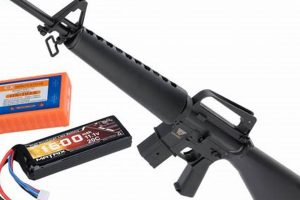
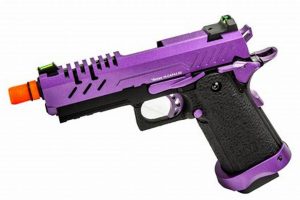
The act of using non-lethal projectile weapons to strike individuals raises significant concerns regarding safety, legality, and ethical considerations. Such actions, typically involving airsoft replicas, can result in physical harm, ranging from minor bruising to more severe injuries depending on the velocity and proximity of the impact, as well as the presence of protective gear. For example, direct impact to the eyes without proper eye protection can lead to serious ocular damage.
The potential for misinterpretation and escalation is considerable. What might be perceived as harmless play by one participant can be construed as assault by another. Historically, instances involving misuse of replica firearms have prompted heightened security measures and stricter regulations surrounding their sale and use. Moreover, the normalization of simulated violence can contribute to desensitization and a blurring of lines between simulated and real-world aggression.
The following sections will delve into the legal ramifications, safety protocols, and potential consequences associated with the aforementioned activity. Ethical considerations surrounding its practice will also be examined, alongside alternative activities that offer similar engagement without the inherent risks and potential for harm.
Important Considerations
Engaging in activities that involve launching projectiles at individuals necessitates a comprehensive understanding of potential risks and appropriate safety measures. The following points address critical aspects of this activity.
Tip 1: Prioritize Eye Protection: Eye protection designed to withstand the impact of airsoft projectiles is non-negotiable. Full-seal goggles that meet ANSI Z87.1 standards are essential to prevent serious eye injuries.
Tip 2: Adhere to Velocity Limits: Understand and strictly adhere to established velocity limits for airsoft guns in the relevant playing environment. Chronographing weapons before use is critical to ensure compliance and prevent excessive force.
Tip 3: Implement Minimum Engagement Distances: Establishing and enforcing minimum engagement distances reduces the risk of injury from close-range impacts. A minimum distance of 10-15 feet is a common guideline.
Tip 4: Mandate Protective Gear: Beyond eye protection, consider requiring additional protective gear such as face masks, vests, and gloves, particularly for vulnerable areas. This minimizes potential bruising and discomfort.
Tip 5: Emphasize Respect and Consent: Clear communication and explicit consent are paramount. Participants should always be aware of the activity and agree to engage. Cease all activity immediately if any participant expresses discomfort or withdraws consent.
Tip 6: Maintain Awareness of Legal Regulations: Familiarize yourself with local laws and regulations regarding the use of airsoft guns. These may vary significantly depending on jurisdiction. Some areas may restrict the use of these devices to specific locations or require permits.
Tip 7: Discourage Headshots: Intentionally targeting the head should be strictly prohibited. The head is a particularly vulnerable area, and headshots can result in more severe injuries. Focus on targeting the torso and extremities.
Adhering to these considerations promotes a safer and more responsible environment for all participants, reducing the likelihood of injury and fostering respect. Failure to do so can lead to significant consequences, including physical harm and legal repercussions.
The subsequent section will examine the legal and ethical implications in greater detail.
1. Legality

The legality surrounding the discharge of airsoft projectiles toward individuals is complex and jurisdiction-dependent. The critical factor is the intent and outcome of the action. While participation in a sanctioned airsoft event, with established rules and safety protocols, may fall within legal boundaries, the unauthorized targeting of individuals outside such contexts can constitute assault or battery, potentially leading to criminal charges. The severity of the charges, and any subsequent penalties, often depends on the extent of any resulting injury and the applicable local laws. For instance, in some jurisdictions, pointing an airsoft replica at an individual could be construed as brandishing a weapon, incurring significant legal repercussions, regardless of whether a projectile is discharged.
The crucial distinction lies in demonstrating a clear absence of malicious intent and adherence to all relevant regulations. Many municipalities have ordinances that specifically address the use of airsoft guns, restricting their use to designated areas or requiring parental supervision for minors. A failure to comply with these regulations can result in fines, confiscation of the airsoft gun, or even more severe penalties. Moreover, property owners often have the right to prohibit the use of airsoft guns on their premises, and disregarding such prohibitions could lead to charges of trespassing.
Ultimately, understanding and respecting the specific legal landscape pertaining to airsoft guns in the relevant location is paramount. Engaging in the activity without proper knowledge of these laws can have severe consequences, highlighting the importance of due diligence and responsible conduct. Legal interpretation and enforcement are subject to change; therefore, seeking guidance from local law enforcement or legal counsel may be prudent, particularly when uncertainty exists regarding the legality of specific activities involving airsoft devices.
2. Liability

The intersection of liability and the discharge of airsoft projectiles at individuals presents considerable legal and financial exposures. In scenarios where harm results from airsoft gun use, the individual discharging the projectile, and potentially the event organizers or property owners, can be held liable for damages. This liability extends to medical expenses, lost wages, and pain and suffering incurred by the injured party. Establishing negligence, which generally involves demonstrating a failure to exercise reasonable care, is often a key element in pursuing a successful liability claim.
Consider a scenario where an individual participating in an unsanctioned airsoft game discharges a projectile that strikes a bystander, causing a severe eye injury. In this instance, the individual discharging the projectile could be held liable for the bystander’s medical expenses, lost income, and any long-term vision impairment. Moreover, if the airsoft game occurred on private property without the owner’s consent, the property owner might also face liability for failing to prevent the hazardous activity. Insurance policies, such as homeowners insurance or event liability insurance, may provide coverage for such incidents, but policy limitations and exclusions must be carefully reviewed.
Understanding the implications of liability is crucial for individuals and organizations involved in airsoft activities. Implementing comprehensive safety protocols, obtaining adequate insurance coverage, and adhering to all applicable laws and regulations are essential steps in mitigating the risk of liability. Failure to adequately address these considerations can lead to significant financial burdens and legal ramifications. Therefore, engaging in such activities necessitates a thorough understanding of the potential for liability and a proactive approach to risk management.
3. Safety

In activities involving airsoft devices and projectile discharge, safety is of paramount concern, dictating the potential for injury and influencing the ethical dimensions of participation. Rigorous adherence to established safety protocols is crucial in mitigating risks associated with impact forces, potential for misidentification, and the escalation of simulated scenarios.
- Protective Gear Standards
The use of appropriate protective gear, specifically adhering to ANSI Z87.1 standards for eye protection, is essential. Standardized protection minimizes the risk of projectile-related ocular injuries. The absence of such gear elevates the likelihood of significant harm, emphasizing its importance as a baseline safety measure.
- Velocity Limits and Calibration
Velocity limits, typically measured in feet per second (FPS), are implemented to regulate projectile impact force. Chronographing airsoft devices before use ensures compliance with these limits. Exceeding established velocity limits increases the potential for injuries and compromises the safety of participants.
- Minimum Engagement Distances
Establishing minimum engagement distances is necessary to reduce the risk of close-range impacts. These distances provide a buffer, lessening the force of projectile impact and mitigating potential injuries. Failure to adhere to these distances increases the risk of localized trauma and discomfort.
- Designated Safe Zones
Designated safe zones, where airsoft devices are prohibited from firing, are crucial for non-combat situations and equipment adjustments. These zones provide a space for participants to remove protective gear temporarily and engage in communication without the potential for accidental discharge or injury.
The interconnectedness of these safety facets underscores their significance in managing the potential risks associated with the activity. A deficiency in any one area can elevate the overall risk profile and increase the potential for adverse outcomes. Therefore, a holistic approach to safety, incorporating stringent adherence to all established protocols, is essential in minimizing the likelihood of injuries and promoting a responsible environment. Strict enforcement can help prevent shooting people with airsoft guns.
4. Consent
Consent forms the bedrock of ethical and legal considerations when engaging in activities involving simulated combat, specifically the discharge of airsoft projectiles toward individuals. Voluntary participation, characterized by informed agreement and the explicit willingness to be subjected to potential projectile impacts, distinguishes legitimate airsoft activities from acts of aggression. Without unambiguous consent, the act of discharging an airsoft projectile at a person transforms from a recreational pursuit into a potentially unlawful action, carrying the risk of civil or criminal charges. The absence of consent voids any pretense of sport or recreation, rendering the action akin to an unprovoked assault.
Practical application of consent manifests through clear pre-engagement communication, often involving the signing of waivers acknowledging the inherent risks and confirming voluntary participation. Participants must possess the capacity to understand the implications of their consent, implying that minors or individuals with cognitive impairments require parental or guardian authorization. Furthermore, consent must be ongoing and freely revocable, meaning individuals retain the right to withdraw from the activity at any time, ceasing projectile discharge upon their request. Failure to honor this right immediately invalidates any prior consent, subjecting the perpetrator to potential legal repercussions.
A lack of explicit consent regarding airsoft activities carries substantial consequences, potentially leading to charges of assault, battery, or even reckless endangerment, depending on the severity of the resulting injuries and applicable jurisdictional laws. Civil lawsuits seeking compensation for damages, including medical expenses and pain and suffering, may also arise. Maintaining clear records of consent, enforcing strict rules against unauthorized targeting, and providing avenues for individuals to easily withdraw participation are crucial safeguards. Understanding and respecting the principles of consent are not merely legal obligations but fundamental ethical responsibilities in this context.
5. Consequences
The ramifications stemming from the act of discharging airsoft projectiles towards individuals extend beyond immediate physical effects, encompassing legal, social, and psychological dimensions. These consequences vary depending on the intent behind the act, the resulting injuries, and the applicable legal and social norms. Understanding these potential outcomes is paramount for promoting responsible conduct.
- Legal Ramifications
Legal consequences can range from misdemeanor charges, such as assault and battery, to more severe felony charges, particularly if significant injury occurs or if the airsoft device is used in a manner that mimics the commission of a more serious crime. Legal recourse may also involve civil lawsuits seeking compensation for medical expenses, pain, suffering, and potential long-term disability. The severity of legal penalties often hinges on the intent of the perpetrator and the specific circumstances of the incident.
- Social Stigma and Reputational Damage
Engaging in such actions can lead to significant social stigma and reputational damage. Being perceived as someone who disregards safety and demonstrates a propensity for violence can negatively impact personal and professional relationships. Public perception is often unforgiving, and the act can be readily disseminated through social media, resulting in lasting damage to one’s reputation.
- Psychological Impact on Victims
The psychological impact on victims can be profound, ranging from fear and anxiety to post-traumatic stress. Even if physical injuries are minor, the feeling of being targeted and potentially vulnerable can have long-lasting effects on an individual’s sense of security and well-being. The incident can also trigger or exacerbate pre-existing psychological conditions.
- Impact on Airsoft Community
Irresponsible actions involving airsoft devices can negatively impact the airsoft community as a whole. Increased scrutiny from law enforcement and regulatory bodies can lead to stricter regulations, limitations on where airsoft activities can be conducted, and a general erosion of public support for the sport. The actions of a few can have far-reaching consequences for the entire community.
These multifaceted consequences underscore the critical need for responsible conduct and adherence to safety protocols when involved with airsoft activities. Failing to consider these ramifications can lead to significant and long-lasting negative outcomes for both the perpetrator and the victim, as well as the broader community. Therefore, responsible conduct, characterized by respect, adherence to safety regulations, and clear consent, is crucial for promoting a safe and ethical environment.
6. Perception
Public perception significantly influences the societal response to activities involving the discharge of airsoft projectiles towards individuals. Misconceptions and a lack of understanding surrounding airsoft devices can lead to misinterpretations of intent and potential danger, shaping attitudes and informing policy decisions.
- Misidentification with Real Firearms
The realistic appearance of many airsoft replicas can lead to confusion with actual firearms, particularly in situations where the device is openly displayed or used in public spaces. This misidentification can trigger fear, alarm, and even aggressive responses from law enforcement or concerned citizens. The potential for escalation is significant, as authorities may react under the assumption that a lethal weapon is present, leading to potentially dangerous confrontations.
- Exaggerated Risk Assessment
Media coverage and anecdotal accounts of injuries resulting from airsoft activities can contribute to an exaggerated perception of risk. While injuries are possible, they are often minor and preventable with appropriate safety measures. However, a focus on negative outcomes can overshadow the responsible use of airsoft devices within organized events with established safety protocols. This skewed risk assessment can lead to calls for stricter regulations and limitations on airsoft activities.
- Moral Panic and Sensationalism
Incidents involving the misuse of airsoft devices can be exploited to fuel moral panic and sensationalism, particularly in the absence of comprehensive information. This can lead to the demonization of airsoft activities and the individuals who participate in them. Sensationalized reporting often focuses on the potential for violence and the perceived desensitization of participants, rather than on the responsible and regulated aspects of the sport.
- Influence on Policy and Regulation
Public perception directly influences policy and regulatory decisions related to airsoft devices. Negative perceptions can lead to stricter laws governing their sale, possession, and use, potentially impacting the ability of responsible airsoft enthusiasts to engage in their chosen activity. Conversely, a more informed and nuanced understanding of airsoft can lead to more reasonable and balanced regulations that protect public safety without unduly restricting legitimate activities.
The interplay between perception and the activity of discharging airsoft projectiles at individuals underscores the importance of promoting accurate information and fostering a responsible image of the airsoft community. Addressing misconceptions, emphasizing safety protocols, and promoting responsible conduct can help shape public attitudes and inform policy decisions in a more balanced and informed manner. The activity can change into shooting people with airsoft guns, thus public perception must be put in a priority.
Frequently Asked Questions
This section addresses common inquiries and clarifies misconceptions pertaining to the discharge of airsoft projectiles towards individuals. The information presented aims to provide a balanced and informative perspective on the legal, ethical, and safety considerations involved.
Question 1: Is discharging airsoft projectiles at another person always illegal?
The legality is dependent upon jurisdiction and circumstances. Organized airsoft events, with established safety rules and explicit consent from all participants, are generally permissible. However, discharging an airsoft projectile at an individual without their consent can constitute assault or battery, leading to criminal charges.
Question 2: What level of protective gear is required to mitigate potential injuries?
Eye protection meeting ANSI Z87.1 standards is considered essential. Additional protective gear, such as face masks, vests, and gloves, can further reduce the risk of injury, particularly in vulnerable areas. The specific protective gear required may vary depending on the event or activity.
Question 3: What velocity limits are considered safe for airsoft projectiles?
Safe velocity limits vary depending on the context and the type of airsoft device. However, velocity limits are typically regulated to prevent injuries.
Question 4: What are the potential long-term psychological effects on individuals struck by airsoft projectiles?
The psychological effects can range from mild anxiety to more severe post-traumatic stress symptoms. The feeling of being targeted, even with a non-lethal projectile, can have lasting emotional impacts on the victim.
Question 5: Who is liable in the event of injury resulting from the discharge of an airsoft projectile?
Liability can extend to the individual discharging the projectile, event organizers, and property owners, depending on the circumstances. Negligence in failing to provide a safe environment or adhering to established safety protocols can be a key factor in determining liability.
Question 6: How can airsoft activities be conducted more responsibly?
Conducting airsoft activities responsibly involves obtaining explicit consent from all participants, adhering to stringent safety protocols, respecting established velocity limits and engagement distances, and promoting a culture of respect and sportsmanship. Strict enforcement of these measures is crucial for minimizing the risk of harm and ensuring ethical conduct.
The information presented here highlights the critical importance of understanding the legal, ethical, and safety considerations surrounding the discharge of airsoft projectiles toward individuals. Responsible conduct and adherence to established protocols are essential for promoting a safe and ethical environment.
The next section will explore alternative activities that offer similar engagement without the inherent risks and ethical concerns.
Conclusion
The preceding analysis has explored the multifaceted implications of shooting people with airsoft guns. Key considerations include legal ramifications encompassing assault and battery charges, ethical considerations related to consent and potential harm, and safety protocols vital for mitigating risks. Misunderstandings regarding airsoft replicas and exaggerated risk perceptions significantly influence public perception and regulatory policies. Adherence to stringent safety standards, explicit consent protocols, and responsible conduct are paramount to mitigating potential adverse outcomes and promoting ethical participation.
Moving forward, a continued emphasis on education, responsible practices, and adherence to established legal frameworks is essential. Promoting a culture of respect, sportsmanship, and accountability within the airsoft community is crucial for fostering a safe and ethical environment. This responsibility extends to individuals, event organizers, and manufacturers to ensure that these devices are used responsibly and ethically. Only through collective effort and diligence can potential harm be minimized, and the activity be conducted in a manner that respects the safety and well-being of all involved.