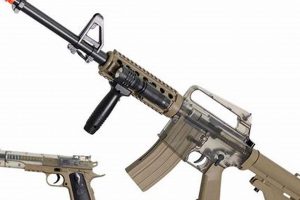
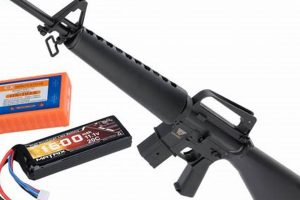
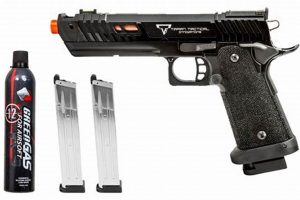
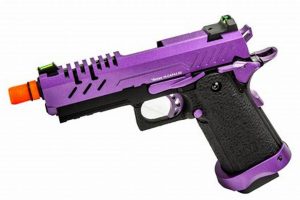
These items are pre-owned units that have undergone inspection, repair, and restoration processes to return them to a functional state. These guns may exhibit cosmetic imperfections, but they are generally offered at a lower price point compared to brand-new models. For example, a gun that was returned due to a minor mechanical issue, such as a faulty magazine release, can be repaired, tested, and then offered for sale as a more affordable alternative.
The practice of offering these guns is beneficial for several reasons. It provides an entry point for individuals new to the sport, allowing them to acquire equipment without a significant financial investment. It also reduces electronic waste by extending the lifespan of existing products. Historically, the concept of refurbishing and reselling products has been a way to make goods more accessible while promoting sustainability.
The following sections will delve into the specific aspects of buying such items, including what to look for in a reliable seller, the types of repairs commonly performed, and the factors that determine the final price. Information on performance expectations and potential risks will also be discussed.
Tips for Purchasing Pre-Owned Airsoft Equipment
Acquiring pre-owned airsoft equipment can be a cost-effective strategy, provided due diligence is exercised. Consider the following guidelines to mitigate potential risks and ensure satisfaction.
Tip 1: Inspect for Obvious Damage: Thoroughly examine the unit for cracks, dents, or signs of excessive wear. Pay close attention to high-stress areas like the receiver, barrel, and stock. For example, hairline fractures in the receiver could compromise the gun’s structural integrity and performance.
Tip 2: Verify Internal Functionality: Test all essential functions, including firing modes (safe, semi-automatic, full-automatic), magazine feeding, and hop-up adjustment. A non-functional hop-up unit, for instance, will negatively impact range and accuracy.
Tip 3: Inquire About Repair History: Obtain detailed information about any repairs or modifications performed on the unit. Understanding the nature and extent of previous repairs can provide insight into potential weaknesses or recurring issues.
Tip 4: Research the Seller’s Reputation: Purchase from reputable vendors or individuals with a proven track record of fair dealing. Review feedback and ratings to assess the seller’s reliability and responsiveness to customer concerns.
Tip 5: Compare Prices Carefully: Evaluate the price of the unit against comparable models in similar condition. Factor in potential repair costs and the availability of replacement parts when determining a fair price.
Tip 6: Consider Return Policies: Prioritize sellers who offer a reasonable return policy in case the unit is not as described or malfunctions shortly after purchase. This provides a safety net and reduces the risk of financial loss.
Tip 7: Understand Warranty Limitations: Inquire about any existing warranties, but be aware that pre-owned items typically have limited or no warranty coverage. This underscores the importance of thorough inspection and testing prior to purchase.
Adhering to these recommendations can significantly increase the likelihood of a successful purchase and ensure that the pre-owned airsoft equipment meets performance expectations. The careful selection process provides an avenue to gain access to equipment at a reduced cost.
The next section will address specific considerations for electric-powered (AEG), gas-powered (GBB), and spring-powered models.
1. Functionality Verification
Functionality verification is paramount when evaluating equipment of this type. The core principle revolves around confirming that all operational aspects of the gun meet the original manufacturer’s specifications or, at a minimum, provide a usable level of performance. This process necessitates a thorough examination of the firing mechanism, magazine feeding, safety features, and any adjustable components, such as hop-up systems. Deficiencies in any of these areas directly impact the item’s utility. As an example, a pre-owned automatic electric gun (AEG) might exhibit a malfunctioning motor or a damaged gearbox. Failure to identify these issues during pre-purchase inspection can result in significant repair costs or, in some cases, the complete unusability of the gun.
Effective functionality verification extends beyond simple testing. It incorporates a degree of critical assessment. The sound of the gearbox should be analyzed for unusual grinding or whining, which can indicate worn gears. The consistency of the firing velocity (FPS) must be measured over multiple shots to ensure the internal air seal is intact. The hop-up unit requires adjustment to observe whether it effectively imparts backspin on the BB, affecting range and accuracy. For gas blowback (GBB) pistols, verifying that the magazine seals are airtight and that the blowback action cycles smoothly are essential steps. These detailed examinations provide a comprehensive picture of the item’s internal condition and operational capability.
In summary, proper functionality verification protects buyers from acquiring unusable or unreliable equipment. It allows for informed decisions based on tangible performance data, rather than speculative assessments. Ignoring this step often leads to dissatisfaction and unnecessary expenses. It is, therefore, a non-negotiable element in the purchase process, critical for both novice and experienced users looking to acquire a functional and reliable airsoft device.
2. Cosmetic Condition

The cosmetic condition of pre-owned airsoft equipment represents an important, albeit sometimes secondary, consideration in the purchase decision. While functional performance is typically the primary focus, the external appearance impacts the overall value and user satisfaction. Scratches, blemishes, or signs of wear and tear can indicate the level of care the item received from previous owners, influencing perceptions of its reliability. For instance, a gun exhibiting extensive superficial damage might suggest a history of rough handling, even if the internal mechanisms are in good working order. This can affect the buyer’s confidence and willingness to pay a premium price. The cosmetic aspect serves as an immediate indicator of overall care, providing critical information.
The importance of cosmetic condition varies depending on the buyer’s priorities. Some individuals may prioritize affordability above all else, accepting cosmetic imperfections to secure a lower price. Others may seek equipment in near-mint condition, even if it means paying a higher price. However, it is essential to differentiate between purely cosmetic issues and damage that may indicate underlying problems. Deep scratches or cracks in the receiver, for example, could compromise the structural integrity of the gun, even if it appears to function correctly. Similarly, excessive wear on the grip or stock might indicate prolonged use and potential internal wear. Examining the overall external condition gives essential insights into how the equipment was maintained and the extent of it’s use and is also reflected to value.
In conclusion, while functional performance remains paramount, the cosmetic state of pre-owned airsoft units plays a critical role in determining value and buyer satisfaction. It provides clues to the previous care it received and potential underlying issues. Purchasers should carefully assess the cosmetic condition alongside its internal workings to reach an informed decision, balancing their budget with requirements for performance and reliability. Ignoring the cosmetic state comes with the risk of undervaluing or overvaluing pre-owned gear, leading to future expenses. Prioritizing a thorough assessment minimizes possible disadvantages.
3. Repair History

The documentation of prior maintenance and repairs is paramount when evaluating pre-owned airsoft guns. Understanding the nature and extent of previous interventions provides critical insight into the unit’s condition, potential weaknesses, and long-term reliability. The absence of such records introduces considerable risk, potentially leading to unforeseen expenses and performance issues.
- Identification of Recurring Issues
A detailed repair history reveals patterns of failure or recurring problems. For example, repeated replacements of the motor in an AEG could indicate an underlying issue with the gearbox or electrical system. Similarly, frequent valve replacements in a GBB pistol might suggest gas leakage problems due to worn seals or damaged components. Recognizing these patterns allows prospective buyers to anticipate potential maintenance requirements and negotiate a fair price.
- Assessment of Repair Quality
The quality of previous repairs significantly impacts the item’s overall condition and longevity. Repairs performed by qualified technicians using high-quality replacement parts are generally preferable to amateur repairs using substandard components. A record of professional servicing provides assurance that the repairs were conducted correctly and that the unit is likely to be more reliable. Conversely, evidence of poorly executed repairs raises concerns about the gun’s current condition and future performance.
- Verification of Component Authenticity
A repair history can assist in verifying the authenticity and originality of components. Discrepancies between the documented repairs and the actual parts installed in the gun may indicate unauthorized modifications or the use of counterfeit components. For example, a record indicating the installation of a specific brand of inner barrel, while the gun is fitted with a different brand, suggests a potential misrepresentation or a previous unreported modification. Authenticity can be verified if parts are original and not switched.
- Determination of Remaining Lifespan
The extent and type of repairs performed can provide clues about the remaining lifespan. A gun that has undergone extensive repairs may be nearing the end of its useful life, while one with minimal repairs might have significant potential remaining. This information allows buyers to make informed decisions about the long-term value and usability of the unit. However, determining these specific facts from any equipment can be challenging without the appropriate data.
In summary, scrutinizing the service and maintenance records of these guns is essential for assessing its current state, determining possible trouble spots, and projecting future reliability. A clear and comprehensive history empowers purchasers to make enlightened judgments and reduce the potential for unanticipated expenses. Absence of such documentation increases the purchase’s risk profile.
4. Seller Reputation
The reputation of the seller represents a critical factor when acquiring pre-owned airsoft guns. It directly influences the buyer’s confidence in the product’s advertised condition, the accuracy of disclosed information, and the overall transaction experience. Evaluating the seller’s standing within the airsoft community or marketplace is essential for mitigating potential risks associated with purchasing pre-owned equipment.
- Accuracy of Product Representation
A seller with a positive reputation is more likely to provide accurate descriptions of the equipment’s condition, including any cosmetic imperfections, mechanical issues, or modifications. Conversely, a seller with a poor reputation may misrepresent the gun’s condition to inflate its value or conceal defects. For instance, a reputable vendor will clearly state if an AEG has a cracked gearbox or if a GBB pistol has a leaking magazine. Accurate representation allows informed decisions.
- Transparency in Transaction Practices
Reputable sellers are transparent in their transaction practices, providing clear and concise information regarding shipping costs, return policies, and warranty coverage (if any). They are also responsive to inquiries and willing to address any concerns or issues that may arise. Conversely, unscrupulous sellers may employ deceptive tactics, such as hidden fees, restrictive return policies, or a lack of communication. Transparency builds trust and mitigates post-purchase disputes.
- Responsiveness to Customer Issues
A seller’s responsiveness to customer issues is a key indicator of their commitment to customer satisfaction. Reputable sellers are proactive in addressing problems and providing timely solutions. They may offer refunds, repairs, or replacements to resolve issues promptly and fairly. A seller with a negative reputation, however, may ignore customer complaints or offer unsatisfactory resolutions. Responsiveness fosters trust and encourages repeat business.
- Adherence to Ethical Standards
Reputable sellers adhere to ethical standards of business conduct, including honesty, integrity, and fairness. They refrain from engaging in deceptive or manipulative practices and prioritize the interests of their customers. Conversely, unethical sellers may engage in fraudulent activities, such as selling stolen or counterfeit goods or making false promises. Adherence to ethical standards builds long-term trust and enhances the seller’s reputation within the airsoft community.
These facets demonstrate the correlation between seller reputation and successful acquisition of pre-owned airsoft equipment. A careful assessment of the seller’s standing mitigates many inherent risks of buying used items. Neglecting this vital step may result in financial loss or equipment dissatisfaction.
5. Pricing Analysis

A structured price evaluation is essential in acquiring pre-owned airsoft equipment. A comprehensive understanding of pricing dynamics informs informed decisions and mitigates the risk of overpayment. Several elements impact the ultimate price, requiring careful assessment.
- Condition Adjustment
Physical state directly influences valuation. Models exhibiting minimal cosmetic damage command a higher price than units with extensive wear. Functionality impairments, such as a non-operational hop-up, necessitate significant price reductions. For example, a fully functional automatic electric gun (AEG) with minor scratches might be priced 20% lower than a new model, while one with a malfunctioning gearbox could see a 40% reduction or more.
- Market Scarcity
Rarity influences valuation. Discontinued models or limited-edition versions command premium prices due to increased demand and limited supply. Conversely, common, readily available models are subject to market pressures and lower prices. As an example, a rare Tokyo Marui AEG from the early 2000s may exceed the price of a current-production model in similar condition due to its collectibility.
- Included Accessories
Additional components impact valuation. Magazines, optics, and tactical accessories increase the unit’s overall value. The quality and brand of these accessories also factor into the price. A pre-owned gas blowback (GBB) pistol bundled with multiple magazines and a high-quality red dot sight will typically fetch a higher price than a bare unit without any extras.
- Seller Reputation Influence
Vendor standing affects valuation. Established vendors with positive reviews often command higher prices due to the increased assurance of quality and customer service. Private sellers or less reputable sources may offer lower prices, but this entails a higher risk of misrepresentation or fraudulent activity. For example, a refurbished item from a well-known retailer might be priced slightly higher than the same item from an unknown individual due to the perceived safety and warranty.
These elements, taken together, determine a justifiable price point for equipment of this type. Accurate pricing analysis protects buyers from overspending and optimizes value for money. Inattention to detail leads to increased chances of unnecessary cost. Comprehensive assessment reduces risk.
6. Warranty Status
Warranty status is a critical, often complex, consideration when evaluating refurbished airsoft guns. Unlike new items, these units rarely come with the original manufacturer’s warranty. The absence of a comprehensive warranty directly impacts the perceived value and risk associated with the purchase. Cause and effect are clear: limited or no warranty coverage necessitates more rigorous pre-purchase inspection to mitigate potential post-purchase repair costs. For instance, a refurbished AEG without a warranty places the onus on the buyer to cover expenses should the motor fail shortly after purchase, whereas a unit with even a limited warranty period provides a safety net against unforeseen mechanical issues. The significance of warranty status is that it is a critical factor in managing risk when buying previously owned equipment.
Practical implications of the warranty, or lack thereof, extend to the cost of repairs. Buyers must factor in the potential cost of repairs when calculating the total expense of the unit. In cases where the seller provides a limited warranty, its terms and conditions require meticulous scrutiny. For example, a 30-day warranty might cover internal components but exclude damage resulting from misuse or modification. Understanding these limitations is crucial for setting realistic expectations and budgeting for potential repairs. This understanding is particularly important when considering complex models, where repair work may necessitate specialized tools and expertise.
In conclusion, warranty coverage, or its absence, directly shapes the buyer’s assessment of a refurbished airsoft gun’s value and risk. The reduced warranty scope places a greater emphasis on pre-purchase inspection and careful seller evaluation. While some refurbished items may offer limited protection against defects, buyers must be prepared for potential repair expenses. Therefore, comprehending the details and limitations of any included warranty is an indispensable part of the purchasing process.
7. Component Originality
Component originality serves as a critical factor in assessing the value and performance of refurbished airsoft guns. The presence of original parts signifies that the unit adheres to the manufacturer’s intended specifications, potentially ensuring optimal functionality and reliability. Replacement with non-original, aftermarket components can introduce inconsistencies in performance, durability, and compatibility. As an example, substituting a lower-quality aftermarket motor in an automatic electric gun (AEG) may result in reduced rate of fire, decreased trigger response, or premature failure compared to the original motor designed for that specific model. Therefore, establishing component originality is essential for determining the quality and potential lifespan.
The verification of component originality requires careful inspection and, in some cases, specialized knowledge. Key areas of focus include the internal mechanisms, such as the gearbox in an AEG or the valve assembly in a gas blowback (GBB) pistol. Discrepancies in markings, materials, or construction can indicate the presence of non-original components. For example, if a refurbished GBB pistol, advertised as having original internal parts, exhibits a valve assembly with a different finish or markings than typically found on that model, it raises concerns about the authenticity of the components and the overall integrity of the refurbishment process. Also, improper component originality contributes to performance issues.
In summary, component originality significantly influences the value and performance of refurbished airsoft guns. Preserving this authenticity ensures better performance and increases value while helping to determine maintenance and repair to the owner. Careful assessment and verification of the components is critical to avoid problems and make knowledgeable purchases.
Frequently Asked Questions about Refurbished Airsoft Guns
The following questions address common concerns and misconceptions regarding these pre-owned units. Information is presented in a concise and objective manner.
Question 1: What defines an “airsoft gun” as “refurbished?”
A unit classified as such has undergone inspection, repair, and restoration processes to return it to a functional state. These guns may exhibit cosmetic imperfections, but they should operate according to the manufacturer’s original specifications, or within acceptable performance parameters.
Question 2: Are such guns reliable?
Reliability depends on the quality of the refurbishment process and the seller’s standards. Purchasing from reputable vendors who provide detailed information about repairs performed and offer a return policy is advisable. Thorough pre-purchase inspection is also essential.
Question 3: What types of repairs are commonly performed?
Common repairs include replacing worn internal components (gears, motors, pistons), fixing air leaks (seals, O-rings), and addressing cosmetic damage (scratches, dents). The specific repairs will vary depending on the unit’s condition and the cause of the initial defect.
Question 4: Do refurbished items come with a warranty?
Warranty coverage varies. Some sellers offer a limited warranty period, while others sell such guns “as is” without any warranty. The presence or absence of a warranty should be a key consideration in the purchasing decision.
Question 5: How much should one expect to save compared to buying new?
Savings vary depending on the unit’s condition, the extent of repairs performed, and the seller’s pricing strategy. Generally, a discount of 20% to 50% compared to the price of a new item is possible.
Question 6: What are the potential risks involved in buying these guns?
Potential risks include acquiring a unit with hidden defects, experiencing premature component failure, or dealing with an unreliable seller. Thorough pre-purchase inspection, careful seller evaluation, and understanding the terms of any warranty can mitigate these risks.
These answers highlight the importance of careful research and evaluation when considering the purchase of used airsoft equipment. By understanding the risks and taking appropriate precautions, buyers can make informed decisions and potentially save money on high-quality gear.
The next section provides a detailed checklist for inspecting a item before purchase.
Conclusion
The preceding examination of “refurbished airsoft guns” elucidates critical factors for informed decision-making. Assessment of functionality, cosmetic state, repair history, seller credibility, price value, warranty scope, and component integrity are crucial when considering pre-owned units. Neglecting due diligence introduces substantial financial and performance risks.
Prudent application of these guidelines allows informed acquisition of previously-owned gear, granting affordable access to the airsoft sport. Purchasers who proceed with meticulousness are best positioned to derive the greatest value from this sector of the market.