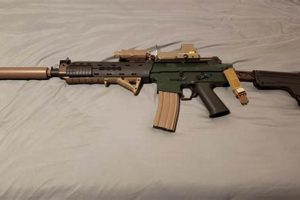
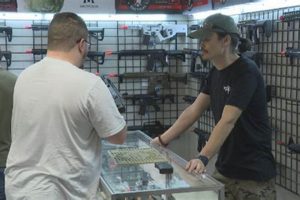
The legality of airsoft activities and equipment within the state of New Jersey is a frequent inquiry. This addresses whether individuals can possess, transport, and utilize airsoft guns without violating state or local regulations. This determination hinges on several factors, including the classification of airsoft guns under state law and compliance with existing statutes related to imitation firearms.
Understanding the legal landscape surrounding airsoft is essential for both players and retailers. Compliance ensures adherence to the law, mitigating the risk of penalties or legal repercussions. Historically, the regulation of items resembling firearms has evolved, often reflecting concerns about public safety and the potential for misuse. Knowledge of these regulations allows participants to engage in the sport responsibly and within established legal boundaries.
Therefore, subsequent sections will delve into specific New Jersey statutes pertaining to imitation firearms, permissible locations for airsoft activities, transportation guidelines, and potential local ordinances that may further regulate or restrict airsoft within specific municipalities. This detailed examination clarifies the overall legal standing of airsoft in New Jersey.
Considerations Regarding Airsoft Legality in New Jersey
The following points offer guidance concerning compliance with laws and regulations pertaining to airsoft activities within New Jersey.
Tip 1: Verify Resemblance Criteria: Airsoft guns should be examined against New Jerseys statutes concerning imitation firearms. Modified airsoft guns which too closely resemble actual firearms may be subject to greater restrictions or be deemed illegal.
Tip 2: Transport Airsoft Guns Responsibly: Airsoft guns should be transported in a case or container, preferably locked, and separate from ammunition. This minimizes the risk of misinterpretation or perceived threat.
Tip 3: Confine Activities to Permitted Locations: Airsoft activities should be limited to designated fields, private property with owner consent, or other locations where such activities are explicitly permitted. Avoid public areas where discharging an airsoft gun may cause alarm or violate local ordinances.
Tip 4: Understand Local Ordinances: Municipalities may enact local ordinances that supplement or further restrict airsoft activities. Research local regulations prior to engaging in airsoft in any specific location.
Tip 5: Prioritize Safety Equipment: Always use appropriate safety equipment, including eye protection, during airsoft activities. Adherence to safety protocols reduces the risk of injury and demonstrates responsible conduct.
Tip 6: Obtain Legal Counsel if Unsure: If there is any uncertainty regarding the legality of airsoft activities in a specific circumstance, consult with legal counsel familiar with New Jersey firearms laws.
Tip 7: Review Relevant Statutes Regularly: Laws and regulations are subject to change. Regularly review relevant New Jersey statutes to ensure ongoing compliance.
Adhering to these considerations promotes responsible airsoft participation and mitigates potential legal issues, promoting a safer and legally compliant environment.
Further details regarding specific regulations and potential penalties will be explored in subsequent sections.
1. State Statutes

The inquiry into the legality of airsoft in New Jersey is fundamentally intertwined with state statutes concerning imitation firearms. These statutes serve as the primary legal framework governing the possession, use, and transportation of items that resemble actual firearms, including airsoft guns. The definition and classification of airsoft guns under these statutes directly determine their legal status. For example, if a statute broadly defines “firearm” to include devices propelling projectiles by compressed air, it could potentially encompass certain airsoft guns, subjecting them to stricter regulations applicable to actual firearms. Conversely, a statute with a more narrowly defined scope might exclude many airsoft guns, treating them as distinct items with less stringent controls.
The practical significance of these statutes is considerable. They dictate where airsoft activities can legally occur, how airsoft guns must be transported, and whether individuals are required to obtain permits or licenses for possession. Consider a scenario where a state statute prohibits the public display of imitation firearms. In this context, individuals transporting airsoft guns to a designated field must ensure the items are concealed within a case or container, to avoid violating the statute. Furthermore, these statutes often grant municipalities the authority to enact supplementary local ordinances. The absence of a clear state statute regarding airsoft could result in varying local ordinances, creating confusion and challenges for players who move between different jurisdictions.
In summary, the interpretation and application of state statutes are crucial in determining the legality of airsoft in New Jersey. These statutes define the boundaries of permissible activity, influencing where airsoft can be played, how equipment is handled, and the potential penalties for non-compliance. Comprehending these statutes enables individuals to engage in airsoft responsibly and within the bounds of the law, mitigating risks associated with unintentional violations. The evolution of these statutes must be monitored to account for any change regarding airsoft guns.
2. Imitation Firearms

The designation of airsoft guns as imitation firearms within New Jersey’s legal framework has a direct bearing on the legality of airsoft activities. State regulations pertaining to imitation firearms define the scope of permissible airsoft usage, influencing possession, transportation, and utilization.
- Definition and Classification
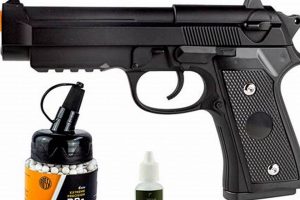
The precise definition of an imitation firearm under New Jersey law is critical. If airsoft guns fall within this definition, they are subject to restrictions applicable to such items. Discrepancies in resemblance to actual firearms influence this classification. For instance, airsoft guns lacking orange tips or possessing realistic coloring may be more readily classified as imitation firearms, potentially leading to legal constraints.
- Possession and Sale Restrictions
Regulations governing the possession and sale of imitation firearms can impact the availability and accessibility of airsoft guns. Certain jurisdictions may impose age restrictions or require specific licensing for purchase or possession. These limitations can directly affect airsoft players’ ability to participate in the sport. A state that requires retailers to verify the age of purchasers for imitation firearms affects how airsoft equipment is acquired.
- Public Display and Transportation
Many jurisdictions restrict the public display and transportation of imitation firearms to prevent alarm or misidentification. Airsoft guns transported openly in public spaces may violate these regulations, even if their use is otherwise permitted. Consequently, airsoft players must ensure their equipment is concealed during transportation, adhering to state and local laws to avoid legal complications.
- Use in Commission of a Crime
The use of an imitation firearm during the commission of a crime often carries severe penalties. If an airsoft gun is brandished or used in a threatening manner, it can result in charges equivalent to those involving actual firearms. Therefore, responsible and lawful usage of airsoft guns is imperative to avoid potential criminal liability. Even if an airsoft gun is not used in an actual crime, brandishing the weapon may be considered disorderly conduct.
In summary, the legal status of airsoft in New Jersey is significantly shaped by how airsoft guns are categorized under imitation firearm laws. Compliance with these laws ensures that airsoft activities remain within legal boundaries, minimizing the risk of penalties or legal repercussions. Variations in local ordinances further emphasize the importance of understanding and adhering to both state and local regulations.
3. Transportation Rules
The legality of airsoft in New Jersey is directly influenced by the state’s transportation rules pertaining to airsoft guns. These rules dictate how airsoft guns must be carried, stored, and moved within the state, playing a critical role in determining whether an individual remains within legal compliance. Failure to adhere to these regulations can result in legal consequences, regardless of the permissibility of airsoft activities themselves.
- Case and Container Requirements
Many jurisdictions mandate that imitation firearms, including airsoft guns, be transported in a closed case or container. This measure aims to prevent the weapon from being visible to the public, thereby minimizing alarm or misinterpretation. In New Jersey, openly carrying an uncased airsoft gun, even if unloaded, may violate transportation laws and lead to penalties. Therefore, individuals must ensure their airsoft guns are concealed within a suitable case during transport.
- Separation of Airsoft Gun and Ammunition
Some regulations require that airsoft guns and ammunition be transported separately. This precaution is intended to reduce the immediate usability of the airsoft gun and mitigate potential risks. In New Jersey, if an airsoft gun and its ammunition are found together during transport, it could be interpreted as intent to use the item unlawfully, potentially leading to legal repercussions. The separation of components provides an additional layer of safety and compliance.
- Route Restrictions
Specific routes or locations may be restricted for the transportation of imitation firearms. For example, transporting an airsoft gun near school zones or government buildings might be prohibited, even if the individual is en route to a designated airsoft field. Awareness of these restrictions is crucial to avoid inadvertent violations of the law. Planning routes carefully to circumvent restricted areas can ensure compliance with transportation regulations.
- Federal Laws
While New Jersey laws primarily govern intrastate transportation, federal laws may come into play if airsoft guns are transported across state lines. Individuals must be aware of any applicable federal regulations related to the interstate transportation of imitation firearms, particularly concerning labeling and markings. Compliance with federal standards ensures that the transportation of airsoft equipment remains lawful throughout the entire journey.
These facets of transportation rules underscore their integral role in determining the legality of airsoft activities in New Jersey. Adherence to these guidelines ensures that individuals possessing and transporting airsoft guns do so responsibly and within the confines of the law, reducing the risk of legal penalties and promoting public safety. As regulations are subject to change, it is important to regularly consult state and local laws to ensure ongoing compliance.
4. Permitted Locations

The legality of airsoft in New Jersey is inextricably linked to the designated areas where such activities are authorized. Restrictions on permissible locations constitute a fundamental aspect of the overall legal framework, directly impacting where individuals can engage in airsoft without contravening state or local regulations.
- Designated Airsoft Fields
Commercial airsoft fields that adhere to specific safety standards and operational guidelines provide legally sanctioned environments for airsoft activities. These fields often possess the necessary insurance, permits, and safety protocols to ensure compliance with applicable laws. Utilization of these fields mitigates legal risks associated with unauthorized locations. For instance, if a field has obtained the required environmental permits and zoning approvals, participants can be reasonably assured that their activities are within legal bounds.
- Private Property with Consent
Airsoft activities may be permissible on private property, contingent upon obtaining explicit consent from the property owner. However, even with consent, activities must comply with noise ordinances, discharge regulations, and other applicable laws. Furthermore, the property owner assumes liability for any injuries or damages arising from airsoft activities on their land. If a property owner allows airsoft on their land, they might still be held liable if a neighbor is injured by a stray projectile.
- Public Lands and Parks: Restrictions
Generally, discharging airsoft guns on public lands, parks, or recreational areas is prohibited unless specifically authorized by relevant authorities. Such restrictions are often in place to ensure public safety and prevent conflicts with other park users. Violations can result in fines, confiscation of equipment, or other penalties. For example, even if an airsoft gun is discharged responsibly, it may still violate park rules prohibiting projectile weapons.
- Proximity to Sensitive Areas
Engaging in airsoft activities near sensitive areas, such as schools, hospitals, or residential zones, is typically restricted. These limitations are implemented to prevent alarm, disturbance, or potential safety risks. Proximity restrictions can vary depending on local ordinances and the specific nature of the area. For instance, a local ordinance might prohibit the discharge of any projectile weapon within 500 feet of a school, even if the activity is otherwise permitted in that location.
The restrictions on permissible locations underscore the need for careful planning and adherence to both state and local regulations. Compliance with these location-based rules is paramount in ensuring that airsoft activities remain lawful and responsible, minimizing the risk of legal consequences and promoting public safety. Failure to adhere to designated locations is a common source of legal issues.
5. Local Ordinances
The permissibility of airsoft activities within New Jersey is not solely determined by state statutes. Municipalities retain the authority to enact local ordinances, which can supplement or further restrict airsoft activities within their jurisdictions. These ordinances can significantly impact the legality of airsoft, often exceeding or clarifying state-level regulations.
- Discharge Regulations
Local ordinances frequently address the discharge of projectile weapons, including airsoft guns, within municipal boundaries. These regulations can establish specific zones where discharge is prohibited, such as residential areas, parks, or near schools. An ordinance might, for instance, forbid the discharge of any air-powered projectile within 500 feet of a dwelling, regardless of whether the individual possesses the property owner’s consent. Such rules are designed to ensure public safety and mitigate noise disturbances. Violation of these discharge regulations can result in fines or confiscation of equipment.
- Noise Restrictions
Airsoft activities, particularly in residential areas, can generate noise complaints. Local ordinances often include noise restrictions that limit the permissible decibel levels at certain times of day. If airsoft activities consistently exceed these noise limits, they may be deemed a public nuisance and subject to enforcement actions. An ordinance may stipulate that no noise exceeding 60 decibels is permitted between the hours of 10 PM and 7 AM. Enforcement of these restrictions relies on municipal authorities responding to complaints and utilizing noise measurement equipment.
- Age Limitations and Parental Consent
While New Jersey lacks a statewide age restriction for airsoft participation, municipalities can impose age limitations or require parental consent for minors engaging in airsoft activities within their boundaries. These ordinances aim to protect younger individuals from potential risks associated with airsoft and to ensure adult supervision. An ordinance may specify that individuals under the age of 16 must be accompanied by a parent or guardian while participating in airsoft. Such restrictions are enforced through verification of age and parental consent during airsoft events or activities.
- Permitting and Zoning Requirements
Local ordinances can mandate that airsoft fields or commercial operations obtain specific permits or adhere to zoning regulations. These requirements ensure that airsoft facilities comply with safety standards, environmental regulations, and land use policies. An ordinance may require an airsoft field to obtain a special use permit demonstrating compliance with safety protocols and noise mitigation measures. Failure to comply with permitting and zoning requirements can result in operational shutdowns or legal penalties.
In conclusion, local ordinances exert a significant influence on the legality of airsoft within New Jersey. Individuals must consult municipal regulations in addition to state statutes to ensure full compliance. The absence of a specific state law does not guarantee permissibility, as local ordinances can impose stricter standards or restrictions. Understanding and adhering to these local rules is crucial for responsible and lawful engagement in airsoft activities, reducing the risk of fines, penalties, or legal disputes.
6. Age Restrictions

Age restrictions serve as a critical component in determining the legality of airsoft activities within New Jersey. The imposition of age-related limitations directly impacts who can legally participate in airsoft, influencing the accessibility and scope of the sport. While New Jersey may lack a statewide statute explicitly setting a minimum age for airsoft participation, the absence of such a law does not necessarily equate to the permissibility of airsoft for all age groups. Local ordinances often bridge this gap, establishing age restrictions or parental consent requirements at the municipal level. For instance, a municipality may stipulate that individuals under the age of 16 must be accompanied by a supervising adult while engaging in airsoft activities within town limits. This restriction stems from concerns about the safety and responsible handling of airsoft guns by younger individuals, reflecting a precautionary approach to mitigating potential risks. This is a real-life example when a municipality establish restriction to enforce the age for a minor to play airsoft.
The practical significance of understanding age restrictions is multifaceted. From a legal standpoint, non-compliance with age-related regulations can result in penalties for both the minor participant and any adult enabling or facilitating their participation. Retailers selling airsoft equipment bear a responsibility to verify the age of purchasers, ensuring adherence to local ordinances and avoiding the sale of airsoft guns to underage individuals in restricted areas. Airsoft field operators must also implement age verification processes and enforce supervision requirements to maintain legal compliance and ensure the safety of all participants. Age restrictions also affect the type of airsoft equipment that can be used. Some municipalities may restrict minors to using lower-powered airsoft guns to minimize the risk of injury. This understanding ensures the safety and compliance during the airsoft game.
In summary, age restrictions are integral to the legal landscape surrounding airsoft in New Jersey. While state statutes may not explicitly address this aspect, the presence of local ordinances establishing age-related limitations necessitates a comprehensive understanding of both state and municipal regulations. Challenges arise from the variability of local ordinances, requiring individuals to ascertain the specific rules applicable to their location. The responsible enforcement of age restrictions, by retailers, field operators, and supervising adults, is paramount in upholding legal standards and promoting the safety of all participants, while linking this aspect to the broader theme of responsible airsoft participation within the state.
Frequently Asked Questions
The following section addresses common inquiries concerning the legal standing of airsoft activities and equipment within the state of New Jersey. These questions and answers offer concise explanations based on existing state and local regulations.
Question 1: Does New Jersey have a minimum age requirement for participating in airsoft?
Currently, New Jersey does not possess a statewide statute establishing a minimum age for engaging in airsoft activities. However, individual municipalities retain the authority to enact local ordinances that impose age restrictions or require parental consent for minors participating in airsoft within their jurisdictions. Therefore, it is essential to verify local regulations before engaging in airsoft activities to ensure compliance.
Question 2: Are there specific areas where airsoft is prohibited in New Jersey?
Airsoft activities are generally restricted on public lands, parks, and recreational areas unless explicitly authorized by the relevant authorities. Additionally, airsoft activities near sensitive locations, such as schools, hospitals, or residential zones, are typically prohibited to prevent alarm, disturbance, or potential safety risks. Designated airsoft fields and private property with the owner’s consent are typically considered permissible locations, provided all applicable laws are followed.
Question 3: How should airsoft guns be transported in New Jersey?
Airsoft guns should be transported in a closed case or container to prevent public display and potential misinterpretation. Regulations may also require the separation of the airsoft gun and its ammunition during transport. Openly carrying an uncased airsoft gun may violate transportation laws and lead to penalties. Adherence to these guidelines ensures the responsible and lawful transportation of airsoft equipment.
Question 4: Are airsoft guns classified as firearms under New Jersey law?
The classification of airsoft guns under New Jersey law depends on their resemblance to actual firearms and the specific definitions outlined in state statutes. If an airsoft gun is deemed an imitation firearm, it may be subject to restrictions applicable to such items. Understanding the precise definition and classification is critical in determining the legal permissibility of possessing and using airsoft guns.
Question 5: What are the potential penalties for violating airsoft regulations in New Jersey?
Violations of airsoft regulations can result in various penalties, including fines, confiscation of equipment, and potential criminal charges, depending on the nature and severity of the offense. Using an airsoft gun in the commission of a crime, brandishing the weapon in a threatening manner, or violating discharge regulations can lead to more severe consequences. Responsible and lawful usage of airsoft guns is essential to avoid these potential liabilities.
Question 6: Where can individuals obtain clarification regarding specific airsoft regulations in New Jersey?
Individuals can obtain clarification regarding specific airsoft regulations by consulting the relevant New Jersey state statutes, reviewing local municipal ordinances, and seeking legal counsel from attorneys familiar with firearms and imitation firearm laws. These resources provide detailed information and guidance to ensure compliance with applicable rules and regulations. Contacting local law enforcement agencies may also offer insights into local ordinances and enforcement practices.
In summary, understanding the nuances of both state statutes and local ordinances is critical for ensuring legal compliance when engaging in airsoft activities within New Jersey. Due diligence and adherence to these regulations are essential to promote safety and avoid potential legal repercussions.
The subsequent section will delve into case studies and real-world scenarios to further illustrate the practical application of airsoft regulations in New Jersey.
Conclusion
The preceding exploration of whether airsoft is legal in NJ reveals a landscape shaped by both state statutes and local ordinances. While New Jersey lacks a singular, comprehensive state law governing airsoft, the interplay of regulations concerning imitation firearms, transportation, permissible locations, and age restrictions determines its legal status. Municipalities possess the authority to supplement or restrict airsoft activities further, underscoring the necessity of local knowledge.
Compliance requires diligent adherence to these multifaceted regulations. Responsible participation, encompassing proper transportation, designated locations, and age verification, mitigates the risk of legal penalties. As laws evolve, continuous awareness and engagement with local authorities remain crucial for ensuring sustained adherence and promoting a responsible airsoft community within the state.