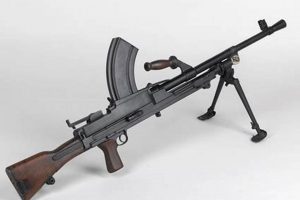
The act of operating an airsoft replica firearm involves understanding its mechanics, aiming techniques, and safety protocols to propel a plastic projectile accurately toward a designated target. This encompasses loading the magazine, chambering a round, aligning the sights, and applying controlled trigger pressure to achieve the desired impact point. Improper execution can lead to inaccurate shots, damage to the device, or, more importantly, potential injury.
Proficiency in this skill provides participants with a sense of accomplishment, enhances strategic thinking in simulated combat scenarios, and promotes teamwork. Its roots can be traced to wargaming simulations used for military training, evolving into a popular recreational activity enjoyed globally. Correct execution is paramount for a safe and enjoyable experience.
The following sections will outline the essential steps, safety precautions, and effective strategies for proper airsoft replica firearm handling, covering topics from basic operation and aiming principles to advanced techniques and equipment maintenance.
Essential Techniques for Airsoft Replica Firearm Operation
Mastering the operation of an airsoft replica firearm requires attention to detail and consistent practice. The following guidance provides actionable steps to improve accuracy and safety.
Tip 1: Implement Consistent Stance and Grip: A stable stance and firm grip are fundamental. Feet should be shoulder-width apart, with the non-dominant foot slightly forward. The replica firearm should be held firmly, ensuring consistent pressure on the pistol grip and foregrip.
Tip 2: Master Sight Alignment: Correct sight alignment involves aligning the front and rear sights, creating a clear and focused sight picture. The front sight should be centered within the rear sight aperture, with the focal point on the front sight. Misalignment will result in inaccurate shots.
Tip 3: Control Trigger Pull: A smooth, controlled trigger pull minimizes movement during the shot. Apply steady pressure to the trigger, avoiding jerking or slapping it. Practice dry firing to refine trigger control without expending ammunition.
Tip 4: Practice Breath Control: Controlling breath can significantly improve stability. Take a deep breath, exhale partially, and hold the breath momentarily before pulling the trigger. This reduces body movement and enhances accuracy.
Tip 5: Understand Hop-Up Adjustment: The hop-up system imparts backspin to the projectile, extending its range and improving accuracy. Adjust the hop-up unit incrementally until the projectile flies straight and level. Over-hopping or under-hopping will negatively impact performance.
Tip 6: Maintain Replica Firearm Condition: Regular cleaning and maintenance are crucial for consistent performance. Clean the barrel regularly to remove debris, and lubricate moving parts as needed. A well-maintained replica firearm will operate more reliably and accurately.
Tip 7: Use Appropriate Ammunition: Utilizing high-quality ammunition of the correct weight and size is essential. Low-quality or incorrect ammunition can damage the replica firearm and reduce accuracy. Match the ammunition to the replica firearm’s specifications.
Consistently applying these techniques enhances accuracy, extends effective range, and contributes to a safer and more enjoyable airsoft experience.
The next section will cover safety protocols and responsible usage guidelines.
1. Stance and Grip

The relationship between stance and grip and the successful operation of an airsoft replica firearm is fundamental. A stable and consistent platform is paramount for accurate shot placement. Without a proper stance and grip, even advanced sighting techniques and trigger control become ineffective.
- Stability and Balance
A well-balanced stance, typically with feet shoulder-width apart and the non-dominant foot slightly forward, provides a solid base. This stability minimizes sway and allows for better recoil management, crucial for maintaining accuracy during rapid firing. An unstable stance introduces inconsistencies, leading to unpredictable shot dispersion.
- Recoil Absorption
A firm yet relaxed grip allows the operator to absorb the recoil generated by the replica firearm. This prevents the weapon from shifting during the firing cycle, which is especially important in gas blowback models. Inadequate grip strength can result in muzzle climb and reduced accuracy.
- Muscle Fatigue Reduction
A correct stance and grip distributes the weight of the replica firearm evenly, reducing muscle fatigue over extended periods of use. This is especially relevant in prolonged skirmishes or training scenarios. Improper posture and grip lead to premature fatigue, impacting accuracy and maneuverability.
- Control and Maneuverability
A secure grip allows for precise manipulation of the replica firearm, facilitating smooth transitions between targets and rapid adjustments to changing combat situations. This control translates into quicker target acquisition and more accurate follow-up shots. A loose or awkward grip hinders control and slows down response times.
In essence, stance and grip form the foundation upon which all other shooting techniques are built. Their mastery is critical for achieving consistent accuracy, maintaining control, and enhancing overall performance in airsoft engagements. Ignoring these fundamental principles undermines the effectiveness of advanced equipment and training.
2. Sight Alignment

Sight alignment represents a critical element in accurate airsoft replica firearm operation. It is the process of correctly aligning the replica firearm’s sights to ensure the projectile impacts the intended target. Proper sight alignment minimizes parallax error and ensures consistent shot placement. Without accurate sight alignment, even a stable firing platform and controlled trigger pull will not compensate for aiming discrepancies.
- Front Sight Focus
Maintaining focus on the front sight is essential. The human eye can only focus on one object at a time; the front sight should be sharp and clear, while the rear sight and target appear slightly blurred. Shifting focus to the target introduces parallax and compromises accuracy, especially at longer distances. The front sight acts as the primary reference point for aiming.
- Equal Height and Equal Light
The top of the front sight should be level with the top of the rear sight, and there should be equal spacing between the front sight and the edges of the rear sight aperture. This ensures the sights are aligned vertically and horizontally. Uneven height or spacing indicates misalignment and will cause shots to deviate in the corresponding direction. Consistent “equal height and equal light” creates a repeatable aiming reference.
- Sight Radius and Stability
A longer sight radius (the distance between the front and rear sights) generally enhances accuracy because it reduces the angular error for a given misalignment. However, a longer sight radius also necessitates greater stability to maintain proper sight alignment. Smaller replica firearms with shorter sight radii are more forgiving but less accurate at longer ranges. Choosing the appropriate replica firearm, or adding aftermarket longer sights, depends on the expected engagement distances.
- Environmental Factors
Environmental conditions, such as lighting and weather, can impact sight alignment. Glare can obscure the sights, while rain or fog can distort the target. Adjusting aiming point based on known trajectory changes in adverse weather is crucial. Understanding how environmental factors influence sight picture promotes more accurate and consistent shot placement.
These facets underscore the pivotal role of sight alignment in the pursuit of precise airsoft replica firearm operation. The correct application of these principles is essential for achieving accuracy and consistency, making sight alignment a fundamental skill for any airsoft participant.
3. Trigger Control

Trigger control is a fundamental aspect of accurate airsoft replica firearm operation. It directly influences the stability of the device during the firing sequence and the consistency of shot placement. Inadequate trigger control introduces movement and misalignment, resulting in inaccurate shots regardless of other aiming fundamentals. Effective trigger control minimizes these disturbances, allowing the projectile to follow the intended trajectory. For example, flinching or jerking the trigger will predictably cause the shot to deviate from the intended point of impact.
The key elements of trigger control include a smooth, consistent pull directly rearward, minimizing any lateral or vertical force applied to the replica firearm. Gradual pressure is applied until the trigger breaks cleanly, releasing the firing mechanism without sudden movement. Dry firing, practicing trigger manipulation without ammunition, is a common training technique for developing muscle memory and refining trigger control. Furthermore, using replica firearms with lighter trigger pulls allows for enhanced trigger control, especially during rapid firing scenarios. The selection of replica firearms therefore directly impacts the ease with which trigger control can be mastered and applied.
In conclusion, trigger control constitutes a foundational skill inextricably linked to accurate replica firearm handling. Its mastery relies on deliberate practice, attention to detail, and an understanding of the interplay between physical manipulation and ballistic outcomes. While challenging to perfect, effective trigger control significantly enhances accuracy and is a critical component of proficient replica firearm operation.
4. Hop-Up Adjustment

The process of hop-up adjustment is intrinsically linked to achieving accurate projectile trajectory when operating an airsoft replica firearm. The hop-up unit imparts a backspin to the projectile as it exits the barrel. This backspin, through the Magnus effect, creates an upward force that counteracts gravity, extending the effective range and improving accuracy. Without proper hop-up adjustment, the projectile’s trajectory will be significantly affected by gravity, leading to a drastically reduced range and downward arc. The correlation is direct: incorrect hop-up negatively affects the ability to effectively operate the replica firearm, while a properly adjusted hop-up optimizes it. The adjustment affects “how to shoot airsoft gun” by optimizing the projection path and overall accuracy of a projectile.
The specific degree of backspin required is contingent on factors such as projectile weight, the power of the replica firearm, and environmental conditions like wind. Over-hopping, applying excessive backspin, causes the projectile to rise sharply, reducing range. Under-hopping results in a rapid drop in trajectory. The optimal hop-up setting is achieved when the projectile maintains a relatively flat trajectory over a considerable distance. For example, a heavier projectile typically requires more hop-up than a lighter one. Some units can fine tune hopup adjustment with ease. Different BB grains can improve the hopup settings and outcome results.
Proper hop-up adjustment is a critical skill for effective airsoft replica firearm operation. Achieving this skill involves a practical understanding of trajectory dynamics, an ability to assess external conditions, and iterative adjustments. Without this, the full potential of the replica firearm will not be realized, limiting its effectiveness in simulated combat scenarios. Mastering this skill is essential for all responsible and engaged airsoft participants.
5. Target Engagement

Target engagement is an intrinsic component of effective airsoft replica firearm operation. It encompasses the multifaceted decision-making process that occurs from target acquisition to trigger pull. Success depends on a synthesis of visual acuity, tactical judgment, and proficiency in replica firearm manipulation. Effective target engagement directly influences the outcome of simulated combat scenarios.
- Range Estimation
Accurate range estimation is essential for compensating for projectile drop. The distance to the target directly affects the required elevation adjustment. Incorrect range estimation leads to shots falling short or overshooting the intended point of impact. Experienced operators utilize visual cues and prior field knowledge to refine their range estimations. For instance, mistaking a 50-foot target for one at 75 feet can result in a significant miss, underscoring the importance of precise distance assessment when aiming the replica firearm.
- Target Identification
Positive target identification is paramount for ethical and strategic reasons. Confirming the target as a valid opponent prevents accidental engagement of teammates or neutral parties. Utilizing visual aids, such as binoculars or magnified optics, can improve target identification in low-light conditions or at longer ranges. Misidentification can lead to disqualification or, more seriously, disrupt the integrity of the game. Therefore, deliberate confirmation is critical prior to initiating the firing sequence.
- Cover and Concealment Assessment
Analyzing the available cover and concealment around the target allows for more strategic shot placement. Aiming for exposed areas while minimizing the target’s opportunities to return fire maximizes the chances of a successful hit. Understanding the ballistic properties of the cover, such as its ability to deflect or penetrate projectiles, is essential. The use of cover directly correlates with survivability and effectiveness in simulated combat. Adjusting aiming point based on the surrounding environment makes the weapon more useful.
- Lead and Trajectory Prediction
Engaging a moving target requires predicting its future position and leading the shot accordingly. The speed and direction of the target influence the amount of lead necessary to achieve a hit. Experienced operators develop an intuitive understanding of projectile trajectory and the effects of wind and other environmental factors. Ineffective lead prediction results in shots landing behind or in front of the target, emphasizing the necessity of anticipating movement and adjusting aim accordingly. Aiming must match to the speed and angle of your objective point.
These elements of target engagement are inseparable from the skill of replica firearm handling. Effective decision-making in these areas directly translates to improved accuracy and tactical advantage. Continuous practice and practical experience are essential for developing proficiency in target engagement, allowing operators to seamlessly integrate these skills into their replica firearm operation.
Frequently Asked Questions
The following section addresses common inquiries and misconceptions regarding the operation of airsoft replica firearms. This information is intended to enhance understanding and promote responsible usage.
Question 1: What constitutes the fundamental safety precautions when handling an airsoft replica firearm?
Eye protection is mandatory for all individuals present during airsoft activities. Treat every replica firearm as if it were loaded. Keep the muzzle pointed in a safe direction at all times. Never point a replica firearm at anything that is not intended to be targeted. Secure the replica firearm when not in use. Utilize designated safe zones for handling replica firearms outside of active gameplay.
Question 2: How does projectile weight affect trajectory and accuracy?
Heavier projectiles generally exhibit greater stability and are less affected by wind, resulting in improved accuracy, especially at longer ranges. However, heavier projectiles also travel at lower velocities. Lighter projectiles travel at higher velocities but are more susceptible to environmental factors. The optimal projectile weight is contingent on the replica firearm’s power and the intended engagement range.
Question 3: What is the purpose of the hop-up system, and how does it impact performance?
The hop-up system imparts backspin to the projectile, creating an upward force that counteracts gravity. This extends the effective range and improves trajectory. Incorrect hop-up settings, either over-hopping or under-hopping, negatively affect accuracy and range. The hop-up must be properly adjusted to match the projectile weight and replica firearm power.
Question 4: How frequently should an airsoft replica firearm undergo maintenance?
The frequency of maintenance depends on usage. Replica firearms used frequently should be cleaned and lubricated after each game. Internal components should be inspected and serviced periodically, typically every three to six months, depending on usage intensity. Neglecting maintenance can lead to reduced performance, malfunctions, and potential damage.
Question 5: What is the optimal distance for engaging targets with an airsoft replica firearm?
The optimal engagement distance varies depending on the replica firearm’s power, accuracy, and environmental conditions. Most airsoft replica firearms are effective within a range of 50 to 150 feet. Beyond this range, accuracy and projectile velocity typically decrease significantly. Understanding the effective range of a particular replica firearm is crucial for responsible target engagement.
Question 6: How can one improve accuracy in airsoft replica firearm operation?
Accuracy improvements require a combination of factors, including proper stance and grip, consistent sight alignment, controlled trigger pull, appropriate hop-up adjustment, range estimation, and environmental awareness. Regular practice and attention to detail are essential for developing these skills. Investing in quality replica firearms and accessories can also contribute to improved accuracy.
This FAQ provides essential information regarding the operation of airsoft replica firearms. Adherence to safety guidelines and a commitment to continuous improvement are paramount for a safe and enjoyable experience.
The next section will delve into advanced techniques and strategies for airsoft engagements.
Mastery and Responsibility in Airsoft Replica Firearm Handling
This exposition has detailed critical facets of how to shoot airsoft gun effectively and safely. It has underscored the importance of proper stance, grip, sight alignment, trigger control, and hop-up adjustment. Moreover, it has elucidated the strategic elements of target engagement and responsible equipment maintenance. The information presented serves as a guide for both novice and experienced participants seeking to improve their operational capabilities.
Proficiency in these skills necessitates continuous practice and adherence to safety protocols. Responsible handling ensures the integrity of the sport and the well-being of all participants. As the technology and tactics evolve, a commitment to ongoing education and skill refinement remains paramount. The future of airsoft depends on participants who prioritize safety, demonstrate respect for the sport, and strive for excellence in their execution of fundamental techniques.