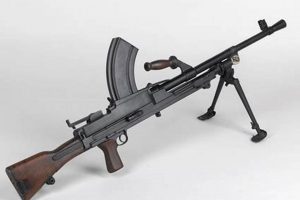
The endeavor to modify an airsoft replica to emulate the auditory characteristics of a real firearm involves altering its internal mechanisms and external components. Examples include adjusting the piston head, experimenting with different hop-up units, or adding sound amplification devices.
Achieving a realistic sound profile can significantly enhance the immersive experience of airsoft gameplay, contributing to heightened realism during training exercises or simulated combat scenarios. The practice has evolved over time, with technological advancements leading to increasingly sophisticated methods for sound replication.
Considerations for pursuing this modification include legal implications, safety protocols, and potential performance alterations. The following sections will address specific techniques, associated risks, and necessary precautions.
Techniques for Enhancing Airsoft Replica Auditory Realism
This section details several modifications and considerations intended to improve the auditory authenticity of airsoft replicas. Implementing these changes may impact performance and require careful execution.
Tip 1: Piston Head Modification: Replacing the factory piston head with a ported variant can alter compression characteristics, resulting in a sharper, more impactful sound upon firing. Experimentation with different materials and port configurations is recommended to achieve the desired auditory effect.
Tip 2: Gearbox Shimming Optimization: Precisely shimming the gearbox gears minimizes internal friction and reduces extraneous noise. A properly shimmed gearbox produces a cleaner, more mechanical sound profile, enhancing perceived realism.
Tip 3: High-Torque Motor Installation: Upgrading to a high-torque motor can increase the cycling speed of the gearbox, leading to a faster, more aggressive firing sound. Ensure compatibility with the existing battery and electrical system to prevent damage.
Tip 4: Hop-Up Unit Fine-Tuning: The hop-up unit’s interaction with the BB can contribute to the overall sound. Experimenting with different hop-up buckings and adjusting the hop-up setting can subtly alter the report.
Tip 5: External Sound Amplification: Attaching a mock suppressor or sound amplifier to the barrel can project and amplify the sound produced by the replica. Select models specifically designed for airsoft replicas to avoid damage or performance degradation.
Tip 6: Utilizing High-Discharge Batteries: Employing batteries with a higher discharge rate can provide more consistent power to the motor, resulting in a more uniform and impactful firing sound. Exercise caution when selecting batteries and adhere to recommended voltage and amperage ratings.
Implementing these techniques requires a thorough understanding of airsoft replica mechanics and electronics. Prioritize safety and consult with experienced technicians when undertaking these modifications.
The following sections will address safety precautions and legal considerations associated with modifying airsoft replicas.
1. Internal component optimization

Internal component optimization within an airsoft replica directly impacts the auditory experience, influencing the character and intensity of the firing sound. Refining these components is integral to achieving a sound profile that mimics a real firearm.
- Piston Head Acoustics
The piston head’s material composition and port configuration significantly influence the compression and release of air within the cylinder. A ported piston head, for instance, creates a sharper, more percussive sound upon impact due to the rapid expulsion of air. Varying the material density of the piston head also affects sound resonance within the gearbox, altering the overall auditory signature. Choosing specific materials and designs to optimize this can closely simulate a realistic firearm discharge.
- Gearbox Shimming and Noise Reduction
Precise shimming of the gearbox gears minimizes frictional contact and extraneous noise generation. Poorly shimmed gears produce a distinct whirring or grinding sound, detracting from the desired realism. Optimized shimming, conversely, promotes a cleaner, more mechanical sound, allowing other sound-enhancing modifications to be more prominent and effective. This ensures that the inherent sounds of operation are minimized, making room for the desired realistic effects.
- Motor Performance and Cycling Speed
The motor’s torque and rotational speed directly impact the velocity at which the gearbox cycles. A high-torque motor, for example, facilitates a faster and more forceful cycling action, resulting in a more aggressive and immediate firing sound. Conversely, a weaker or underpowered motor produces a sluggish and less impactful sound, diminishing the perceived realism. Consequently, motor selection is directly tied to the desired sound quality during operation.
- Air Seal Integrity and Consistency
Maintaining optimal air seal within the cylinder assembly is crucial for consistent and impactful sound production. Air leaks diminish the force of the piston impact, resulting in a weaker and less defined sound. A properly sealed system ensures maximum compression and a consistent auditory report with each firing cycle. This contributes significantly to the realism of the firing sound by creating a predictable and powerful discharge.
The cumulative effect of optimizing these internal components contributes significantly to emulating the auditory characteristics of a real firearm. Each modification, from the piston head design to the gearbox shimming, plays a crucial role in shaping the overall sound profile. By carefully selecting and configuring these components, a closer approximation of a realistic firing sound can be achieved.
2. Sound amplification devices

Sound amplification devices represent a direct method of augmenting the auditory output of airsoft replicas, contributing to a heightened sense of realism. These devices focus on increasing the perceived volume and altering the tonal characteristics of the sound produced during operation.
- Mock Suppressors with Internal Resonance Chambers
Mock suppressors, designed to mimic the appearance of real firearm suppressors, can incorporate internal resonance chambers. These chambers function by capturing and amplifying the sound waves generated during the replica’s operation. The internal geometry of these chambers influences the frequencies emphasized, altering the overall sound profile. This approach aims to increase the perceived volume and create a deeper, more resonant sound, thus enhancing the auditory simulation of a real firearm.
- External Sound Amplifiers
External sound amplifiers are electronic devices specifically designed to capture and amplify the sound produced by an airsoft replica. These systems typically consist of a microphone positioned near the muzzle, an amplifier unit, and a speaker. These devices amplify the existing sound and add electronic generated sounds to produce the desired realistic sound.
- Muzzle Brakes and Sound Redirectors
While primarily designed for recoil management in real firearms, muzzle brakes and similar devices can be adapted to airsoft replicas for their sound redirection properties. These devices redirect the sound waves forward and to the sides, increasing the perceived volume for individuals positioned in front of the replica. This can create a more impactful auditory experience for both the user and surrounding participants.
The application of sound amplification devices offers a tangible method of modifying the auditory output of airsoft replicas. Whether through passive resonance chambers or active electronic amplification, these devices contribute to a more immersive and realistic simulation of firearm operation. Careful consideration of device design and sound characteristics is essential for achieving the desired auditory effect without compromising the replica’s functionality or safety.
3. Material selection impacts
Material selection profoundly influences the auditory characteristics of an airsoft replica, directly contributing to its perceived realism. The density, rigidity, and surface properties of various components dictate how vibrations propagate and resonate, shaping the sound profile during operation. The choice of materials, therefore, is a critical factor in the pursuit of emulating the sound of a real firearm.
- Piston Head Composition
The piston head, responsible for compressing air within the cylinder, exhibits a significant variance in sound characteristics based on its material. Aluminum piston heads, due to their high density and rigidity, produce a sharp, metallic impact sound. Conversely, softer materials like polycarbonate or rubber-padded piston heads generate a duller, more dampened sound. The selection of piston head material thus allows for the precise tuning of the impact sound to more closely resemble a real firearms report.
- Gear Material and Acoustic Properties
Gear material affects the acoustic properties of an airsoft gearbox. Steel gears, known for their durability, generate a higher-pitched, more audible whine during operation due to increased friction. Brass gears, while exhibiting smoother operation, produce a softer, less pronounced sound. The material composition of the gears directly influences the auditory signature of the gearbox, requiring careful consideration to minimize extraneous noise and optimize the overall sound profile.
- Cylinder Material and Resonance
The cylinder’s material influences sound wave reflection, affecting audible sounds. Metal cylinders promote louder sounds due to material solidity. Experimentation with polymers and metals can change the sonic range, bringing the airsoft replica closer to the sound range of a real firearm.
- Outer Barrel Material and Sound Projection
The material used for the outer barrel also contributes to overall acoustic dynamics. Denser materials, such as steel, can produce greater echo to a certain extent. Different materials will react uniquely, affecting the projection quality. By making an informed choice for the outer barrel material, users can subtly adjust the overall auditory impression for better realism.
In summary, material selection in airsoft replica construction directly impacts the perceived realism of the generated sound. Careful consideration of material properties in components such as the piston head, gears, cylinder, and outer barrel allows for precise control over the auditory characteristics, bringing the replica closer to the sound profile of a real firearm. Balancing durability and acoustic properties is paramount in achieving optimal sound realism.
4. Gearbox shimming precision

Gearbox shimming precision directly influences the sound profile of an airsoft replica, playing a critical role in achieving auditory realism. The degree to which gears are accurately spaced within the gearbox dictates the level of extraneous noise produced during operation. Precise shimming minimizes unwanted sounds, allowing other sound-enhancing modifications to be more effective.
- Minimizing Gear Whine
Inaccurately shimmed gears generate a distinct high-pitched whine, detracting from the desired sound profile. This whine arises from excessive friction between the gear teeth due to improper spacing. Precise shimming ensures optimal gear mesh, reducing friction and minimizing the unwanted whine. This results in a cleaner, more mechanical sound signature, enhancing the perceived realism.
- Reducing Impact Noise
Improper shimming can also lead to increased impact noise within the gearbox. Gears that are too tightly meshed can create excessive stress, leading to sharper, more pronounced impact sounds during cycling. Correct shimming provides adequate spacing to absorb these impacts, resulting in a smoother, quieter operation. This contributes to a sound profile more akin to a real firearm, where mechanical noise is less prominent.
- Improving Overall Sound Clarity
Precise shimming contributes to overall sound clarity by eliminating extraneous noise sources. A well-shimmed gearbox allows the intended sound modifications, such as ported piston heads or sound amplification devices, to be more clearly heard. This enhances the effectiveness of these modifications, as they are not masked by unwanted gearbox noise. A clean and clear sound profile is essential for achieving auditory realism.
- Enhancing Mechanical Longevity
While not directly related to sound, proper shimming reduces wear and tear on the gearbox components. Reduced friction translates to lower operating temperatures and less stress on the gears, bearings, and motor. This contributes to the overall reliability and longevity of the airsoft replica. A well-maintained gearbox is more likely to produce a consistent and predictable sound profile over time.
In conclusion, gearbox shimming precision is a foundational element in the pursuit of auditory realism for airsoft replicas. By minimizing extraneous noise and improving overall sound clarity, precise shimming allows other sound-enhancing modifications to be more effective. A well-shimmed gearbox not only contributes to a more realistic sound profile but also enhances the mechanical longevity and reliability of the replica.
5. Piston modification techniques
Piston modification techniques play a central role in the pursuit of achieving realistic auditory signatures in airsoft replicas. The piston, as a key component within the gearbox, directly influences the compression and release of air, thereby shaping the sound produced during firing. Specific alterations to the piston’s design, material, and weight can significantly alter the acoustic characteristics of the replica. For instance, introducing ports or vents into the piston head allows for a more rapid and forceful expulsion of air, creating a sharper, more percussive sound reminiscent of a firearm discharge. Conversely, incorporating dampening materials can reduce the impact noise, resulting in a more muffled report. The selection and application of these modifications are critical in tailoring the sound profile to the desired level of realism.
Practical applications of piston modification techniques are evident in various after-market products designed to enhance airsoft replica sound. Manufacturers offer ported piston heads crafted from materials like aluminum or POM (Polyoxymethylene), each possessing distinct acoustic properties. Modifying the piston head O-ring can also improve air seal, yielding more consistent pressure. Experimentation with different piston head designs and materials allows technicians to fine-tune the acoustic output, addressing specific noise characteristics and achieving a more authentic firing sound. The effectiveness of these modifications depends on factors such as the specific gearbox design, motor performance, and battery voltage.
In summary, piston modification techniques are integral to achieving realistic auditory signatures in airsoft replicas. The deliberate alteration of piston design, material, and weight provides a direct means of shaping the sound produced during firing. However, challenges exist in achieving consistent results due to the complex interplay of factors within the gearbox. A comprehensive understanding of piston mechanics and careful experimentation are essential for realizing the full potential of these modifications in the broader context of enhancing realism.
6. Motor performance influence
Motor performance significantly influences the auditory characteristics of an airsoft replica. The motor’s rotational speed and torque output directly dictate the cycling speed of the gearbox, which, in turn, determines the temporal spacing and intensity of the sounds produced during firing. A motor with insufficient torque may struggle to cycle the gearbox smoothly, resulting in inconsistent or sluggish sounds, thereby detracting from realism. Conversely, a high-torque motor facilitates a faster and more aggressive cycling action, contributing to a more rapid and impactful auditory experience. Motor performance therefore represents a fundamental variable in shaping the auditory signature of the replica.
The practical significance of motor performance lies in its ability to directly affect the perceived power and responsiveness of the airsoft replica. A sluggish motor may produce a delayed or weakened sound upon trigger pull, creating the impression of a less potent weapon. An optimally performing motor, on the other hand, generates an immediate and robust sound, enhancing the perceived realism and providing a more engaging user experience. Upgrading the motor or optimizing its performance is therefore a common modification undertaken to improve the overall auditory impression of the replica. Examples include replacing stock motors with high-torque variants or adjusting the motor height to ensure proper gear engagement. The choice of battery voltage also influences motor performance, with higher voltages typically resulting in increased rotational speed and torque.
In summary, motor performance serves as a critical factor in achieving realistic auditory signatures in airsoft replicas. The motor’s rotational speed and torque output directly dictate the cycling speed of the gearbox, shaping the sound produced during firing. The practical significance of this influence lies in its ability to affect the perceived power and responsiveness of the replica, highlighting the importance of motor upgrades or optimization in the pursuit of auditory realism. While challenges may exist in selecting the appropriate motor and battery combination for optimal performance, a thorough understanding of motor characteristics and their impact on sound output is essential for achieving the desired level of realism.
7. External sound resonance
External sound resonance plays a crucial role in shaping the auditory signature of airsoft replicas, contributing significantly to the effort to emulate the sound of a real firearm. It encompasses the interaction of sound waves produced by the replica with its surrounding environment and external components, influencing the perceived volume, tone, and overall realism of the auditory experience.
- Barrel Extension Resonance
Barrel extensions, whether functional or aesthetic, can act as resonance chambers, amplifying or modifying the sound waves emanating from the muzzle. The internal volume, shape, and material of the barrel extension determine which frequencies are emphasized, potentially deepening the report or adding a metallic echo. A longer barrel extension might lower the resonant frequency, creating a more bass-heavy sound. Conversely, a shorter, wider extension could emphasize higher frequencies. The specific design and material of the extension dictate its contribution to the overall auditory signature.
- Surrounding Environment Effects
The environment in which an airsoft replica is discharged significantly impacts its perceived sound. Open spaces allow sound waves to dissipate rapidly, resulting in a quieter report. Enclosed spaces, such as indoor arenas or woodland areas with dense vegetation, can create echoes and reverberations, amplifying the sound and altering its tonal characteristics. The presence of reflective surfaces, such as walls or hard ground, further contributes to these environmental effects. Understanding the acoustic properties of the surrounding environment is crucial for accurately assessing the realism of the replica’s sound.
- External Accessory Vibration
External accessories attached to the airsoft replica, such as rails, sights, or foregrips, can vibrate in response to the sound waves produced during firing. These vibrations can generate secondary sounds, adding to the complexity of the auditory experience. Loose accessories may rattle or buzz, creating unwanted noise that detracts from realism. Tightly secured accessories, on the other hand, may resonate at specific frequencies, subtly altering the tonal characteristics of the report. The material and mounting method of external accessories influence their contribution to external sound resonance.
- Acoustic Damping Materials
The strategic placement of acoustic damping materials on the exterior of an airsoft replica can be used to reduce unwanted resonance and refine the sound profile. Materials such as foam padding or rubber coatings can absorb vibrations, minimizing extraneous noise and focusing the auditory output on the desired elements. This technique is particularly useful for dampening vibrations in plastic components, which may be prone to producing unwanted rattling or buzzing sounds. The selective application of acoustic damping materials allows for precise control over the external sound resonance of the replica.
These facets of external sound resonance collectively contribute to the overall auditory impression of an airsoft replica. By carefully considering the effects of barrel extensions, surrounding environments, external accessories, and acoustic damping materials, it becomes possible to shape the external sound resonance. Understanding and manipulating these elements is essential for those seeking to enhance the sound profile to emulate a more accurate real firearms.
Frequently Asked Questions
The following section addresses common inquiries concerning modifications intended to emulate the auditory characteristics of a real firearm in airsoft replicas.
Question 1: Is it legally permissible to modify an airsoft replica to sound like a real firearm?
Modifying an airsoft replica to closely resemble the sound of a real firearm may have legal ramifications depending on jurisdiction. Individuals must research and comply with local, state, and federal laws pertaining to imitation firearms. Alterations that could lead to confusion with actual firearms may result in legal penalties.
Question 2: What are the primary safety concerns associated with modifying an airsoft replica for enhanced sound?
Modifying an airsoft replica can compromise its structural integrity and safe operation. Improper modifications may increase the risk of component failure, projectile malfunction, and potential injury to the user or bystanders. Strict adherence to safety protocols and proper tool usage is paramount.
Question 3: Can modifications to improve sound negatively impact the performance of the airsoft replica?
Yes, certain modifications intended to enhance the sound of an airsoft replica can adversely affect its performance. Alterations to internal components, such as the piston or gearbox, may reduce power, range, or accuracy. A comprehensive understanding of the replica’s mechanics is crucial to mitigate potential performance degradation.
Question 4: What is the relative cost associated with achieving a realistic sound profile?
The cost of modifying an airsoft replica for realistic sound can vary significantly depending on the complexity of the modifications and the quality of the components used. Simple modifications may involve minimal expense, while more elaborate alterations, such as installing electronic sound amplification systems, can incur considerable costs.
Question 5: Is it possible to achieve a truly indistinguishable sound replication of a real firearm?
While modifications can significantly enhance the auditory realism of an airsoft replica, achieving a sound indistinguishable from a real firearm presents a considerable challenge. Factors such as internal mechanisms, projectile type, and the absence of gunpowder combustion inherently limit the potential for perfect sound replication.
Question 6: What level of technical expertise is required to perform these modifications successfully?
Successfully modifying an airsoft replica for enhanced sound typically requires a moderate to high level of technical expertise. A thorough understanding of airsoft replica mechanics, electronics, and sound acoustics is essential. Individuals lacking the necessary skills should seek guidance from experienced technicians.
In summary, while achieving a realistic sound in airsoft replicas is possible through various modifications, it is essential to consider the legal, safety, and performance implications. Informed decision-making and technical proficiency are critical for successful outcomes.
The following section will provide resources for further research and information.
Conclusion
The exploration of methods to emulate the auditory characteristics of real firearms in airsoft replicas reveals a complex interplay of mechanical modifications, material selection, and acoustic principles. Optimizing internal components, leveraging sound amplification, and manipulating external sound resonance each contribute to achieving a more realistic sound profile. The efficacy of these techniques depends on a comprehensive understanding of airsoft replica mechanics and careful consideration of legal and safety implications.
Further research and experimentation are warranted to refine existing techniques and explore novel approaches to sound replication. The pursuit of auditory realism in airsoft serves not only to enhance the immersive experience but also to underscore the importance of responsible modification and adherence to all applicable regulations. Continued investigation in this area may yield advancements with implications for training simulations and entertainment applications, provided safety remains paramount.