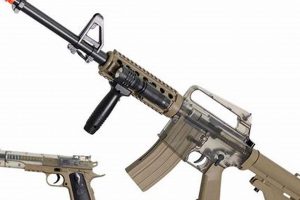
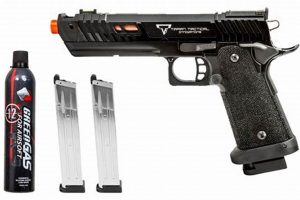
The process of applying lubricant to the internal and external components of an airsoft gun is essential for maintaining its optimal performance and longevity. This procedure typically involves using silicone-based oils or greases to reduce friction between moving parts, prevent corrosion, and ensure smooth operation. For example, applying a thin layer of silicone oil to the piston o-ring in an AEG (Automatic Electric Gun) can improve compression and increase firing power.
Properly executed, this maintenance task offers several key advantages. It enhances the airsoft gun’s accuracy and consistency, extends its lifespan by minimizing wear and tear on critical components, and reduces the likelihood of malfunctions during gameplay. Historically, regular lubrication has been recognized as a fundamental aspect of airsoft gun ownership, contributing significantly to a more reliable and enjoyable shooting experience.
The following sections will detail the specific types of lubricants recommended for different airsoft gun platforms, the necessary tools and materials for effective application, step-by-step guides for lubricating various internal and external components, and best practices to ensure proper maintenance and prevent potential issues.
Tips on Maintaining Airsoft Gun Performance
Consistent and effective lubrication plays a crucial role in maximizing the performance and lifespan of any airsoft gun. The following tips offer practical guidance for achieving optimal results.
Tip 1: Use Silicone-Based Lubricants Exclusively: Silicone is non-reactive with the rubber and plastic components commonly found in airsoft guns, preventing swelling, cracking, or degradation. Avoid petroleum-based products, as they can damage these materials.
Tip 2: Apply Lubricant Sparingly: Over-lubrication can attract dirt and debris, leading to malfunctions. Apply a thin, even coat to the necessary components. A small amount of lubricant goes a long way.
Tip 3: Focus on High-Friction Areas: Prioritize lubrication of the gearbox internals, piston o-ring, hop-up unit adjustment mechanism, and any other parts that experience significant friction during operation. These areas are most susceptible to wear.
Tip 4: Clean Before Lubricating: Before applying fresh lubricant, thoroughly clean the components to remove old grease, dirt, and debris. This prevents contaminants from interfering with the new lubricant’s effectiveness.
Tip 5: Regularly Lubricate After Use: Implement a consistent lubrication schedule based on the frequency of use. Frequent players should lubricate their airsoft guns after each game day to prevent wear and maintain performance.
Tip 6: Understand Different Lubricant Types: Silicone oil is ideal for o-rings and seals, while silicone grease is better suited for gears and high-friction areas within the gearbox. Using the correct lubricant for the application is essential.
Tip 7: Inspect Components Regularly: During the lubrication process, carefully inspect all components for signs of wear, damage, or cracking. Addressing these issues promptly can prevent more serious problems down the line.
Consistent application of these lubrication techniques results in smoother operation, increased accuracy, and extended component lifespan, ultimately enhancing the overall performance and reliability of the airsoft gun.
The subsequent section will provide specific lubrication instructions for various airsoft gun models, ensuring comprehensive understanding and application of these principles.
1. Appropriate lubricant selection
The efficacy of any procedure to lubricate airsoft guns is directly contingent upon selecting the correct lubricant. This choice is not arbitrary; it is a critical factor determining the long-term health and functionality of the airsoft gun’s internal mechanisms. Improper lubricant selection can lead to a cascade of negative consequences, including material degradation, increased friction, and eventual system failure. For example, using a petroleum-based lubricant on rubber o-rings will cause them to swell and lose their sealing properties, leading to air leaks and a significant decrease in performance. The selection process demands careful consideration of the materials the lubricant will contact and the specific operational requirements of the component in question.
Silicone-based oils and greases are generally recommended for airsoft guns due to their compatibility with the plastic, rubber, and metal components commonly found in these devices. However, variations exist within this category, necessitating further discernment. Silicone oil, with its low viscosity, is well-suited for lubricating o-rings and other sealing surfaces, allowing for smooth movement and minimal friction. Silicone grease, with its higher viscosity, is better suited for gearboxes and other high-stress, high-friction areas, providing a durable lubricating layer that can withstand significant mechanical forces. Incorrect application such as using grease on o-rings will impede performance, not enhance it.
Therefore, appropriate lubricant selection is not merely a preliminary step in the process; it is a fundamental determinant of success. It requires understanding the material composition of the airsoft gun’s components, the specific needs of each mechanism, and the distinct properties of various lubricants. Ignoring this foundational principle renders any lubrication effort potentially detrimental, ultimately undermining the airsoft gun’s performance and shortening its lifespan. A mindful approach, grounded in informed decision-making, is essential for effective and sustainable airsoft gun maintenance.
2. Component disassembly knowledge

Proficiency in component disassembly is intrinsically linked to effective airsoft gun lubrication. Accessing internal mechanisms for thorough lubrication necessitates a comprehensive understanding of disassembly procedures. Without this knowledge, lubricant application becomes superficial, addressing only readily accessible external parts while neglecting critical internal components where friction and wear are most prevalent.
- Gearbox Access
The gearbox, housing the gears, motor, and piston, requires disassembly for proper lubrication. Applying grease to gears and lubricating the piston o-ring necessitate opening the gearbox. Without knowledge of gearbox disassembly, these critical lubrication points remain inaccessible, leading to diminished performance and potential mechanical failure.
- Hop-Up Unit Maintenance
The hop-up unit, responsible for backspin and range, often requires disassembly for cleaning and lubrication of its adjustment mechanism. Dirt and debris accumulation can hinder hop-up performance. Disassembly allows for thorough cleaning and the application of silicone lubricant to ensure smooth and consistent adjustment.
- Piston and Cylinder Lubrication
The piston and cylinder assembly, crucial for air compression, benefits significantly from lubrication. Disassembly is necessary to access the piston o-ring, which requires lubrication to maintain a proper air seal. Inadequate lubrication here results in air leaks and a reduction in muzzle velocity.
- Motor Maintenance
While not directly lubricated, the motor’s pinion gear interfaces with the gearbox gears. Disassembly allows for inspection of the pinion gear’s condition and facilitates proper shimming, contributing to overall gearbox efficiency. Lack of disassembly knowledge hinders this crucial aspect of airsoft gun maintenance.
In summary, component disassembly knowledge is not merely a supplementary skill but a foundational requirement for effectively lubricating an airsoft gun. Accessing internal components, cleaning surfaces, and applying lubricant precisely are all predicated on the ability to disassemble and reassemble the airsoft gun’s various systems. Neglecting this aspect of maintenance severely compromises the long-term performance and reliability of the firearm.
3. Precise application technique

The process of lubricating an airsoft gun is significantly influenced by the application technique employed. Improper lubricant application can negate the benefits of selecting the correct lubricant and understanding component disassembly. Excessive lubricant, for instance, can attract dust and debris, forming an abrasive paste that accelerates wear on internal components. Conversely, insufficient application fails to provide adequate friction reduction, leaving critical areas vulnerable to damage.
Precise application involves targeting specific areas with the appropriate amount of lubricant. A fine-tipped applicator or syringe allows for controlled placement of oil or grease within the gearbox, ensuring that gears receive adequate lubrication without over-saturating the surrounding components. Similarly, when lubricating the piston o-ring, a thin, even coating is essential to create an effective air seal without impeding the piston’s movement. Consider the hop-up bucking, over-lubricating it can ruin its grip to BB pellet. The application technique directly affects the longevity and performance of the airsoft gun. Inadequate or excessive lubrication results in diminished performance, potential malfunctions, and accelerated wear on critical parts.
In summary, the connection between precise application and effective airsoft gun lubrication is undeniable. The success of lubrication hinges on the ability to apply the correct amount of lubricant to the right areas, minimizing potential complications and maximizing the benefits of reduced friction and component protection. Neglecting precise application techniques undermines the entire lubrication process, potentially leading to negative consequences and ultimately shortening the lifespan of the airsoft gun.
4. Regular maintenance schedule

The implementation of a regular maintenance schedule is inextricably linked to the prolonged efficacy of any effort to lubricate an airsoft gun. Consistent lubrication, performed at scheduled intervals, mitigates the cumulative effects of friction, wear, and environmental exposure on critical internal components. Without a defined schedule, lubrication becomes a reactive measure, addressing problems only after they manifest, rather than proactively preventing them. For example, an airsoft gun used frequently in outdoor environments accumulates dust and debris within its gearbox. A scheduled lubrication, performed every month, would remove this contamination and reapply grease to critical gears, minimizing wear and maintaining optimal performance. Conversely, neglecting this regular schedule results in increased friction, decreased efficiency, and potential component failure.
A comprehensive maintenance schedule considers the frequency of airsoft gun usage, environmental conditions, and the inherent wear characteristics of individual components. Airsoft guns used in competitive settings, where round counts are high, necessitate more frequent lubrication than those used for recreational purposes. Similarly, exposure to moisture or extreme temperatures can accelerate lubricant degradation, requiring adjustments to the maintenance schedule. The piston o-ring, for instance, a component subject to constant friction, may require lubrication every few uses to maintain a proper air seal and prevent velocity loss. Adhering to a schedule allows for preemptive identification of potential issues before they escalate into costly repairs. A thorough maintenance log helps monitor the performance of the gun over time.
In conclusion, a regular maintenance schedule is not merely an ancillary aspect of airsoft gun ownership; it is a foundational element of long-term performance and reliability. Proactive lubrication, guided by a well-defined schedule, minimizes wear, prevents malfunctions, and extends the lifespan of the airsoft gun. Ignoring this critical aspect of maintenance invites preventable problems and ultimately diminishes the value and enjoyment derived from the airsoft experience. A commitment to regular maintenance translates to a more reliable, consistent, and enjoyable airsoft gun ownership experience.
5. Proper storage practice

Effective airsoft gun maintenance extends beyond lubrication; storage practices significantly impact the longevity of lubricant effectiveness and overall gun condition. Proper storage minimizes environmental factors that degrade lubricants and compromise internal components.
- Humidity Control
High humidity accelerates corrosion and promotes lubricant breakdown. Storing airsoft guns in a dry environment, potentially utilizing dehumidifying agents, preserves lubricant integrity and prevents rust formation on metal parts. Neglecting humidity control necessitates more frequent lubrication to counteract moisture-induced degradation.
- Temperature Stability
Extreme temperature fluctuations can alter lubricant viscosity and accelerate its deterioration. Storage in a temperature-stable environment prevents these viscosity changes, maintaining consistent lubrication properties. Wide temperature swings may cause condensation, contributing to corrosion and requiring more frequent lubricant replacement.
- Protective Cases
Protective cases shield airsoft guns from dust, debris, and physical impacts that can damage internal components and contaminate lubricants. Abrasive particles introduced during storage can compromise the effectiveness of the lubricant, accelerating wear. Protective cases minimize this contamination, extending lubricant lifespan.
- Spring Tension Relief
For AEG (Automatic Electric Guns) models, prolonged storage with a compressed spring can lead to spring fatigue and performance degradation. Releasing spring tension before storage, when feasible, alleviates stress on the spring and associated components, preserving their operational integrity and the effectiveness of surrounding lubricants.
These storage practices, when integrated with a consistent lubrication schedule, collectively contribute to the long-term preservation of airsoft gun performance and reliability. Minimizing environmental stressors and physical damage ensures that lubrication efforts are not undermined by improper storage conditions.
Frequently Asked Questions
This section addresses common inquiries regarding the proper lubrication of airsoft guns, emphasizing best practices and dispelling potential misconceptions to ensure optimal performance and longevity.
Question 1: What types of lubricants are appropriate for airsoft guns?
Silicone-based oils and greases are generally recommended due to their compatibility with plastic, rubber, and metal components commonly found in airsoft guns. Petroleum-based lubricants should be avoided as they can degrade these materials.
Question 2: How often should an airsoft gun be lubricated?
Lubrication frequency depends on usage. Airsoft guns used frequently in competitive settings require more frequent lubrication than those used recreationally. A monthly lubrication schedule is a good starting point, adjusting based on observed wear and performance.
Question 3: Is it possible to over-lubricate an airsoft gun?
Yes. Over-lubrication can attract dust and debris, forming an abrasive paste that accelerates wear. Apply lubricant sparingly and evenly to the necessary components.
Question 4: Which components require lubrication?
Key components include the gearbox internals (gears, piston o-ring), hop-up unit adjustment mechanism, and any other parts experiencing significant friction during operation.
Question 5: How should an airsoft gun be prepared before lubrication?
The airsoft gun should be disassembled to access internal components. Remove old grease, dirt, and debris before applying fresh lubricant.
Question 6: What tools are required for effective airsoft gun lubrication?
Necessary tools include silicone oil and grease, a fine-tipped applicator or syringe, cleaning cloths, and appropriate tools for disassembly and reassembly of the airsoft gun.
Proper lubrication, combined with consistent cleaning and maintenance, ensures optimal performance and extended lifespan of the airsoft gun. Ignoring lubrication can lead to diminished performance, potential malfunctions, and accelerated wear.
The following section provides a summarized list of steps for easy lookup and reference.
Conclusion
This exploration of how to lubricate airsoft gun has emphasized the critical role of proper maintenance in ensuring optimal performance and longevity. Key considerations include selecting appropriate silicone-based lubricants, achieving proficiency in component disassembly, applying lubricants with precision, adhering to a regular maintenance schedule, and implementing proper storage practices. These elements, when diligently observed, collectively minimize friction, prevent wear, and safeguard internal components from environmental degradation.
Consistent and informed lubrication is not merely a superficial task but a fundamental responsibility of airsoft gun ownership. Neglecting this process invites preventable malfunctions, compromises performance, and ultimately shortens the lifespan of the firearm. A proactive approach, grounded in a thorough understanding of the principles outlined, is essential for maximizing the value and enjoyment derived from the airsoft experience. Commitment to these best practices yields a more reliable, consistent, and enduring tool for the sport.