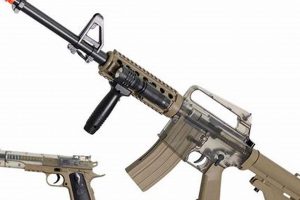
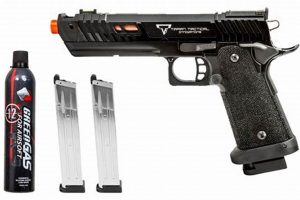
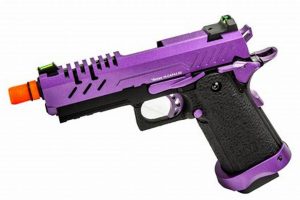
The query “do airsoft guns make noise” investigates the sound produced by airsoft weaponry during operation. Understanding the acoustic signature of these devices is crucial for various reasons, ranging from strategic gameplay considerations to adherence to noise regulations. The sound generated can vary considerably depending on the type of airsoft gun, its internal mechanisms, and any modifications applied.
Knowledge of the sound profile offers advantages in tactical scenarios by providing information about the user’s position. Furthermore, understanding the noises generated by airsoft devices is important for compliance with community rules and local ordinances concerning noise levels. Historically, the noise produced by simulated weaponry has always been a consideration in both training and recreational contexts.
This discussion will explore the different types of airsoft guns and the associated sounds they generate, factors influencing noise levels, and methods for mitigating or suppressing this acoustic output. The analysis offers a comprehensive overview of the auditory impact associated with airsoft activities.
Minimizing Airsoft Gun Sound Emission
Strategies for reducing the acoustic signature of airsoft guns are detailed below. These recommendations address various factors contributing to the overall sound level produced during operation, focusing on practical modifications and usage techniques.
Tip 1: Internal Component Dampening: Introducing sound-dampening materials within the gearbox of an AEG (Automatic Electric Gun) can significantly reduce mechanical noise. This involves applying specialized foam or rubber pads to internal surfaces to absorb vibrations and minimize rattling.
Tip 2: Precision Gear Shimming: Correctly shimming the gears within an AEG gearbox ensures proper alignment and reduces friction. This leads to smoother operation and a quieter cycling sound.
Tip 3: Piston Head Modification: Replacing the stock piston head with a quieter alternative, often featuring rubber or polymer dampeners, will soften the impact against the cylinder head. This minimizes the sharp “crack” sound often associated with AEGs.
Tip 4: Spring Selection and Lubrication: Selecting a spring appropriate for the desired power output can prevent over-stressing the mechanism, leading to excessive noise. Regularly lubricating the spring and other moving parts within the gearbox also reduces friction and noise.
Tip 5: HPA (High-Pressure Air) System Regulation: For HPA-powered airsoft guns, carefully regulate the air pressure to the minimum required for the desired performance. Excessive pressure results in louder bursts of air upon firing.
Tip 6: Barrel and Outer Assembly Insulation: Wrapping the outer barrel and receiver with sound-absorbing materials can dampen vibrations and reduce the projection of sound outward. Specialized wraps or tapes designed for this purpose are available.
Tip 7: Utilize Suppressor Accessories (Where Permitted): Although typically ineffective at truly “suppressing” sound, mock suppressors can somewhat alter the sound profile of an airsoft gun, potentially reducing its perceived loudness or changing its frequency.
Implementing these techniques can substantially diminish the auditory output of airsoft weaponry. Each method contributes to a reduction in specific noise sources, resulting in a quieter overall operation.
By addressing these noise-related aspects, individuals can promote a more considerate and less disruptive airsoft experience within their communities.
1. Mechanical Operation

The mechanical operation of an airsoft gun is a primary contributor to its overall sound profile. Automatic Electric Guns (AEGs), a prevalent type, rely on a complex gearbox containing gears, a motor, and a piston assembly. These components interact rapidly to compress air and propel the BB projectile. The meshing of gears, the motor’s rotation, and the piston’s movement within the cylinder all generate distinct sounds. For example, a poorly shimmed gearbox will produce a noticeable whining or grinding noise, directly increasing the weapon’s acoustic signature. Furthermore, the speed and power of the motor influence the loudness of the operational sounds. These noises, if not mitigated, can compromise a player’s position in a tactical scenario and violate noise restrictions imposed at airsoft fields.
Variations in mechanical design and maintenance significantly impact the sound produced. High-quality gears manufactured with tighter tolerances tend to generate less noise compared to their cheaper counterparts. Regular lubrication of the gearbox reduces friction and dampens the overall sound level. Similarly, the type and quality of the motor play a role; some motors are inherently quieter than others. Another example is the Anti-Reversal Latch which stop gears backward to ensure BB fired properly. Malfunction or wear on any of these components results in increased noise, emphasizing the importance of regular maintenance for both performance and acoustic considerations. For example, a worn piston head striking the cylinder head can create a sharp, distinct sound that is easily detectable.
In summary, the mechanical operation constitutes a significant source of noise in airsoft guns. Understanding the interplay between the various mechanical components and their contribution to the overall sound level is crucial for those seeking to minimize the weapon’s acoustic signature. Properly maintaining and upgrading these components will both improve performance and reduce unnecessary noise. These factors are especially critical where stealth and adherence to noise limits are paramount.
2. Gas Propulsion

Gas propulsion constitutes a distinct source of sound in airsoft weaponry. Guns utilizing compressed gas, such as CO2 or green gas, operate by releasing a measured burst of gas to propel the BB projectile. The sudden expansion of gas generates an audible report, contributing significantly to the overall acoustic signature of the device.
- Valve Operation and Release Noise
The opening and closing of the gas valve is a primary source of noise. The rapid release of pressurized gas creates a sharp “hiss” or “pop” sound. The intensity of this sound is directly related to the gas pressure and the valve’s design. A valve that seals poorly or releases gas unevenly will often produce a louder and more erratic sound. For instance, a worn valve seal in a gas blowback pistol can cause excessive gas leakage, resulting in a noticeable increase in the report. Furthermore, the speed at which the valve opens and closes influences the sound’s characteristics; a quicker opening typically generates a sharper, louder sound.
- Gas Expansion and Muzzle Report
As the compressed gas exits the muzzle behind the BB, it expands rapidly into the surrounding air, creating a mini-sonic boom effect. This expansion generates a distinct “crack” or “pop” sound. The sound intensity depends on the gas pressure, the barrel length, and the muzzle design. Higher gas pressures result in a louder muzzle report. A longer barrel allows for more efficient gas expansion, potentially altering the sound profile. Additionally, muzzle devices, while not true suppressors, can affect the way gas is released and diffused, slightly modifying the sound’s characteristics. For example, a muzzle brake might redirect some of the gas to the sides, altering the perceived direction and intensity of the sound.
- Blowback Mechanism Noise
In gas blowback (GBB) airsoft guns, a portion of the gas is used to cycle the slide or bolt, simulating the recoil of a real firearm. The movement of these parts creates additional mechanical noise. The slide impacting the frame generates a distinct “clack” sound, and the internal components shifting contribute to the overall auditory output. The force of the blowback action, the weight of the slide or bolt, and the materials used in their construction all impact the loudness of this mechanical cycling. For example, a GBB pistol with a metal slide typically produces a louder and more resonant sound than one with a polymer slide.
- Gas Type and Pressure Considerations
The type of gas used, whether CO2, green gas, or propane, influences the noise generated. CO2 generally operates at higher pressures than green gas, leading to a louder report. The gas pressure itself is a critical factor. Over-pressurized systems produce significantly louder sounds than those operating at recommended pressures. The temperature also affects gas pressure; colder temperatures reduce pressure and potentially lower the noise output, while warmer temperatures increase pressure and can lead to a louder sound. Using the appropriate gas type and maintaining optimal pressure are vital for both performance and noise management.
The connection between gas propulsion and audible noise is evident. Each stage of the gas release process, from valve operation to muzzle report and blowback action, generates a distinct sound. Understanding these noise sources is critical for individuals seeking to minimize the acoustic signature of gas-powered airsoft guns. Factors such as gas type, pressure, and internal components contribute significantly to the overall noise level, demanding careful consideration for both tactical advantage and compliance with noise restrictions.
3. BB Impact
The impact of an airsoft BB projectile against a target contributes to the overall sound produced by an airsoft gun. This impact noise is a key element in the assessment of whether airsoft guns generate sound and warrants specific consideration.
- Target Material Properties
The composition of the target material significantly influences the sound produced upon impact. Softer materials, such as fabric or soft foam, tend to absorb more of the BB’s kinetic energy, resulting in a muffled sound or minimal noise. Conversely, harder materials, such as metal or rigid plastic, offer less resistance and generate a sharper, louder impact sound. For example, a BB striking a metal barrel will produce a distinct “ping,” while impact on dense foliage will result in a much quieter thud. The acoustic properties of the target are, therefore, a critical determinant of the impact noise generated.
- BB Material and Weight
The material and weight of the BB projectile also affect the impact sound. BBs are typically made of plastic, but variations in density and composition exist. Heavier BBs, possessing greater kinetic energy upon impact, generally produce louder sounds than lighter BBs. Similarly, the type of plastic influences the sound; some plastics are more prone to creating higher-frequency sounds upon collision. Biodegradable BBs, often made of PLA (polylactic acid), may have slightly different acoustic properties compared to standard ABS (acrylonitrile butadiene styrene) BBs. These differences in material and weight contribute to the variations in impact noise observed in airsoft activities.
- Impact Velocity and Angle
The velocity at which the BB strikes the target has a direct relationship with the impact sound’s loudness. Higher velocities result in greater force upon impact, leading to louder and more distinct sounds. The angle of impact also plays a role; a direct, perpendicular hit typically generates the loudest sound, while glancing blows may produce softer or less noticeable noises. The effective range of the airsoft gun and the distance to the target thus influence the BB’s velocity at impact and, consequently, the sound produced. For example, a BB fired at close range will likely generate a louder impact sound than one fired at a greater distance, due to the decreased velocity.
- Proximity and Environmental Factors
The distance between the target and the observer, as well as the surrounding environment, significantly impact the perception of the impact sound. Proximity amplifies the sound, making it more easily detectable. Conversely, greater distances reduce the sound’s intensity. Environmental factors, such as enclosed spaces or reflective surfaces, can amplify and reverberate the sound, while open spaces or sound-absorbing materials can diminish its audibility. The presence of ambient noise, such as wind or human activity, can also mask or interfere with the perception of the impact sound. These spatial and environmental elements contribute to the overall auditory experience associated with BB impacts.
In summary, the noise resulting from BB impact is not a singular event but a complex interplay of material properties, velocity, angle, and environmental conditions. Comprehending these influencing factors provides a more thorough understanding of how BB impact contributes to the sounds associated with airsoft guns.
4. Environment

The surrounding environment significantly influences the sound propagation and perceived loudness emanating from airsoft weaponry. The acoustic properties of the location where airsoft guns are discharged can either amplify or dampen the sound, impacting audibility and potential disturbance levels. Enclosed spaces, characterized by hard, reflective surfaces, create reverberation, prolonging the duration and increasing the intensity of the sound. Open outdoor environments, particularly those with soft ground cover and foliage, tend to absorb sound, reducing its range and perceived loudness. For example, an airsoft gun discharged within a concrete building will produce a much louder and more persistent sound than the same gun fired in a wooded area.
Moreover, ambient noise within the environment can mask or distort the sounds generated by airsoft guns. A noisy urban setting may render the report of an airsoft gun virtually imperceptible, while the same sound in a quiet, rural area can be easily distinguished. Wind direction and strength also affect sound propagation, carrying sound further in one direction and diminishing it in another. Topography plays a role, with hills and valleys creating acoustic shadows and influencing the distribution of sound. Understanding the environmental factors that affect sound is critical for evaluating the impact of airsoft activities on surrounding communities and for implementing appropriate noise mitigation strategies. An airsoft field located near residential areas may require sound barriers or operational restrictions based on the environmental characteristics of the site.
In summary, the environment acts as a crucial modulator of the sounds produced by airsoft guns. Factors such as enclosure, surface reflectivity, ambient noise, and topography all contribute to the final acoustic signature. Recognizing the role of the environment is essential for both players and regulators seeking to manage noise levels and minimize potential disturbances. Proper site selection and the implementation of noise control measures, informed by an understanding of environmental acoustics, are necessary to ensure responsible airsoft practices.
5. Modifications

Modifications to airsoft weaponry can substantially alter the acoustic signature they produce, directly impacting whether and how distinctly these devices “make noise.” These alterations range from internal component replacements to external additions, each influencing the sound profile in specific ways. The degree and nature of these modifications determine the extent to which the resulting sound differs from that of an unaltered airsoft gun. For instance, replacing the stock motor in an AEG with a high-torque variant may result in a louder, higher-pitched whine during operation. Similarly, installing a weaker spring to reduce the muzzle velocity can lessen the impact noise when the BB strikes a target.
The practical significance of these modifications is twofold. First, modifications can be implemented to reduce the sound generated, thereby enhancing stealth for competitive play or minimizing disturbance in noise-sensitive environments. Examples include installing sound-dampening materials inside the gearbox or using specialized piston heads designed to lessen the impact against the cylinder head. Conversely, modifications can inadvertently increase the sound output. For example, improper shimming of gears within an AEG can create a loud grinding noise. Further, the use of high-pressure air (HPA) systems, if not carefully regulated, can result in significantly louder bursts of air upon firing. In certain jurisdictions, modifications intended to replicate the sound of real firearms may be subject to legal restrictions.
In conclusion, modifications represent a crucial determinant of the sounds produced by airsoft guns. Understanding the impact of specific modifications on the acoustic profile is essential for both players seeking to optimize stealth and for individuals aiming to comply with noise regulations. The choices made regarding internal and external alterations, coupled with proper maintenance, directly influence the audibility and characteristics of the sound produced during airsoft activities.
6. Perception
Auditory perception forms a critical, subjective component in determining whether airsoft guns “make noise.” While the objective sound pressure levels produced by these devices can be measured using decibel meters, the perceived loudness and characteristics are inherently influenced by individual hearing capabilities, contextual factors, and pre-existing biases. The subjective interpretation of a sound event plays a pivotal role in whether it is deemed noticeable, disruptive, or even alarming. For instance, a faint “thwack” from a BB impacting a target might be considered negligible by an individual with a hearing impairment, while someone with acute hearing might perceive it as a distinct and concerning sound. This demonstrates the impact of individual hearing sensitivity on noise perception.
Contextual factors further modify auditory perception. The same sound produced by an airsoft gun may be interpreted differently depending on the setting. A “pop” emanating from an airsoft gun within a designated skirmish field would likely be expected and accepted, whereas the same sound heard in a residential area could be perceived as a potential threat, triggering alarm and investigation. Furthermore, pre-existing biases and expectations can shape perception. Someone already predisposed to dislike airsoft activities might be more sensitive to the sounds produced by these devices, amplifying their perceived loudness and disruptiveness. Conversely, individuals familiar with airsoft may be less likely to notice or be bothered by the associated noises. Understanding these perceptual influences is crucial when assessing the impact of airsoft activities on the surrounding community.
In summary, “Perception” introduces a layer of subjectivity that significantly shapes the understanding of whether and how airsoft guns generate noise. While objective measurements provide a foundation for noise assessment, it is the individual’s auditory experience, modulated by hearing capabilities, context, and biases, that ultimately determines the perceived impact. Therefore, effective noise management strategies must consider not only the objective sound levels but also the subjective perceptual responses of individuals within the surrounding environment, incorporating education and communication to address potential misinterpretations and reduce concerns.
Frequently Asked Questions
The following addresses common inquiries regarding the sound produced by airsoft devices. The information presented aims to provide clarity and understanding of the acoustic properties associated with these recreational implements.
Question 1: Is complete silence attainable with an airsoft gun?
Complete acoustic elimination is not realistically achievable. Every action of firing an airsoft gun such as mechanical, gas, and BB propelled produces sound.
Question 2: Are specific types of airsoft guns consistently louder than others?
Generally, gas-powered airsoft guns operating at higher pressures tend to generate more noise compared to automatic electric guns (AEGs) with dampened internal components. However, the degree of modification and maintenance can significantly alter the relative loudness.
Question 3: Can modifications guarantee noise reduction in airsoft guns?
Modifications can reduce certain noise components. Sound-dampening materials and precision gear shimming can mitigate mechanical noise. However, modification results depend on execution and may not eliminate all sounds.
Question 4: Do environmental conditions influence the audibility of airsoft gun noise?
Indeed, enclosed environments amplify sounds, while open spaces tend to dissipate them. Wind direction, terrain, and ambient noise levels all play a role in the perceived loudness and propagation of sound.
Question 5: Are there legal restrictions pertaining to the sound level of airsoft guns?
Specific regulations vary by locality. Some areas may have noise ordinances that apply to airsoft activities, particularly in residential zones. Therefore, consulting local authorities is recommended.
Question 6: Is the perception of airsoft gun noise consistent among all individuals?
Auditory perception varies. Factors such as hearing sensitivity, prior experiences, and pre-existing biases can influence how individuals perceive and react to the sounds generated by airsoft guns.
In summary, complete silence from airsoft devices is unattainable, and noise levels are influenced by multiple factors including gun type, modifications, environment, and the individual’s perception. Understanding these variables is crucial for responsible and informed airsoft activities.
The subsequent discussion will transition to strategies for promoting responsible airsoft practices and minimizing potential noise-related conflicts within communities.
The Audible Reality of Airsoft Gunnery
The inquiry “do airsoft guns make noise” has been addressed through an examination of various contributing factors. The mechanics of operation, gas propulsion systems, projectile impact, environmental influence, modifications undertaken, and auditory perception all contribute to the overall sound profile. The analysis shows that while absolute silence is unattainable, understanding these elements enables mitigation strategies and responsible practices.
Given the multifaceted nature of sound generation and perception, a commitment to considerate conduct remains paramount. Continued research and innovation in noise reduction technologies, combined with informed community engagement, will foster a sustainable balance between recreational airsoft activities and the maintenance of peaceful environments. The responsibility to minimize noise impact rests with both the participants and the broader community, necessitating ongoing dialogue and proactive measures.