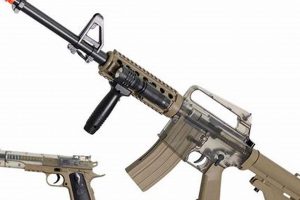
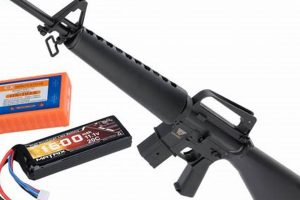
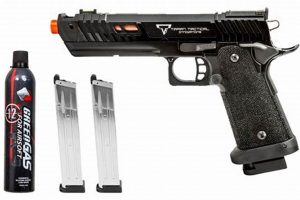
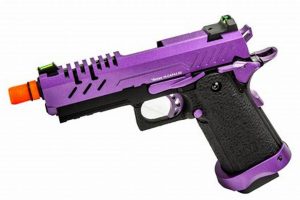
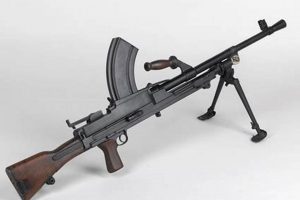
The process of disposing of airsoft replicas necessitates careful consideration due to their realistic appearance. These items, while not firearms, can be mistaken for such, leading to potential legal ramifications or safety concerns if improperly handled. Discarding them irresponsibly, such as simply placing them in regular trash, is strongly discouraged.
Proper disposal methods are essential to prevent misidentification, theft, or misuse. Historical incidents involving airsoft replicas being mistaken for genuine firearms underscore the importance of responsible handling. The benefits of appropriate disposal include minimizing potential harm, adhering to local regulations, and contributing to community safety.
The subsequent sections will detail various methods for relinquishing ownership of airsoft replicas, including options for donation, sale, or, when necessary, destruction, ensuring compliance with relevant laws and best practices. Each method offers a different approach to ensuring the safe and lawful removal of these items from circulation.
Responsible Airsoft Replica Disposal Tips
The following guidelines provide instruction on safely and legally relinquishing ownership of airsoft replicas. These steps aim to minimize potential risks associated with improper disposal.
Tip 1: Research Local Regulations: Before any disposal action, it is imperative to consult local laws and ordinances pertaining to imitation firearms. Regulations can vary significantly by jurisdiction, dictating permissible methods of disposal or transfer.
Tip 2: Consider Donation: Contact local airsoft fields, clubs, or organizations that may accept donations of used equipment. Ensure the items are in working order and that the recipient understands the intended use and safety guidelines.
Tip 3: Explore Resale Options: If the replica is in good condition, consider selling it through online marketplaces or local airsoft communities. Clearly disclose the item’s nature as an airsoft replica and adhere to all platform-specific guidelines regarding imitation firearms.
Tip 4: Disable Functionality (If Necessary): If donation or resale are not viable options, disabling the replica’s functionality is crucial before disposal. This can involve removing or destroying key internal components, rendering it inoperable.
Tip 5: Conceal Appearance During Disposal: When discarding a non-functional replica, ensure it is securely wrapped or contained to obscure its resemblance to a real firearm. This prevents misidentification and potential alarm.
Tip 6: Contact Local Law Enforcement (When Uncertain): If uncertain about the legality of specific disposal methods, contact local law enforcement agencies for guidance. They can provide information on local regulations and recommend appropriate procedures.
Tip 7: Document the Process: Keep records of any donation, sale, or disposal actions, including dates, recipients (if applicable), and methods used. This documentation can be helpful in the event of future inquiries.
Adherence to these tips ensures that the relinquishing of airsoft replicas is conducted responsibly, minimizing potential risks and complying with legal requirements. Prioritizing safety and legality throughout the disposal process is paramount.
The subsequent section will address further considerations regarding the long-term implications of responsible airsoft replica handling.
1. Local regulations compliance

Local regulations pertaining to imitation firearms directly govern the legal methods for disposal. Neglecting these regulations can lead to legal penalties, emphasizing the critical importance of understanding and adhering to them prior to any disposal action.
- Definition of “Imitation Firearm”
Local ordinances often define what constitutes an “imitation firearm,” which may include airsoft replicas. This definition dictates whether a specific item falls under disposal regulations. For instance, some municipalities may consider replicas with specific color markings to be exempt, while others may not. A clear understanding of this definition is crucial before proceeding.
- Permissible Disposal Methods
Local regulations often outline permissible methods for disposing of imitation firearms. Some jurisdictions may require items to be rendered permanently inoperable before disposal, while others may prohibit disposal in regular waste streams, mandating specific collection points or procedures. Failure to comply can result in fines or legal action.
- Transfer and Sale Restrictions
Regulations may also govern the transfer or sale of airsoft replicas. Some localities may require sellers to obtain permits or licenses, while others may impose restrictions on the age of buyers or the types of replicas that can be sold. These restrictions directly impact the viability of resale as a disposal method.
- Penalties for Non-Compliance
Violating local regulations regarding imitation firearms can result in various penalties, including fines, confiscation of the items, or even criminal charges in certain cases. Awareness of these potential consequences serves as a strong incentive for adhering to all applicable laws and ordinances.
The preceding facets illustrate how local regulations profoundly impact the disposal of airsoft replicas. Understanding these regulations is not merely a legal formality but a fundamental aspect of responsible ownership. Compliance mitigates potential risks and ensures adherence to community standards regarding public safety.
2. Donation viability assessment

The feasibility of donation as a disposal method for airsoft replicas hinges on a comprehensive assessment of various factors. This assessment determines whether donation is a practical and ethical option for relinquishing ownership.
- Recipient Acceptance Policies
Airsoft fields, clubs, and organizations maintain specific policies regarding the acceptance of donated equipment. These policies may stipulate requirements for functionality, condition, brand, or model. Understanding these policies is crucial; a replica deemed unsuitable by potential recipients renders donation unviable. For example, a field might decline replicas with significant cosmetic damage or those not adhering to field-specific FPS (feet per second) limits. Rejection necessitates exploration of alternative disposal methods.
- Operational Condition Evaluation
The operational condition of the airsoft replica directly influences donation viability. Donated items are typically expected to be in functional order, requiring only minor repairs or maintenance. Non-functional replicas may be deemed unsuitable for donation, unless the recipient possesses the capacity and willingness to undertake significant repairs. For example, a replica with a broken gearbox might be accepted by a club with teching capabilities, but rejected by a field primarily focused on gameplay.
- Safety Compliance Verification
Donated airsoft replicas must adhere to established safety standards. This includes ensuring that the replica is free from critical defects, that it operates within acceptable FPS limits, and that it incorporates appropriate safety features, such as orange tips. Replicas failing to meet these standards may pose a safety risk to users and are unlikely to be accepted by responsible organizations. For example, a replica with a malfunctioning safety mechanism would be considered unsafe and unsuitable for donation.
- Legal and Regulatory Considerations
Local regulations regarding the donation of airsoft replicas must be considered. Some jurisdictions may impose restrictions on the transfer of imitation firearms, even in the context of donation. Ensuring compliance with these regulations is paramount. A donation that violates local laws can result in legal penalties for both the donor and the recipient. Consulting with legal counsel or local law enforcement can help ensure compliance.
In conclusion, a thorough donation viability assessment, encompassing recipient policies, operational condition, safety compliance, and legal considerations, is crucial in determining whether donation is a responsible and feasible method for relinquishing ownership of airsoft replicas. Failure to conduct such an assessment can lead to wasted effort, potential safety risks, or even legal repercussions.
3. Resale marketplace restrictions

Resale marketplaces, both online and physical, frequently impose restrictions on the sale of airsoft replicas, directly impacting disposal options. These restrictions stem from concerns regarding public safety, compliance with local laws pertaining to imitation firearms, and the potential for misuse. The presence of such restrictions necessitates thorough investigation and adherence to marketplace guidelines before attempting to sell an airsoft replica as a means of disposal. Non-compliance can lead to the removal of listings, account suspension, or, in certain instances, legal ramifications. For example, platforms like eBay and Amazon often have specific policies prohibiting or restricting the sale of items resembling real firearms, including airsoft replicas, even with orange tips.
The severity of resale marketplace restrictions varies depending on the platform, the location of both the seller and potential buyers, and the specific characteristics of the airsoft replica. Some marketplaces may permit the sale of airsoft replicas only if they are clearly marked with blaze orange tips, lack realistic coloration, or are sold to buyers in jurisdictions where such sales are legal. Others may require sellers to provide proof of age or certifications demonstrating compliance with local laws. These restrictions influence the viability of resale as a disposal method, often requiring significant effort to ensure compliance and potentially limiting the pool of eligible buyers. Consider, for instance, a seller attempting to sell an airsoft replica in a state where such items are heavily regulated; the pool of eligible buyers may be significantly smaller than in a state with more lenient regulations, potentially prolonging the disposal process or necessitating alternative methods.
Understanding and navigating resale marketplace restrictions is crucial for individuals seeking to responsibly dispose of airsoft replicas. Thoroughly reviewing marketplace policies, verifying compliance with local laws, and clearly disclosing the nature of the item being sold are essential steps. Failure to do so can result in the rejection of listings, account suspension, or, in severe cases, legal consequences. The limitations imposed by resale marketplaces underscore the need to explore alternative disposal methods, such as donation or safe destruction, when resale is not a viable option, ensuring compliance with both marketplace guidelines and applicable legal requirements.
4. Safe deactivation methods

Safe deactivation methods are intrinsically linked to the responsible disposal of airsoft replicas. These methods represent a critical safeguard, ensuring that discarded replicas cannot be mistaken for functioning firearms or misused. Rendering an airsoft replica inoperable significantly reduces the risk of accidental injury, misuse in criminal activities, or the instigation of unwarranted public alarm. The selection and execution of appropriate deactivation methods directly influence the safety and legality of the entire disposal process. For example, simply removing the magazine from an airsoft replica does not constitute safe deactivation, as the replica remains capable of firing if a magazine is inserted. More robust methods are required.
Further, safe deactivation methods vary in their complexity and effectiveness, depending on the replica’s design and construction. Some methods involve dismantling internal components, such as the gearbox or hop-up unit, rendering the replica incapable of firing projectiles. Other methods involve permanently disabling the replica’s power source, such as puncturing the gas reservoir in a gas-powered replica. The chosen method should effectively prevent future functionality while minimizing the risk of accidental injury during the deactivation process itself. For example, using power tools to disassemble a replica requires appropriate safety precautions, including eye protection and gloves, to prevent injury from flying debris or sharp edges. Incorrectly deactivating a replica could leave it still partially functional, posing a risk to anyone who might find or attempt to use it.
In conclusion, safe deactivation methods are not merely optional steps but essential components of responsible airsoft replica disposal. Their proper execution is crucial for minimizing risks, complying with legal requirements, and ensuring that discarded replicas do not pose a threat to public safety. Individuals seeking to dispose of airsoft replicas must prioritize safe deactivation, carefully selecting and implementing methods appropriate to the specific replica and its potential for misuse. This underscores the importance of responsible ownership extending beyond the period of active use.
5. Appearance concealment crucial

The practice of obscuring the appearance of airsoft replicas during the disposal process is a pivotal component of responsible ownership. This precaution directly addresses the potential for misidentification, preventing airsoft replicas from being mistaken for genuine firearms. Such misidentification can trigger undue alarm, provoke law enforcement intervention, or, in the most severe cases, lead to accidental shootings or escalated confrontations. Concealing the replica’s form minimizes the likelihood of these adverse outcomes. A real-world example includes instances where discarded airsoft replicas, left visible in public areas, prompted emergency calls and deployment of tactical units, diverting resources and creating unnecessary risk.
Effective appearance concealment involves wrapping the airsoft replica in opaque materials such as cardboard, plastic bags, or cloth. This ensures that the item’s distinctive features are not readily visible during transport or while awaiting collection as refuse. It is equally important to avoid displaying the replica in a manner that could be construed as threatening or provocative. For instance, leaving an airsoft replica partially visible in a dumpster or near a public thoroughfare increases the risk of misidentification and subsequent alarm. The significance of appearance concealment extends beyond legal compliance; it reflects a commitment to community safety and responsible handling of items that, while not lethal, possess a realistic appearance capable of causing confusion and fear.
In summation, appearance concealment serves as a critical layer of protection against the potential consequences of misidentifying discarded airsoft replicas. This practice minimizes the risk of triggering undue alarm, preventing law enforcement interventions, and averting potential accidents. By prioritizing appearance concealment as an integral step in the disposal process, individuals demonstrate a commitment to responsible ownership and community safety. The benefits of this practice far outweigh the minor inconvenience it may entail, underscoring its importance in the responsible handling of airsoft replicas.
Frequently Asked Questions
This section addresses common inquiries regarding the proper and responsible methods for disposing of airsoft replicas, emphasizing safety, legality, and ethical considerations.
Question 1: Is it permissible to simply discard an airsoft replica in the regular trash?
No. Discarding an airsoft replica in regular trash is strongly discouraged due to the risk of misidentification and potential misuse. Regulations may vary, but responsible disposal requires either donation, resale (where permitted), or deactivation and concealment.
Question 2: What are the potential legal consequences of improperly disposing of an airsoft replica?
Improper disposal can lead to legal penalties, including fines or even criminal charges, depending on local regulations. If an improperly discarded replica is used in a crime, the previous owner may face legal scrutiny. Compliance with local ordinances is essential.
Question 3: How can one determine if a local airsoft field or organization will accept a donated airsoft replica?
Contact the airsoft field or organization directly. Inquire about their donation policies, including any requirements for functionality, condition, FPS limits, or specific replica types. Be prepared to provide detailed information about the replica.
Question 4: What constitutes a “safe” deactivation method for an airsoft replica?
A safe deactivation method renders the replica permanently inoperable. This may involve dismantling internal components, such as the gearbox or hop-up unit, or permanently disabling the power source. The method should prevent future functionality while minimizing the risk of accidental injury during the deactivation process.
Question 5: What are the primary considerations when attempting to resell an airsoft replica through online marketplaces?
Primary considerations include marketplace restrictions on imitation firearms, compliance with local laws regarding sales and transfers, and clear disclosure of the item’s nature as an airsoft replica. Failure to comply can result in the removal of listings or account suspension.
Question 6: Why is appearance concealment considered a crucial step in the disposal process?
Appearance concealment prevents misidentification, reducing the risk of undue alarm, law enforcement intervention, or potential misuse. Wrapping the replica in opaque materials ensures that its resemblance to a real firearm is obscured during disposal.
Proper disposal of airsoft replicas requires careful consideration of legal, ethical, and safety factors. Adherence to these guidelines minimizes risks and ensures responsible relinquishment.
The following section will provide a comprehensive summary of the key steps for responsible disposal of airsoft replicas.
Conclusion
This discourse has detailed the critical aspects of how to get rid of airsoft guns responsibly. Key points have included adherence to local regulations, the viability assessment of donation, the examination of resale marketplace restrictions, safe deactivation methods when necessary, and the crucial need for appearance concealment during final disposal. Each of these elements contributes to mitigating risks associated with misidentification, misuse, and potential legal ramifications.
Effective management of airsoft replica disposal is paramount for community safety and legal compliance. Prioritizing these guidelines fosters responsible ownership and minimizes potential harm. Continued diligence in following these procedures will contribute to a safer environment and responsible handling of realistic imitation firearms.