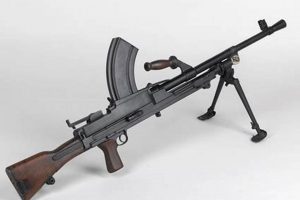
The measure of an airsoft replica’s output is typically defined by its muzzle velocity, expressed in feet per second (FPS), and the projectile’s weight, usually measured in grams (g). These two factors combine to determine the energy delivered by the projectile upon impact. This energy level is the primary determinant of the replica’s performance and potential effect.
Understanding the energy output of these devices is crucial for safety and responsible usage. Historically, airsoft evolved from recreational activities utilizing repurposed equipment. Current regulations and field rules are often based on these energy levels, designed to prevent injury while maintaining a realistic simulation. Awareness of these limitations ensures a positive and safe experience for all participants.
Further discussion will delve into the specific factors influencing projectile velocity, the typical FPS ranges observed in different types of airsoft replicas, and the safety guidelines associated with various energy levels. The article will also explore modifications that impact projectile velocity, and legal considerations surrounding the use and ownership of these devices.
Guidelines for Understanding Power Levels
The following guidelines offer critical information concerning the management and safe operation of airsoft devices. Comprehending these aspects is essential for responsible participation in the sport.
Tip 1: Chronograph Testing: Before engaging in any airsoft activity, ensure the device undergoes chronograph testing. This process measures projectile velocity (FPS) and ensures adherence to field or legal limits. Documented results are advisable.
Tip 2: Weight Considerations: Projectile weight significantly impacts energy transfer. Increasing projectile weight, while maintaining a similar FPS, can result in higher energy output. Understand the correlation between weight and impact force.
Tip 3: Field Regulations: Always comply with specific field rules regarding FPS limits and minimum engagement distances (MED). These regulations are designed to mitigate the risk of injury and should be strictly observed.
Tip 4: Protective Gear: Proper protective gear, including full-seal eye protection, is mandatory. The potential for injury, even at regulated power levels, necessitates the consistent use of appropriate safety equipment.
Tip 5: Safe Handling Practices: Treat all airsoft devices as if they were real firearms. Practice muzzle discipline, keep the device pointed in a safe direction, and avoid unnecessary handling or modifications that could increase its output beyond legal or safe limits.
Tip 6: Legal Compliance: Be aware of local and national laws pertaining to the ownership, transportation, and use of airsoft devices. These laws may vary significantly, and compliance is essential.
Tip 7: Internal Modifications: Altering internal components to increase FPS requires extreme caution. Such modifications can compromise the device’s safety and potentially void any manufacturer’s warranty. Understand the risks involved.
Adhering to these guidelines promotes a safer and more enjoyable airsoft experience. Consistent application of these practices minimizes risk and ensures responsible participation.
The subsequent sections will explore the legal and ethical implications of modifying airsoft devices and the potential consequences of exceeding established safety thresholds.
1. Muzzle Velocity (FPS)

Muzzle velocity, expressed in feet per second (FPS), serves as a primary indicator of a particular airsoft replica’s potential output. It directly correlates to the kinetic energy the projectile possesses upon leaving the barrel, influencing its range, impact force, and overall effectiveness in airsoft scenarios. Understanding FPS is critical for assessing the limitations and safety considerations associated with a particular device.
- FPS as a Gauge of Energy:
FPS functions as a quantifiable measure of the projectile’s speed, and thus, its energy. A higher FPS generally translates to a greater potential for delivering force upon impact. Different airsoft replica types, such as pistols, rifles, and sniper rifles, often operate within specific FPS ranges. Exceeding established FPS limits can lead to increased risk of injury and violate field regulations.
- Impact on Range and Trajectory:
Higher FPS values typically result in increased projectile range and a flatter trajectory. However, these benefits come with the responsibility of adhering to minimum engagement distances (MEDs). MEDs are enforced to mitigate the potential for close-range injuries associated with higher-velocity projectiles. The relationship between FPS, range, and MEDs is a key factor in fair and safe gameplay.
- Regulation and Compliance:
Airsoft fields and organized events universally implement FPS limits as a core safety measure. These limits are strictly enforced through chronograph testing. Failing to comply with FPS regulations can result in disqualification from play and, in some cases, legal consequences. Responsible airsoft participants prioritize compliance with these established rules.
- Relationship to Projectile Weight:
While FPS is a direct measure of velocity, projectile weight plays a crucial role in determining the overall kinetic energy delivered. A heavier projectile traveling at the same FPS as a lighter one will possess greater energy. This interplay between FPS and projectile weight necessitates a holistic approach to assessing the potential energy output. Some fields may impose limits on both FPS and projectile weight.
In summary, muzzle velocity (FPS) is a fundamental aspect when evaluating an airsoft replica’s overall output. It directly influences range, impact force, and the potential for injury. Compliance with established FPS limits is paramount for ensuring a safe and responsible airsoft experience. The consideration of projectile weight alongside FPS provides a more comprehensive understanding of the kinetic energy involved, further reinforcing the importance of responsible airsoft practices.
2. Projectile Weight (grams)

The mass of an airsoft projectile, typically measured in grams, exerts a significant influence on the overall output and perceived force delivered by an airsoft replica. While muzzle velocity (FPS) indicates projectile speed, weight determines the kinetic energy transferred upon impact. A heavier projectile, propelled at the same FPS as a lighter one, imparts a greater impulse, potentially causing a more pronounced sensation or, in extreme cases, increasing the risk of injury. This relationship is not linear; kinetic energy increases proportionally with mass and with the square of the velocity.
For instance, a 0.20g projectile, commonly used in standard airsoft replicas, provides a balance between range and impact. However, employing heavier projectiles, such as 0.25g or 0.28g, can improve accuracy and stability, particularly in outdoor environments where wind resistance becomes a factor. These heavier projectiles, due to their increased mass, retain energy more effectively over longer distances. Conversely, using excessively heavy projectiles (e.g., above 0.30g) in replicas not designed for them can strain internal components, reduce FPS, and potentially damage the device. Legal regulations in certain jurisdictions may also stipulate maximum projectile weights or mandate lower FPS limits for heavier projectiles to maintain safety standards. The interplay between projectile weight and replica power is therefore critical for responsible usage.
In summary, projectile weight is an integral component affecting the overall output of an airsoft replica. Its impact on kinetic energy, range, and potential stress on the device necessitates careful consideration. Selecting an appropriate projectile weight, in conjunction with understanding FPS limits and field regulations, is essential for ensuring both safety and optimal performance. Disregarding this element can lead to reduced accuracy, increased risk of injury, and potential damage to the airsoft device itself. Responsible airsoft participation mandates a comprehensive understanding of this relationship.
3. Kinetic Energy (Joules)

Kinetic energy, quantified in Joules (J), represents the most accurate and comprehensive measurement of an airsoft replica’s potential output. It directly correlates to the energy the projectile possesses in motion and, consequently, its capacity to deliver force upon impact. Understanding kinetic energy provides a definitive assessment of a replica’s potential for causing injury and informs responsible usage practices.
- Calculation and Significance
Kinetic energy is calculated using the formula KE = 0.5 m v^2, where ‘m’ represents the projectile’s mass in kilograms and ‘v’ its velocity in meters per second. This calculation emphasizes the squared relationship between velocity and energy; even slight increases in FPS can result in disproportionately larger gains in kinetic energy. Consequently, focusing solely on FPS readings, while important, can be misleading without considering projectile mass. The resulting Joule value provides a standardized and readily comparable metric across different airsoft replicas and projectile weights.
- Safety Thresholds and Regulations
Many airsoft fields and organizations establish maximum kinetic energy limits, typically expressed in Joules, as a primary safety regulation. These limits, often ranging from 1.0J to 2.0J, are designed to minimize the risk of injury. Fields employ chronographs to measure both FPS and projectile weight, which are then used to calculate the projectile’s kinetic energy. Replicas exceeding these Joule limits are deemed unsafe for play. The implementation of Joule-based regulations represents a shift towards a more precise and scientifically sound approach to safety in airsoft.
- Impact on Minimum Engagement Distances (MED)
Higher kinetic energy levels necessitate increased minimum engagement distances (MEDs). MEDs dictate the minimum distance at which a player can engage another, preventing close-range shots that could cause unnecessary discomfort or injury. Replicas generating higher Joule values require larger MEDs to mitigate the potential impact force. This tiered system, based on kinetic energy output, ensures that the MED is appropriately scaled to the replica’s potential output. Therefore, it enforces a safety zone around players using more potent airsoft devices.
- Comparing Replica Power Levels
Kinetic energy allows for a direct comparison of the relative power levels of different airsoft replicas, regardless of their firing mechanisms or projectile types. For example, a gas-powered rifle and an electric-powered rifle, both generating 1.5J of kinetic energy, would be considered to have equivalent potential output. This standardization simplifies the process of assessing a replica’s power and ensuring compliance with field regulations. It is a crucial factor when evaluating the performance characteristics of various airsoft technologies.
In conclusion, kinetic energy, measured in Joules, provides the most accurate assessment of an airsoft replica’s potential output and associated safety implications. Its reliance on both projectile mass and velocity offers a comprehensive understanding beyond simple FPS readings. Established safety thresholds, MED regulations, and comparative power assessments all rely on Joule measurements to ensure responsible usage and mitigate the risk of injury within the airsoft community. Prioritizing kinetic energy as a key metric promotes safer and more informed participation in the sport.
4. Field Regulations (limits)
Field regulations, specifically the imposed limits on airsoft replica output, directly address concerns regarding the level of force delivered by airsoft projectiles. These rules are paramount for mitigating potential injuries and maintaining a safe environment for all participants.
- Velocity Caps and Energy Restrictions
Airsoft fields commonly impose velocity caps, measured in feet per second (FPS), and energy restrictions, measured in Joules. These limits dictate the maximum permissible output of any airsoft replica used on the field. The specific values vary depending on the field and the type of airsoft replica in question (e.g., assault rifle, sniper rifle). These caps are established based on empirical data and risk assessments to balance gameplay realism with player safety. Exceeding these limits results in disqualification to prevent undue harm.
- Minimum Engagement Distances (MED)
Field regulations often include Minimum Engagement Distances (MEDs), which specify the closest distance at which a player can engage another. These distances are directly correlated with the velocity or energy output of the airsoft replica. Higher FPS or Joule limits typically necessitate longer MEDs, providing a buffer zone that reduces the impact force at close range. Failing to adhere to MEDs constitutes a safety violation and may result in penalties.
- Chronograph Testing and Enforcement
Airsoft fields implement chronograph testing to ensure all airsoft replicas comply with established velocity and energy limits. Before gameplay commences, players must submit their replicas for testing. A chronograph measures the FPS and, sometimes, the kinetic energy of the projectile. Replicas exceeding the limits are not permitted for use until modifications are made to bring them into compliance. This process is crucial for maintaining a level playing field and preventing unintentional injuries.
- Projectile Weight Restrictions
Some field regulations also include restrictions on the weight of projectiles used. While FPS is a primary concern, projectile weight significantly impacts kinetic energy. A heavier projectile traveling at the same FPS as a lighter one delivers a greater force upon impact. Fields may, therefore, limit the maximum projectile weight allowed or adjust FPS limits based on the weight of the projectile used. This added layer of regulation ensures a comprehensive approach to safety.
In summary, field regulations, through FPS and Joule limits, MEDs, projectile weight restrictions, and mandatory chronograph testing, directly govern replica energy output. These rules are fundamental in moderating “how powerful is airsoft gun” to minimize risk and maintain a safe and enjoyable environment for all participants. Consistent adherence to these regulations is essential for responsible airsoft participation.
5. Safety Gear (necessity)

The potential for injury in airsoft directly correlates with the power output of the utilized airsoft replicas. While regulations on velocity and energy seek to minimize risk, the inherent nature of launching projectiles necessitates appropriate protective equipment. Safety gear is not merely recommended but is, instead, a non-negotiable requirement for participation, serving as the final line of defense against potential harm caused by an airsoft projectile’s impact. For example, full-seal eye protection is universally mandated to prevent projectiles from entering the eye socket, a highly vulnerable area susceptible to serious injury even at regulated power levels. Similarly, face masks or lower face protection are commonly advised or required to safeguard the teeth and soft tissues of the face from direct impacts.
The efficacy of safety gear depends on its quality and proper usage. Low-quality or improperly fitted equipment may fail to provide adequate protection. Eye protection, for instance, should meet or exceed ANSI Z87.1 standards, indicating its ability to withstand high-impact forces. Face masks must be constructed from durable materials and securely fastened to ensure full coverage during gameplay. Furthermore, the type of gameplay also influences the necessary level of protection. Close-quarters battle (CQB) environments, characterized by shorter engagement distances, typically necessitate more comprehensive protective gear compared to outdoor field games. This adaptation demonstrates a practical application of risk assessment based on environmental and equipment factors.
The indispensable role of safety gear underscores the recognition that, regardless of regulations and best practices, the potential for accidents remains. No set of rules can eliminate all risk, and individual responsibility in utilizing appropriate safety measures is paramount. The consistent and proper use of high-quality safety equipment mitigates the potential for injury, allowing participants to engage in airsoft with a reduced risk of long-term harm. It reinforces the understanding that while airsoft involves simulated combat, the importance of safeguarding physical well-being remains paramount.
6. Legal Restrictions (compliance)
The legal landscape surrounding airsoft replicas is directly influenced by their potential energy output, necessitating strict compliance to ensure responsible ownership and usage. Regulations often vary significantly across jurisdictions, creating a complex web of laws that govern possession, transportation, and permissible usage scenarios. The degree to which a replica resembles a functional firearm also factors into these legal frameworks, with more realistic-looking models often facing stricter scrutiny.
- Velocity and Energy Limits
Many jurisdictions establish maximum velocity (FPS) or energy (Joules) limits for airsoft replicas. These limits define the legal threshold for what constitutes an airsoft device versus a more heavily regulated or prohibited item. Exceeding these limits can result in legal penalties, including fines, confiscation of the replica, and, in some cases, criminal charges. These laws are intended to prevent the misuse of airsoft devices as weapons or to minimize potential harm from high-velocity projectiles.
- Marking and Identification Requirements
Certain laws mandate that airsoft replicas be visibly marked with orange tips or other identifying features to distinguish them from real firearms. These markings are intended to prevent confusion and reduce the risk of misidentification by law enforcement or the public. Failure to comply with marking requirements can lead to seizure of the replica and legal repercussions. Such regulations aim to address public safety concerns and minimize the potential for accidental shootings or confrontations.
- Age Restrictions and Ownership Regulations
Age restrictions are commonly imposed on the purchase and ownership of airsoft replicas. These restrictions are designed to prevent minors from possessing potentially dangerous devices without adult supervision. Depending on the jurisdiction, individuals below a certain age may be prohibited from owning or using airsoft replicas altogether, or they may be required to have parental consent or supervision. These regulations reflect concerns about responsible handling and the potential for misuse by younger individuals.
- Transportation and Public Display Laws
Laws governing the transportation and public display of airsoft replicas are often in place to minimize public alarm and prevent potential security incidents. These laws may require replicas to be transported in closed cases or bags, prohibiting their open display in public areas. The intent is to avoid misinterpretations and prevent situations where the replica could be mistaken for a real firearm, potentially causing panic or triggering an unnecessary law enforcement response.
These legal restrictions, tied directly to the understanding of the power output of airsoft replicas, underscore the importance of responsible ownership and compliance. Understanding and adhering to all applicable laws, both local and national, is crucial for avoiding legal consequences and ensuring the continued availability of airsoft as a regulated and safe recreational activity. The intersection of “how powerful is airsoft gun” and legal restrictions highlights the need for ongoing awareness and responsible behavior within the airsoft community.
7. Modification impact (risks)
The potential to modify airsoft replicas presents a direct connection to their overall power, introducing inherent risks that demand careful consideration. Altering internal components to increase muzzle velocity or firing rate inevitably raises the output, directly impacting safety and compliance with established regulations. This cause-and-effect relationship necessitates a thorough understanding of the potential consequences before undertaking any modifications. The significance of “Modification impact (risks)” as a component of “how powerful is airsoft gun” is paramount; it shifts the focus from a replica’s factory-standard specifications to its potential capabilities after alterations. For instance, replacing the spring in an airsoft rifle to achieve a higher FPS may inadvertently exceed field limits, rendering the replica unsafe and illegal for sanctioned gameplay. This highlights the importance of assessing the risks associated with each modification.
Modifications can also compromise the structural integrity and reliability of the airsoft replica. Stressing internal components beyond their design limits can lead to premature wear, breakage, and even catastrophic failures. For example, installing a more powerful motor in an electric airsoft gun (AEG) without upgrading the gearbox and other supporting parts can cause the gearbox to shatter under the increased strain. This not only damages the replica but also poses a potential hazard to the user. Furthermore, even seemingly minor modifications, such as changing the hop-up bucking, can have a significant impact on the replica’s consistency and accuracy. Without proper expertise and testing, these modifications can lead to erratic performance and increased risk of malfunction.
In conclusion, the impact of modifications on airsoft replicas presents a complex set of risks directly related to their potential power output. While modifications may offer performance enhancements, they also carry the potential for compromising safety, reliability, and legal compliance. Understanding the intricate interplay between “Modification impact (risks)” and “how powerful is airsoft gun” is therefore essential for responsible ownership and informed decision-making. Careful consideration, thorough research, and adherence to safety guidelines are crucial for mitigating these risks and ensuring a positive and safe airsoft experience. Ignoring these factors can lead to unintended consequences and undermine the integrity of the sport.
Frequently Asked Questions
This section addresses common inquiries and clarifies prevalent misconceptions regarding the power and safety of airsoft devices. The information presented aims to promote informed decision-making and responsible participation in the sport.
Question 1: What is the significance of FPS (feet per second) in determining the power of an airsoft replica?
FPS is a measure of the projectile’s muzzle velocity. While it provides an indication of the projectile’s speed, it is not the sole determinant of power. Projectile weight must also be considered. A higher FPS generally equates to greater potential impact force, but heavier projectiles at the same FPS will deliver more energy.
Question 2: How do Joule limits relate to safety in airsoft?
Joule limits specify the maximum kinetic energy a projectile can possess. Kinetic energy, measured in Joules, accounts for both the projectile’s mass and velocity, providing a more comprehensive assessment of potential impact force than FPS alone. Fields often use Joule limits to regulate power output and minimize the risk of injury.
Question 3: Why are Minimum Engagement Distances (MEDs) necessary?
Minimum Engagement Distances (MEDs) are imposed to prevent close-range shots that could cause undue discomfort or injury. Higher FPS or Joule limits necessitate longer MEDs, creating a buffer zone that reduces the impact force on opposing players. Compliance with MEDs is crucial for maintaining a safe gameplay environment.
Question 4: Are all airsoft replicas created equal in terms of power?
No. Airsoft replicas vary significantly in their power output based on their design, construction, and intended use. Sniper rifles, for example, often have higher FPS limits than pistols, reflecting their role in longer-range engagements. It is essential to understand the specific power characteristics of each replica and adhere to all applicable regulations.
Question 5: What risks are associated with modifying airsoft replicas to increase their power?
Modifying airsoft replicas to increase their power can compromise safety, reliability, and legal compliance. Exceeding FPS or Joule limits can result in disqualification from gameplay, fines, or even criminal charges. Furthermore, modifications can stress internal components, leading to premature wear or catastrophic failure.
Question 6: Is safety gear always necessary when using airsoft replicas?
Yes. The use of appropriate safety gear, including full-seal eye protection, is non-negotiable. While regulations seek to minimize the risk of injury, the potential for accidents remains. Safety gear serves as the final line of defense against projectile impacts and is essential for protecting vulnerable areas such as the eyes and face.
In summary, understanding the interplay between FPS, Joule limits, MEDs, and responsible modification practices is essential for ensuring a safe and enjoyable airsoft experience. Adherence to field regulations and the consistent use of appropriate safety gear are paramount.
The following section will provide a closing summary of key article takeaways.
Conclusion
This exploration has detailed that “how powerful is airsoft gun” is not defined solely by muzzle velocity, but by a complex interplay of projectile weight, kinetic energy, and adherence to field regulations. Understanding each element FPS, Joules, MEDs, and modification risks is critical for responsible airsoft participation. Legal compliance and consistent use of appropriate safety gear are paramount to mitigating potential harm.
The ongoing development of airsoft technology and evolving regulatory landscapes necessitate continuous education and a commitment to safety within the airsoft community. Prioritizing informed decision-making and responsible behavior will ensure the continued availability of airsoft as a safe and regulated recreational activity.