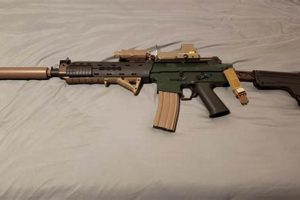
The necessary age for participation in airsoft activities is not universally standardized. Various factors influence the applicable age restrictions, including geographic location, facility policies, and the type of airsoft equipment used. Consequently, individuals intending to engage in this activity should verify the relevant regulations in their specific jurisdiction and at the chosen airsoft venue.
Understanding the age prerequisites is essential for ensuring safety and adherence to legal requirements. Airsoft involves replica firearms that, while not lethal, can cause injury if mishandled or used irresponsibly. Compliance with age-related regulations also fosters a responsible and respectful airsoft community. Historically, age restrictions have been implemented to mitigate risks associated with unsupervised participation and to promote the safe handling of airsoft equipment.
The following sections will delve into the specifics of age restrictions based on location, explore the role of parental consent, and outline the importance of safety training in relation to airsoft participation.
Age-Related Airsoft Guidance
The following points offer important information regarding age and participation in airsoft, aiming to ensure compliance and promote responsible engagement.
Tip 1: Research Local Laws: Prior to engaging in airsoft, thoroughly investigate the specific laws and regulations pertaining to airsoft guns and minimum age requirements in the relevant jurisdiction. This information is often available through local government websites or law enforcement agencies.
Tip 2: Verify Field Policies: Different airsoft fields and venues may have their own specific age restrictions and consent policies that exceed local legal minimums. Contact the chosen field directly to confirm their requirements before planning a visit.
Tip 3: Understand Parental Consent Requirements: In many cases, individuals below a certain age (typically 18) will require parental or guardian consent to participate in airsoft activities. Ensure that all necessary consent forms are properly completed and submitted as required.
Tip 4: Emphasize Safety Training: Regardless of age, adequate safety training is paramount. Seek out qualified instructors or courses that cover safe gun handling, eye protection, and field etiquette. This training is particularly crucial for younger participants.
Tip 5: Consider Maturity Level: Legal and field age requirements are minimums. Assess an individual’s maturity level and responsibility before allowing participation. The ability to follow rules and handle equipment safely is crucial.
Tip 6: Insist on Proper Gear: Ensure that all participants, especially younger ones, are equipped with appropriate safety gear, including full-seal eye protection, face masks, and appropriate clothing. Compromising on safety gear is never advisable.
Tip 7: Monitor Gameplay: For younger participants, closely monitor gameplay to ensure that safety rules are being followed and that responsible behavior is consistently demonstrated. Intervention may be necessary to prevent unsafe actions.
Adherence to these guidelines minimizes risks and promotes a positive airsoft experience for all participants. Understanding and respecting age-related regulations are fundamental to responsible airsoft engagement.
The subsequent section will provide a summary of the key considerations discussed and offer concluding remarks on the importance of responsible airsoft participation.
1. Local Legislation

Local legislation is a primary determinant of the permissible age for engaging in airsoft activities. These laws dictate the minimum age at which individuals can legally purchase, possess, and use airsoft guns within a specific jurisdiction. Failure to comply with these regulations can result in legal repercussions for both the participant and, in cases involving minors, their parents or guardians.
The connection between local statutes and participation is direct. For example, a municipality may mandate that individuals be at least 18 years old to operate an airsoft gun without adult supervision. Conversely, another locale might allow younger individuals to participate with parental consent and supervision. The cause-and-effect relationship is evident: local statutes set the parameters, and participation must align accordingly. Furthermore, local legislations influence extends to airsoft fields and retailers, compelling them to enforce age verification protocols.
Understanding local legislation is not merely a legal formality, it’s fundamental for ensuring responsible and compliant participation. By consulting local ordinances, individuals gain clarity on the legal requirements, thereby minimizing the risk of inadvertent violations. This understanding is essential for both participants and airsoft field operators to promote a safe and lawful environment.
2. Field Requirements

Airsoft fields often implement age restrictions that may surpass those mandated by local law. These requirements stem from considerations such as insurance liability, safety protocols specific to the field’s environment, and the overall maturity level deemed necessary for safe participation on their premises. The field’s operating policies become a direct influence, establishing a set of prerequisites for participation regardless of whether an individual meets the baseline legal age in that jurisdiction. For instance, while a local ordinance might permit 16-year-olds to play airsoft, a specific field could enforce an 18-year-old minimum, or require parental consent for individuals under 17, effectively superseding the broader legal allowance. The field has complete authority to refuse entry even if a person is old enough to do airsoft by law.
The practical application of such field requirements is seen in the emphasis on player safety. Fields may have established stringent rules regarding minimum engagement distances, acceptable projectile velocity, and mandatory safety gear, necessitating a certain level of understanding and responsibility that operators attribute more readily to older participants. A field may also have unique terrain characteristics, like dense foliage or elevated structures, that necessitate heightened awareness and physical coordination. These factors collectively influence the age-related policies of the field, reflecting an operator’s considered evaluation of potential risks and the perceived capacity of different age groups to mitigate those risks.
In summary, field requirements constitute a critical component, often acting as a more stringent layer of regulation compared to local laws. Airsoft fields bear the direct responsibility for player safety and risk management within their operating area, giving them the authority to impose additional age restrictions and procedural safeguards. Awareness of these specific field requirements is as important as knowledge of local legislation to ensure full compliance and responsible participation.
3. Parental Consent

Parental consent frequently acts as a conditional element governing participation in airsoft activities for individuals below a specified age, typically 18. While local laws may permit individuals of a certain age to possess or use airsoft guns, airsoft fields often mandate explicit parental or guardian approval for younger players. This requirement reflects a recognition of the inherent risks associated with airsoft, including potential injuries from projectiles and the need for responsible equipment handling. The absence of parental consent, where required, directly precludes an individual’s participation, regardless of whether they meet the minimum age according to local statutes.
The necessity for parental consent stems from a field operator’s need to ensure appropriate supervision and acceptance of liability. A parent or guardians signature on a consent form indicates an understanding of the risks involved and an agreement to hold the field harmless in the event of accidental injury. For instance, a 15-year-old might be legally allowed to own an airsoft gun in a particular state, but a local airsoft field could deny entry without a signed waiver from a parent or legal guardian. This practical application underlines parental consent’s significance as a safety mechanism and a risk management strategy for field operators, demonstrating the field’s legal responsibility.
Ultimately, parental consent serves as a crucial bridge between legal permissibility and responsible participation. While age-related laws establish broad guidelines, parental consent injects a layer of personalized oversight, acknowledging the specific circumstances and capabilities of individual minors. This requirement highlights the collaborative responsibility of parents, field operators, and participants in promoting a safe and enjoyable airsoft experience for all, especially younger players. Ignoring parental consent requirements carries potential legal and ethical ramifications and undermines the efforts to foster a responsible airsoft community.
4. Maturity Level

Maturity level, while not always explicitly codified in legal statutes, represents a critical, albeit subjective, component influencing safe and responsible airsoft participation. While minimum age requirements provide a baseline, the ability to adhere to safety protocols, exercise sound judgment, and respect fellow players correlates directly with an individuals maturity, irrespective of chronological age. The absence of sufficient maturity can negate the protective value of age-based regulations, potentially leading to accidents or disruptive behavior on the field. A young individual demonstrating exceptional discipline and adherence to rules might be a safer participant than an older individual exhibiting recklessness or disregard for safety guidelines. The field has no legal obligation to allow someone just because of their age.
The practical implications of maturity level assessment manifest in several ways. Airsoft field operators may informally evaluate player behavior during introductory briefings or observed gameplay, intervening or even refusing participation to those demonstrating insufficient maturity. More formally, some fields incorporate mandatory safety training or probationary periods, providing opportunities to assess a players ability to handle equipment responsibly and follow instructions. Real-world examples include scenarios where younger, but demonstrably mature, players are permitted to participate with closer supervision, while older, yet irresponsible, individuals are restricted or banned due to safety violations or disruptive conduct. These assessments highlight the importance of behavioral observation and practical evaluation alongside chronological age.
In conclusion, while minimum age regulations provide a necessary legal framework, maturity level serves as an indispensable qualitative factor in determining safe and responsible airsoft participation. The challenge lies in developing effective, objective methods for assessing maturity, given its inherently subjective nature. Recognizing the crucial role of maturity fosters a more holistic approach to safety, promoting responsible behavior and mitigating potential risks beyond the scope of age-based restrictions alone. This understanding ultimately benefits the entire airsoft community by prioritizing player safety and promoting a culture of respect and responsibility.
5. Safety Training

Safety training is intrinsically linked to age requirements in airsoft, serving as a crucial element in determining readiness for participation. While minimum age laws provide a baseline, the efficacy of these laws hinges on the assumption that participants possess the knowledge and skills necessary to handle airsoft equipment safely. Safety training directly addresses this assumption, mitigating the risks associated with inexperienced players. The completion of a recognized safety course often influences field policies, sometimes enabling younger individuals, who demonstrate competence, to participate even if they fall below the standard age threshold. Conversely, a lack of adequate safety training can preclude participation, irrespective of age, highlighting the critical role of instruction in minimizing accidents and promoting responsible gameplay.
The practical application of safety training is observed in airsoft fields requiring certification for new players. These courses typically cover safe gun handling practices, mandatory eye protection protocols, field-specific rules, and basic first aid. For example, a field might offer a comprehensive safety briefing followed by a practical assessment. Participants who successfully complete the assessment receive a certification card, which is mandatory for participation. This process provides a structured means of ensuring that all players, regardless of age, possess a foundational understanding of safety procedures. Furthermore, certain fields may offer specialized training for younger participants, tailored to their developmental stage and comprehension level, demonstrating the adaptability of safety programs to address varying age groups.
In conclusion, safety training serves as a vital complement to age-based regulations in airsoft. It not only enhances player safety but also promotes a culture of responsibility and respect within the community. While minimum age requirements provide a starting point, the practical knowledge and skills acquired through comprehensive safety training are essential for mitigating risks and ensuring a positive experience for all participants. Encouraging and mandating safety training, regardless of age, strengthens the overall safety framework and fosters a more responsible and enjoyable airsoft environment.
Frequently Asked Questions
The following section addresses common inquiries regarding age restrictions and airsoft activities, providing concise and informative responses.
Question 1: Is there a universal minimum age requirement for airsoft participation across all regions?
No, a universal minimum age does not exist. Age restrictions vary significantly based on local laws and the policies of individual airsoft fields.
Question 2: Can an airsoft field impose age restrictions that are stricter than local legal requirements?
Yes, an airsoft field retains the right to establish age restrictions exceeding those mandated by local law. These policies are often driven by insurance requirements, safety concerns, and the specific characteristics of the playing environment.
Question 3: What documentation is typically required to verify age for airsoft participation?
Valid government-issued identification, such as a driver’s license or passport, is commonly requested to verify age. For minors requiring parental consent, a signed waiver and proof of the parent or guardian’s identity may also be necessary.
Question 4: Does parental consent automatically guarantee participation for a minor, even if they meet the minimum age?
Not necessarily. While parental consent is often a prerequisite, the airsoft field may still assess the minor’s maturity level and ability to adhere to safety protocols before granting permission to participate.
Question 5: Is safety training mandatory, and how does it relate to age restrictions?
While not always legally mandated, safety training is highly recommended and often required by airsoft fields. Completion of a certified safety course can sometimes allow younger, competent individuals to participate, even if they fall below the standard age threshold. Conversely, a lack of safety training can preclude participation regardless of age.
Question 6: What are the potential consequences of violating age restrictions or falsifying documentation related to age?
Violating age restrictions or falsifying documentation can result in denial of participation, expulsion from the airsoft field, and potential legal ramifications, including fines or other penalties. Furthermore, such actions undermine the integrity of the airsoft community and compromise player safety.
In summary, age and maturity are critical factors. Understanding specific requirements is crucial for safe, responsible play.
The following section presents a final overview, summarizing important points and offering concluding thoughts.
How Old Do You Need to Be to Play Airsoft
The preceding discussion elucidates the multifaceted nature of age restrictions governing airsoft participation. It emphasizes that determining eligibility extends beyond simple chronological age, encompassing legal statutes, field-specific regulations, parental consent protocols, maturity level assessments, and the completion of comprehensive safety training. Non-compliance carries potential legal ramifications and compromises player safety.
Navigating the complexities surrounding age prerequisites necessitates diligence. Prospective participants must proactively research local laws, meticulously verify field policies, and conscientiously prioritize safety. Adherence to these principles safeguards individual well-being and fosters a responsible airsoft community. Continuing education and a commitment to ethical conduct are essential for the sustained growth and integrity of the sport. Airsoft participants should strive to promote responsible gameplay, thereby guaranteeing a safe and enjoyable setting for everybody.