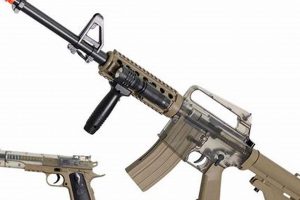
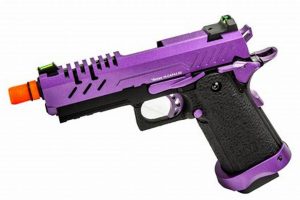
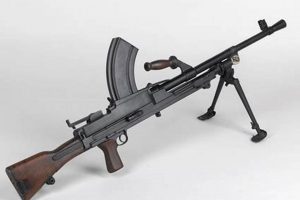
The financial investment required to acquire an airsoft gun can vary significantly based on several factors. These factors include the type of gun (e.g., electric, gas, spring), its quality, brand, features, and intended use. Therefore, establishing a singular, precise figure is challenging. However, a reasonable range can be defined to provide a general understanding of the market.
Understanding the pricing landscape is crucial for both new and experienced players. The cost reflects the complexity of the internal mechanisms, the materials used in construction (plastic vs. metal), and the level of realism offered. Furthermore, historical context reveals that prices have adjusted with technological advancements and increasing market demand, making entry-level options more accessible while high-end replicas continue to command premium prices.
To provide clarity, the following sections will explore the cost ranges associated with different types of airsoft guns, delve into the factors influencing price, and offer guidance for making informed purchasing decisions. This aims to equip individuals with the knowledge necessary to navigate the airsoft market effectively.
Airsoft Gun Cost Considerations
When assessing the expenditure required for an airsoft gun, a comprehensive approach is advised to ensure a suitable selection that aligns with individual needs and expectations.
Tip 1: Research Different Types: Airsoft guns are categorized into electric (AEG), gas (GBB/NBB), and spring-powered models. Electric models typically offer higher rates of fire and sustained performance, but may involve higher initial outlay. Gas models can provide realistic recoil, impacting price. Spring-powered options are generally the most cost-effective initially, but require manual cocking before each shot.
Tip 2: Evaluate Material Quality: The materials used in construction significantly affect the price. Airsoft guns constructed primarily from plastic will generally be less expensive than those with metal components. Metal construction often implies greater durability and a more realistic feel, thus influencing the cost.
Tip 3: Consider Brand Reputation: Established brands often command higher prices due to perceived quality, reliability, and availability of spare parts. Opting for a reputable brand can represent a long-term investment, mitigating potential repair costs or premature replacement.
Tip 4: Analyze Features and Performance: Advanced features, such as adjustable hop-up systems, enhanced gearboxes, or pre-installed MOSFETs, will contribute to the overall expense. Assess whether such features are necessary based on the intended use and skill level.
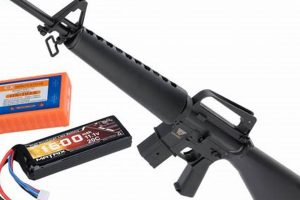
Tip 5: Factor in Accessories: The initial cost of an airsoft gun is only part of the overall expense. Consider the required accessories, such as batteries, chargers, magazines, protective gear, and BBs. These additions can significantly impact the total budget.
Tip 6: Explore Second-Hand Options: The used airsoft market can present opportunities to acquire higher-end models at reduced prices. However, thorough inspection and verification of the gun’s condition are paramount.
Tip 7: Read Reviews and Seek Recommendations: Before making a purchase, consult online reviews and seek recommendations from experienced airsoft players. This can provide valuable insights into the performance, reliability, and value of different models.
By considering these factors, individuals can better understand the spectrum of costs associated with airsoft guns and make informed decisions based on their individual needs and budget.
The succeeding section will address the potential for cost-saving measures and alternatives in airsoft purchases.
1. Entry-level affordability

Entry-level affordability defines the minimum financial investment required to participate in the sport of airsoft. Its significance resides in providing accessibility to a broad audience, including those with limited financial resources. The availability of affordable options expands the player base and fosters interest in the activity.
- Spring-Powered Mechanisms
Spring-powered airsoft guns represent the most common entry point due to their simple internal mechanisms. These guns require manual cocking before each shot, eliminating the need for batteries or gas. The reduced complexity translates to lower manufacturing costs, resulting in more affordable retail prices. However, the performance characteristics, such as rate of fire and range, are typically limited compared to electric or gas-powered alternatives.
- Plastic Construction
The utilization of plastic as the primary construction material significantly contributes to affordability. Plastic components are cheaper to produce than metal counterparts. While plastic construction may compromise the realism and durability of the airsoft gun, it allows manufacturers to offer products at a more competitive price point. This trade-off between cost and quality is a defining characteristic of entry-level options.
- Limited Features
Entry-level airsoft guns typically lack advanced features such as adjustable hop-up systems, metal gearboxes, or realistic blowback mechanisms. The absence of these features simplifies the design and reduces manufacturing costs. While this may limit the performance and customization options, it enables a lower initial purchase price. Players can later upgrade to more advanced models as their interest and budget allow.
- Basic Accessories
Entry-level packages often include minimal accessories, such as a small quantity of BBs and a basic magazine. Additional accessories, such as protective gear, batteries, or chargers, are typically purchased separately. This unbundling of accessories helps to keep the initial cost down, making the airsoft gun more accessible to budget-conscious consumers. However, players must factor in the cost of these essential accessories when calculating the total investment.
Entry-level affordability allows individuals to explore the sport without significant financial commitment. The trade-offs inherent in affordable options, such as reduced performance or limited features, are balanced by the lower initial investment. As players gain experience and develop preferences, they can progress to higher-end models that offer improved performance, durability, and realism, resulting in an increase in the average expense over time for committed enthusiasts.
2. Mid-range performance

Mid-range performance in airsoft directly correlates with the average price range, representing a balance between affordability and functional capability. This performance tier typically includes airsoft guns that utilize electric power (AEGs), offering a rate of fire and effective range superior to entry-level, spring-powered models. The increased performance is due to more complex internal mechanisms, often featuring improved gearboxes and adjustable hop-up systems. An increase in manufacturing cost, due to better materials and engineering, results in a higher price point compared to basic models.
The practical significance of this performance level lies in its suitability for a wider range of gameplay scenarios. Mid-range AEGs are often used in both indoor and outdoor settings, providing sufficient power and accuracy for competitive play. For example, an AEG with a metal gearbox and adjustable hop-up might allow a player to consistently hit targets at distances of 100-150 feet. This is a marked improvement over the 50-75 foot range commonly associated with entry-level guns. The increased effective range and rate of fire translate directly into a competitive advantage, justifying the higher price. A real-world example would be the popular use of mid-range AEGs in organized airsoft events or milsim scenarios.
In conclusion, the cost of mid-range airsoft guns reflects the increased performance characteristics achievable through improved internal mechanisms and design. This performance tier offers a significant upgrade over entry-level options, enabling players to participate more effectively in diverse gameplay situations. Understanding the relationship between performance and cost is essential for making informed purchasing decisions within the airsoft market. While representing a greater initial outlay than entry-level options, the benefits of mid-range performance often outweigh the financial considerations for players seeking a competitive edge and reliable functionality.
3. High-end realism
High-end realism in airsoft represents the pinnacle of replication, striving to mirror real firearms in appearance, weight, and functionality. This pursuit of authenticity has a direct and substantial impact on cost, positioning these models at the upper echelon of the airsoft market.
- External Construction Materials
High-end models commonly utilize materials identical to their real-world counterparts, such as CNC-machined aluminum, steel, and reinforced polymers. The employment of these materials increases manufacturing costs compared to the plastic or cast metal found in lower-priced airsoft guns. For instance, a replica of a specific rifle may incorporate the same grade of aluminum alloy used in the actual firearm’s receiver, thereby significantly raising production expenses.
- Internal Component Accuracy
Beyond external aesthetics, high-end realism extends to internal components. Gearboxes, hop-up units, and other mechanical parts are often designed to replicate the function and dimensions of their real-world equivalents. This requires precision engineering and stricter quality control, contributing to higher production costs. For example, a high-end gas blowback pistol may feature a realistic hammer and trigger mechanism that mimics the feel and travel of the firearm it replicates.
- Licensing Agreements
Many manufacturers of high-end realistic airsoft guns enter into licensing agreements with real firearm manufacturers to accurately reproduce trademarks, logos, and designs. These licensing agreements involve royalty payments, which are factored into the final price of the airsoft gun. A replica bearing the officially licensed trademarks of a well-known firearms manufacturer commands a premium compared to unlicensed alternatives.
- Enhanced Features and Performance
In addition to realism, high-end airsoft guns often incorporate enhanced features and performance characteristics. This may include upgraded internal components, such as high-torque motors, precision inner barrels, and electronic trigger units. These upgrades contribute to improved accuracy, range, and reliability, further driving up the overall cost. The inclusion of advanced features distinguishes these models from standard offerings and positions them as premium products.
The pursuit of high-end realism in airsoft necessitates the utilization of premium materials, precision engineering, licensing agreements, and enhanced performance features. These factors collectively contribute to a significantly higher price point compared to entry-level or mid-range models. While the increased cost may be a deterrent for some, the level of authenticity and performance offered by these airsoft guns appeals to collectors, serious players, and those seeking the most realistic training experience possible.
The premium associated with established brands constitutes a significant factor in determining the average price. Established brands often command higher prices due to perceived quality, durability, and performance. This premium reflects investments in research and development, quality control processes, and established distribution networks. Consumers are frequently willing to pay more for the assurance that a reputable brand provides, mitigating potential risks associated with lesser-known manufacturers.
The impact of brand premium on expense is evident in comparing models with similar features and specifications. For instance, two electric airsoft rifles might possess comparable rates of fire and effective ranges. However, the rifle manufactured by a well-known, respected brand will likely carry a higher price tag than one from a lesser-known or generic manufacturer. This difference stems from the brand’s perceived value, its warranty policies, and its reputation for providing reliable products and customer service. A practical application of this understanding involves recognizing that opting for a reputable brand can often translate to lower long-term costs, considering potential repair expenses and the lifespan of the product.
In summary, the brand premium represents a tangible component of cost. While the higher initial investment may seem prohibitive, the potential benefits of increased reliability, performance, and customer support associated with established brands should be carefully considered. Recognizing the influence of brand premium enables consumers to make informed decisions, balancing cost considerations with the long-term value provided by a reputable manufacturer.
5. Accessory influence

The initial outlay for an airsoft gun represents only a fraction of the total financial commitment involved in the sport. Accessory influence, encompassing essential and optional additions, significantly contributes to the overall expenditure. Therefore, evaluating the potential cost of accessories is crucial when determining how much engagement in airsoft will ultimately cost.
- Protective Gear necessities
Eye protection, in the form of ANSI-rated goggles or a full-face mask, is non-negotiable for player safety. Additional protective gear, such as vests, gloves, and knee pads, enhances safety and comfort. These items, while varying in price, represent a mandatory investment. Failure to account for protective gear undermines both physical safety and financial planning.
- Ammunition (BBs)
Airsoft guns require BBs for operation, and the ongoing expense of ammunition is substantial. BBs are available in varying weights, materials (plastic, biodegradable), and quantities. Frequent players will incur a recurring expense for BBs, directly impacting the total cost over time. The choice of BB type can also affect the gun’s performance and longevity, further necessitating careful consideration.
- Power Source Components
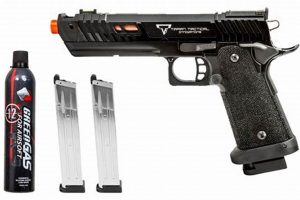
Electric airsoft guns (AEGs) require batteries and a compatible charger. Gas-powered guns necessitate a supply of gas (e.g., green gas, CO2). These power sources represent a recurring expense and contribute to the overall financial burden. High-quality batteries and efficient chargers, while initially more expensive, can offer improved performance and lifespan, potentially offsetting costs in the long term.
- Magazines and Loading Equipment
Additional magazines increase the sustained rate of fire and reduce downtime during gameplay. Speed loaders facilitate rapid magazine refills. These accessories enhance the playing experience but add to the initial and ongoing expense. The type of magazine (e.g., high-capacity, mid-capacity, real-capacity) also affects the investment required.
- Optical attachments
Optical attachments enhance aiming capabilities but add significantly to the expense. Red dot sights, scopes, and other aiming devices are costly and will need additional rings for attachments and may cause additional fees for having professional installing them.
The selection and acquisition of accessories directly influence the total investment. While some accessories are essential for safety and operation, others offer enhanced performance or convenience. Budgetary planning must incorporate both categories to accurately determine the overall commitment to the sport. Neglecting the cost of accessories results in an incomplete and potentially misleading assessment.
Frequently Asked Questions
This section addresses common inquiries regarding the financial investment required to acquire an airsoft gun. The information presented aims to provide clarity and guidance for prospective buyers.
Question 1: What is the typical cost spectrum for an airsoft gun?
The price range is broad, spanning from approximately $50 for basic spring-powered models to upwards of $500 or more for high-end electric or gas-powered replicas. The ultimate figure is contingent upon factors such as brand, materials, and features.
Question 2: Do electric (AEG) airsoft guns generally carry a higher cost compared to spring-powered alternatives?
Yes, electric airsoft guns typically represent a greater initial investment. This is attributable to the complexity of their internal mechanisms, including gearboxes and motors, as well as their enhanced performance capabilities.
Question 3: How significantly does the choice of materials impact the total cost?
Material composition exerts a considerable influence on pricing. Airsoft guns constructed primarily from metal tend to be more expensive than those utilizing plastic, reflecting the increased cost of raw materials and manufacturing processes.
Question 4: Are there recurring expenses associated with airsoft guns beyond the initial purchase?
Yes, recurring expenses are inevitable. These include ammunition (BBs), batteries (for electric models), gas (for gas-powered models), and maintenance or repair costs. Budgetary planning must account for these ongoing requirements.
Question 5: Does purchasing from a well-known brand invariably translate to a higher price?
While established brands often command a premium, this is not universally true. Reputable brands may offer entry-level options at competitive prices. However, their high-end models typically carry a higher cost due to enhanced quality control and performance.
Question 6: Is it possible to acquire a suitable airsoft gun on a limited budget?
Yes, it is feasible to enter the sport with a limited budget. Spring-powered models offer an affordable entry point, albeit with reduced performance capabilities. Exploring the used market can also present opportunities to acquire higher-end models at reduced prices.
In summation, the cost of airsoft guns varies widely based on multiple factors. Thorough research and careful consideration of individual needs and budget are essential for making an informed purchasing decision.
The subsequent section will offer a comprehensive summary and final recommendations regarding airsoft gun acquisition.
How Much Does an Average Airsoft Gun Cost
The examination of “how much does an average airsoft gun cost” reveals a complex landscape influenced by gun type, material quality, brand reputation, and accessory requirements. Entry-level spring-powered models offer an accessible starting point, while mid-range electric guns balance performance and price. High-end realistic replicas command a premium due to their meticulous construction and licensed designs. Furthermore, protective gear, ammunition, and power sources contribute significantly to the overall expense.
Informed decision-making necessitates a comprehensive evaluation of individual needs and budgetary constraints. Prospective buyers should carefully weigh the trade-offs between initial cost, performance capabilities, and long-term maintenance requirements. Prioritizing safety through appropriate protective gear remains paramount. Ultimately, understanding the factors that determine “how much does an average airsoft gun cost” empowers consumers to navigate the market effectively and make responsible purchasing choices.