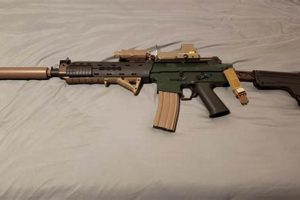
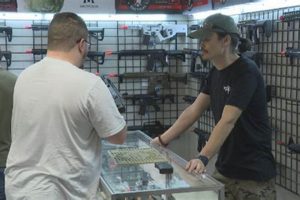
The apparatus safeguarding vision during simulated combat activities utilizing projectile-firing replica firearms constitutes a critical piece of safety equipment. These devices typically involve goggles or full-face masks constructed from impact-resistant materials like polycarbonate. Usage ensures that participants are shielded from potential ocular injury stemming from propelled BBs.
The employment of appropriate shields is paramount for participant safety. Their implementation significantly mitigates the risk of temporary or permanent visual impairment resulting from high-velocity impacts. Historically, inadequate shielding measures have resulted in severe injuries, underscoring the necessity of universally enforced standards and robust protective solutions. The evolution of materials and designs has led to increasingly effective and comfortable safeguarding options.
Subsequent sections will delve into specific standards and regulations governing protective devices, explore various types available on the market, and provide guidance on selecting suitable shields based on individual needs and gameplay scenarios. We will also examine maintenance procedures and best practices for ensuring optimal functionality and longevity of the equipment.
Essential Considerations for Ocular Safeguarding in Simulated Combat
The following guidelines outline key aspects concerning the selection, utilization, and maintenance of vision-protective gear within simulated combat scenarios. Adherence to these points is crucial for minimizing the risk of injury and maximizing equipment effectiveness.
Tip 1: Verify Compliance with Standards: Prioritize equipment that meets or exceeds established safety standards, such as ANSI Z87.1 in the United States or EN166 in Europe. These standards dictate impact resistance and optical clarity requirements.
Tip 2: Ensure a Secure and Comfortable Fit: Proper fit is essential for both protection and comfort. Goggles or masks should sit snugly on the face, creating a complete seal around the eyes without causing excessive pressure or obstruction of vision.
Tip 3: Choose Appropriate Lens Tint: Lens tint affects visibility in varying lighting conditions. Clear lenses are suitable for indoor environments, while tinted lenses, such as smoke or amber, can enhance contrast and reduce glare outdoors.
Tip 4: Inspect Equipment Regularly: Before each use, thoroughly inspect for signs of damage, such as cracks, scratches, or loose components. Compromised equipment should be replaced immediately.
Tip 5: Maintain Cleanliness: Regularly clean lenses with appropriate cleaning solutions and cloths to prevent fogging and maintain optimal visibility. Avoid abrasive materials that can scratch the surface.
Tip 6: Consider Anti-Fog Properties: Fogging can significantly impair vision. Opt for equipment with built-in anti-fog coatings or use anti-fog sprays to maintain clear vision, especially in humid conditions.
Tip 7: Use Full-Seal Protection: Goggles or masks should create a full seal around the eyes to prevent BBs from entering from any angle. Avoid open-frame designs that may leave gaps.
Diligent application of these considerations promotes a safer environment for all participants, reducing the likelihood of ocular injuries and ensuring a more enjoyable experience.
The subsequent section will address the legal ramifications of neglecting safety protocols and the ethical responsibilities of individuals involved in simulated combat activities.
1. Impact Resistance in Ocular Protection for Simulated Combat Activities
Impact resistance constitutes a fundamental attribute of any device intended to safeguard the eyes during simulated combat involving projectile-firing replica firearms. The inherent danger of propelled projectiles necessitates a protective barrier capable of withstanding significant force without compromising its structural integrity. The absence of sufficient impact resistance directly correlates with an elevated risk of ocular injury, ranging from corneal abrasions to permanent vision impairment. For instance, a lens failing to meet minimum impact standards may shatter upon direct contact with a BB, transforming the protective device into a source of secondary projectiles.
The certification and adherence to established standards, such as ANSI Z87.1 or EN166, serve as indicators of validated impact resistance. These standards mandate rigorous testing procedures wherein protective eyewear is subjected to high-velocity projectile impacts. Equipment bearing these certifications provides a demonstrably higher level of protection compared to uncertified alternatives. The selection process should prioritize certified products, thereby minimizing the potential for catastrophic failure during simulated combat engagements. Furthermore, material composition plays a critical role. Polycarbonate, known for its high impact strength and shatter-resistant properties, is a commonly employed material in the construction of suitable shielding.
In conclusion, impact resistance is an indispensable element of effective eye safety equipment for simulated combat. Proper understanding of the relationship between impact resistance, certification standards, and material selection is crucial for mitigating the risk of ocular injury. Failure to prioritize this critical aspect compromises the safety and well-being of participants. Selecting appropriately rated and certified equipment constitutes a responsible and necessary measure for engaging in simulated combat activities safely.
2. Full Seal

The concept of “full seal” is fundamental to effective ocular safeguarding within the context of simulated combat scenarios. Its implementation dictates the prevention of projectile ingress, thereby minimizing the potential for injury. A lack of complete enclosure around the orbital region negates the protective capabilities of the shielding device.
- Prevention of Projectile Entry
The primary role of a full seal is to create a barrier that prevents BBs from entering the eye socket from any angle. Even small gaps can allow projectiles to bypass the shield, rendering it ineffective. Real-world examples include situations where improperly fitted goggles allowed BBs to enter from the side during intense gameplay, resulting in corneal abrasions.
- Enhanced Peripheral Protection
Full seal designs often extend protection to the periocular area, safeguarding the delicate tissues surrounding the eye. This broader coverage reduces the risk of injury to the eyelids and adjacent facial areas. Many open-frame goggle designs lack this extended protection, leaving these areas vulnerable.
- Minimizing Fogging Potential
While not the primary function, a well-designed full seal can contribute to reducing fogging by limiting airflow around the lens. This reduction in airflow can help maintain a more consistent temperature, minimizing condensation. However, effective anti-fog coatings or ventilation systems are still crucial for preventing fogging under humid conditions.
- Compatibility with Corrective Lenses
Certain full seal designs are engineered to accommodate corrective eyeglasses or prescription inserts. This feature is essential for participants who require vision correction, ensuring both visual acuity and protection. The absence of this compatibility can force individuals to choose between clear vision and adequate safety.
The integration of a full seal into the design of shielding devices significantly enhances the overall level of protection offered. Ignoring this critical feature compromises the effectiveness of the protection, potentially leading to serious ocular injuries. Consequently, the selection of protective equipment should always prioritize designs that incorporate a complete and secure seal around the eyes.
3. Lens clarity
Lens clarity is inextricably linked to the efficacy of protective eyewear used in simulated combat. Its impact directly influences a participant’s ability to accurately perceive and react to dynamic battlefield conditions. Reduced clarity, resulting from scratches, fogging, or inherent lens imperfections, impairs visual acuity, potentially leading to misidentification of targets or hazards. This compromise in visual fidelity increases the risk of accidental injury to oneself or others. For example, a player with fogged lenses might fail to distinguish between a teammate and an opponent, resulting in friendly fire incidents. Therefore, the optical quality of the lens is not merely a matter of comfort, but a critical component of safety.
The selection of protective eyewear must consider lens material, coatings, and design features that promote optimal clarity. Polycarbonate lenses, known for their impact resistance, are often treated with anti-fog and anti-scratch coatings to further enhance visibility. Ventilation systems integrated into the frame can also mitigate fogging by facilitating airflow. Furthermore, the lens should be free from optical distortions that could skew depth perception or spatial awareness. Regularly cleaning lenses with appropriate cleaning solutions is essential for maintaining clarity and prolonging the lifespan of the protective equipment.
In summary, lens clarity is an indispensable attribute of effective eye protection within the context of simulated combat. Its influence extends beyond mere visual comfort, directly impacting the safety and tactical awareness of participants. By prioritizing lenses with superior optical quality, appropriate coatings, and effective ventilation, players can significantly reduce the risk of accidents and enhance their overall gameplay experience. The relationship between clarity and safety underscores the need for rigorous standards and conscientious equipment selection within the community.
4. Secure Fit

A secure fit is a cardinal element in the functionality of visual safeguards employed in simulated combat scenarios. The relationship between secure fit and protective efficacy is one of direct causation: inadequate fit compromises the integrity of the eye safety apparatus, thereby elevating the risk of ocular trauma. Ill-fitting goggles or masks are prone to displacement during periods of intense physical activity, creating vulnerabilities for projectile penetration. For instance, a poorly secured goggle may shift upon impact from a BB, exposing the orbital region to direct contact. This failure to maintain positional stability negates the protective benefits inherent in the design of the device.
The attributes of a secure fit include appropriate sizing relative to the wearer’s facial structure, adjustable straps or retention systems to customize tension, and compatibility with other gear such as helmets or headwear. Protective equipment that does not accommodate these factors is unlikely to provide consistent shielding across a range of dynamic movements. A real-world example highlighting the practical significance involves reports of participants sustaining eye injuries despite wearing protective goggles, where subsequent investigation revealed that the goggles had become dislodged during gameplay due to insufficient tightening of the retention straps, allowing projectiles to enter beneath the frame. The correct adjustment ensures that a seal is maintained between the protective device and the user’s face, even under duress.
In conclusion, a secure fit constitutes an indispensable characteristic of effective visual safeguarding in simulated combat. Failure to prioritize and ensure proper fitting renders the equipment functionally deficient, and substantially increases the potential for ocular injury. Emphasizing the importance of proper fit within training protocols and enforcing compliance standards concerning adjustable retention mechanisms are crucial steps to maximizing player safety and mitigating risk within simulated combat environments. The connection between secure fit and eye protection is a critical consideration that should not be overlooked.
5. Standard compliance
Adherence to recognized safety standards is a non-negotiable aspect of effective shielding designed for simulated combat scenarios involving projectile-firing replica firearms. Standard compliance, specifically with certifications such as ANSI Z87.1 in the United States or EN166 in Europe, ensures that protective devices have undergone rigorous testing to meet minimum impact resistance requirements. The absence of such compliance renders the equipment’s protective capability questionable and potentially hazardous. For example, protective eyewear lacking ANSI Z87.1 certification may shatter or fail upon impact from a BB, offering inadequate protection and potentially causing injury. Conversely, compliant equipment is engineered and tested to withstand significant impact forces, minimizing the risk of ocular trauma.
The practical implications of standard compliance extend beyond immediate impact resistance. Certifications often encompass other crucial factors, including optical clarity, field of view, and material durability. Equipment meeting these standards provides a safer and more reliable experience for participants. Moreover, many organized simulated combat events mandate the use of standard-compliant protective gear as a condition of participation. This enforcement reflects a broader recognition of the importance of rigorous testing and validation in ensuring player safety. For instance, many airsoft fields and leagues require all players to wear eye protection that is rated to meet or exceed ANSI Z87.1 standards. Equipment must demonstrably bear marks indicating compliance to this standard.
In conclusion, standard compliance is an indispensable characteristic of appropriate shielding for simulated combat. The absence of certification signals a potential deficiency in protective capability and exposes users to undue risk. Prioritizing standard-compliant equipment is a fundamental responsibility for all participants, site operators, and organizers. This commitment to safety minimizes the likelihood of ocular injuries and promotes responsible participation in simulated combat activities. Ensuring adequate eye protection airsoft through equipment validation is paramount.
6. Durability

Durability, in the context of ocular safeguards employed in simulated combat scenarios, refers to the capacity of the protective device to withstand sustained use and environmental stressors without experiencing significant degradation in performance or structural integrity. This attribute extends beyond mere impact resistance, encompassing resistance to scratching, chemical degradation from cleaning agents, and general wear and tear resulting from repeated use.
- Material Composition and Longevity
The material used in construction directly impacts the lifespan of eye protection. Polycarbonate, a common choice due to its impact resistance, can still degrade over time if exposed to harsh chemicals or abrasive cleaning methods. The selection of appropriate cleaning solutions and adherence to manufacturer guidelines are crucial for maximizing material longevity. Failure to do so can result in embrittlement or clouding of the lens, compromising both protection and visibility.
- Scratch Resistance and Optical Clarity
Surface scratches on the lens can significantly impair visual acuity, especially in low-light conditions. While many protective devices incorporate scratch-resistant coatings, these coatings are not impervious to damage. Contact with abrasive surfaces, such as sand or rough fabrics, can compromise the coating, leading to permanent scratches. Proper storage and handling practices, such as using microfiber cloths for cleaning, are essential for preserving optical clarity and extending the usable lifespan of the equipment.
- Frame Integrity and Component Resilience
The frame of the eye protection, along with its associated components (straps, buckles, ventilation ports), must maintain structural integrity under stress. Repeated adjustments to straps or impacts during gameplay can weaken these components over time. Regular inspection for signs of wear, such as cracks in the frame or fraying of straps, is necessary to identify and address potential points of failure before they compromise protection.
- Resistance to Environmental Factors
Exposure to extreme temperatures, humidity, and UV radiation can accelerate the degradation of materials used in eye protection. Prolonged exposure to direct sunlight, for instance, can cause polycarbonate to yellow and become brittle. Storing protective devices in a cool, dry place away from direct sunlight can mitigate these effects. Furthermore, specialized coatings may offer enhanced UV protection, extending the lifespan of the equipment under harsh environmental conditions.
The multifaceted nature of durability underscores its importance in the selection and maintenance of protective eyewear for simulated combat. Prolonging the lifespan of these devices through conscientious care practices not only represents a cost-effective approach but also ensures consistent and reliable protection over time. Neglecting durability considerations can lead to premature equipment failure and an increased risk of ocular injury.
Frequently Asked Questions
The following section addresses common inquiries and misconceptions surrounding protective eyewear used in simulated combat scenarios. Information aims to provide clarity on best practices and safety protocols.
Question 1: Is standard eye protection sufficient for simulated combat activities?
Standard eyewear not specifically designed and certified for impact resistance is inadequate. Simulated combat projectiles can exceed velocities that general-purpose eyewear cannot withstand, leading to potential injury. Only equipment meeting ANSI Z87.1 or EN166 standards should be employed.
Question 2: Can mesh goggles provide adequate protection?
Mesh goggles present potential risks. While they offer ventilation, the mesh aperture may allow small fragments of shattered projectiles to pass through, causing corneal abrasions or other ocular injuries. Solid lens goggles certified for impact resistance are recommended.
Question 3: Does lens tint affect protective capability?
Lens tint does not intrinsically influence impact resistance. However, it affects visibility under different lighting conditions. Ensure that any tinted lens meets established impact resistance standards, as tint alone does not guarantee protection.
Question 4: How often should protective eyewear be replaced?
Protective eyewear should be replaced immediately upon exhibiting any signs of damage, such as cracks, scratches, or loose components. Even without visible damage, replacement every 1-2 years is recommended to ensure optimal performance due to material degradation over time.
Question 5: Are prescription glasses sufficient protection under goggles?
Prescription glasses alone do not provide adequate protection. Impact-resistant goggles specifically designed to fit over prescription glasses, or goggles with prescription inserts, must be used to ensure both vision correction and sufficient eye safety airsoft measures.
Question 6: What are the consequences of neglecting proper eye safety measures?
Neglecting appropriate safety protocols can result in a range of ocular injuries, from minor corneal abrasions to permanent vision impairment or even blindness. Responsible participation necessitates adherence to safety guidelines and use of certified protective equipment.
Prioritizing appropriately rated and maintained equipment significantly reduces the risk of ocular injury. Consistent enforcement of safety standards is paramount to fostering a safe environment for all participants.
The following section will address legal and ethical considerations relating to participation in simulated combat.
Conclusion
This article has explored the critical importance of appropriate shielding in simulated combat activities. Key considerations include impact resistance, secure fit, full seal design, lens clarity, standard compliance, and durability. Each of these elements contributes to the overall effectiveness of protective eyewear in minimizing the risk of ocular injury.
The information presented underscores the serious responsibility incumbent upon participants, organizers, and field operators to prioritize eye protection airsoft. Consistent adherence to safety standards and rigorous equipment inspection protocols are essential for fostering a safe and responsible environment, mitigating potential legal ramifications, and ensuring the well-being of all individuals involved. The future of safe and enjoyable simulated combat hinges upon a continued commitment to these principles.