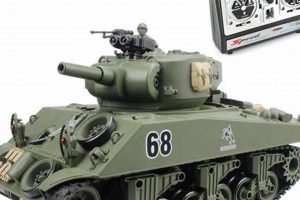
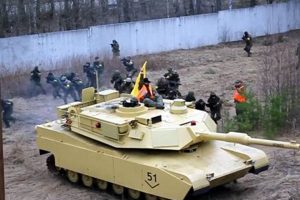
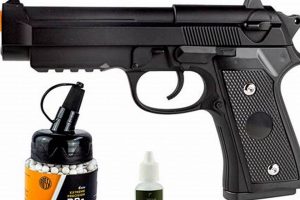
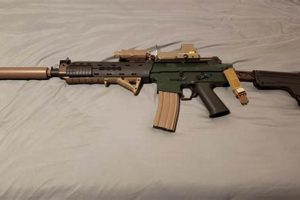
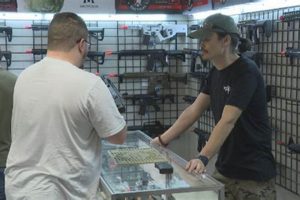
A collection of essential equipment designed for individuals new to the sport of airsoft. It typically includes a primary weapon, eye protection, and often supplementary gear such as ammunition or a battery and charger for electric-powered guns. As an example, a package might contain a spring-powered rifle, safety goggles, and a bag of BBs.
The value lies in providing a convenient and cost-effective entry point to the activity. It allows novices to participate without the need to research and purchase each item separately. Historically, these bundles have served as a primary driver for growing participation in the sport, lowering the barrier to entry and encouraging wider adoption.
The following sections will delve into the specific components found within such an offering, factors to consider when selecting one, and tips for responsible use and maintenance of the included items.
Essential Guidance for New Airsoft Participants
This section provides critical guidance for individuals acquiring a starting equipment bundle. Adherence to these recommendations will promote safe and enjoyable engagement with the sport.
Tip 1: Prioritize Eye Protection: Eye protection meeting ANSI Z87.1 standards is non-negotiable. Ensure the selected goggles or glasses provide a secure fit and comprehensive coverage, preventing projectile entry.
Tip 2: Understand Equipment Functionality: Before use, thoroughly review the instruction manual for each item. Familiarize oneself with the operation of the weapon, safety mechanisms, and battery charging procedures, if applicable.
Tip 3: Adhere to Field Regulations: Each airsoft field establishes specific rules regarding projectile velocity limits, engagement distances, and acceptable weaponry. Compliance with these rules is essential for safety and fair play.
Tip 4: Practice Safe Weapon Handling: Treat every airsoft gun as if it were a real firearm. Keep the muzzle pointed in a safe direction, and never point it at anything one does not intend to shoot. Engage the safety mechanism when not actively engaged in gameplay.
Tip 5: Select Appropriate Ammunition: Use only high-quality, seamless BBs of the recommended weight and diameter for the specific airsoft gun. Inferior ammunition can damage the weapon’s internal components and degrade accuracy.
Tip 6: Maintain Equipment Regularly: Clean the airsoft gun after each use to remove dirt and debris. Lubricate moving parts as recommended by the manufacturer to ensure smooth operation and longevity.
Tip 7: Store Equipment Securely: Store the airsoft gun in a safe location, inaccessible to unauthorized individuals, particularly children. Secure storage prevents accidents and misuse.
Implementing these guidelines is crucial for maximizing the enjoyment and minimizing the risks associated with airsoft. This proactive approach to safety and responsible equipment handling lays a foundation for continued participation in the sport.
The following section will address common upgrades and modifications, providing insights into enhancing performance and customizing one’s equipment.
1. Essential components
The integrity of an “airsoft kit for beginners” is intrinsically linked to its “essential components.” The presence, quality, and functionality of these components directly determine the kit’s suitability for its intended purpose: introducing new players to airsoft safely and effectively. Deficiencies in even one critical element can render the entire assemblage inadequate or even dangerous. For instance, a kit without appropriate eye protection exposes the user to significant risk of eye injury. Similarly, a primary weapon of poor construction, lacking necessary safety features, increases the likelihood of accidental discharge or malfunction, thereby undermining the overall safety and enjoyment.
The inclusion of items such as a functional airsoft gun (typically electric, spring, or gas-powered), compliant eye protection (meeting ANSI Z87.1 standards), and a supply of ammunition (BBs) constitutes the bare minimum. Many kits also incorporate additional items like a battery and charger (for electric guns), a speedloader (for facilitating rapid magazine refills), or a basic tactical vest (for carrying magazines and other gear). The absence of these supplementary items does not necessarily negate the kit’s utility, but their inclusion can significantly enhance the user experience, providing a more comprehensive and immediately usable package. Understanding these essential components guides purchasing decisions.
In summary, the value and effectiveness of an “airsoft kit for beginners” hinge directly on the quality and completeness of its “essential components.” Careful evaluation of these elements, prioritizing safety, functionality, and suitability for the intended user, is paramount. A well-curated selection of core items promotes safe engagement, realistic gameplay and foundational appreciation for the sport.
2. Safety compliance

Safety compliance forms a cornerstone of any legitimate offering designed for new airsoft participants. Its presence directly influences the potential for injury during play and the legal ramifications associated with the use of airsoft equipment. A primary cause of airsoft-related injuries stems from inadequate eye protection. Therefore, an “airsoft kit for beginners” must include eye protection that meets or exceeds ANSI Z87.1 impact resistance standards. Failure to adhere to this compliance point elevates the risk of severe eye trauma, potentially resulting in permanent vision impairment. Similarly, projectile velocity limits, often regulated by local airsoft fields and legal statutes, necessitate careful consideration in weapon selection for the kit. Exceeding these limits can lead to heightened injury risk and potential legal consequences.
The importance of adherence to “safety compliance” extends beyond individual well-being. It directly affects the perception and acceptance of airsoft within the broader community. Incidents involving injuries resulting from non-compliant equipment can foster negative public sentiment and potentially lead to stricter regulations governing the sport. Furthermore, reputable manufacturers and retailers prioritize safety compliance to mitigate legal liabilities and maintain ethical business practices. Real-world examples demonstrate the consequences of neglecting safety standards; injuries and ensuing lawsuits have underscored the necessity of rigorous testing and certification of airsoft equipment. Therefore, it is in the interest of all stakeholders to uphold the highest standards of safety.
In summary, “safety compliance” is not merely a supplementary aspect of an “airsoft kit for beginners” but an indispensable component. It is the responsibility of manufacturers, retailers, and end-users to ensure that all included equipment adheres to relevant safety standards and regulations. By prioritizing safety compliance, stakeholders contribute to a safer and more sustainable future for the sport of airsoft, preserving its accessibility and fostering a positive perception within the wider community. Ignoring such considerations carries significant risks, affecting both individual welfare and the longevity of airsoft as a recreational activity.
3. Performance level

The term “Performance level” within the context of an “airsoft kit for beginners” defines the operational capabilities of the included equipment, primarily focusing on the airsoft gun’s range, accuracy, and rate of fire. While advanced performance may not be the primary objective for novice users, a baseline level of functionality is crucial for a positive introductory experience.
- Range and Accuracy
This facet concerns the effective distance the airsoft gun can accurately project a projectile. A low-quality gun with poor range and accuracy can lead to a frustrating experience, discouraging the beginner. A common problem is significant deviation of the BB trajectory, rendering aiming unreliable beyond short distances. Kits should specify approximate effective ranges, typically adequate for small to medium-sized playing fields.
- Rate of Fire (ROF)
ROF measures the number of projectiles the gun can fire per minute. Primarily applicable to electric-powered airsoft guns, a low ROF can hinder competitive play. While not critical for beginners, an excessively low ROF can make the gun feel underpowered compared to other players’ equipment. An acceptable ROF provides a reasonable level of firepower without being overwhelming.
- Power Source Reliability
The type of power source (spring, electric, or gas) significantly impacts the reliability and consistency of the gun’s performance. Spring-powered guns are generally simpler but require manual cocking before each shot. Electric guns offer semi-automatic and automatic firing modes but rely on battery power. Gas guns provide realism and higher power but require gas refills. The selected power source should offer reasonable reliability and ease of use for the beginner.
- Build Quality and Consistency
The overall construction and materials of the airsoft gun affect its durability and long-term performance. A poorly constructed gun made from cheap materials is prone to breakage and inconsistent performance. Essential components, such as the gearbox (in electric guns) and the piston (in spring guns), should be reasonably robust to withstand regular use. Consistent performance ensures predictable shot placement and reduces the likelihood of malfunctions.
Ultimately, the “Performance level” of an “airsoft kit for beginners” should strike a balance between usability, reliability, and affordability. Overly high performance is unnecessary and can be intimidating for new players. Conversely, inadequate performance can lead to frustration and discouragement. A well-chosen kit provides a functional and reliable platform for learning the fundamentals of airsoft without requiring significant investment or technical expertise.
4. Budget considerations

The affordability of an “airsoft kit for beginners” is a primary determinant of its accessibility. The initial investment required to participate in the sport often dictates whether a potential player can enter. “Budget considerations” encompass the price range of available equipment sets and the trade-offs between cost and quality inherent in those options. The relationship is direct: higher prices often correlate with improved materials, more features, and increased durability. However, exceeding a reasonable expenditure threshold for a beginner may deter many from engaging with airsoft.
One practical application of understanding these constraints involves identifying kits that provide the best value. For example, a lower-priced set might include a spring-powered rifle and basic eye protection, offering a simple entry point. Conversely, a more expensive kit could feature an electric-powered automatic weapon, upgraded safety gear, and additional accessories. The choice depends on the individual’s financial capacity and their commitment to the sport. The practical significance of this understanding is in aligning expectations with available resources and avoiding the pitfalls of either overspending on unnecessary features or underspending on crucial safety equipment.
Therefore, the challenge lies in finding a balance between “Budget considerations” and the necessary components for a safe and enjoyable experience. This requires careful research, comparison of available options, and a realistic assessment of one’s financial resources. The ultimate goal is to acquire a starting equipment configuration that provides a solid foundation for future participation in airsoft without imposing undue financial strain or compromising safety standards.
5. Field regulations

Field regulations represent a critical intersection with “airsoft kit for beginners,” shaping the suitability and legality of equipment brought onto a designated playing area. The cause-and-effect relationship is direct: non-compliance with specific field rules regarding projectile velocity, acceptable weapon types, or protective gear mandates immediate exclusion from play. This necessitates careful consideration of those regulations when selecting a starting loadout. For example, a common restriction limits airsoft gun muzzle velocity to 400 feet per second (FPS) with 0.20g BBs. An entry equipment selection exceeding this limit, regardless of its other merits, renders it unusable on that field. Similarly, some arenas prohibit fully automatic fire or mandate full-face protection instead of goggles alone. The practical significance of understanding this lies in preventing wasted investment and ensuring immediate participation.
The importance of field regulations as a component of initial loadouts extends beyond simple compliance. It fosters a culture of safety and responsible gameplay. Airsoft facilities implement rules to minimize injury risk and maintain a level playing field. A beginner, by adhering to these rules through equipment selection, demonstrates respect for other players and contributes to a positive gaming environment. Real-life examples are numerous: fields routinely chronograph weapons to ensure compliance with velocity limits, often requiring modifications or outright bans for offenders. Instances of injury resulting from disregard for protective gear mandates underscore the necessity of strict adherence. Furthermore, understanding field-specific rules facilitates effective tactical planning, influencing weapon choice, engagement distances, and overall strategy.
In conclusion, “field regulations” serve as a governing framework for “airsoft kit for beginners,” dictating equipment acceptability and shaping responsible gameplay. Failure to account for these regulations can result in exclusion, increased risk of injury, and a negative impact on the overall airsoft experience. Thorough research and comprehension of specific field requirements are essential steps in selecting a suitable and compliant starting equipment configuration. This proactive approach ensures a safe, enjoyable, and legally sound introduction to the sport of airsoft.
Frequently Asked Questions
This section addresses common inquiries regarding initial equipment configurations for individuals new to airsoft.
Question 1: What constitutes a typical “airsoft kit for beginners”?
A standard configuration includes a primary airsoft weapon (often electric-powered or spring-powered), ANSI Z87.1 rated eye protection, and an initial supply of ammunition (BBs). Certain packages might also incorporate a battery and charger (for electric guns) or a speedloader.
Question 2: Is expensive equipment necessary for starting airsoft?
Significant investment is not essential for introductory participation. Functionality and safety are paramount; more elaborate features are secondary. An entry-level set focused on these core attributes can provide a satisfying and secure initial experience.
Question 3: Why is eye protection such a prominent component of a beginner’s equipment selection?
Eye injuries are a primary risk in airsoft. Compliant eye protection, meeting ANSI Z87.1 standards, is non-negotiable for safety. This feature prevents projectile impact and protects against potential vision impairment.
Question 4: How important is it to understand field regulations before purchasing introductory equipment?
Understanding field regulations is crucial. Muzzle velocity limits, weapon type restrictions, and protective gear mandates vary across fields. Failure to comply results in equipment unsuitability and exclusion from play.
Question 5: What steps are involved in maintaining equipment included in a starting selection?
Maintenance practices include cleaning the airsoft gun after each use, lubricating moving parts as recommended by the manufacturer, and storing the equipment securely to prevent unauthorized access and potential accidents.
Question 6: What are the primary factors differentiating various equipment options available for new participants?
Key differentiators include build quality, performance metrics (range, accuracy, rate of fire), type of power source (spring, electric, gas), and included accessories. Affordability and alignment with field regulations are also significant considerations.
In essence, acquiring a starting equipment assemblage requires a balanced approach, emphasizing safety, functionality, and adherence to established rules and guidelines.
The subsequent section will delve into advanced considerations for participants who have progressed beyond the introductory phase.
Concluding Remarks on Entry-Level Airsoft Equipment
This exploration of “airsoft kit for beginners” has emphasized the paramount importance of safety, functionality, and regulatory compliance when selecting initial equipment. It has highlighted the essential components, performance considerations, budgetary constraints, and the critical need for adherence to field-specific rules. A discerning approach to these factors ensures a responsible and enjoyable introduction to the sport.
The ultimate goal remains the promotion of safe and ethical participation in airsoft. Informed decision-making, coupled with responsible equipment handling, contributes to a sustainable and positive future for the sport. Continued adherence to established guidelines and a commitment to player safety remain the cornerstones of long-term engagement and the ongoing evolution of airsoft.