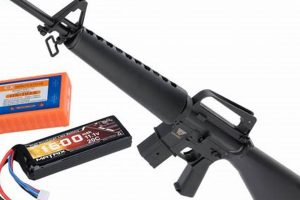
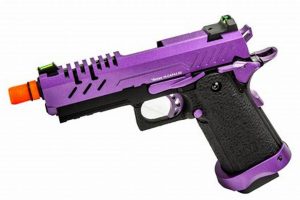
The presence of a blaze orange tip on airsoft replicas serves as a readily identifiable visual cue. This marking is designed to differentiate these devices from real firearms, thereby reducing the risk of misidentification by law enforcement or the general public. Its primary function is to enhance safety and prevent potentially dangerous situations arising from confusion or misinterpretation.
The implementation of such identifiers stems from a need to address concerns regarding the potential misuse of realistic-looking replica firearms. This requirement aims to minimize the likelihood of airsoft devices being perceived as genuine weapons, which could otherwise trigger unnecessary alarm or even escalate into encounters with law enforcement. Historically, the introduction of these markers followed incidents where the lack of clear distinction led to misunderstandings and potentially hazardous outcomes.
Federal regulations, as well as varying state and local laws, govern the specifics regarding the sale, transportation, and modification of airsoft devices. Understanding these regulations, along with the associated consequences for non-compliance, is essential for both retailers and individuals involved in the airsoft hobby or sport. The subsequent sections will delve into these legal aspects, explore the exceptions that may exist, and offer guidance on ensuring adherence to all applicable rules and guidelines.
Adhering to both federal and local regulations surrounding airsoft devices is paramount for safe and legal participation in the sport. The following guidelines provide crucial information for airsoft enthusiasts and retailers.
Tip 1: Understand Federal Law: Federal law mandates that airsoft guns be marked with a blaze orange tip of at least 6mm in length when imported or sold. Ensure any airsoft device purchased or sold meets this minimum requirement to comply with federal regulations.
Tip 2: Know Local and State Laws: Many states and municipalities have their own laws regarding airsoft guns, which may be stricter than federal law. Research and understand the specific regulations in your area regarding possession, transportation, and use. Violations can result in fines or confiscation.
Tip 3: Never Remove the Orange Tip: Removing, altering, or obscuring the orange tip can lead to misidentification and potential legal consequences. Even if local laws do not explicitly require the orange tip, maintaining it is a best practice to avoid confusion.
Tip 4: Transport Airsoft Guns Responsibly: When transporting airsoft guns, keep them in a case or bag and out of plain sight. Treat them with the same care and respect as real firearms to avoid alarming the public and attracting unwanted attention.
Tip 5: Educate Others: Share your knowledge of airsoft regulations with fellow enthusiasts and those unfamiliar with the sport. Promoting responsible behavior and awareness can help prevent misunderstandings and ensure the continued acceptance of airsoft.
Tip 6: Purchase from Reputable Dealers: Buy airsoft guns from established retailers who understand and adhere to all relevant laws. Reputable dealers will ensure their products are compliant with federal and local regulations.
Tip 7: Store Airsoft Guns Securely: Secure storage prevents unauthorized access, particularly by minors. Store airsoft devices unloaded and in a location separate from ammunition or accessories to minimize the risk of misuse.
These guidelines emphasize the importance of understanding and adhering to the legal framework surrounding airsoft devices. Compliance protects individuals from legal repercussions, promotes responsible behavior within the airsoft community, and helps ensure the sport’s continued viability.
By consistently practicing these guidelines, stakeholders contribute to a safer and more responsible airsoft environment.
1. Federal Mandate

The federal mandate requiring a blaze orange tip on airsoft guns directly addresses safety and identification concerns. Specifically, 15 CFR 272.3 mandates that airsoft guns, BB guns, and replica firearms must have a blaze orange tip, no less than 6 mm in length, affixed to the muzzle end. This regulation aims to prevent these devices from being mistaken for real firearms. The “cause” is the desire to reduce incidents of misidentification, and the “effect” is the legally enforced requirement for the orange tip. Without this mandate, the potential for misuse or misinterpretation of airsoft guns as real weapons would significantly increase.
The federal mandate’s importance stems from its role as the primary legal basis for differentiating airsoft guns from actual firearms at the point of import and sale. For instance, when customs officials encounter a shipment of airsoft guns lacking the orange tip, those items may be subject to seizure, highlighting the practical significance of compliance. Similarly, retailers who sell airsoft guns without the mandated orange tip may face legal penalties. The clear delineation offered by the orange tip also aids law enforcement in rapidly assessing situations where an individual is observed possessing what appears to be a firearm, reducing the risk of unnecessary escalation.
In summary, the federal mandate serves as a foundational legal requirement impacting the manufacturing, sale, and use of airsoft guns. Understanding the implications of this mandate is crucial for manufacturers, retailers, and end-users alike. The orange tip serves as a visual signal designed to minimize the risk of misidentification, emphasizing its role in promoting safety and legal compliance. This regulatory framework, while not without its nuances regarding state and local laws, establishes a baseline standard intended to prevent potentially dangerous situations.
2. State Variations

While federal law mandates blaze orange tips on airsoft guns during importation and sale, individual states possess the authority to enact supplemental regulations. These “State Variations” introduce significant complexity to the overarching question of required markings, potentially imposing stricter standards or addressing areas not covered by federal law.
- Complete Bans
Some states or municipalities may prohibit the sale or possession of airsoft guns altogether, irrespective of markings. For example, certain cities might classify airsoft guns as prohibited weapons within city limits. In these jurisdictions, the presence or absence of an orange tip is rendered moot, as the underlying device is illegal.
- Age Restrictions
States can implement age restrictions on the purchase or possession of airsoft guns. These laws may require parental supervision for minors using airsoft guns, even if the devices have orange tips. The restrictions act independently of the marking requirement but contribute to overall safety.
- Public Display Restrictions
Several states restrict the public display of airsoft guns, even with orange tips. These regulations are designed to prevent alarming the public or creating situations where law enforcement might mistake the airsoft gun for a real firearm. The orange tip alone is insufficient to guarantee legal permissibility; concealment during transport may be necessary.
- Color Requirements
While the federal standard specifies “blaze orange,” states could conceivably mandate alternate or additional colors for marking airsoft guns. Although less common, this type of variation could create challenges for manufacturers and retailers operating across state lines. Understanding the specific color requirements is essential for compliance.
The existence of State Variations underscores the necessity for individuals and businesses to thoroughly research and comply with local laws in addition to federal mandates regarding the marking and use of airsoft guns. Failure to account for these variations can result in legal penalties, even if the device technically meets federal requirements. The question of whether airsoft guns require orange tips necessitates a multi-layered analysis considering federal, state, and local ordinances.
3. Identification
The presence of a blaze orange tip on airsoft devices serves as a primary means of visual identification. This marking aims to distinguish these devices from actual firearms, thereby mitigating potential safety risks and legal ramifications.
- Immediate Visual Differentiation
The orange tip allows for rapid visual assessment, enabling law enforcement and the general public to differentiate an airsoft gun from a real firearm. For instance, during a police response to a reported weapons sighting, the presence of an orange tip can de-escalate the situation by providing immediate confirmation that the device is not a lethal weapon. The tip’s visibility is crucial in preventing misinterpretations and potential use-of-force incidents.
- Legal Compliance Indicator
The orange tip acts as a preliminary indicator of compliance with federal regulations concerning the sale and importation of airsoft devices. Retailers selling airsoft guns without the required orange tip may face legal penalties, demonstrating the tip’s role as a marker of regulatory adherence. Similarly, customs officials rely on the presence of the orange tip to determine the legality of imported airsoft shipments.
- Reduced Risk of Misuse
The distinct appearance created by the orange tip reduces the likelihood of airsoft guns being used for unlawful purposes. Individuals are less likely to attempt to use an airsoft gun in a threatening manner when it is clearly identifiable as a non-lethal replica. This deterrence factor contributes to public safety and helps prevent airsoft guns from being involved in criminal activities.
- Promoting Responsible Ownership
The consistent application of orange tips encourages responsible ownership and handling of airsoft devices. By visually distinguishing airsoft guns from real firearms, the marking reinforces the understanding that these devices are toys or sporting equipment and should be treated accordingly. This awareness helps prevent accidental injuries and promotes a culture of safety within the airsoft community.
These facets of visual identification underscore the importance of the orange tip in the context of airsoft guns. The presence of this marking serves not only as a legal requirement but also as a crucial element in promoting safety, preventing misuse, and fostering responsible ownership. The orange tip facilitates immediate differentiation, indicates legal compliance, and reduces the risk of airsoft devices being mistaken for real firearms, thereby minimizing potentially dangerous situations.
4. Prevent Misidentification

The imperative to prevent misidentification forms the core rationale behind regulations concerning orange tips on airsoft guns. The resemblance of these replicas to actual firearms poses a significant risk of misinterpretation by law enforcement, security personnel, and the general public. The presence of the orange tip provides an immediately discernible visual cue that differentiates the airsoft device from a potentially lethal weapon. The cause for this requirement lies in the realistic appearance of airsoft guns; the effect is the implementation of mandated markings aimed at reducing the potential for dangerous or even fatal misunderstandings.
The importance of preventing misidentification is underscored by incidents where individuals carrying airsoft guns have been mistakenly perceived as threats, leading to confrontations with law enforcement. Consider a scenario where an individual transports an airsoft rifle without an orange tip in public. This action could easily be misinterpreted, prompting a rapid response from law enforcement based on the assumption of a real firearm being present. Such encounters can escalate quickly, placing both the individual and law enforcement officers at risk. The orange tip mitigates this risk by providing a clear visual indicator that the device is non-lethal. Furthermore, preventing misidentification plays a role in reducing public anxiety and avoiding unnecessary alarm caused by realistic-looking replica firearms.
In summary, the requirement for orange tips on airsoft guns directly addresses the critical need to prevent misidentification. This preventative measure aims to minimize the risk of misinterpretations by law enforcement and the public, thereby enhancing safety and reducing the potential for dangerous confrontations. While challenges may arise concerning the aesthetic impact of the orange tip, its practical significance in promoting public safety remains paramount. Adherence to this regulation contributes to a responsible and informed approach to airsoft activities, fostering a safer environment for both participants and the broader community.
5. Safe Transportation
Safe transportation of airsoft devices necessitates a clear understanding of legal requirements and best practices, directly linking to the question of mandated markings. The presence, or absence, of the prescribed orange tip significantly influences how these devices are perceived and handled during transit.
- Concealment and Visual Indication
While an orange tip provides a visual indication that an item is an airsoft device, many jurisdictions require concealment during transport. The intent is to prevent alarming the public, even when the orange tip is present. For example, transporting an airsoft rifle openly, despite the presence of the orange tip, could still lead to police intervention due to public perception. Compliance involves both marking and discreet carrying methods.
- State and Local Laws
Transportation regulations for airsoft guns vary significantly by state and municipality. Some locales mandate that airsoft devices be transported in locked cases, regardless of whether an orange tip is affixed. Ignoring these specific laws can result in legal penalties, even if the device is federally compliant. Individuals must research and adhere to local ordinances in addition to federal requirements.
- Minimizing Public Alarm
The goal of safe transportation is to minimize the risk of misidentification and subsequent alarm. Even with an orange tip, displaying an airsoft device in public can provoke anxiety or lead to misinterpretations. For example, brandishing an airsoft pistol with an orange tip in a public park could still result in a concerned citizen reporting a potential threat. Responsible transportation involves minimizing visibility and maintaining a low profile.
- Transportation Across State Lines
Transporting airsoft guns across state lines requires careful consideration of varying state laws. An airsoft device legally possessed and transported in one state might be subject to different regulations in another. Ensuring compliance with all relevant state laws is essential to avoid legal complications during interstate travel. The orange tip alone does not guarantee legal transport across state boundaries.
Safe transportation practices necessitate a comprehensive approach, integrating marking requirements with concealment methods, awareness of jurisdictional laws, and consideration for public perception. The orange tip serves as one component within a larger framework of responsible handling, aimed at preventing misidentification and ensuring compliance with all applicable regulations during transit.
6. Resale Compliance
Resale compliance, within the context of airsoft devices, pertains to the legal and regulatory obligations associated with selling used or previously owned airsoft guns. These obligations are intrinsically linked to regulations governing orange tips and other identifying markings. The responsibility for ensuring compliance shifts from the original manufacturer and retailer to the individual or entity conducting the resale.
- Adherence to Federal Law
Resellers must ensure that any airsoft gun offered for sale complies with the federal mandate requiring a blaze orange tip of at least 6mm in length. Failure to meet this requirement constitutes a violation of federal law, regardless of whether the device was compliant at the time of original purchase. Resellers bear the responsibility of verifying the presence and proper attachment of the orange tip prior to sale. For example, a private individual selling a used airsoft rifle must confirm the orange tip is intact and meets the minimum size requirement before listing the item for sale online.
- State and Local Regulations
Resellers are subject to state and local laws governing the sale of airsoft guns, which may be more stringent than federal regulations. These laws may include age restrictions, limitations on the types of airsoft guns that can be sold, and requirements for specific markings or disclaimers. Resellers operating online or across state lines must ensure compliance with the laws of both the seller’s and the buyer’s locations. For example, a reseller in a state without age restrictions must not sell to a minor in a state where such sales are prohibited, even if the airsoft gun has an orange tip.
- Liability for Modifications
Resellers may be held liable for modifications made to airsoft guns that render them non-compliant with applicable laws. This includes modifications that remove, alter, or obscure the orange tip, as well as modifications that increase the device’s power or realism to levels that violate legal standards. Resellers must carefully inspect airsoft guns for unauthorized modifications and disclose any known alterations to potential buyers. Selling a modified airsoft gun without proper disclosure could result in legal action if the buyer subsequently violates any applicable laws.
- Documentation and Disclosure
Resellers are encouraged to maintain records of their transactions and provide clear and accurate disclosures to potential buyers regarding the condition and legal compliance of the airsoft guns they offer for sale. This includes documenting the presence and condition of the orange tip, disclosing any known modifications, and providing information on applicable state and local laws. Transparency and thorough documentation can help protect resellers from liability in the event of a dispute or legal challenge. For example, a reseller might include a photograph of the orange tip in the product listing and provide a disclaimer stating that the buyer is responsible for complying with all applicable local laws.
Resale compliance, therefore, necessitates a diligent approach to ensuring that airsoft devices meet all applicable legal requirements, including those pertaining to orange tips and other identifying markings. The responsibility for compliance rests with the reseller, who must take proactive steps to verify the legality of the devices they offer for sale and provide clear and accurate information to potential buyers. Failure to adhere to these obligations can result in significant legal and financial consequences.
7. Modification Risks
The alteration of airsoft devices, specifically concerning the removal or obscuration of the mandated blaze orange tip, presents significant legal and safety implications. Federal regulations require this marking to distinguish airsoft guns from real firearms. Modification that violates this regulation creates a direct cause-and-effect relationship, leading to potential legal penalties and heightened risks of misidentification. An example is the intentional painting over of the orange tip, which violates federal law and increases the chance the airsoft gun will be perceived as a real weapon by law enforcement or the public. Therefore, understanding modification risks is a vital component of adhering to regulations about orange tips.
Consider the practical implications. If an individual modifies an airsoft gun by removing the orange tip and subsequently displays the device in public, the risk of misidentification by law enforcement is substantially increased. This misidentification could lead to a use-of-force incident, resulting in severe consequences for all parties involved. The orange tip, although seemingly a minor detail, serves as a visual safety mechanism that minimizes such risks. Furthermore, unauthorized modifications can void warranties and insurance coverage, exposing the modifier to potential financial liabilities in the event of accidents or injuries. Retailers selling modified airsoft guns risk facing legal action as well.
In summary, modifications to airsoft guns, particularly those affecting the orange tip, carry substantial risks. These risks encompass legal repercussions, safety concerns, and potential financial liabilities. While aesthetic preferences may motivate some modifications, the practical significance of maintaining compliance with federal regulations and prioritizing public safety cannot be overstated. Challenges arise when individuals are unaware of or choose to disregard these risks. The connection between modification risks and the orange tip mandate underscores the importance of responsible airsoft gun ownership and adherence to all applicable laws and regulations.
Frequently Asked Questions
This section addresses common inquiries regarding the requirement for blaze orange tips on airsoft devices, providing concise and informative answers based on current regulations and best practices.
Question 1: Is an orange tip always required on airsoft guns?
Federal law mandates a blaze orange tip, no less than 6mm in length, during importation and sale of airsoft guns. State and local laws may impose additional regulations or exceptions.
Question 2: Can the orange tip be removed after purchase?
Removal of the orange tip is generally discouraged, even if not explicitly prohibited by local law. Removing the orange tip increases the risk of misidentification and potential legal repercussions.
Question 3: What are the penalties for not having an orange tip?
Penalties vary depending on jurisdiction. Violations may result in fines, confiscation of the airsoft device, or even criminal charges in certain circumstances.
Question 4: Do law enforcement officers know about the orange tip requirement?
While law enforcement agencies are generally aware of the orange tip requirement, misinterpretations can still occur. Responsible handling and transportation practices are essential, regardless of the orange tip’s presence.
Question 5: Are there exceptions to the orange tip requirement?
Exceptions are rare and typically limited to specific circumstances, such as use in controlled environments like movie sets or private property with appropriate safety measures in place. These exceptions do not negate the general requirement.
Question 6: Does the orange tip guarantee that the airsoft gun won’t be mistaken for a real firearm?
The orange tip reduces the likelihood of misidentification but does not provide an absolute guarantee. Responsible handling, storage, and transportation practices remain crucial for preventing misunderstandings.
In summary, the orange tip serves as a crucial visual identifier, but compliance with applicable laws and responsible behavior are paramount. The orange tip is an important component of safe airsoft practices but is not a substitute for informed decision-making.
The subsequent section will provide a concluding summary to reinforce key concepts about the importance of following guidelines.
Do Airsoft Guns Have To Have Orange Tips
The preceding analysis has demonstrated the critical role of blaze orange tips on airsoft devices, encompassing federal regulations, state variations, identification considerations, prevention of misidentification imperatives, safe transportation guidelines, resale compliance obligations, and the risks associated with unauthorized modifications. The presence of this marking serves as a foundational visual cue, differentiating airsoft replicas from actual firearms, and mitigating potential safety and legal repercussions.
Maintaining adherence to all applicable laws and best practices related to airsoft devices remains paramount. Responsible ownership, diligent handling, and a comprehensive understanding of both federal and local regulations are essential. As the landscape of airsoft activities continues to evolve, remaining informed and proactive in promoting safety and compliance will ensure the sport’s continued viability and acceptance within the broader community. This commitment safeguards individuals, fosters a responsible culture, and minimizes the potential for adverse incidents.