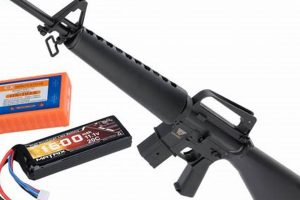
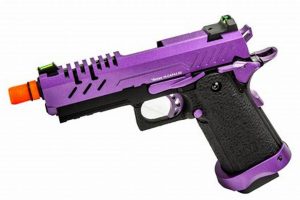
The central question revolves around the permissibility of operating an airsoft replica firearm on private residential property. Understanding this requires careful consideration of local ordinances, homeowner’s association (HOA) rules, and broader legal frameworks governing projectile weapons. The legality is not uniform and depends heavily on the specific location and circumstances. For example, some municipalities classify airsoft guns similarly to BB guns or pellet guns, subjecting them to restrictions on discharge within city limits.
The significance of determining the answer stems from concerns about public safety, property damage, and potential legal repercussions. Openly discharging what appears to be a firearm, even if it’s an airsoft replica, can cause alarm among neighbors and trigger police intervention. Moreover, repeated or irresponsible use may lead to complaints, fines, or even legal action from neighbors or the HOA. Historically, unregulated use of airguns and similar projectile devices has prompted stricter laws in many jurisdictions.
Therefore, any consideration of this activity necessitates a thorough investigation of applicable laws, regulations, and community standards. The following sections will delve into specific legal considerations, safety guidelines, and methods for responsible operation to mitigate risks and ensure compliance with local mandates, thereby enabling a more informed decision regarding engaging in airsoft activities on private property.
Responsible Airsoft Operation on Private Property
Engaging in airsoft activities requires adherence to safety protocols and legal compliance. The following tips promote safe and responsible operation.
Tip 1: Legal Compliance. Prior to any airsoft activity, investigate local ordinances and HOA regulations pertaining to projectile weapons. Verify that discharging airsoft guns is permissible within the property’s jurisdiction. Obtain written confirmation from the relevant authorities if necessary.
Tip 2: Eye Protection. Mandatory eye protection is essential for all participants. ANSI Z87.1 rated goggles or full-face masks should be worn at all times during gameplay to prevent eye injuries. Ensure the protective gear fits securely and offers complete coverage.
Tip 3: Velocity Limits. Adhere to established velocity limits for airsoft guns used on the property. Typically, this is measured in feet per second (FPS) with 0.20g BBs. Chronograph each airsoft gun regularly to ensure it remains within legal and safe FPS ranges. Lower FPS is generally safer, especially in close-quarters engagements.
Tip 4: Designated Play Area. Define a clear and contained play area within the backyard. Use netting, barriers, or natural features to prevent BBs from leaving the designated area and potentially impacting neighbors or the public. This minimizes the risk of accidental injury or property damage.
Tip 5: Neighbor Communication. Inform neighbors of planned airsoft activities, providing a schedule and explaining safety measures in place. Addressing concerns proactively can prevent misunderstandings and maintain positive relationships within the community.
Tip 6: Safe Gun Handling. Treat every airsoft gun as if it were a real firearm. Keep the muzzle pointed in a safe direction. Store airsoft guns securely when not in use, preventing unauthorized access, especially by children. Utilize appropriate gun cases for transport to and from the property.
Tip 7: Target Selection. Use appropriate targets specifically designed for airsoft use. Avoid shooting at animals, people not participating in the game, or objects that could cause ricochets or property damage.
Implementing these measures minimizes potential risks associated with airsoft activities and fosters responsible gun ownership, upholding public safety and legal compliance.
These tips provide a foundation for responsible airsoft usage. Understanding local laws and prioritizing safety are crucial elements in ensuring enjoyable and legally compliant experiences.
1. Local Ordinances

The permissibility of operating an airsoft gun within the confines of a private backyard is intrinsically linked to the governing local ordinances. These regulations, enacted at the municipal or county level, establish the legal framework within which such activities are either permitted, restricted, or prohibited. Understanding these ordinances is paramount in determining the legality of backyard airsoft activities.
- Definition and Scope
Local ordinances are legally binding rules and regulations enacted by local government bodies, such as city councils or county commissions. These ordinances have the force of law within the jurisdiction they govern. They often address issues specific to the locality, including noise levels, discharge of projectile weapons, and public safety. The scope varies widely, and a lack of a specific ordinance on airsoft guns does not necessarily imply permissibility; existing laws on firearms or projectile devices may apply.
- Classification of Airsoft Guns
The manner in which local ordinances classify airsoft guns is crucial. Some jurisdictions may categorize them alongside BB guns, pellet guns, or even conventional firearms, subjecting them to similar restrictions on use, possession, and discharge. Other jurisdictions may not have a specific classification, leaving the legal status ambiguous. The classification directly impacts the restrictions and requirements imposed on airsoft gun owners.
- Restrictions on Discharge
Many local ordinances regulate or prohibit the discharge of firearms and other projectile weapons within city limits or residential areas. These restrictions may extend to airsoft guns, even on private property. The ordinances may specify minimum distances from dwellings, public areas, or roadways where discharge is permitted. Violations can result in fines, confiscation of the airsoft gun, or even criminal charges.
- Enforcement and Penalties
Local ordinances are typically enforced by local law enforcement agencies, such as police departments or sheriff’s offices. Penalties for violating airsoft-related ordinances vary depending on the severity of the infraction and the specific provisions of the law. These penalties can include fines, warnings, confiscation of the airsoft gun, or, in more serious cases, misdemeanor charges. Consistent or egregious violations can lead to escalated legal consequences.
Consequently, determining whether airsoft gun use is permitted in a backyard requires a meticulous review of the relevant local ordinances. Consulting with local law enforcement agencies or legal professionals can provide clarity on the applicable laws and ensure compliance, thereby mitigating the risk of legal penalties and promoting responsible airsoft practices.
2. HOA Restrictions

Homeowner’s Association (HOA) restrictions represent a critical factor in determining the permissibility of airsoft gun usage on private residential property. These restrictions, established by the HOA’s governing documents, can significantly impact, or outright prohibit, activities that might otherwise be legal under local ordinances.
- Covenants, Conditions, and Restrictions (CC&Rs)
CC&Rs form the cornerstone of HOA regulations. These legally binding documents outline permissible and prohibited activities within the community. CC&Rs may contain explicit prohibitions against the discharge of projectile weapons, including airsoft guns, irrespective of their classification under local law. For instance, a CC&R might state, “No firearms or projectile weapons, including airsoft and BB guns, shall be discharged within the community.” Violation of CC&Rs can result in fines, legal action, and potential loss of privileges within the community.
- Nuisance Clauses
Many HOAs incorporate nuisance clauses into their governing documents. These clauses prohibit activities that disturb the peace and quiet of the community or pose a threat to the safety and well-being of residents. Discharging an airsoft gun, even in a backyard, could be deemed a nuisance if it generates excessive noise, causes alarm among neighbors, or creates a perceived safety hazard. Enforcement of nuisance clauses is often subjective and depends on the specific circumstances and the tolerance levels of nearby residents.
- Architectural Guidelines
While seemingly unrelated, architectural guidelines can indirectly affect airsoft activities. For example, these guidelines might restrict the types and heights of fences allowed on a property. Inadequate fencing could increase the risk of BBs leaving the property, potentially leading to complaints and violations of HOA rules. Similarly, restrictions on the visibility of play areas from neighboring properties could impact the acceptability of airsoft activities within the community.
- Enforcement Mechanisms
HOAs possess various enforcement mechanisms to ensure compliance with their rules and regulations. These mechanisms typically include issuing violation notices, imposing fines, and, in extreme cases, initiating legal action against homeowners who repeatedly violate the governing documents. The enforcement process generally involves a formal complaint, an investigation by the HOA’s board of directors or management company, and an opportunity for the homeowner to respond before any penalties are imposed.
Therefore, any evaluation of whether airsoft gun use is permissible within a backyard setting must include a thorough review of the HOA’s CC&Rs, nuisance clauses, architectural guidelines, and enforcement policies. Ignoring these restrictions can lead to disputes with the HOA, financial penalties, and ultimately, the cessation of airsoft activities on the property.
3. Safety Guidelines

The question of whether airsoft guns can be used in a backyard setting is inextricably linked to adherence to comprehensive safety guidelines. The potential for injury or property damage necessitates that specific protocols be in place and rigorously followed. If safety guidelines are inadequate or disregarded, the possibility of legally sanctioned airsoft gun use diminishes significantly, regardless of local ordinances or HOA regulations. A practical example illustrates this: If a municipality allows airsoft guns, but a user neglects mandatory eye protection, resulting in an injury, the user may face legal repercussions exceeding initial permissions. The implementation of robust safety measures, therefore, becomes a fundamental prerequisite for responsible and legally defensible airsoft activities on private property.
Elaborating further, consider the implications of exceeding established velocity limits. Airsoft guns firing projectiles at excessively high speeds pose a heightened risk of injury, irrespective of protective gear. Similarly, the absence of a designated and adequately secured play area increases the likelihood of projectiles leaving the property, potentially causing harm to neighbors or damage to surrounding property. A real-world scenario might involve a BB penetrating a neighbor’s window, resulting in property damage and potential legal action against the airsoft gun user. Thus, the practical application of safety guidelines extends beyond personal protection to encompass the safety and well-being of the community at large.
In conclusion, the permissibility of airsoft gun use in a backyard setting is contingent upon the consistent and conscientious implementation of safety guidelines. These guidelines serve not only to minimize the risk of injury and property damage but also to demonstrate responsible gun ownership and compliance with legal and ethical standards. Failure to prioritize safety effectively undermines the legitimacy of such activities, increasing the likelihood of legal intervention and community disapproval. Therefore, a comprehensive understanding of and unwavering commitment to safety guidelines are essential for responsible airsoft practices on private property.
4. Age Restrictions

Age restrictions are intrinsically linked to the question of airsoft gun use in a backyard, forming a critical regulatory layer affecting legality and responsible operation. Jurisdictions frequently establish minimum age requirements for possessing or using airsoft guns, reflecting concerns about maturity, judgment, and adherence to safety protocols. These age limits directly influence whether a minor can legally operate an airsoft gun on private property, irrespective of parental consent or supervision. For example, a local ordinance might prohibit individuals under 16 from using airsoft guns, rendering backyard use by a 14-year-old illegal, even if local ordinances permit airsoft use generally.
The underlying rationale for age restrictions centers on the perceived capacity of individuals to understand and apply safety guidelines, manage risk, and exercise responsible firearm handling. Younger individuals may lack the cognitive maturity to fully appreciate the potential dangers associated with airsoft guns, increasing the risk of accidental injury or misuse. Furthermore, age restrictions often correlate with the ability to comprehend and comply with relevant laws and regulations. The practical effect is a tiered system of access, where older individuals are presumed to possess a greater degree of responsibility and are therefore granted greater latitude in airsoft gun ownership and usage. This can manifest in different stipulations based on age, such as requiring adult supervision for individuals below a certain threshold. A specific example could be permitting 16-18 year olds to use airsoft guns unsupervised, whereas those younger than 16 require constant adult supervision while operating an airsoft gun.
In summary, age restrictions serve as a significant determinant of whether airsoft gun use is permissible in a backyard setting. These regulations reflect societal concerns about safety, responsibility, and legal compliance. Understanding and adhering to these age limits is crucial for both airsoft gun users and parents, ensuring responsible practices and minimizing the risk of legal repercussions. A failure to acknowledge and act in accordance with relevant age restrictions undermines the legitimacy of airsoft activities, regardless of other permissions and carries the risk of potentially serious consequences.
5. Neighbor Notification

Neighbor notification is a significant consideration when determining the permissibility of airsoft gun usage on private residential property. Proactive communication mitigates potential concerns, fosters positive community relations, and can preemptively address issues that might lead to complaints or legal challenges.
- Reducing Alarm and Misunderstanding
Unannounced airsoft activity, particularly when visible or audible to neighbors, can create alarm and misunderstanding. The sight of individuals with realistic-looking replica firearms can be misconstrued as a genuine threat, prompting calls to law enforcement and escalating potential conflicts. Notification allows neighbors to understand the nature of the activity, alleviating fears and preventing unnecessary interventions. For example, a simple conversation explaining the safety precautions taken can transform a potential complaint into an understanding neighbor.
- Addressing Noise Concerns
The operation of airsoft guns, even with modifications to reduce noise, can generate audible sounds that may disturb neighbors, particularly during early morning or late evening hours. Notification provides an opportunity to discuss potential noise levels and establish acceptable operating times. This proactive approach demonstrates consideration for the neighborhood’s peace and tranquility. Agreements can be reached to limit activities during certain hours, or to use quieter airsoft gun models.
- Managing Perceived Safety Risks
Even with stringent safety measures in place, neighbors may harbor concerns about the potential for stray projectiles to leave the property and cause injury or damage. Notification provides a platform to communicate the safety measures implemented, such as the use of netting or barriers, and to address any concerns about the security of the play area. Demonstrating a commitment to safety reassures neighbors and minimizes their perceived risk. This might involve showing them the containment measures in place and offering contact information for addressing any unforeseen issues.
- Establishing Good Community Relations
Proactive neighbor notification fosters positive community relations and cultivates a sense of mutual respect. By demonstrating consideration for the well-being of neighbors, airsoft gun users can build trust and goodwill, reducing the likelihood of complaints or disputes. This approach promotes a harmonious living environment and supports the responsible exercise of personal freedoms. This might include providing a direct contact method for neighbors and adhering to mutually agreed upon hours.
In conclusion, neighbor notification is not merely a courtesy; it is an essential element of responsible airsoft gun ownership and operation on private property. It addresses potential alarm, manages noise concerns, mitigates perceived safety risks, and establishes positive community relations. By prioritizing communication and consideration, airsoft gun users can minimize the likelihood of conflicts and contribute to a harmonious neighborhood environment.
6. Velocity Limits

The permissibility of operating an airsoft gun in a backyard is directly and significantly influenced by velocity limits. Velocity, measured in feet per second (FPS), dictates the kinetic energy imparted by the projectile and, consequently, the potential for injury. Most jurisdictions and organized airsoft events establish maximum velocity limits to mitigate these risks. The ability to legally and safely use an airsoft gun on private property hinges on adherence to these established velocity caps. Exceeding these limits increases the risk of injury, potentially leading to legal liability and invalidating any permissions granted by local ordinances or homeowner associations. Real-world examples include instances where excessively high-powered airsoft guns have caused serious eye injuries, resulting in legal action against the operator. Therefore, velocity limits serve as a critical control measure in regulating the safe operation of airsoft guns.
Practical application of velocity limits necessitates the use of a chronograph, a device that measures the speed of a projectile as it exits the barrel of the airsoft gun. Regular chronographing is essential to ensure the airsoft gun remains within specified limits, particularly as internal components wear or modifications are made. Many organized airsoft fields and events require mandatory chronograph testing before participation is allowed. Failure to comply with velocity limits can result in expulsion from these events and, more importantly, legal repercussions if an injury occurs. Furthermore, awareness of local laws concerning maximum allowed FPS values is critical; ignorance is not a defense in legal proceedings. Different jurisdictions may have different restrictions.
In summary, velocity limits are not merely arbitrary numbers; they are integral to ensuring safe and legal airsoft gun use in a backyard setting. Compliance with these limits minimizes the risk of injury, protects against potential legal liability, and fosters responsible gun ownership. Challenges include the need for consistent monitoring and the potential for individuals to tamper with airsoft guns to increase their velocity. Nonetheless, a thorough understanding and strict enforcement of velocity limits are essential components of responsible and permissible airsoft activities on private property. The broader theme underscores the importance of prioritizing safety and adhering to regulations when engaging in activities involving projectile weapons.
Frequently Asked Questions
The following addresses common queries regarding the operation of airsoft guns within the confines of a private residential backyard, emphasizing legal considerations and safety protocols.
Question 1: Is it inherently legal to operate an airsoft gun in a residential backyard?
The legality is not universal and depends on specific local ordinances and homeowner association (HOA) regulations. Jurisdictions may classify airsoft guns as projectile weapons, subjecting them to discharge restrictions. HOAs may have independent prohibitions irrespective of local laws.
Question 2: What steps should be taken to determine the legality in a specific location?
Consult local municipal codes and ordinances pertaining to firearms, projectile weapons, and airguns. Review the governing documents of any applicable homeowner associations, specifically looking for restrictions on discharge of weapons or nuisance clauses. Clarification from local law enforcement may be beneficial.
Question 3: What safety precautions are essential when operating an airsoft gun?
Mandatory eye protection (ANSI Z87.1 rated), adherence to velocity limits (measured in feet per second), establishment of a designated and contained play area, and safe gun handling practices are imperative. Informing neighbors is also recommended.
Question 4: What constitutes a responsible designated play area?
The area should be clearly defined and enclosed using netting, barriers, or natural features to prevent projectiles from leaving the property. The play area should be free from hazards and designed to minimize the risk of injury.
Question 5: What are the potential consequences of violating local ordinances or HOA rules?
Consequences can include fines, warnings, confiscation of the airsoft gun, legal action from the HOA, and, in serious cases, criminal charges. Repeated violations may lead to escalated penalties.
Question 6: How does neighbor notification contribute to responsible airsoft practices?
Neighbor notification reduces alarm and misunderstanding, addresses noise concerns, manages perceived safety risks, and establishes good community relations. It allows for open communication and a proactive approach to mitigating potential conflicts.
Understanding local laws and HOA regulations, along with adherence to stringent safety protocols, is paramount for responsible airsoft gun operation on private property. Prioritizing safety and community relations minimizes risks and promotes compliance.
The subsequent section will delve into the legal liabilities of operating the airsoft gun in the backyard.
Can You Use An Airsoft Gun In Your Backyard
The preceding discussion has comprehensively addressed whether airsoft guns can be used in a backyard, emphasizing the critical interplay of local ordinances, HOA restrictions, safety guidelines, age restrictions, neighbor notification, and velocity limits. It has established that no blanket permission exists; legality is contingent on meticulous adherence to a complex web of regulations and proactive measures to ensure safety and community harmony.
Therefore, responsible individuals must conduct thorough due diligence before engaging in such activities. Failure to do so carries substantial risks, including legal penalties, community discord, and potential physical harm. The onus is on the individual to prioritize safety, legality, and ethical conduct, ensuring that personal enjoyment does not infringe upon the well-being and rights of others. A proactive and informed approach is not merely recommended but is essential for responsible airsoft gun ownership.