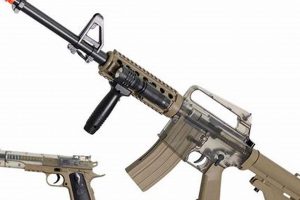
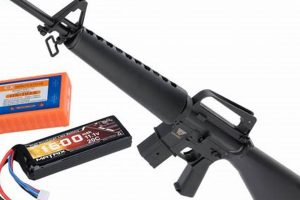
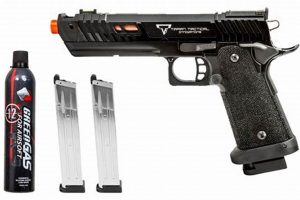
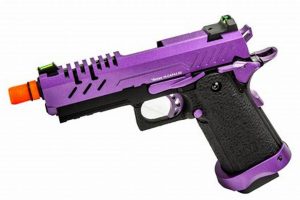
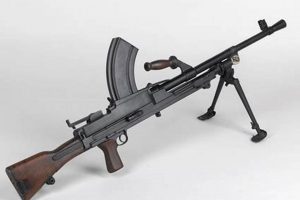
The viability of employing an airsoft replica firearm as a self-defense tool presents a complex scenario. While superficially resembling real firearms, airsoft guns primarily project plastic pellets at relatively low velocities. These projectiles are designed for recreational skirmishes and target practice, generally not causing serious or life-threatening injury under normal circumstances. The impact of an airsoft pellet may inflict temporary pain or leave a welt, but is unlikely to incapacitate an attacker effectively.
The potential benefits of relying on such a device for personal protection are minimal and overshadowed by significant drawbacks. Historically, tools used for self-defense have aimed to quickly neutralize a threat, either through incapacitation or deterrence. An airsoft gun lacks the stopping power and intimidating presence of a real firearm, and its use could escalate a situation by prompting a more dangerous response from an assailant who may be armed with a lethal weapon. Moreover, misidentification of the replica as a real firearm by law enforcement could have severe and even fatal consequences.
This analysis necessitates a detailed examination of the legal implications, the potential for unintended escalation, the psychological impact on both the user and the assailant, and, ultimately, the availability of more reliable and effective alternatives for personal safety. Therefore, a comprehensive understanding of the limitations and risks is crucial before considering such a device for protection.
The following points are intended to provide crucial insight regarding the limitations and potential dangers associated with considering an airsoft device for personal safety. A thorough understanding of these factors is paramount.
Tip 1: Understand Legal Ramifications: Possessing or brandishing what resembles a firearm can carry legal penalties, even if it’s an airsoft gun. Local laws vary, and improper use could result in arrest or charges.
Tip 2: Acknowledge the Lack of Deterrent: While resembling a firearm superficially, airsoft guns often lack the weight, recoil, and sound that genuinely deter assailants. Reliance on visual intimidation alone is risky.
Tip 3: Assess the Risk of Escalation: Displaying what an attacker perceives as a real firearm could provoke a violent response, potentially from an assailant who is armed with a lethal weapon. This scenario significantly increases the danger to the user.
Tip 4: Prioritize Training and Awareness: If an airsoft gun is used, familiarize with its operation and safety. Situational awareness is also useful and should be prioritized to potentially avoid dangerous confrontations.
Tip 5: Consider Alternative Tools: Explore less-lethal options designed specifically for self-defense, such as pepper spray or personal alarms. These alternatives may offer a more appropriate level of force and lower legal risks.
Tip 6: Recognize Limitations in Stopping Power: Airsoft pellets are unlikely to cause significant injury or incapacitation. Relying on them to stop an attacker poses a critical risk to personal safety.
Tip 7: Practice Responsible Storage: Store airsoft guns securely, out of reach of children and individuals who may misuse them. Treat them with the same respect as any potentially dangerous item.
The considerations outlined above highlight the necessity of approaching the question of using an airsoft gun for protection with caution and informed decision-making. There are viable alternatives.
The next section will offer a conclusion summarizing key points and stressing the importance of responsible decision-making in matters of personal safety.
1. Legality
The legality surrounding the use of an airsoft device for self-defense is a crucial determinant in evaluating its viability. Regulations governing the possession, display, and use of airsoft guns differ significantly across jurisdictions. In some areas, airsoft guns may be subject to the same restrictions as actual firearms, requiring specific licensing, registration, or transportation protocols. A violation of these regulations, even in a self-defense scenario, can result in criminal charges. The cause-and-effect relationship is straightforward: possessing or using an airsoft device in a manner that violates local laws leads to legal consequences, regardless of the user’s intent.
A significant factor impacting legality is the potential for misidentification. An airsoft gun closely resembles a real firearm, increasing the likelihood that law enforcement or other individuals will perceive it as such. This misidentification can lead to an escalated response from law enforcement, who may reasonably believe they are facing a deadly threat. For example, in situations where a person brandishes an airsoft gun in self-defense, responding officers, unable to immediately distinguish it from a real firearm, may use lethal force. Several documented cases illustrate this danger, highlighting the practical significance of understanding local laws and the risks associated with using airsoft devices in public.
Consequently, while the act of self-defense may be legally justifiable under certain circumstances, using an airsoft gun does not automatically grant immunity from prosecution. The user must demonstrate adherence to all applicable laws regarding the possession and use of such devices. Moreover, the perceived threat and the response must be proportionate to justify the use of any force, including that exerted by an airsoft gun. Ultimately, the legal landscape dictates that responsible ownership, knowledgeable use, and a clear understanding of local regulations are paramount. Otherwise, the purported act of self-defense could result in severe legal repercussions.
2. Deterrent Effectiveness

The deterrent effectiveness of an airsoft gun in a self-defense scenario hinges on its ability to dissuade a potential assailant from continuing their attack. This effectiveness is directly related to how realistically the airsoft gun is perceived and the assailant’s understanding of its actual capabilities. The mere appearance of a weapon might initially deter an attacker, but the extent and duration of this deterrent effect are questionable.
- Visual Similarity and Misinterpretation
The visual resemblance of an airsoft gun to a real firearm plays a significant role in its initial deterrent capacity. If an assailant believes the airsoft gun to be a lethal weapon, they may be deterred from proceeding with the attack. However, this relies entirely on the assailant’s lack of knowledge. Upon closer inspection or if the assailant is familiar with firearms, the deterrent effect can quickly diminish. For instance, if the assailant recognizes the lack of a muzzle flash or the sound associated with a real firearm discharge, the perceived threat decreases, negating the deterrent. In instances involving trained assailants or those familiar with weapons, the effect can be minimal or nonexistent.
- Psychological Impact on Assailant
The psychological impact on an assailant also influences the deterrent. The display of what appears to be a weapon can induce fear or uncertainty, potentially causing them to retreat. However, this is contingent on the assailant’s mindset and emotional state. An assailant driven by rage, under the influence of substances, or determined to commit violence may not be deterred by the sight of the replica. Furthermore, a confident or experienced assailant may perceive the use of an airsoft gun as a sign of weakness, potentially emboldening them to escalate the situation. The assumption that an assailant will be universally deterred by the appearance of a weapon is unreliable.
- Role of Environmental Factors
Environmental conditions can influence the deterrent effect. In low-light conditions or at a distance, the airsoft gun may be more readily mistaken for a real firearm, enhancing its deterrent potential. Conversely, in well-lit environments or at close range, the differences become more apparent, reducing the deterrent. Noise levels can also play a role; in loud environments, the lack of a realistic gunshot sound may be less noticeable. The effectiveness is highly situational, and relying on environmental factors to enhance the deterrent is precarious.
- Potential for Negative Consequences
The use of an airsoft gun as a deterrent carries inherent risks. If the assailant is not deterred and retaliates, the individual using the airsoft gun is now at a disadvantage, having revealed their lack of a truly effective weapon. Moreover, brandishing what appears to be a firearm, even in self-defense, can attract unwanted attention from law enforcement and bystanders, potentially leading to misunderstandings and escalations. The potential for negative consequences must be weighed against the uncertain deterrent value. The perceived benefit must justify the significant risk of escalation or misinterpretation by law enforcement.
In conclusion, the deterrent effectiveness of an airsoft gun in a self-defense context is highly variable and unreliable. It depends on factors such as the assailant’s knowledge, psychological state, environmental conditions, and the potential for misinterpretation. Relying on this deterrent effect as a primary means of self-defense carries significant risks and may prove counterproductive. The inherent uncertainty necessitates a careful consideration of alternative, more reliable self-defense strategies.
3. Escalation Potential
The question of employing an airsoft device for personal protection is intrinsically linked to the escalation potential it introduces into a confrontation. The act of brandishing what appears to be a firearm, even if it is a replica, can significantly alter the dynamics of an encounter, potentially transforming a non-lethal situation into one with deadly consequences. This escalation stems from the misinterpretation of the device as a genuine weapon, triggering a more aggressive response from the assailant, bystanders, or law enforcement. The decision to use an airsoft gun for self-defense necessitates a careful evaluation of this inherent risk.
Several factors contribute to this escalation potential. The primary factor is the visual similarity between airsoft guns and actual firearms. This resemblance is often deliberate, intended to mimic the appearance and feel of real weapons for training or recreational purposes. However, in a high-stress self-defense scenario, this similarity can be misconstrued, leading an assailant to believe they are facing a lethal threat. In response, the assailant may escalate their actions, resorting to the use of a genuine firearm or other deadly weapon. Furthermore, bystanders witnessing the display of what appears to be a firearm may react with fear and panic, potentially leading to chaotic and unpredictable outcomes. Law enforcement, upon arriving at the scene, may also perceive the situation as a lethal threat, employing tactics appropriate for dealing with an armed suspect. The case of Tamir Rice, a 12-year-old boy fatally shot by police while holding a replica toy gun, serves as a stark reminder of the dangers of misidentification and the potential for tragic escalation.
Understanding the escalation potential is vital when considering employing such a device for personal safety. The effectiveness as a deterrent must be balanced against the possibility that it could precipitate a more dangerous and potentially lethal outcome. While an airsoft gun may seem like a less-lethal option, its deployment can inadvertently introduce a higher level of risk and violence into a situation. Exploring alternative self-defense methods that minimize the risk of escalation, such as personal alarms or self-defense training, is prudent. Ultimately, ensuring personal safety demands a comprehensive assessment of the potential consequences, including the risks associated with escalation. Otherwise, the decision may inadvertently increase danger rather than mitigate it.
4. Incapacitation Capability

The incapacitation capability of an airsoft device is a critical factor when evaluating its suitability for self-defense. The core objective of self-defense is to neutralize a threat effectively, preventing further harm to oneself or others. The ability of a tool to quickly and reliably incapacitate an assailant is paramount. The degree to which an airsoft device can achieve this directly impacts its utility in a real-world self-defense scenario.
- Projectile Velocity and Energy Transfer
Airsoft guns propel plastic or biodegradable pellets at relatively low velocities compared to firearms. The energy transferred upon impact is consequently limited. While a direct hit can cause temporary pain or discomfort, it is unlikely to result in significant injury or immediate incapacitation. A typical airsoft pellet lacks the kinetic energy required to penetrate clothing effectively, let alone cause the kind of tissue damage necessary to stop an attacker. Real-world scenarios demonstrate the inadequacy: even multiple hits from an airsoft gun rarely deter a determined assailant, especially one under the influence of drugs or adrenaline. The limitations in projectile velocity and energy transfer significantly diminish the ability to effectively neutralize a threat.
- Pain Compliance vs. Physiological Incapacitation
Airsoft guns primarily rely on pain compliance, rather than physiological incapacitation, to deter an attacker. Pain compliance is the theory that the infliction of pain will cause an individual to cease their actions. However, pain compliance is unreliable, particularly against individuals with a high pain tolerance, those under the influence of substances, or those experiencing a heightened state of arousal (e.g., during an aggressive encounter). Physiological incapacitation, on the other hand, involves causing actual physical damage that prevents the assailant from continuing their attack, such as a broken bone or a temporary loss of consciousness. Airsoft guns lack the capability to reliably induce physiological incapacitation. This reliance on pain compliance makes them less effective against a determined or mentally compromised assailant, severely limiting their suitability for self-defense.
- Limited Range and Accuracy
Airsoft guns generally have a limited effective range and accuracy compared to firearms. This limitation further reduces their incapacitation capability. The accuracy of an airsoft gun diminishes significantly at longer distances, making it difficult to consistently hit vital areas necessary for even temporary incapacitation. Furthermore, the low velocity of the projectiles means they lose energy rapidly over distance, further reducing their impact. In a dynamic self-defense situation, the limited range and accuracy can be a significant disadvantage, making it difficult to deliver even a mildly painful blow to a vital area. The need for close proximity to achieve any meaningful impact places the user at increased risk. The accuracy issues exacerbate this limitation in stopping power.
- Clothing and Environmental Factors
The effectiveness of an airsoft gun is also influenced by environmental factors and the clothing worn by the assailant. Heavy clothing can significantly reduce the impact of an airsoft pellet, rendering it practically harmless. Winter clothing, in particular, provides substantial protection. Moreover, adverse weather conditions, such as rain or wind, can further reduce the accuracy and range of the airsoft gun, diminishing its incapacitation capability. These external factors introduce an element of unpredictability, making the airsoft gun even less reliable as a self-defense tool. The fact that its performance can be so easily compromised by common environmental factors underscores its inadequacy for the task.
In summary, the limited incapacitation capability of airsoft guns stems from a combination of factors, including low projectile velocity, reliance on pain compliance, limited range and accuracy, and vulnerability to environmental factors. These limitations render them unreliable and potentially dangerous as self-defense tools. The inability to reliably neutralize a threat quickly and effectively means that relying on an airsoft gun for self-defense can place the user at greater risk. More effective and reliable alternatives should always be considered.
5. Alternative Options

The consideration of whether an airsoft device is suitable for self-defense invariably leads to an examination of viable alternatives. These options provide varying degrees of protection and address the inherent limitations and risks associated with using an airsoft device for personal safety. Evaluating these alternatives is critical for making informed decisions about personal protection strategies.
- Personal Alarms
Personal alarms emit a loud, attention-grabbing sound designed to deter potential attackers and alert others to the situation. Unlike an airsoft device, personal alarms do not present the risk of escalation through misidentification or the potential for causing physical harm. They are legal to carry in most jurisdictions and offer a non-lethal means of discouraging an assault. However, their effectiveness relies on the presence of others and may be limited in isolated or noisy environments. Real-world examples include individuals using personal alarms to successfully interrupt attempted robberies or assaults.
- Pepper Spray (OC Spray)
Pepper spray is a non-lethal irritant that causes temporary incapacitation by affecting the eyes, skin, and respiratory system. It is more effective than an airsoft device in neutralizing a threat and is designed specifically for self-defense purposes. The effects are immediate and can provide valuable time to escape or seek assistance. However, its legality varies by jurisdiction, and improper use can result in legal consequences. Wind conditions and close-quarters combat can also limit its effectiveness. Numerous cases document pepper spray’s successful use in thwarting attacks, highlighting its value as a self-defense tool. Responsible training in deployment techniques is crucial.
- Self-Defense Training
Self-defense training provides individuals with the knowledge and skills to assess threats, de-escalate conflicts, and physically defend themselves if necessary. Training programs often include techniques for striking, grappling, and escaping from attacks. Unlike relying on a specific device, self-defense training equips individuals with adaptable skills that can be used in a variety of situations. While physical techniques are an element, training emphasizes awareness, avoidance, and verbal de-escalation as first steps. Self-defense skills provide a lasting benefit beyond a particular moment or tool.
- Tasers and Stun Guns
Tasers and stun guns are electroshock weapons designed to temporarily incapacitate an assailant by disrupting muscle control. These devices offer a greater degree of stopping power than an airsoft device, delivering a high-voltage, low-amperage shock. However, their legality is heavily regulated, and their effectiveness depends on proper deployment and contact with the assailant. The user also needs to be in close proximity for use, creating inherent risk. There are documented instances of both successful incapacitation and failure, depending on factors such as clothing, contact area, and the assailant’s resistance to pain. These are often presented as a direct alternative to lethal options.
The availability of these alternative options underscores the importance of a comprehensive approach to personal safety. While an airsoft device may superficially resemble a firearm, its limited incapacitation capability and the potential for escalation make it a less desirable choice compared to tools and skills specifically designed for self-defense. A responsible approach involves assessing individual needs, understanding local laws, and choosing options that offer the most effective and safest means of protection.
Frequently Asked Questions
The following section addresses common inquiries regarding the suitability of airsoft guns for personal protection. These answers provide an overview of key considerations.
Question 1: Is it legal to use an airsoft device for self-defense?
The legality varies considerably by jurisdiction. Possessing or brandishing what resembles a firearm, even an airsoft replica, can result in legal penalties. Local laws concerning replica firearms must be thoroughly understood and followed.
Question 2: Can an airsoft gun effectively deter an attacker?
The effectiveness as a deterrent is uncertain. The visual resemblance to a real firearm might initially deter some individuals. However, the effect relies on the assailant’s lack of knowledge and could easily diminish upon closer inspection or recognition of the replica.
Question 3: Does using an airsoft device for self-defense risk escalating the situation?
Yes, significant escalation is possible. An assailant perceiving the airsoft device as a lethal weapon may respond with greater force, potentially using a real firearm. Bystanders or law enforcement may also misinterpret the situation, leading to unintended and dangerous consequences.
Question 4: How effective is an airsoft device at incapacitating an attacker?
The incapacitation capability is limited. Airsoft pellets lack the energy to cause significant injury or immediate incapacitation. Reliance on pain compliance is unreliable, particularly against individuals under the influence of substances or experiencing heightened aggression.
Question 5: Are there viable alternatives to airsoft devices for personal protection?
Yes, several alternatives exist, including personal alarms, pepper spray, self-defense training, and electroshock weapons. These options offer varying degrees of protection and may present a safer and more effective means of self-defense.
Question 6: What are the potential consequences of misusing an airsoft device for self-defense?
Misusing an airsoft gun can result in legal penalties, including arrest and prosecution. It can also lead to physical harm if the situation escalates or if law enforcement misinterprets the device as a real firearm. Personal safety may ultimately be compromised.
These FAQs underscore the need for cautious consideration before contemplating the use of an airsoft device for self-defense. A thorough understanding of the legal implications, potential risks, and availability of alternative options is essential.
The concluding section will summarize the analysis and provide final recommendations regarding personal safety strategies.
Conclusion
The preceding analysis explored the multifaceted issue of whether can you use an airsoft gun for self defense effectively. The findings indicate that while possessing a superficial resemblance to actual firearms, airsoft devices present significant limitations and potential risks when considered for personal protection. The uncertain deterrent effect, coupled with the possibility of escalating a confrontation and the limited incapacitation capability, outweigh any perceived benefits. The legality surrounding their use is complex and jurisdiction-dependent, further complicating their suitability. The alternatives of pepper spray, personal alarms, or self-defense training should be considered and weighed.
Responsible decision-making in matters of personal safety necessitates a thorough assessment of the options and their potential consequences. The question can you use an airsoft gun for self defense should now be replaced with what can be used to better improve your self defense. The purpose of this analysis is to show that one should prioritize strategies that offer reliable protection while minimizing the potential for unintended harm or legal repercussions. The decision to use force, even in self-defense, carries significant weight and warrants careful consideration of all available information and resources. Prioritizing safety is vital.